

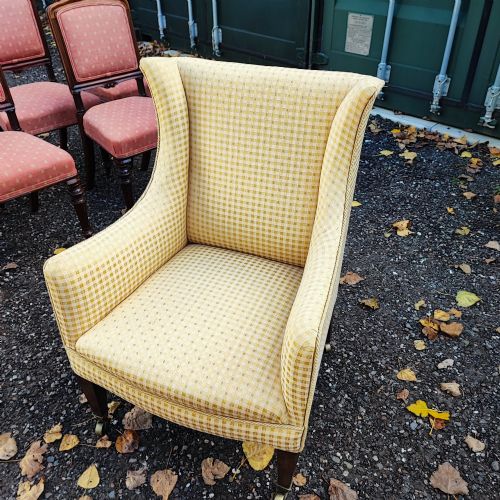
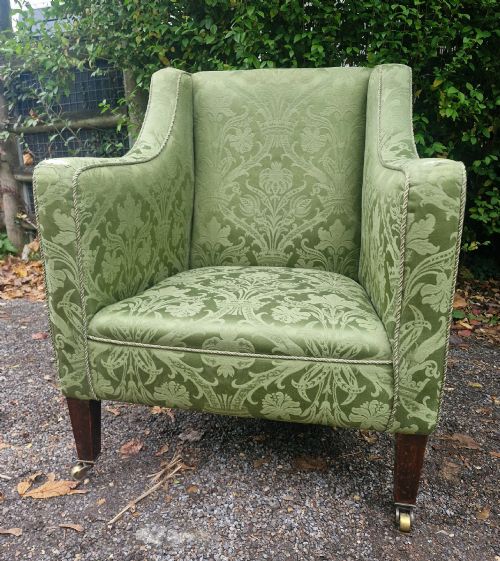
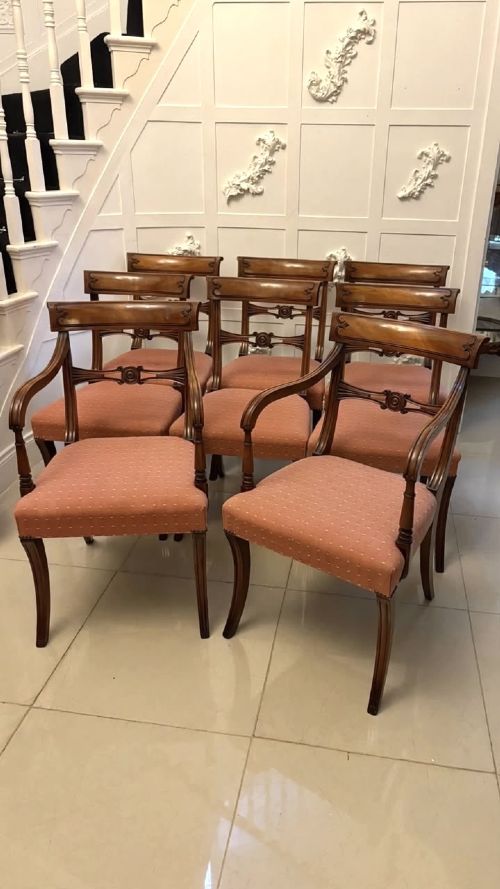
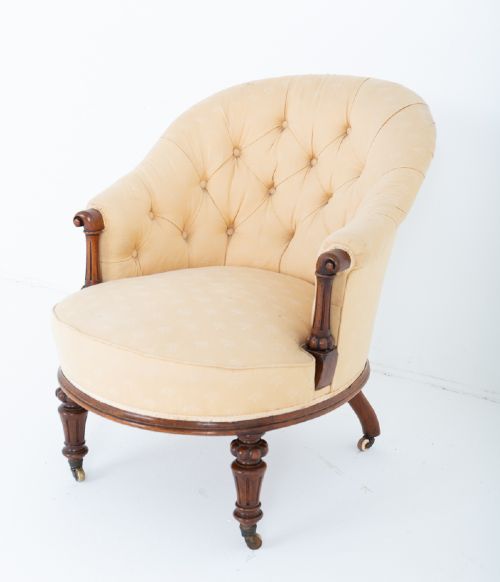
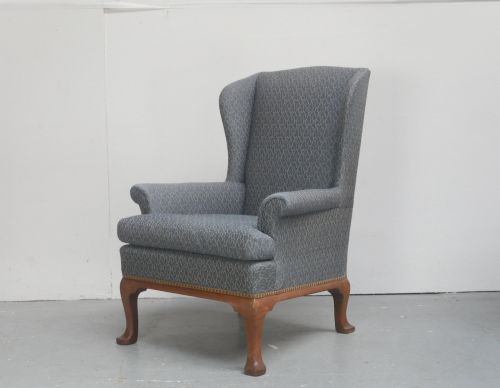
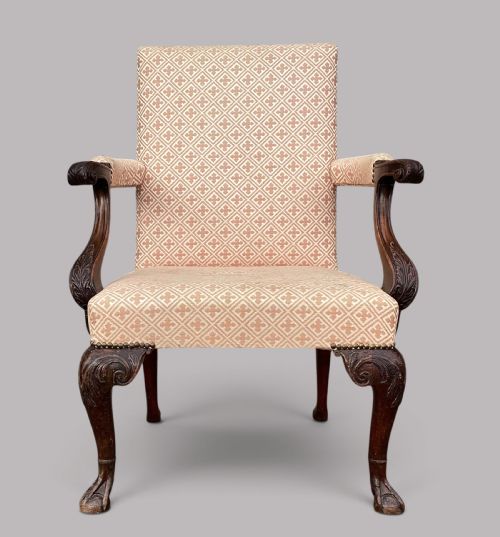
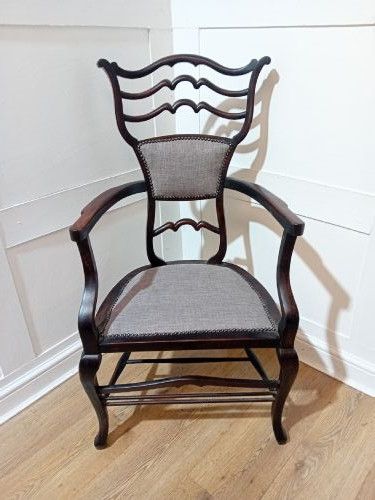
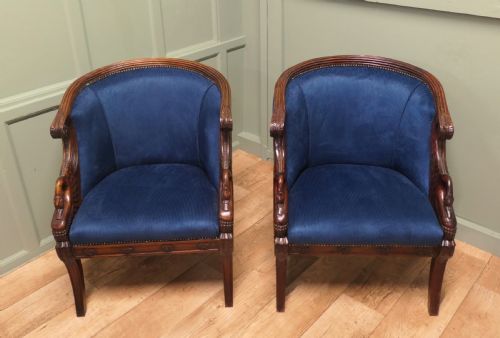
Mahogany and Fabric Armchair
When you search for a mahogany and fabric armchair, you are looking at substantial seating built from dense tropical hardwoods and upholstered in various textiles.
Mahogany and Fabric Armchair
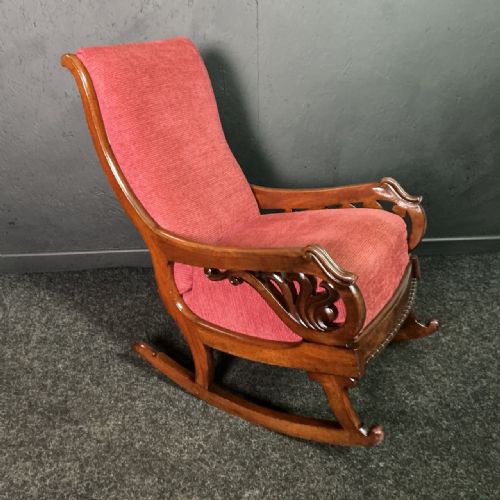
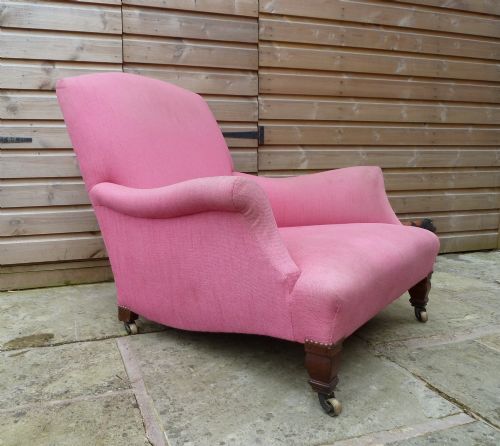
A mahogany and fabric armchair is a substantial seat combining a dark timber frame with textile upholstery, appearing across periods from the eighteenth century through to the twentieth century. These pieces encompass diverse forms such as open armchairs, wingbacks, tub chairs, and library chairs designed for domestic comfort.
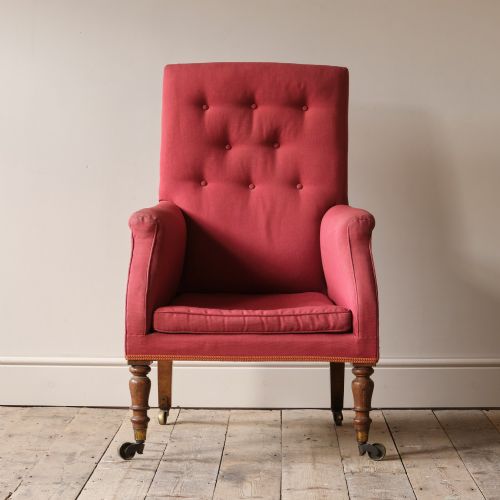
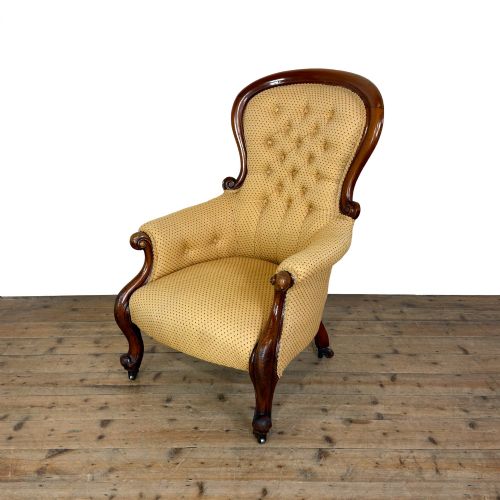
The version you are most likely to meet on this page is a Victorian or Edwardian interpretation, frequently featuring turned or cabriole legs, scroll arms, and button-backed upholstery. Earlier Georgian examples also appear, showing carved details and substantial proportions.
Makers and regional workshops produced these chairs across Britain, with styles ranging from traditional Scottish designs to English country house seating and revival pieces reflecting earlier reigns.
What varies in quality
Quality in a mahogany and fabric armchair rests upon the integrity of the timber frame and the depth of hand-carved ornamentation. Finer examples display crisply defined carving on the mahogany and robust joinery that supports the upholstered body without movement.
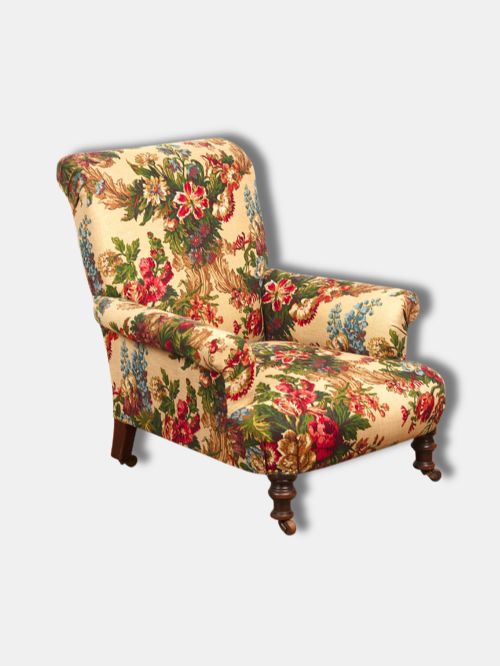
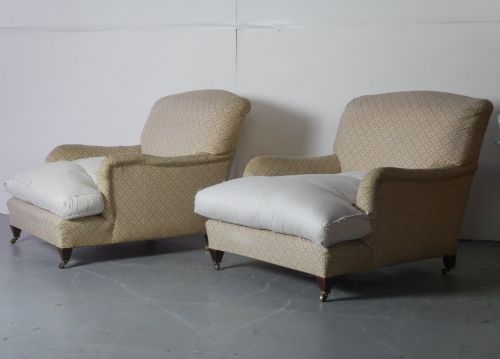
The sophistication of the upholstery materials and the precision of the stitching dictate the upper tier of pieces. Selection of superior fabrics, such as printed cottons or heavy velvets, combined with traditional internal stuffing methods, separates standard seating from exceptional examples.
Mahogany and Fabric Armchair Retail Price Guide 2026
Typical asking prices for mahogany and fabric armchair among the pieces listed under this phrase on Sellingantiques today, from the lower quarter to the upper quarter. They describe what is for sale here now, not the wider market.
Listings feature mahogany frames combined with textiles like cotton, velvet, and hessian across Victorian, Edwardian, and Georgian periods.
Giles Grendey·Whytock and Reid·Howard and Sons·Robert Kime
The Mahogany and Fabric Armchair Glossary
- Cabriole leg
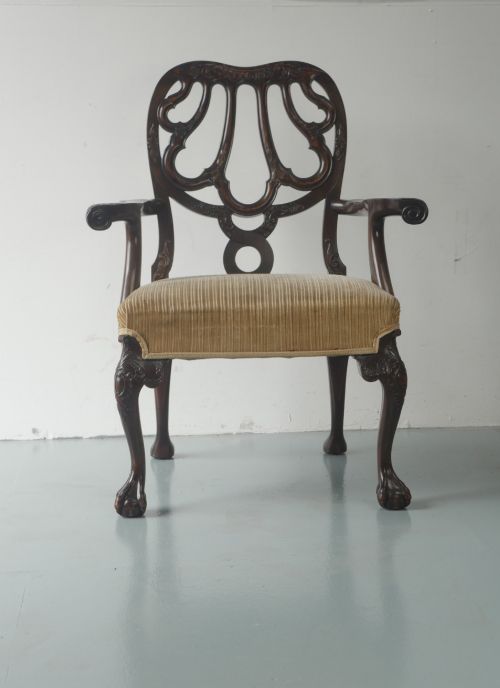
- A furniture leg that curves out and then in, mimicking an animal's leg, commonly found on eighteenth and nineteenth-century chairs. This form often terminates in a pad or claw and ball foot.
- Wingback
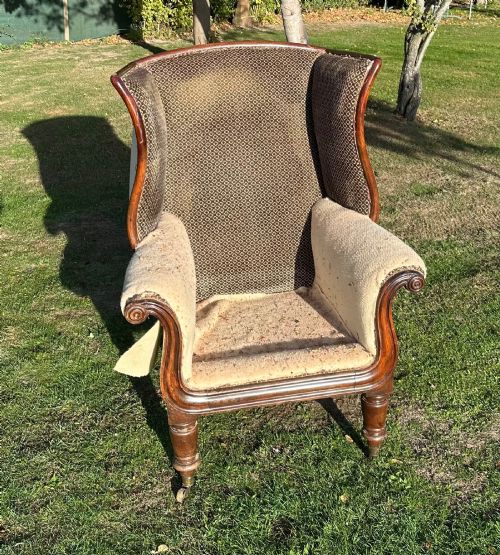
- An armchair with side panels attached to the arms and rising to the back, designed to shield the sitter from drafts. Early versions were padded for warmth.
- Button back
- An upholstery style where depressions are created by pulling twine tightly through the padding and securing it with covered buttons. This technique keeps the internal stuffing evenly distributed.
- Carver
- An armchair, often designed en suite with a set of dining chairs, featuring extended arms. These were traditionally used by the head of the table.
- Tub chair
- A curved armchair where the back and arms form a single continuous rounded enclosure. The design provides an enveloping seat.
Mahogany and Fabric Armchair: Frequently Asked Questions
What periods do these armchairs span?
The listings encompass items from the eighteenth century, the Georgian era, and the William IV period, alongside numerous Victorian and Edwardian examples up to the 1930s.
This broad chronological range means you will encounter varied stylistic revivals, including Queen Anne and George III influences alongside country house vernacular pieces.
How do I identify a Victorian armchair?
Victorian armchairs often feature dark mahogany frames with scroll arms, button-backed upholstery, and turned or cabriole legs. Many incorporate brass castors on the feet.
They frequently appear as library chairs, gentleman's armchairs, or nursing chairs, utilising floral fabrics, velvet, or tapestry covers.
What materials are used in the upholstery?
Upholstery materials recorded in the evidence include cotton, hessian, velvet, tapestry, and general upholstery fabric. Internal structures typically rely on webbing and traditional stuffing.
Top covers range from floral patterns and printed cottons to specific textiles by makers such as Robert Kime.
Are there matching dining chair sets?
Yes, the evidence includes sets of dining chairs alongside individual armchairs. Examples feature George III mahogany dining chairs and shield-back dining chairs in the Sheraton style.
These sets usually comprise six or eight matching seats designed around a central dining table.
How were different chair types used?
Different forms served specific domestic functions within historic interiors. Library chairs and desk chairs provided support for reading and writing, while reception and elbow chairs furnished public rooms.
Tub chairs and wingbacks offered comfortable fireside seating, and slipper or nursing chairs were built with lower profiles for specific domestic tasks.