

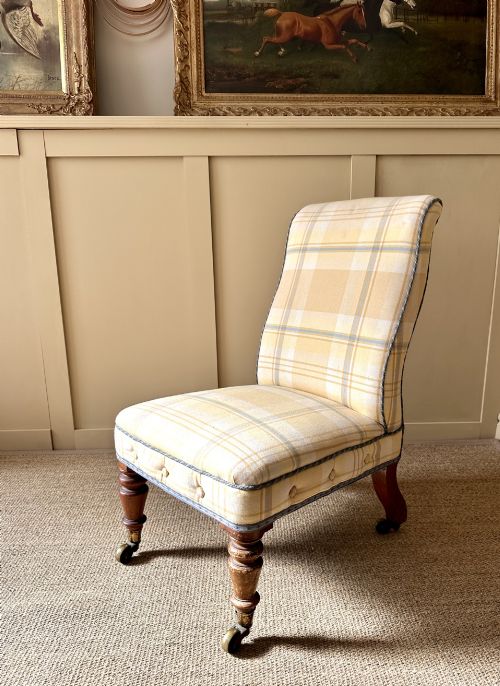
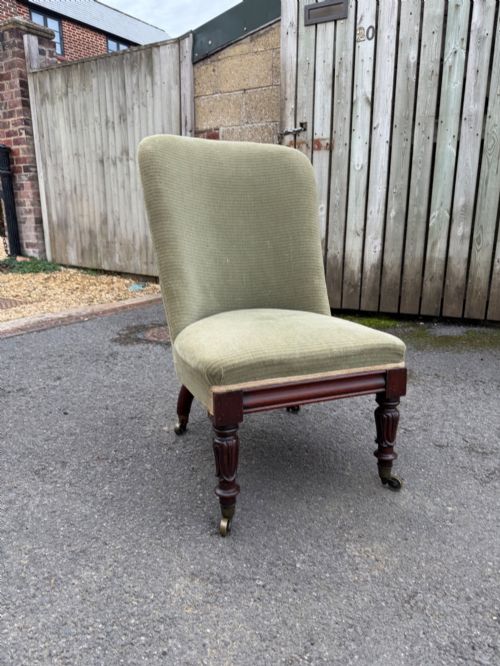
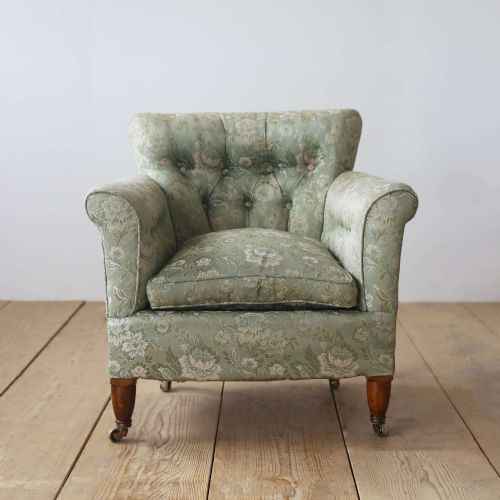
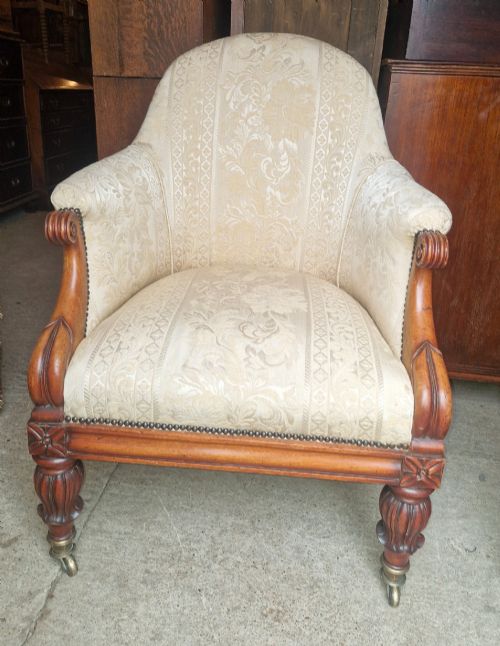
Mahogany and Brass Castor Chair
A mahogany and brass castor chair brings solid timber and metal mobility together, offering sturdy seating with effortless movement across a room.
Mahogany and Brass Castor Chair
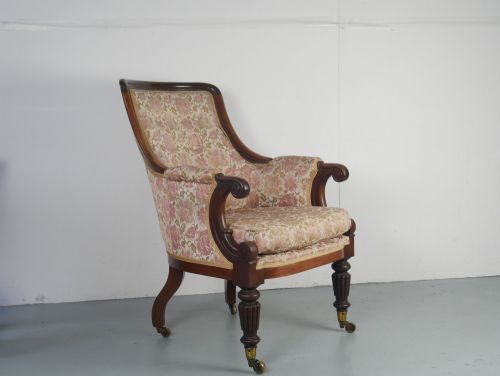
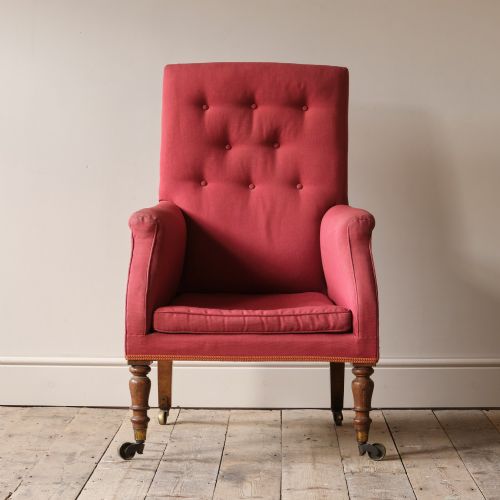
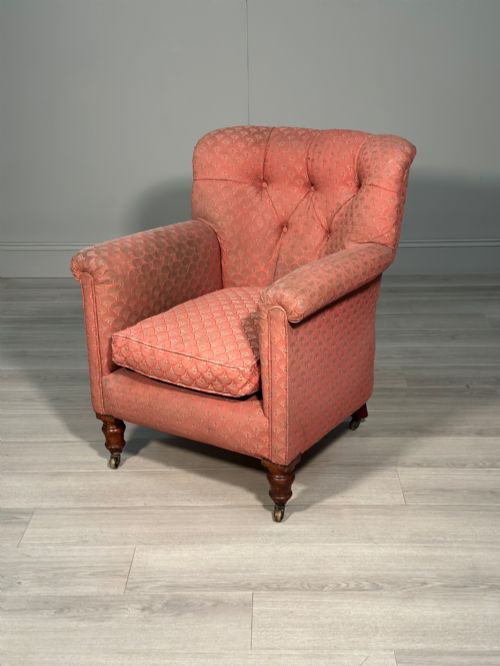
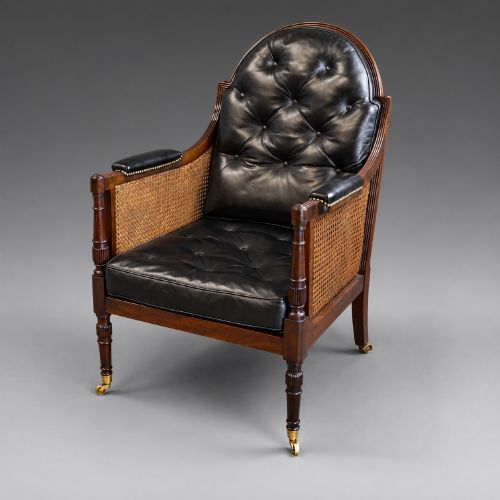
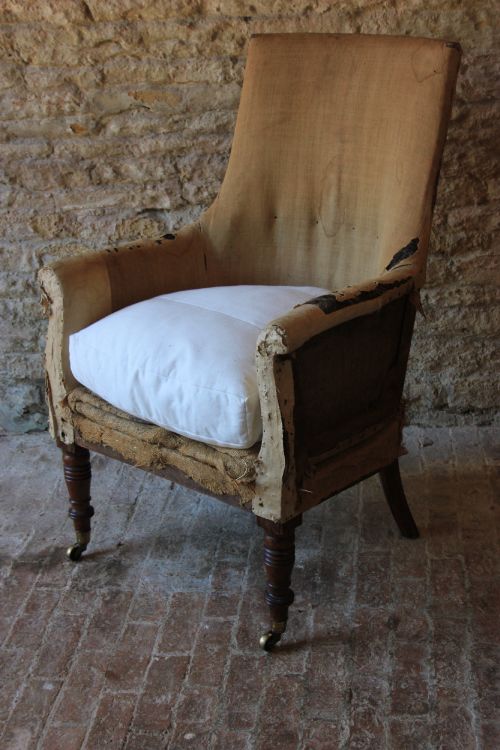
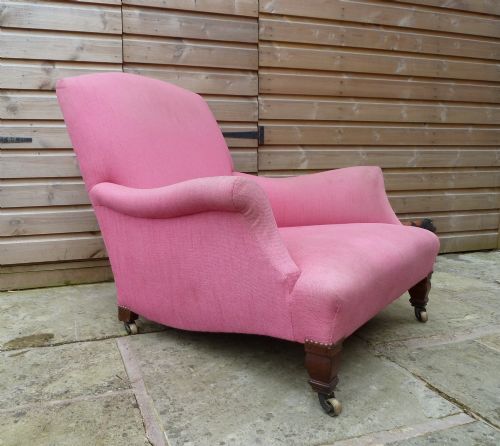
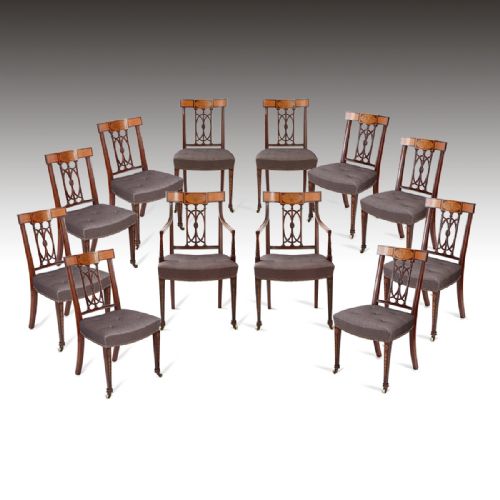
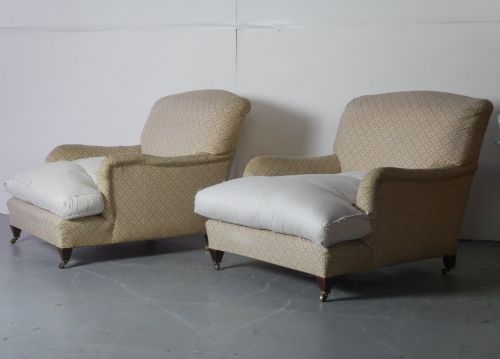
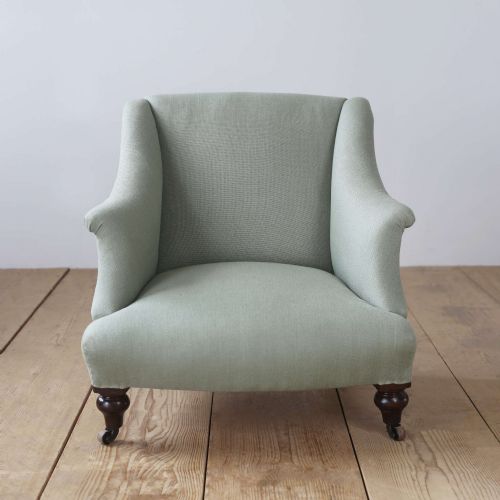
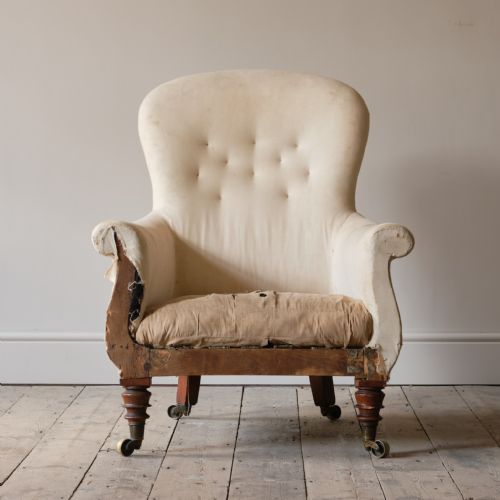
A mahogany and brass castor chair spans multiple seating forms, from library armchairs and bergères to slipper chairs and occasional chairs. These pieces emerge predominantly from the nineteenth century, including Georgian, Regency, William IV, and Victorian periods.
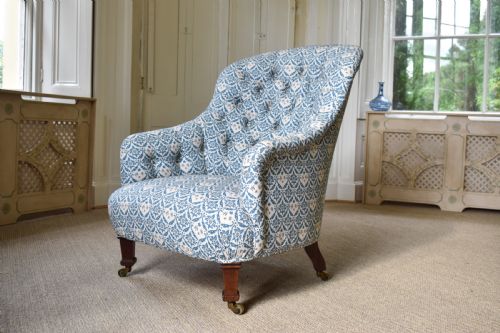
Makers and workshops construct these seats using dense mahogany frames combined with metal castors on the feet for ease of movement. Buyers frequently encounter library armchairs and larger country house seating alongside occasional and side chairs.
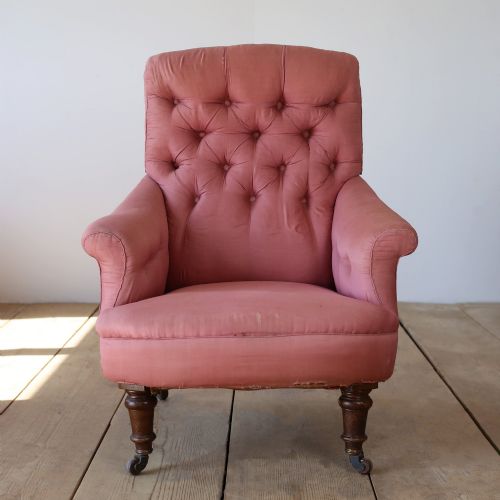
The selection ranges from button-back upholstered armchairs to caned bergères and leather-faced library seats. Each piece reflects the cabinet-making traditions of its specific decade, maintaining the dark timber framework typical of the era.
Indicators of quality
The sophistication of the timber carving and the precision of the frame joinery distinguish finer examples from standard production. Superior pieces exhibit carefully turned mahogany components and robust internal bracing.
The originality of the brass castors and the integrity of the underlying frame construction dictate the standing of an individual chair. Workshops known for high-standard cabinet work naturally elevate the execution of the piece.
Mahogany and Brass Castor Chair Retail Price Guide 2026
Typical asking prices for mahogany and brass castor chair among the pieces listed under this phrase on Sellingantiques today, from the lower quarter to the upper quarter. They describe what is for sale here now, not the wider market.
Listings feature nineteenth-century seating across Georgian, Regency, William IV, Victorian, and Edwardian periods, utilising mahogany, brass, leather, and cane.
Charles Hindley & Sons·Whytock & Reid·Howard and Sons·Morris & Co·Gillows·Holland & Sons
The Mahogany and Brass Castor Chair Glossary
- Bergère
- An enclosed armchair with cane panels or upholstery on the back and sides. This style gained popularity during the eighteenth and nineteenth centuries.
- Castor
- A small wheel fitted to the foot of a piece of furniture for easy rolling. These are typically fashioned from brass on nineteenth-century seating.
- Reeded
- Decorated with parallel convex mouldings carved directly into the timber. This technique appears frequently on mahogany chair legs.
- Slipper chair
- A low-seated upholstered chair designed originally for dressing rooms. They provide a relaxed posture close to the floor.
- Library chair
- A substantial armchair built for reading rooms, often featuring upholstered armrests and leather covers. These pieces prioritize heavy comfort and stable construction.
Mahogany and Brass Castor Chair: Frequently Asked Questions
How do I identify a Regency period chair?
Regency pieces often display classical architectural influences, featuring dark mahogany timber and clean, restrained lines. Look for reeded legs and classical proportions that reflect early nineteenth-century design.
Hardware such as brass castors on these models tends to be robustly cast and neatly integrated into the foot of the chair.
Can these armchairs be used in modern rooms?
These solid mahogany frames fit easily beside contemporary sofas and low tables, bringing dark wood warmth to neutral spaces. Their rolling brass castors make repositioning simple across different layouts.
Many examples feature durable leather or heavy fabric upholstery that withstands daily domestic use without losing structural support.
What is a bergere chair?
A bergere is an upholstered armchair featuring enclosed sides, frequently woven with cane panels rather than stuffed padding. This design creates a lighter visual profile while maintaining firm lateral support.
Such chairs often combine exposed mahogany woodwork with loose seat cushions for flexible comfort.
How should I care for mahogany frames?
Keep mahogany furniture away from direct heat sources and strong sunlight to prevent the timber from drying out or splitting. Dust the wood regularly with a dry cloth to protect the polished surface.
Inspect the brass castors periodically to ensure they roll freely without gathering carpet fibres or dust in the mechanism.