

Mahogany and Brass Armchair
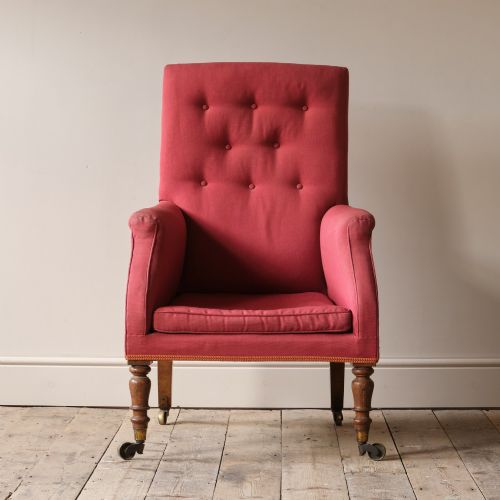
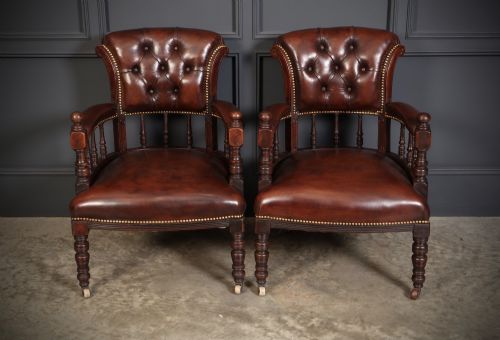
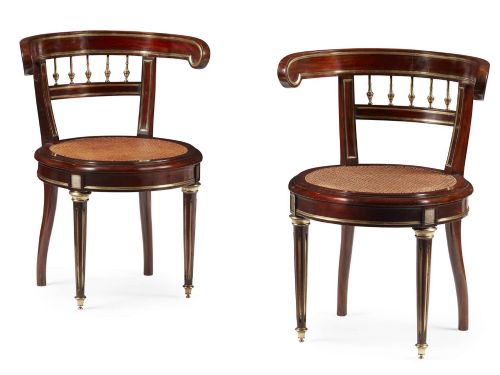
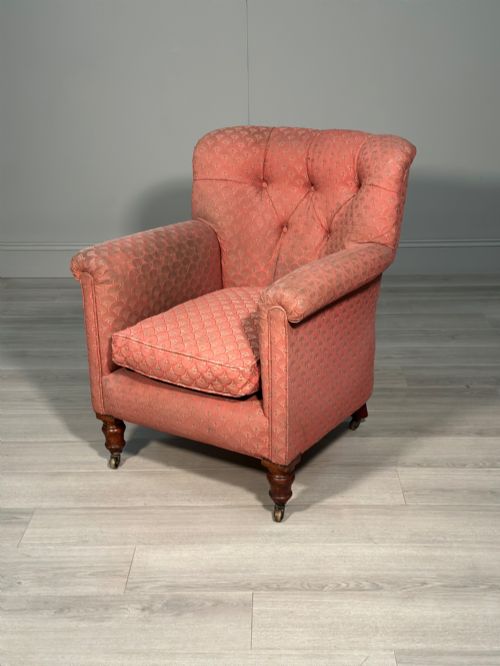
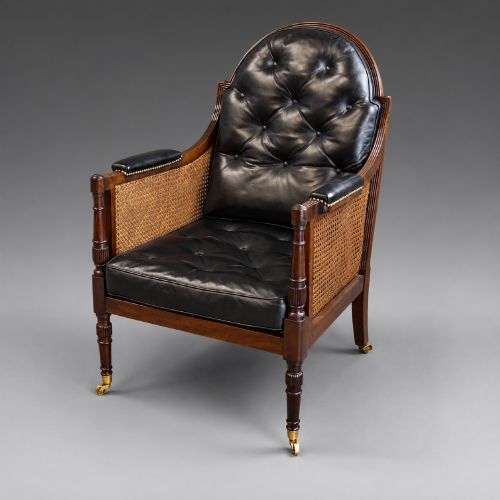
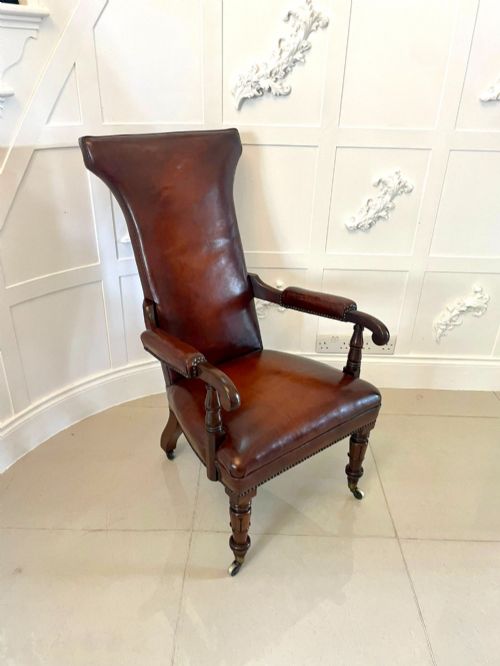
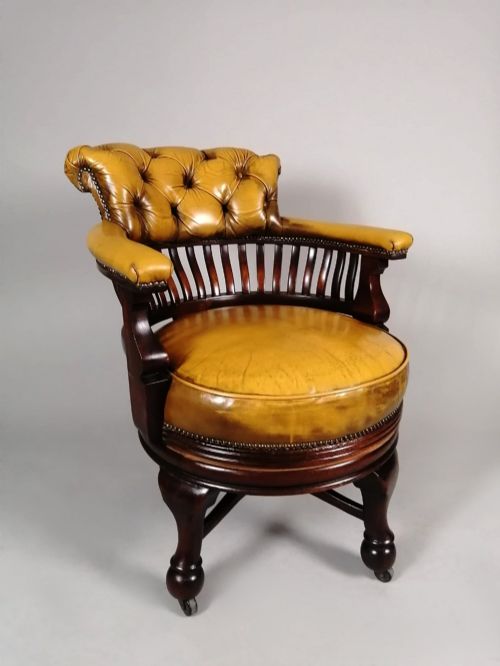
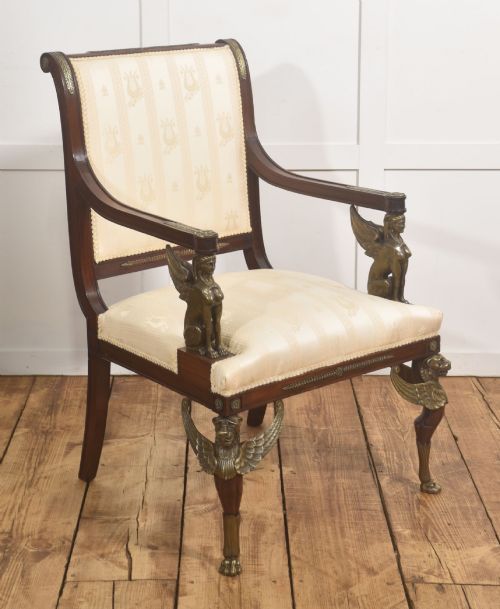
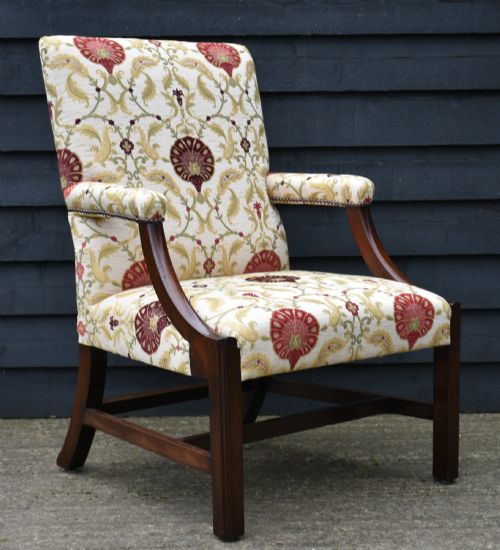
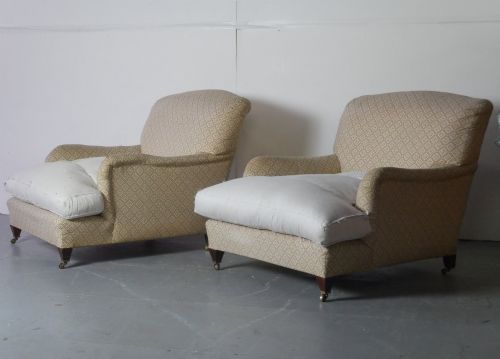
A mahogany and brass armchair brings together rich timber and structural metalwork to anchor a traditional study or library.
Mahogany and Brass Armchair
A mahogany and brass armchair combines solid timber frames with metal casters, mounts, or reading attachments. These seating forms span the Georgian, Regency, and Victorian periods, alongside later revival pieces.
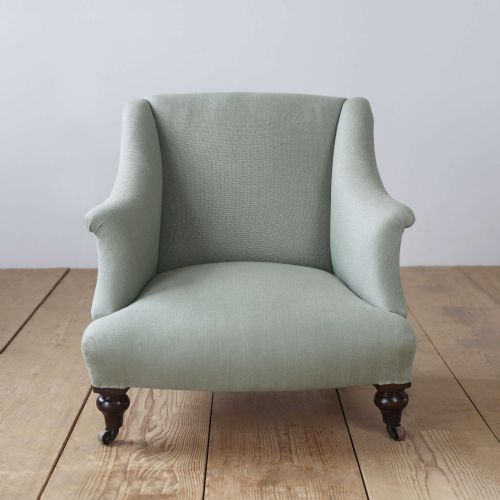
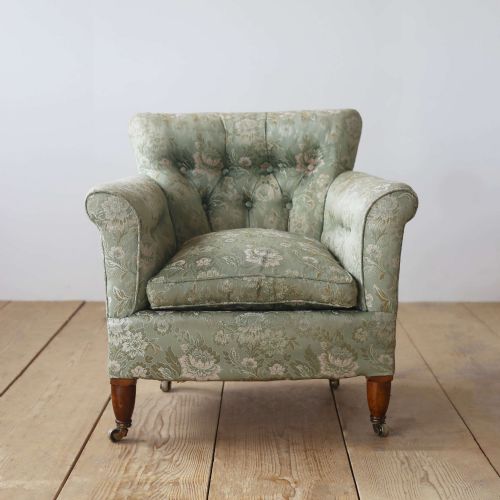
The primary forms on this page include library armchairs, desk chairs, and reading chairs upholstered in leather or various textiles. Pieces range from formal Regency library seats to comfortable country house armchairs.
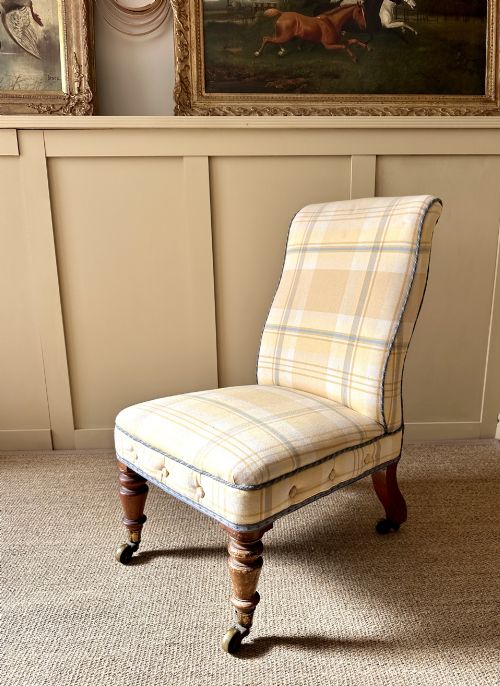
Makers and workshops of the nineteenth century frequently adapted classical proportions for domestic comfort. Examples include revolving desk chairs and compact slipper chairs designed for specific domestic rooms.
Materials and construction
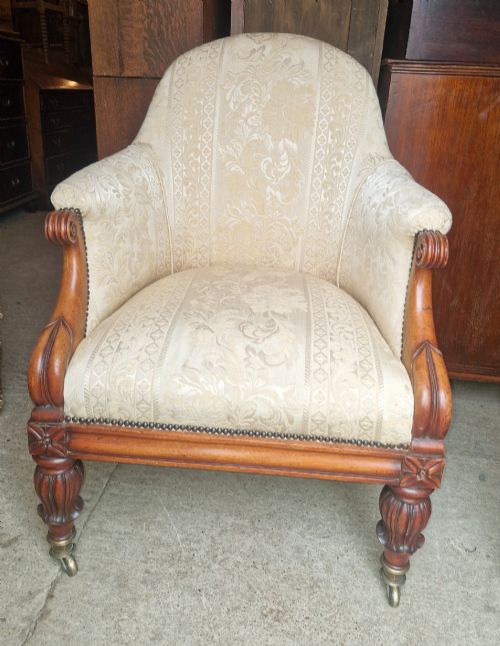
Makers utilised dense mahogany for structural frames, relying on its stability to support heavy carving and secure joinery. Brass components supplied both functional support through castors and decorative accent through studs and mounts.
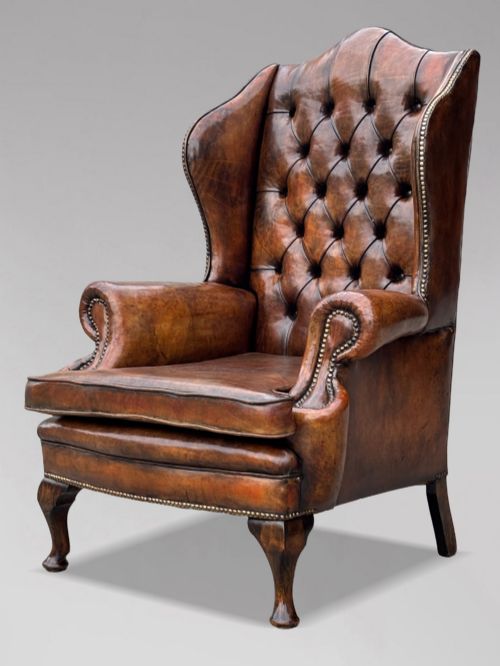
Upholstery materials include buttoned leather, velvet, calico, hessian, and various traditional fabric coverings. Internal webbing and stuffing provided resilient support for library and desk seating.
Mahogany and Brass Armchair Retail Price Guide 2026
Typical asking prices for mahogany and brass armchair among the pieces listed under this phrase on Sellingantiques today, from the lower quarter to the upper quarter. They describe what is for sale here now, not the wider market.
Reading chairs placed the user facing backwards with arms resting on an integrated desk shelf.
Evaluating standard
The standard of a mahogany and brass armchair depends upon the crispness of the timber carving and the weight of the metal fittings. Heavier gauge brass and carefully turned mahogany members distinguish finer workshop production from standard commercial output.
Proportion and integrity of the timber frame dictate desirability among collectors. Original upholstery foundations and untouched mahogany surfaces retain greater historical interest than extensively rebuilt examples.
Charles Hindley And Sons·Whytock And Reid·George Jack For Morris And Co·Gillows
The Mahogany and Brass Armchair Glossary
- Bergère
- An enclosed upholstered armchair with exposed wooden framing around the back and sides. Caned panels frequently replace solid upholstery on these seating forms.
- Gainsborough
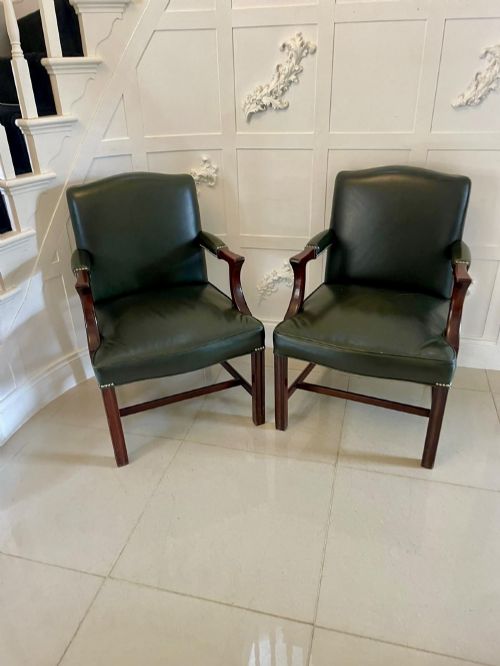
- A wide-seated armchair with padded arms originating in the mid eighteenth century. These library chairs typically feature mahogany frames and leather upholstery.
- Reeded
- A decorative moulding formed of parallel convex strips resembling bundled reeds. Cabinet makers carved these patterns directly into chair legs and structural rails.
- Caster
- A small wheel mounted in a swivel frame attached to chair legs for mobility. Brass forms are standard on nineteenth-century library and desk seating.
Mahogany and Brass Armchair: Frequently Asked Questions
How do I identify a Regency library chair?
Regency library chairs display classical architectural influences with sabre legs and restrained brass mounts. Mahogany frames from this era often incorporate reeded details and scroll arms.
Upholstery on these pieces typically consists of dark leather secured with individual brass tacks. Proportions are designed for upright reading rather than relaxed lounging.
What is a Gainsborough chair?
A Gainsborough chair is a wide armchair designed for writing desks or parlour use during the Georgian period. The open wooden arms allow space for voluminous eighteenth-century clothing.
These chairs feature padded backs and seats supported on mahogany framework with square or carved legs.
Are desk chairs adjustable?
Nineteenth-century desk chairs frequently incorporate mechanical revolving actions mounted on timber or iron spiders. Some examples include pivoting mechanisms or reading stands fixed to the arm.
Height adjustment was less common in this period than simple swivel movement for ease of access at large library tables.
How should I care for leather upholstery?
Leather upholstery requires regular dusting and occasional treatment with appropriate conditioning balms to prevent drying. Avoid placing antique chairs in direct sunlight or near heat sources.
Preserving the original surface patina involves maintaining stable room humidity and gentle cleaning methods.