
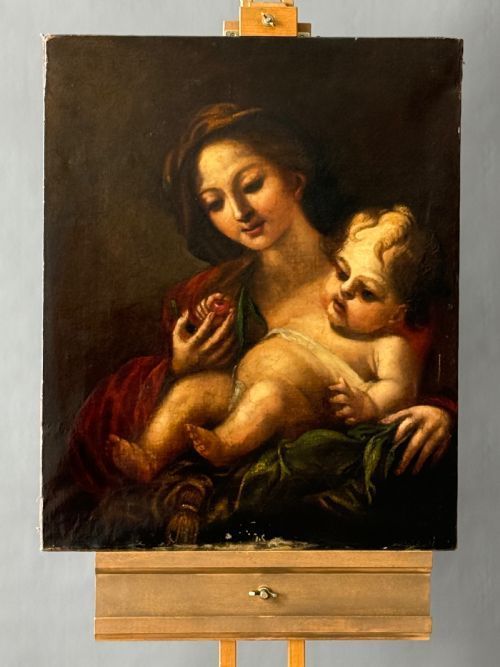
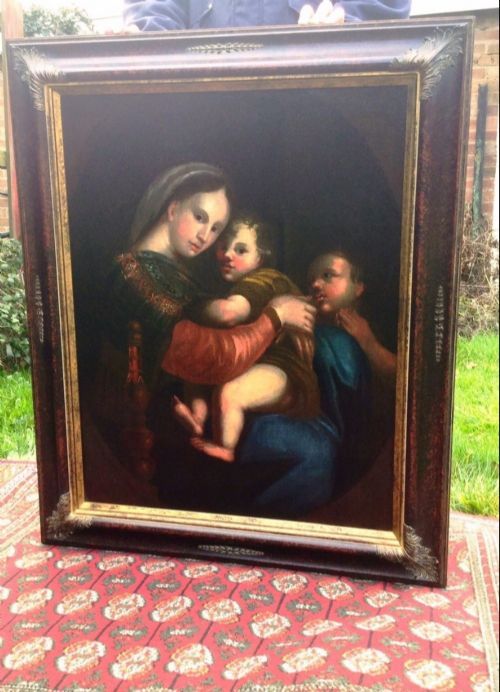
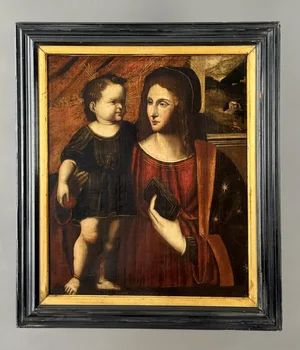
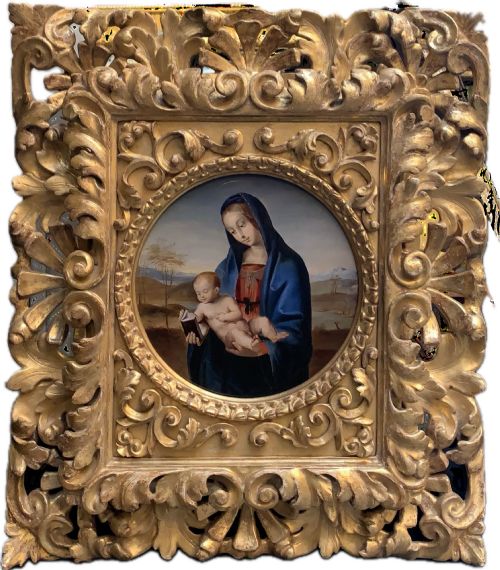
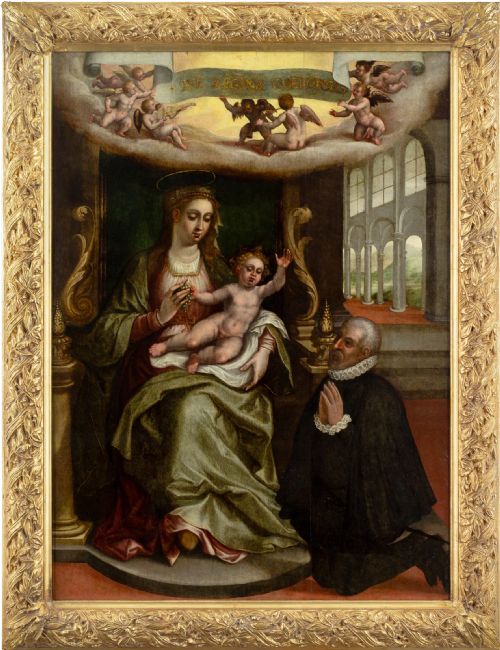


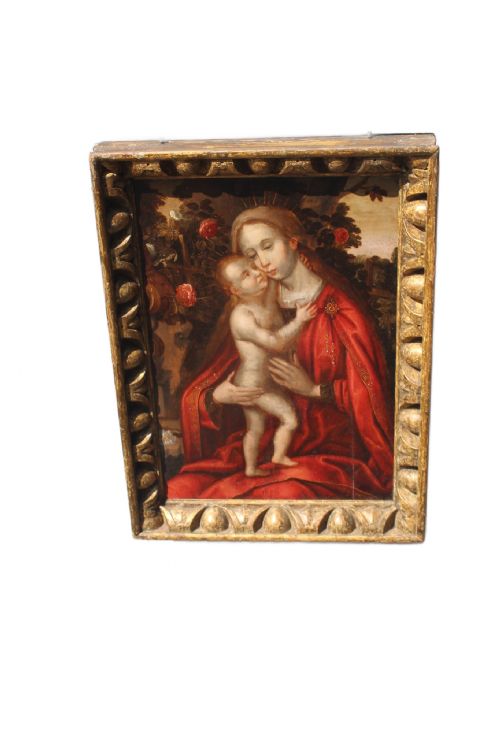

Madonna and Child Portrait
A madonna and child portrait captures centuries of devotion, offering collectors timeless religious imagery rendered in oil on canvas, wood, and gesso.
Madonna and Child Portrait
A madonna and child portrait represents the Virgin Mary and the infant Jesus, appearing in various formats from large devotional canvases to smaller personal items. These works span multiple centuries, capturing distinct stylistic shifts from early religious painting traditions through to later revivals.
On this page, buyers most frequently encounter traditional oil paintings executed on canvas or panel, alongside occasional decorative pieces like silver enamel brooches. The selections reflect both primary artistic periods and later interpretations inspired by Renaissance masters.
The materials and compositions range from grand Italian Baroque oils to Edwardian creations and modernist depictions. This variety allows collectors to find works spanning the sixteenth century up to the mid-twentieth century.
Materials and construction
Painters typically utilised oil on canvas or oil on panel as the primary medium for these religious portraits, often applying rich pigments to build depth and luminosity. Supporting structures frequently incorporated wood frames finished with gesso and gold leaf or giltwood.
Workshops employed traditional layering techniques to capture fine details in drapery and facial expressions, emulating famous Renaissance compositions. Metalwork variations involved silver mounts and delicate enamel work for smaller wearable pieces.
Even the smallest silver brooch can pack enough divine presence to make a saint smile.
Evaluating quality and execution
The integrity of the underlying canvas or panel and the preservation of the original paint surface influence the overall standing of a piece. Finer works maintain their chromatic richness and structural stability across centuries of existence.
Raphael·Miguel Barroso·Francesco Solimena·Bartolomé Murillo
The Madonna and Child Portrait Glossary
- Oil on Canvas
- Pigments mixed with a drying oil applied to a stretched fabric support. This technique became dominant in European painting from the Renaissance onwards, allowing for rich colour blending.
- Gesso
- A plaster-like mixture used as a base coat on wood panels or frames before gilding or painting. It provides a smooth, stable surface for fine artistic work.
- Oil on Panel
- Pigments suspended in oil applied directly to a wooden board. This method was widely used in early European art before canvas gained widespread favour.
- Giltwood
- Wood carved and treated with gold leaf or gold paint to create a decorative metallic finish. It frequently surrounds antique religious paintings.
- Enamel
- Opaque or transparent glass fused to a metal surface through firing. This technique appears in smaller wearable devotional objects.
Madonna and Child Portrait: Frequently Asked Questions
What periods do these portraits cover?
The listings span from the sixteenth century through the seventeenth and eighteenth centuries, extending into nineteenth-century works and Edwardian pieces.
Later examples include twentieth-century interpretations, showing how religious portraiture evolved across different eras.
How were these paintings originally used?
Many oil paintings served as devotional objects in private chapels, homes, or churches to inspire contemplation and prayer.
Smaller items like silver enamel brooches allowed individuals to carry personal religious imagery with them daily.
What is the difference between original and follower works?
Original period paintings are created by known masters or contemporary workshop artists during active historical periods.
Follower works and pieces created after master painters reflect later interpretations and stylistic revivals of famous compositions.
How should I care for an antique oil painting?
Keep religious oil paintings away from direct sunlight, excessive moisture, and rapid temperature fluctuations to protect the canvas and pigments.
Dust surfaces gently with a soft, dry cloth and consult a professional restorer for cleaning.