


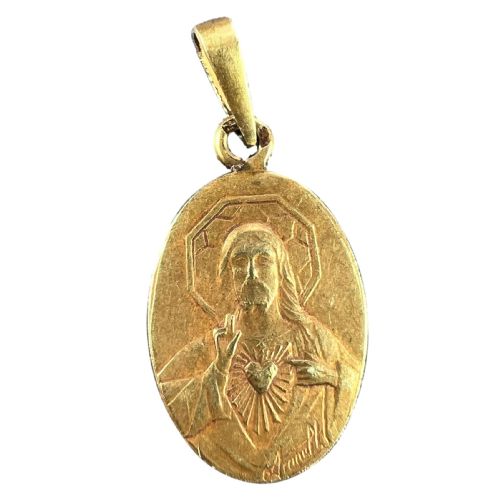
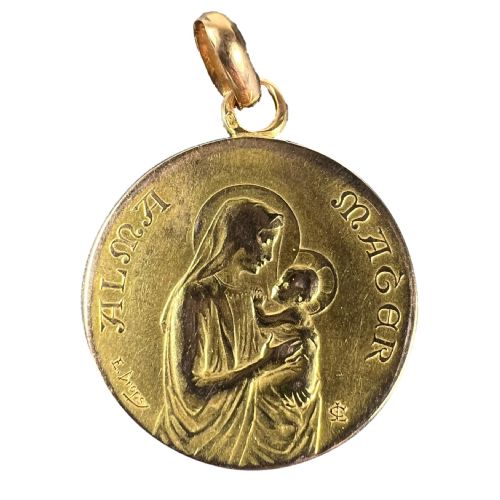


Madonna and Child Pendant
A madonna and child pendant carries centuries of devotional artistry in gold and enamel, offering intimate protection that collectors wear close to the heart.
Madonna and Child Pendant
A madonna and child pendant takes the form of a small religious medal or charm intended to be worn on a chain around the neck. These devotional pieces emerge primarily from French workshops during the early decades of the twentieth century, spanning the nineteen hundreds to the nineteen thirties. The examples you encounter most frequently on this page combine sacred imagery with the distinctive aesthetic movements of the period.
Most pieces combine the traditional iconography of Mary and Jesus with the flowing lines of Art Nouveau or the intricate detailing of French religious art. Formats range from simple round medals to elaborate pendants featuring the sacred heart and enamel work. Every piece reflects the deep connection between personal faith and the decorative arts of early twentieth-century Europe.
Materials and technique
Goldsmiths forge these pendants predominantly in eighteen carat yellow gold, occasionally incorporating rose gold for contrast within the design. The metal is stamped, cast, or hand-engraved to create high-relief depictions of the figures against textured or polished grounds. Enamel work, including translucent plique-à-jour techniques, adds vibrant colour to the garments and haloes.
Master medallists sign many of these works, employing steel dies to strike crisp details into the precious metal before manual finishing and polishing. The integration of devotional symbolism relies on precise miniature sculpture executed by specialist artisans working within French religious jewellery houses.
Madonna and Child Pendant Retail Price Guide 2026
Typical asking prices for madonna and child pendant among the pieces listed under this phrase on Sellingantiques today, from the lower quarter to the upper quarter. They describe what is for sale here now, not the wider market.
Several miniature medals bear the tiny signatures of master French sculptors who managed to fit entire artistic reputations onto pieces smaller than a coin.
What varies in quality
The distinction between standard production and exceptional work rests on the clarity of the sculptural relief and the reputation of the medallist who designed the piece. Finer examples display remarkably sharp facial expressions, delicate drapery folds, and crisp lettering that remain legible despite the miniature scale. Lesser pieces exhibit softer casting lines and shallower depth in the figures.
Enamelling quality further separates the ordinary from the remarkable, particularly where translucent panes catch the light without cloudiness or cracking. The weight of the gold and the finesse of any surrounding floral or geometric framing also indicate the level of craftsmanship invested by the original maker.
Mazzoni·Dropsy·Perriat·Arnault·Oscar Roty·Lavrillier·Vern
The Madonna and Child Pendant Glossary
- Plique-à-jour
- An enamelling technique where the enamel is applied without a backing metal, allowing light to shine through the transparent colours like stained glass. This method demands great skill from the jeweller to prevent the delicate glass panes from fracturing during firing.
- Sacred Heart
- A Christian devotion representing the heart of Jesus as a symbol of divine love, frequently depicted with flames, rays, and a crown of thorns. On these pendants, it appears alongside the figures of Mary and the child as an emblem of spiritual protection.
- Medal pendant
- A wearable devotional token struck like a coin with a suspension loop attached for suspension from a chain. These objects served both as personal amulets and as markers of religious milestones.
- Art Nouveau
- An international style of art and architecture characterised by intricate linework and inspired by natural forms. In these pendants, it manifests in flowing floral borders and organic framing around the central sacred figures.
Madonna and Child Pendant: Frequently Asked Questions
How do I wear a madonna and child pendant?
Suspend the piece from a slender gold chain that allows the medal to rest comfortably against the chest. Many owners choose a chain length that keeps the devotional imagery visible just below the collarbone.
Pair the pendant with similar antique gold chains to maintain the historical character of the piece. Ensure the jump ring or bale is secure before daily wear.
Are these pendants distinctly French?
The vast majority of these devotional pieces originate from France, reflecting a rich tradition of religious jewellery production during the early twentieth century. French assay marks often appear on the jump rings to indicate the gold purity.
Craftsmen in French workshops collaborated with renowned medallists to produce these miniature works of art. This heritage explains the prevalence of French stylistic elements in the surviving pieces.
What is plique-à-jour enamel?
Plique-à-jour translates from French as daylighting, describing an enamel technique that resembles miniature stained glass. Artisans fire transparent enamel within open gold wire cells without a solid backing.
This method allows natural light to illuminate the coloured glass, creating a luminous effect on the pendant. It represents one of the most demanding techniques employed by period jewellers.
How do I clean an antique gold pendant?
Clean the gold gently using warm water, mild soap, and a soft-bristled brush to remove any accumulated oils or dust from the recessed areas. Avoid harsh chemical dips, especially on pieces featuring enamel work.
Dry the pendant thoroughly with a soft cloth before storing it in a lined jewellery box. Regular gentle maintenance preserves the fine details of the sculptural relief.