
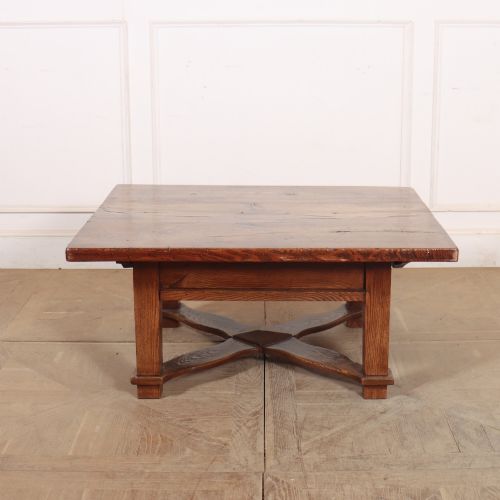
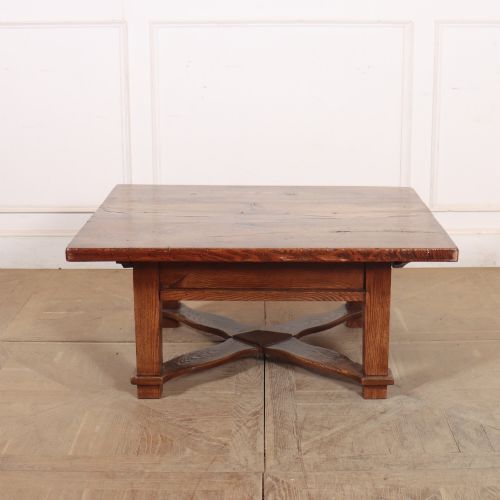


Low Stretcher Table
A low stretcher table gives a room a grounded weight, joining solid timbers like oak and walnut with traditional cross braces.
Low Stretcher Table
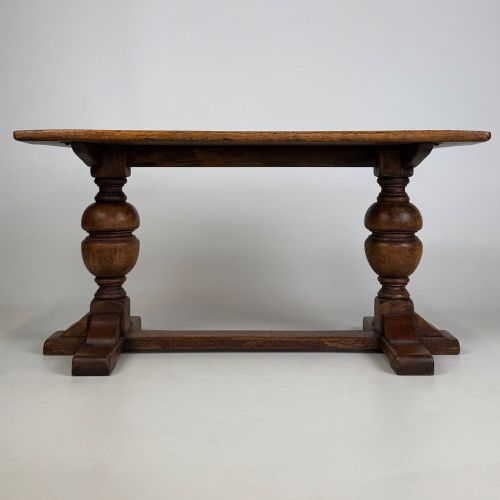
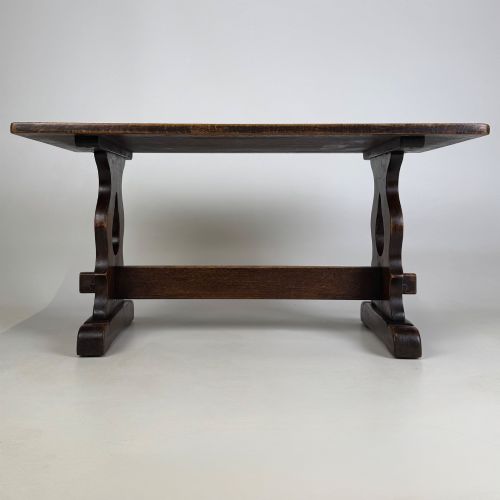
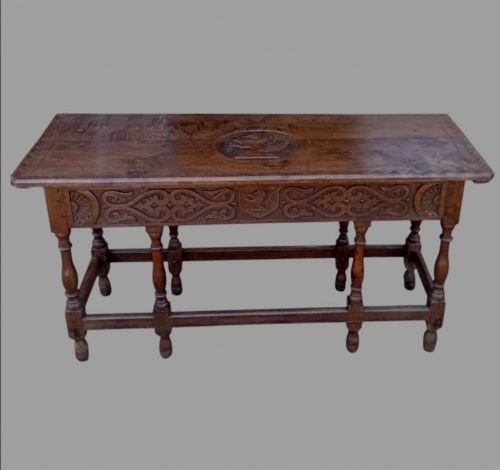
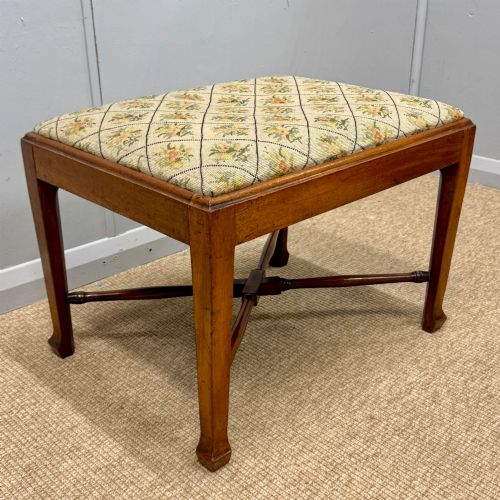
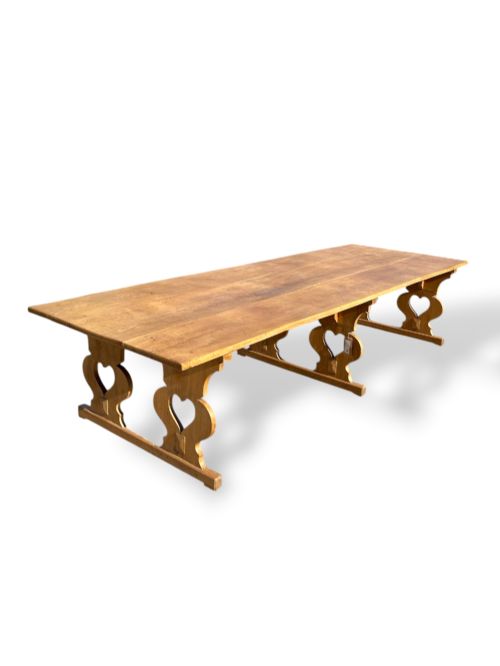
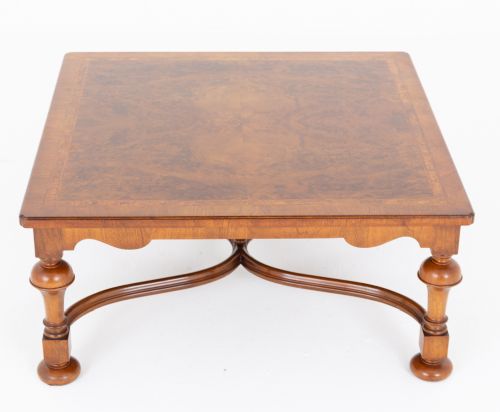
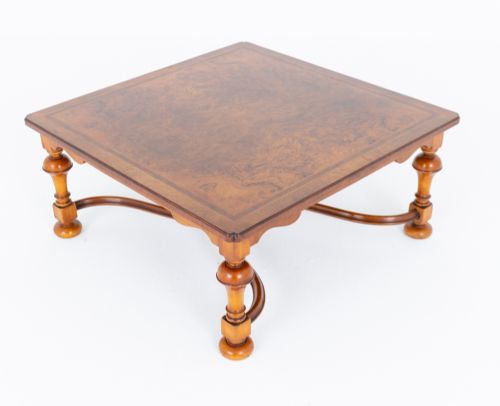
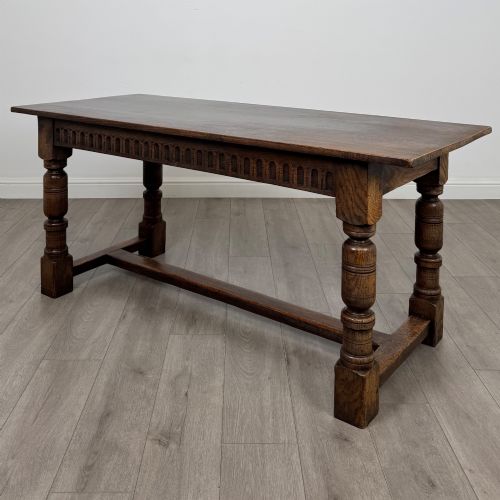
When you search for a low stretcher table, you enter a category defined by supportive underframes that link the legs together close to the floor. These pieces appear in forms ranging from compact coffee tables and side tables to long refectory dining tables and stools.
The selections span centuries of revival and rustic country making, with Edwardian and nineteenth-century examples appearing frequently alongside earlier eighteenth-century prototypes. You will encounter styles drawing on Jacobean, Carolean, and Arts and Crafts traditions.
Materials vary from sturdy English and Welsh oak to rich walnut, elm, and satinwood, occasionally incorporating brass and wrought iron details. These tables serve multiple domestic functions, operating as centre tables, hall tables, or low coffee surfaces in period and eclectic interiors.
Assessing Quality
Quality rests upon the integrity of the timber and the tightness of the joinery within the stretcher frame. Tables that retain their original structural timber without excessive replacement parts demonstrate superior craftsmanship.
The crispness of hand-carved detail and the depth of the polished surface distinguish finer examples from standard production pieces. Proportion and balance between the low stretcher and the top board dictate the overall visual success of the piece.
The documented forms span coffee tables, footstools, side tables, and refectory dining tables linked by low supporting stretchers.
Gillows Of Lancaster
The Low Stretcher Table Glossary
- Stretcher
- A horizontal support beam connecting the legs of a table to add stability. This structural element sits low to the floor in these designs.
- Refectory
- A long dining table style traditionally used in monastic refectories. These tables often feature sturdy stretcher bases for heavy daily use.
- Mortise and tenon
- A joint formed by inserting a shaped projection into a corresponding cavity. This method secures the frame without relying on metal fasteners.
- Carolean
- A seventeenth-century design style associated with the reign of Charles II. Pieces in this revival style often feature rich carving and turned walnut legs.
- Cross stretcher
- An intersecting arrangement of supportive wooden bars linking all four legs near the base. This configuration prevents the legs from wobbling under weight.
Low Stretcher Table: Frequently Asked Questions
How were stretcher tables used historically?
Stretcher systems were originally engineered to prevent unseasoned timber legs from bowing outward under heavy loads in domestic and institutional settings. Over time, lower tables adapted these functional braces into decorative elements for halls and parlours.
They served as stable surfaces for dining, writing, or displaying objects in period homes, utilising the cross framing to keep the entire structure firm.
How do I identify an older table?
Dating relies on examining the timber species, joinery techniques, and tool marks visible on the underside of the top and within the frame. Hand-cut peg joints and patinated surfaces point toward earlier periods of construction.
Revival pieces from the nineteenth and twentieth centuries often emulate these older construction methods while utilising machinery appropriate to their manufacturing era.
Will a low stretcher table fit a modern room?
These tables adapt well to contemporary spaces due to their low profile and warm timber tones, providing a practical surface for living areas. Their varied forms, from narrow side tables to wide coffee tables, suit different room layouts.
The mix of turned wood, brass, or iron details allows them to anchor both traditional period interiors and streamlined modern settings.