
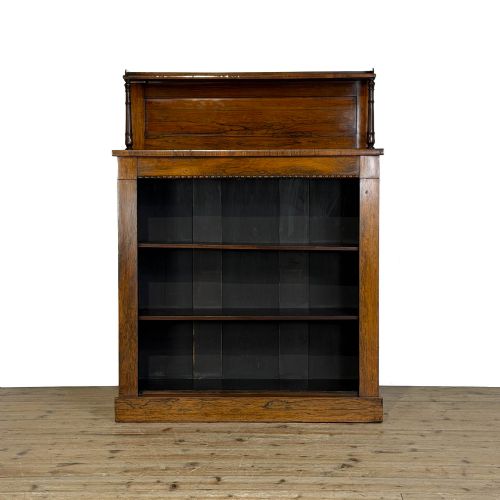
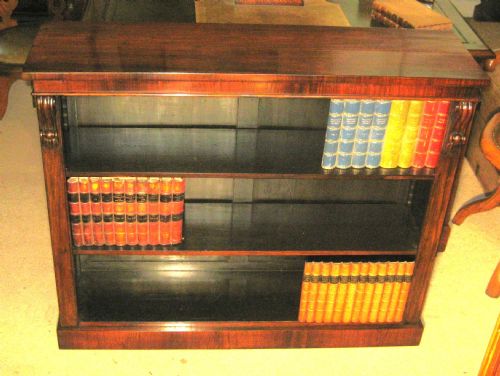
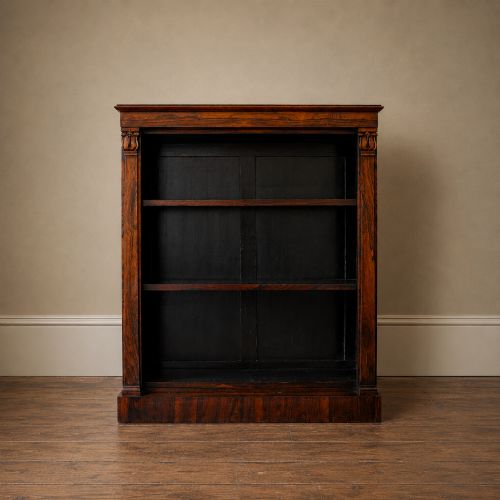
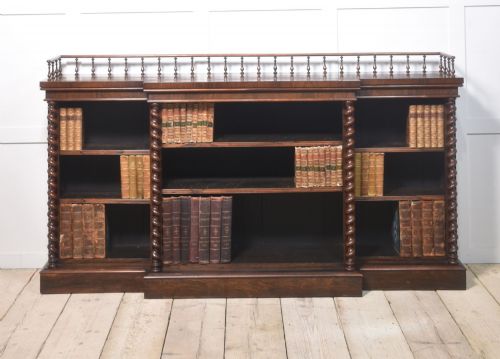

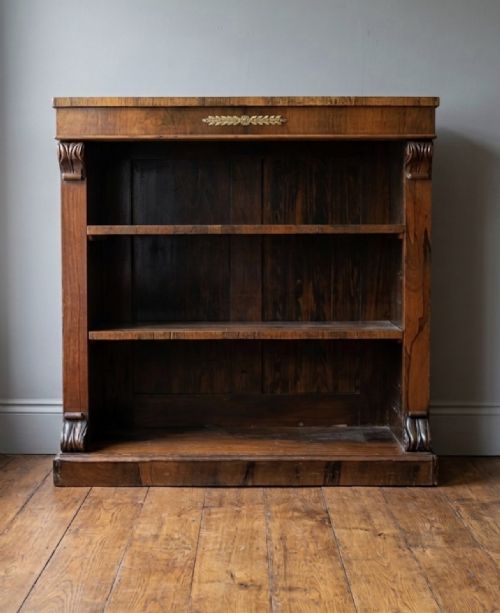


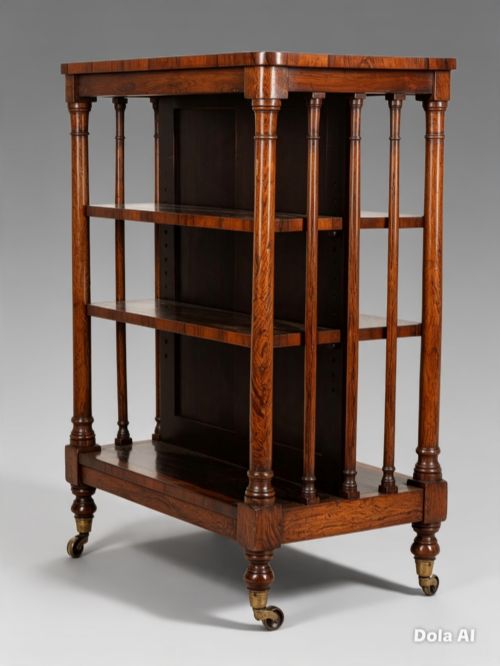

Low Rosewood Shelf Unit
A low rosewood shelf unit brings rich grain and practical display height to a room, offering open access to books and objects.
Low Rosewood Shelf Unit
A low rosewood shelf unit comprises open bookcases, chiffoniers, and waterfall styles designed for domestic display and storage. These pieces predominantly date from the nineteenth century, encompassing Regency, Victorian, and William IV periods.
The format usually stays low to the floor, often featuring adjustable shelves and occasional marble tops. Examples range from simple open front designs to breakfront configurations and brass inlaid pieces.
Origins span standard British cabinetmaking to Anglo-Indian carved variants and simulated paint finishes from the early nineteenth century. Buyers encounter single items as well as matched pairs suited to flanking a fireplace or window.
How they were made
Cabinetmakers utilised solid timbers alongside rosewood veneer applied over secondary woods such as pine and oak. The rich grain of the rosewood forms the visual foundation of each cabinet.
Decoration often involved brass inlay integrated into the timber surfaces, alongside structural additions like pink marble tops, mirror glass, and giltwood accents. Carved details appear on specific regional variants such as Anglo-Indian pieces.
Early nineteenth-century makers occasionally simulated timber grain with paint when genuine rosewood proved too costly.
What varies in quality
Quality rests in the selection and bookmatching of the rosewood grain across the visible surfaces of the cabinet. Finer examples display meticulous brass inlay and well-executed structural details like breakfront facades.
Secondary materials and internal mechanics, such as the mechanism for adjustable shelving, separate standard utility pieces from high-status workshop production. The integration of quality components like pink marble tops further elevates the stature of a piece.
The Low Rosewood Shelf Unit Glossary
- Rosewood
- A dense, heavily figured timber prized for its dark grain and polished finish. It served as the primary surface material for fine nineteenth-century cabinetmaking.
- Veneer
- A thin layer of superior wood applied over a secondary timber base to create decorative surfaces. Cabinetmakers utilised rosewood veneer to achieve rich visual patterns economically.
- Breakfront
- A cabinet design where the central section projects forward from the flanking wings. This architectural form adds depth and formal presence to low bookcases.
- Waterfall bookcase
- A set of open shelves that steps back progressively from bottom to top, creating a terraced profile. This form appeared in Regency period design.
- Chiffonier
- A low cabinet equipped with shelves or enclosed storage, developed during the nineteenth century. These items combined display functions with modest storage capacity.
Low Rosewood Shelf Unit: Frequently Asked Questions
Are the shelves adjustable?
Many nineteenth-century examples include adjustable shelving systems supported by wooden bearers or brass pins. This allows the internal height to adapt to varying book sizes.
Buyers should inspect the interior uprights to see if the original adjustment mechanisms remain intact.
How do I care for rosewood?
Rosewood surfaces respond best to regular dusting with a soft, dry cloth. Avoid placing these cabinets in direct sunlight or near heat sources to prevent the timber and veneer from drying out.
Applying occasional specialist wax helps maintain the natural lustre of the polished grain.
Can these units hold heavy books?
The solid construction and sturdy timber shelves of these cabinets provide reliable support for standard volumes. However, very heavy folios can cause timber shelving to bow over extended periods.
Distributing weight evenly across the shelf helps preserve the original timber.
What is an Anglo-Indian shelf?
Anglo-Indian pieces reflect nineteenth-century design exchange, featuring distinct carved ornamentation executed in rosewood. These items combine British furniture forms with traditional South Asian carving techniques.
They offer a more decorative alternative to standard domestic Regency and Victorian models.
How do I identify a Regency piece?
Regency items typically date from the early nineteenth century and often feature classical proportions, brass inlay, or waterfall shelving profiles. Cabinetmakers of this era favoured clean architectural lines alongside rich timber grains.
Examining the construction methods and hardware helps confirm the period of manufacture.