



Low Oak Footstool
A low oak footstool brings solid timber and traditional joinery to the hearth, offering a practical seat or footrest grounded in centuries of British craft.
Low Oak Footstool
A low oak footstool is a compact domestic seating piece designed for use near the fire or alongside larger chairs and benches. When you search for low oak footstool, you encounter forms ranging from rustic country joint stools to upholstered Victorian and Arts and Crafts examples.
The pieces on this page span several centuries, drawing heavily on nineteenth-century vernacular furniture, Georgian proportions, and early vernacular traditions. Makers utilised sturdy native timbers to build functional items that have survived generations of daily domestic use.
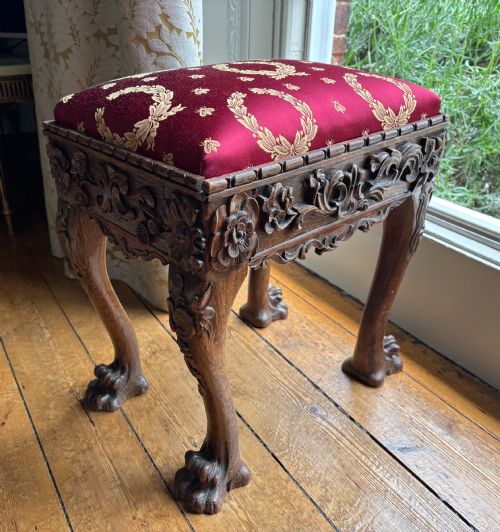
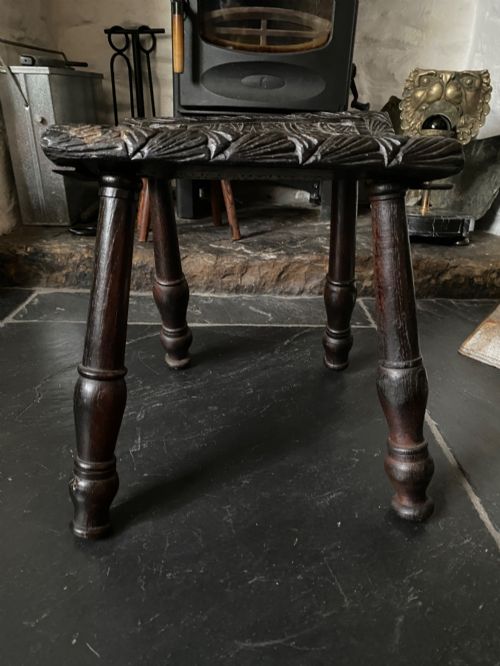
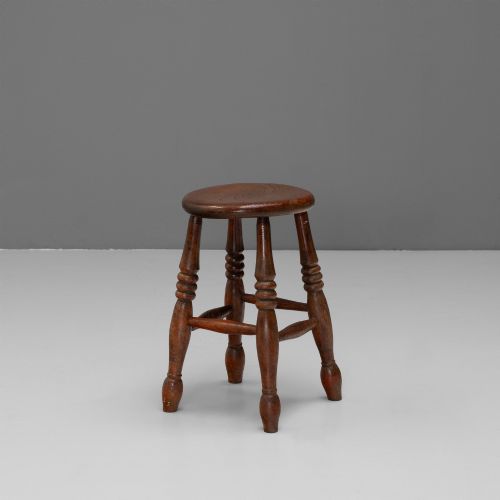
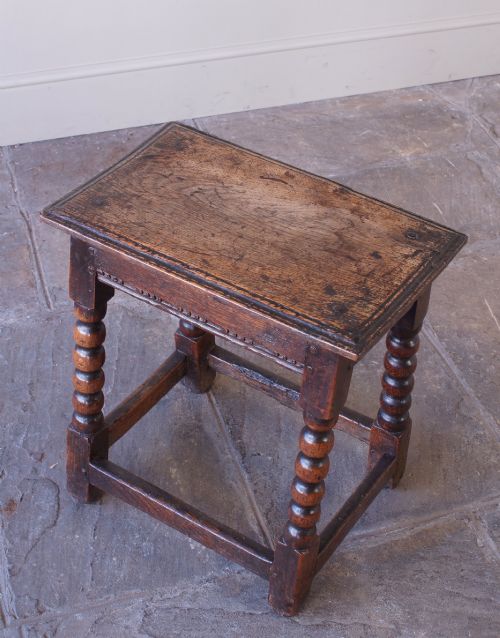
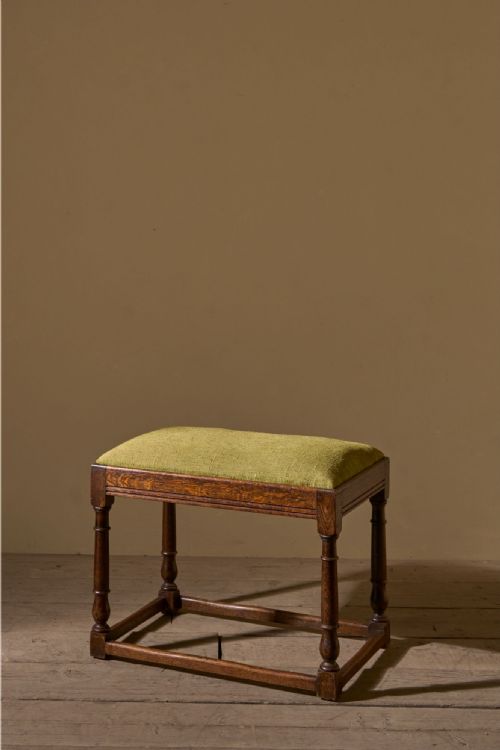
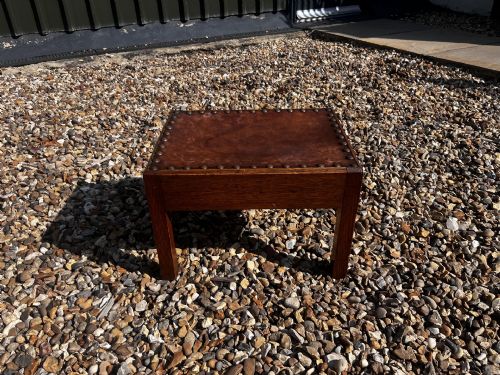
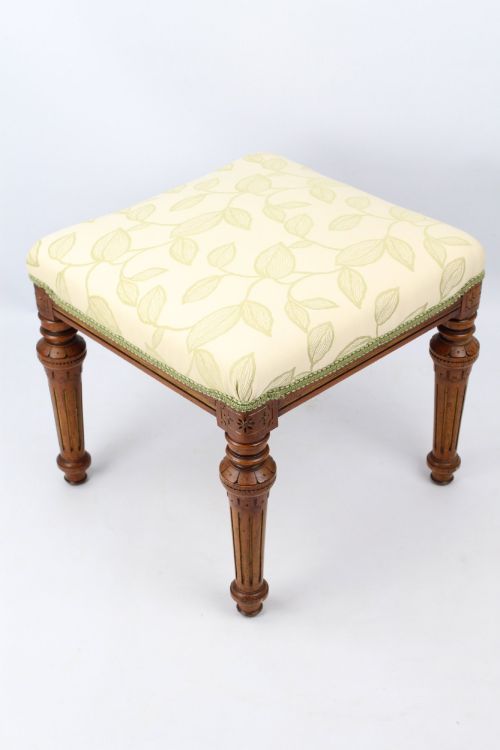
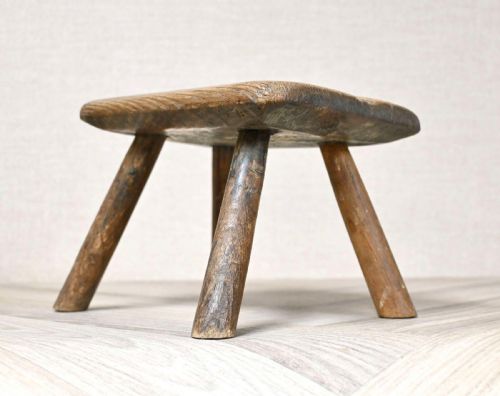
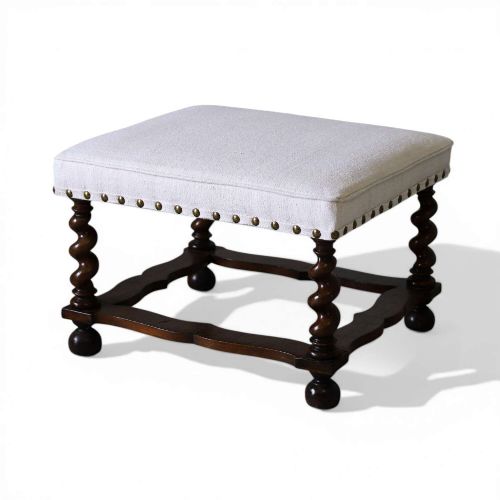
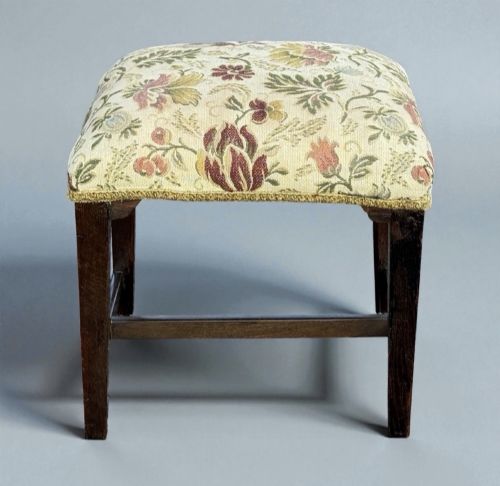
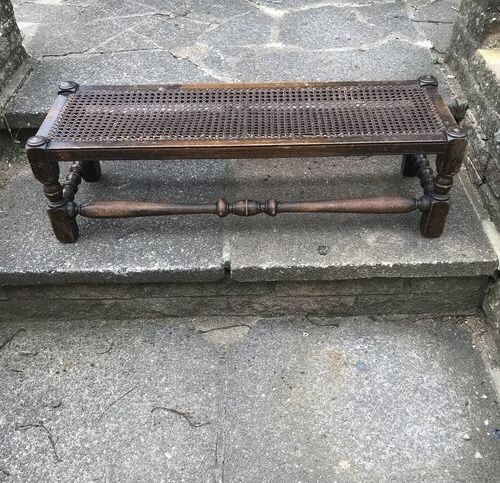
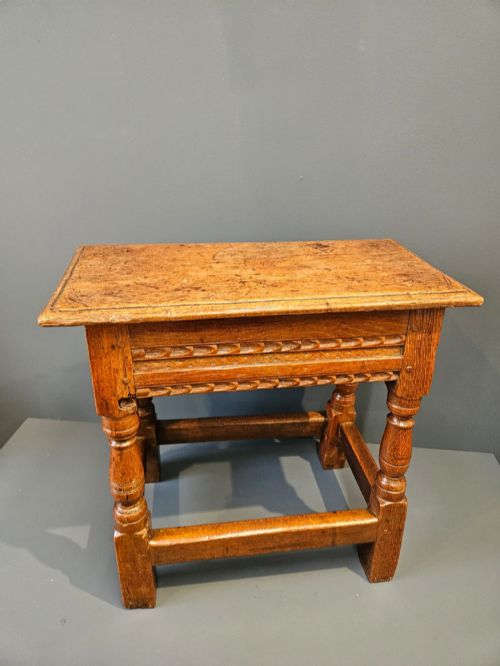
Forms include joint stools, square jointed frames, long cane-topped benches, and low hearth stools upholstered in heavy linen or leather. Many feature turned legs, stretchers, or carved details characteristic of regional English cabinet-making and workshop production.
How they were made
Constructed primarily from solid oak, these stools often incorporate secondary hardwoods, elm, or fruitwood for structural integrity. Traditional joinery such as mortise and tenon joints secure the frames, ensuring long-term durability without reliance on metal fasteners.
Upholstered versions layer traditional stuffing materials beneath covers of heavy linen, leather, or woven cane. Surfaces are finished with turned supports, barley-sugar legs, or hand-carved details executed by regional artisans and workshops.
Low Oak Footstool Retail Price Guide 2026
Typical asking prices for low oak footstool among the pieces listed under this phrase on Sellingantiques today, from the lower quarter to the upper quarter. They describe what is for sale here now, not the wider market.
Listings feature oak, elm, brass, leather, and cane across periods spanning the seventeenth century to Art Deco.
What varies in quality
The distinction between standard vernacular work and finer pieces lies in the crispness of the turning, the tightness of the joinery, and the integrity of the timber. Maker attribution, such as documented pieces from notable Arts and Crafts workshops, elevates historical interest.
Arthur Simpson Of Kendal·Jack Grimble·Harry And Lou Epstein
The Low Oak Footstool Glossary
- Joint stool
- A solid wooden stool constructed with mortise and tenon joints pegged together, common in sixteenth and seventeenth-century households. These sturdy items served multiple domestic purposes before upholstered seating became widespread.
- Stretchers
- Horizontal wooden bars connecting the legs of a stool to provide structural rigidity and stability. They often feature simple turnings or decorative mouldings that help date the piece.
- Oyster-veneered
- A decorative surface treatment created by slicing branch wood transversely to produce circular or oval patterns resembling oyster shells. This technique appeared on high-status seventeenth-century and revival furniture.
- Cabriole legs
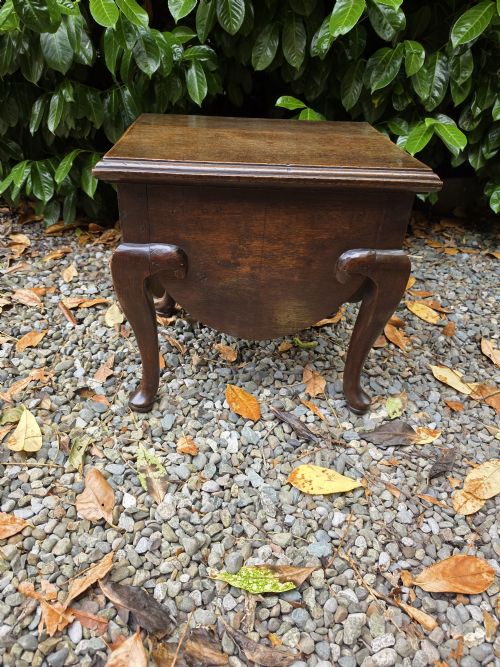
- S-shaped legs curving outward at the knee and tapering inward toward the foot, inspired by animal forms. This design gained prominence during the Georgian period.
- Turned legs
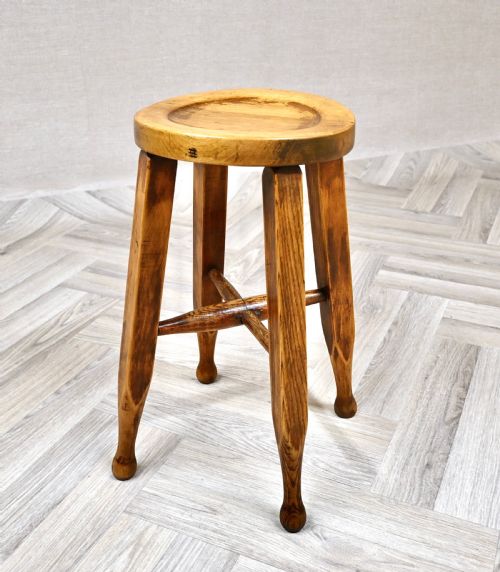
- Wood shaped on a lathe to create cylindrical, barley-sugar, or baluster profiles. Cabinet-makers utilised this method to add decorative flair to structural supports.
Low Oak Footstool: Frequently Asked Questions
How do I use a low oak footstool today?
These compact pieces function well as fireside footrests, low seats in hallways, or occasional stands for plants and books.
Their sturdy timber construction allows them to withstand daily placement beside modern sofas or armchairs.
Are these stools comfortable for sitting?
Many examples feature flat wooden tops intended for utilitarian sitting or heavy linen and leather upholstery over supportive padding.
Upholstered hearth stools provide a softer seat, while plain joint stools offer firm, upright support.
How do I distinguish a joint stool from a standard stool?
A joint stool relies on pegged mortise and tenon joinery rather than glued or nailed assembly, creating a rigid architectural frame.
This specific method of framing gives the piece its name and ensures exceptional load-bearing strength.
What periods do these oak stools represent?
The selection spans from seventeenth-century vernacular pieces through Georgian proportions to Victorian country items and twentieth-century Arts and Crafts revivals.
Revival pieces from the nineteenth and early twentieth centuries often replicate earlier seventeenth-century forms with notable accuracy.
How should I care for antique oak furniture?
Maintain the wood by applying traditional beeswax sparingly and buffing with a soft cloth to preserve the natural patination.
Keep oak pieces away from direct heat sources and dramatic humidity shifts to prevent timber splitting.