
Low Oak Cupboard
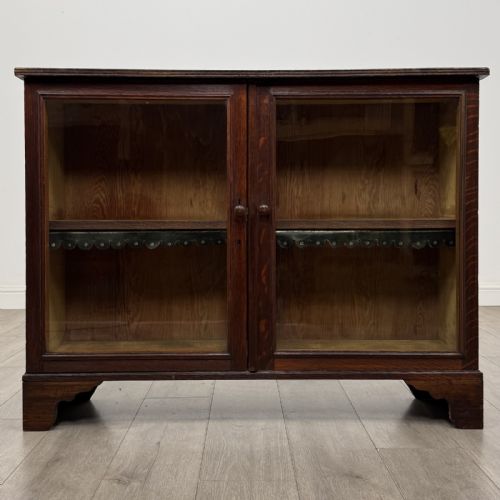
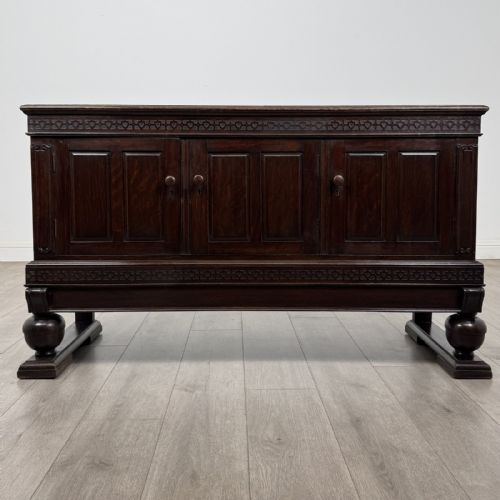
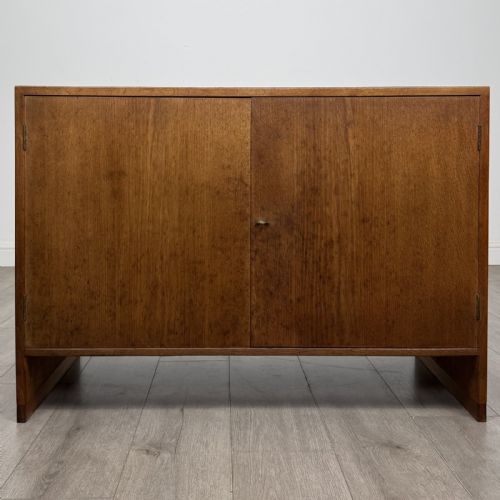
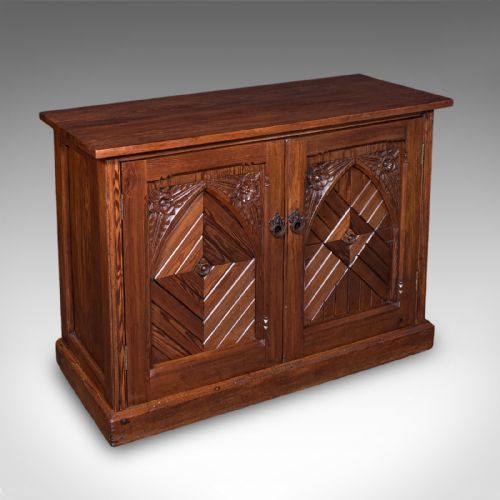
A low oak cupboard brings grounded warmth and practical storage to a room, offering heavy timber construction and centuries of utilitarian design.
Low Oak Cupboard
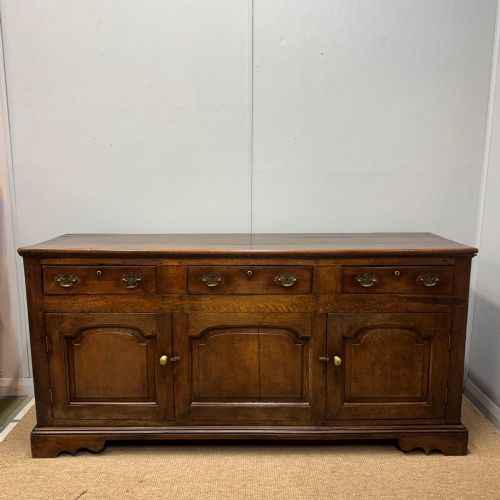
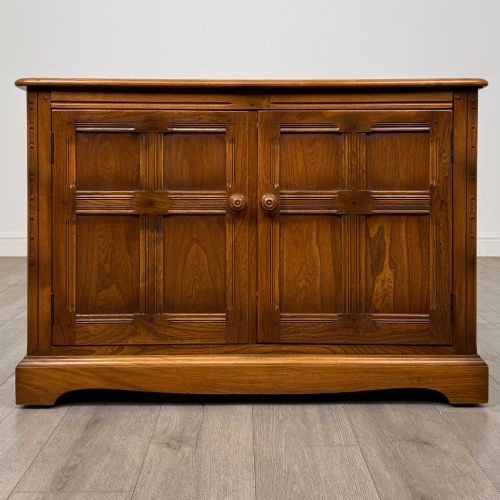
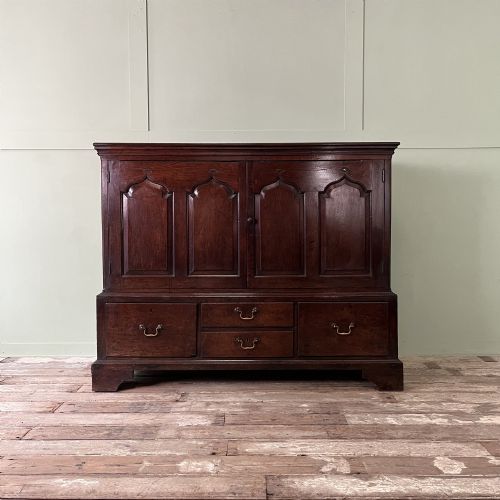
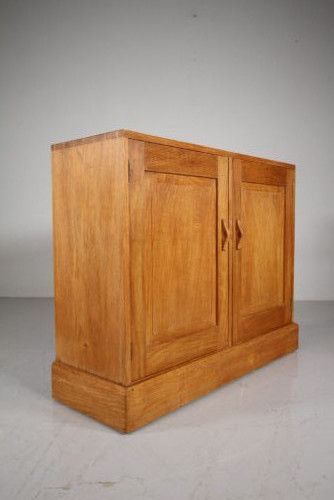
A low oak cupboard encompasses a variety of sturdy storage furniture designed to sit low against a wall, frequently taking the form of dresser bases, sideboards, press cupboards and dwarf cabinets.
Buyers searching for a low oak cupboard encounter items spanning several periods, with Georgian and 18th-century country pieces appearing alongside Edwardian, Victorian, Arts and Crafts and 1920s reinterpretations.
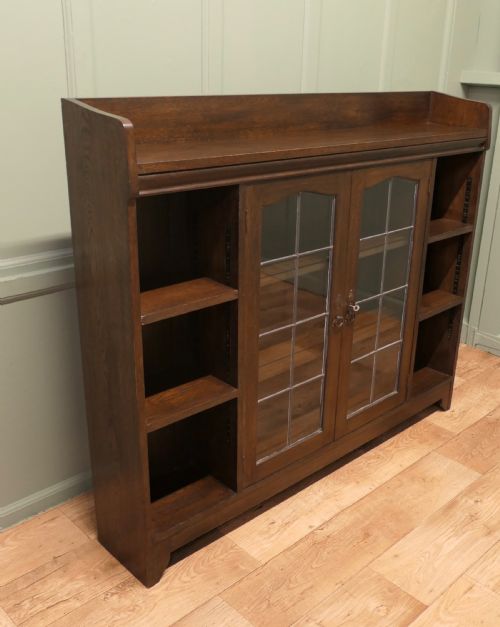
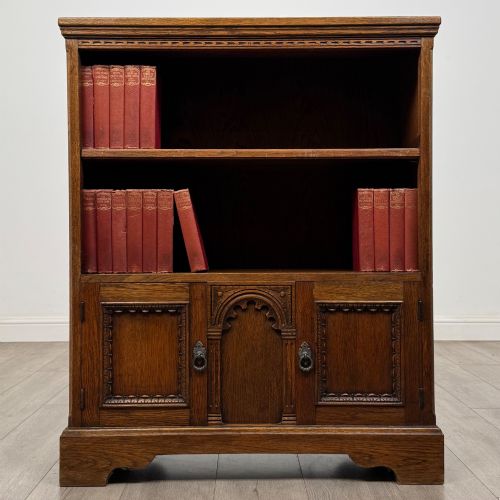
Functionally, these low storage pieces serve as sideboards in dining rooms, low bookcases in studies, or practical cabinets in hallways, combining enclosed shelving with surface display space.
How they were made
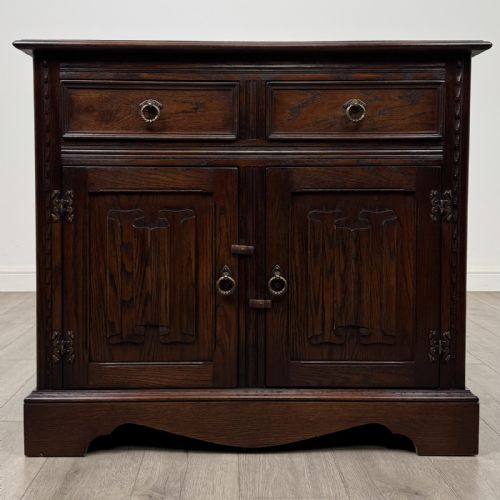
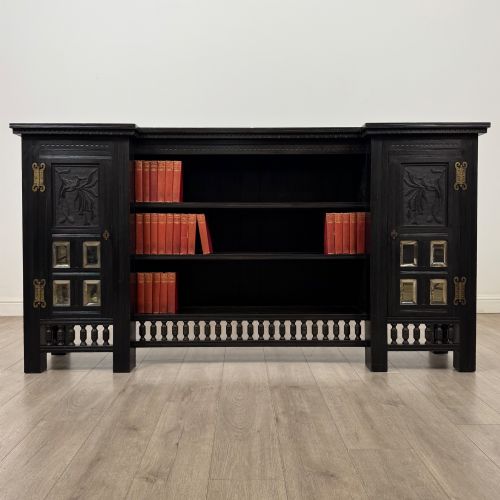
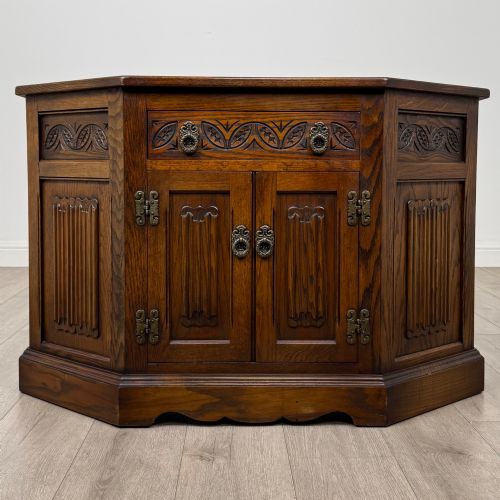
Construction relies heavily on solid oak timber, sometimes paired with secondary woods like pine or enriched with burr elm marquetry, ebonised wood details and linenfold carving on the doors.
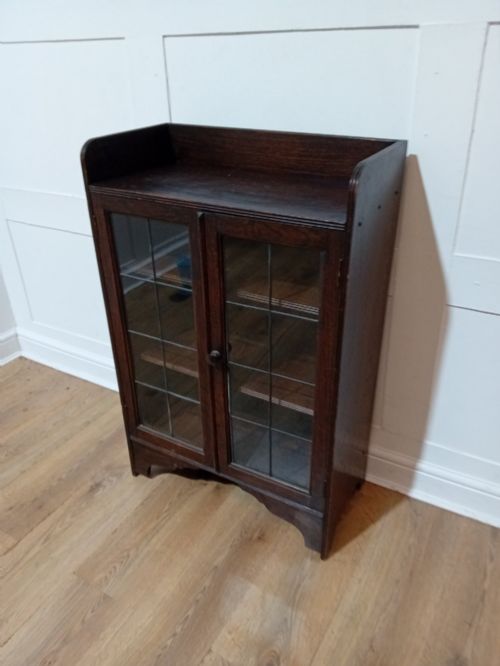
Hardware details such as brass handles and iron fittings complement the heavier timber frames, while glazed doors or open shelving appear on specific bookcase and cabinet hybrids.
Keep an eye out for the occasional carved Green Man peering out from beneath the timber grain on early 19th-century Welsh dresser bases.
What varies in quality
Quality rests on the depth of the timber's grain, the crispness of hand-carved elements like linenfold panels or Green Man motifs, and the integrity of the original construction rather than applied decorative flourishes.
Finer examples demonstrate balanced proportions, integrated galleries, and well-fitted doors that maintain their alignment across centuries of domestic use.
Liberty
The Low Oak Cupboard Glossary
- Dresser base
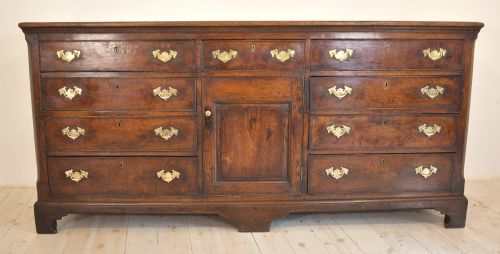
- A low wooden sideboard or table featuring drawers and cupboards beneath a surface, historically used for food preparation and serving. These pieces form a significant portion of early low storage furniture.
- Linenfold
- A style of wood carving that mimics the appearance of folded linen drapery, commonly seen on cupboard and cabinet doors from the Tudor period onwards. It provides subtle texture to flat wooden panels.
- Enfilade
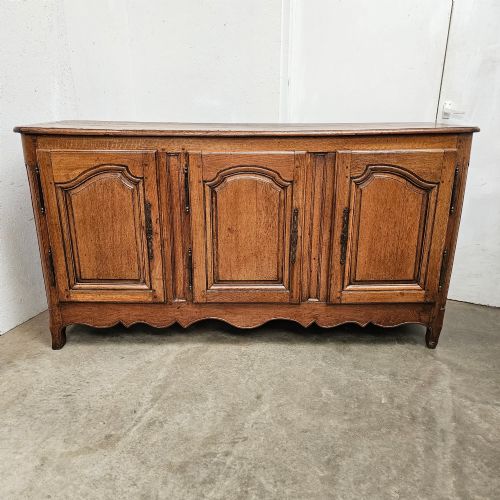
- A suite of rooms or a long cabinet with a row of three or more doors, often seen in French provincial furniture. This form offers expansive low storage along a single elevation.
- Press cupboard
- A tall or low piece of furniture designed for storing folded clothes or linen, combining enclosed shelving with lower compartments. Welsh and English regional variations frequently feature compact proportions.
- Gallery
- A raised protective edge running along the top surface of a cabinet or dresser base, intended to keep items from sliding off. Edwardian and Georgian pieces frequently incorporate carved or wooden galleries.
Low Oak Cupboard: Frequently Asked Questions
Where should I place a low oak cupboard?
These versatile pieces suit dining rooms as sideboards, hallways for everyday storage, or living areas beneath windows.
Their reduced height allows them to sit comfortably beneath artwork or mirrors without overwhelming the wall space.
How do I care for antique oak furniture?
Maintain the wood by applying natural beeswax periodically and avoiding direct sunlight or excessive heat sources.
Keep humidity levels stable to prevent the solid timber from splitting or warping over time.
What is the difference between a dresser base and a sideboard?
A dresser base originates from working country kitchens and typically offers deeper proportions with practical drawers and lower cupboards.
Sideboards evolved primarily for formal dining rooms to serve food and display silver, though the terms often overlap in antique listings.
How can I tell a Georgian cupboard from a later revival piece?
Examine the construction methods inside the drawers and cabinet backs, noting hand-cut joints and timber ageing consistent with the eighteenth century.
Revival pieces from the Edwardian era or the 1920s often employ machine-assisted uniformity while imitating earlier Tudor or Georgian styles.