
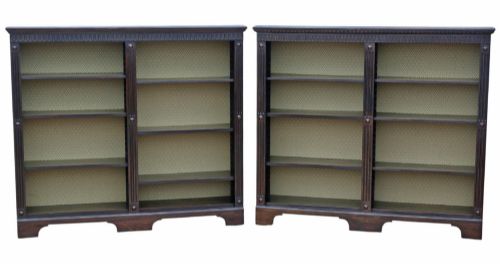
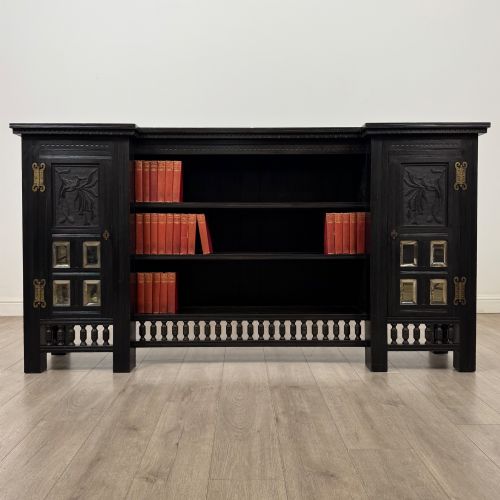
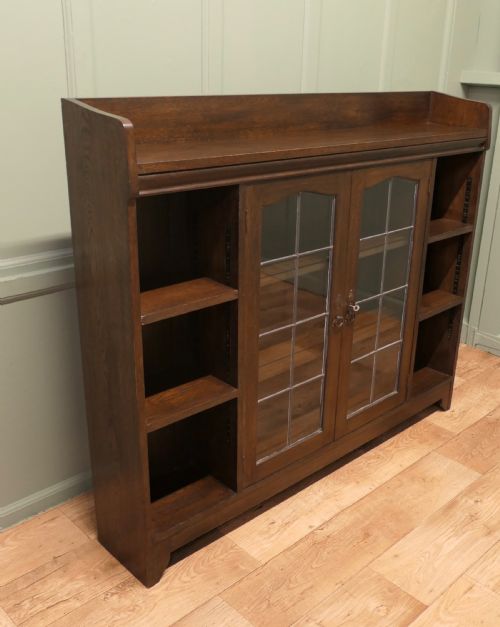
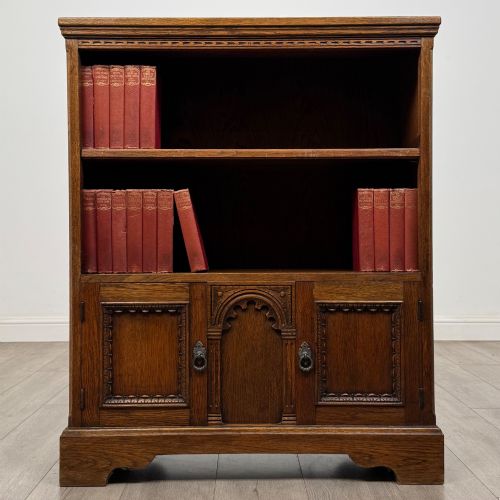
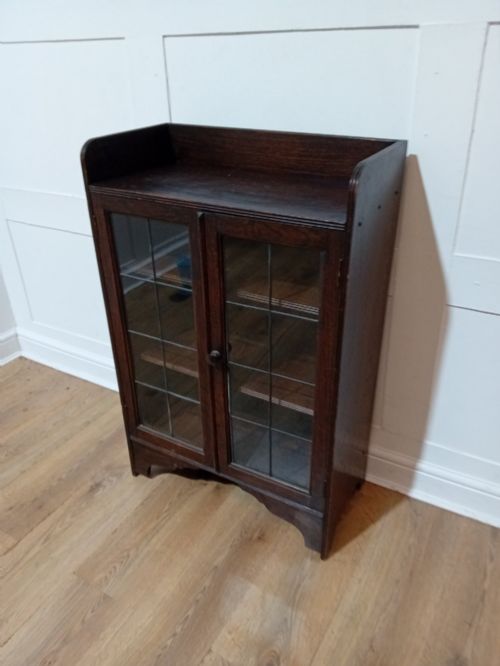
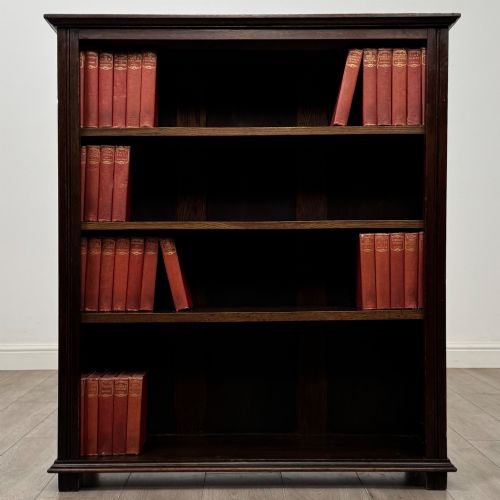
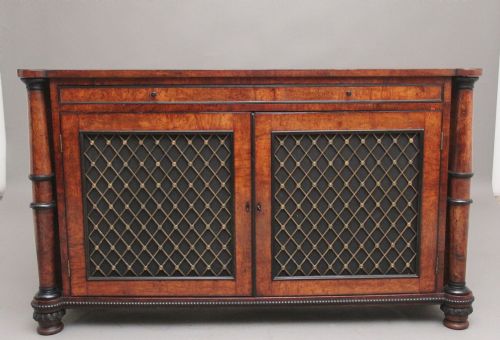
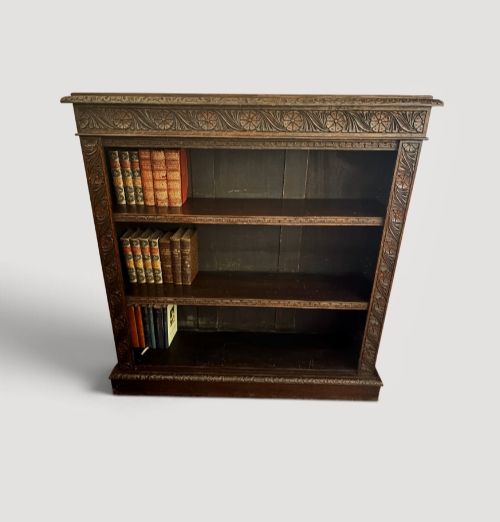
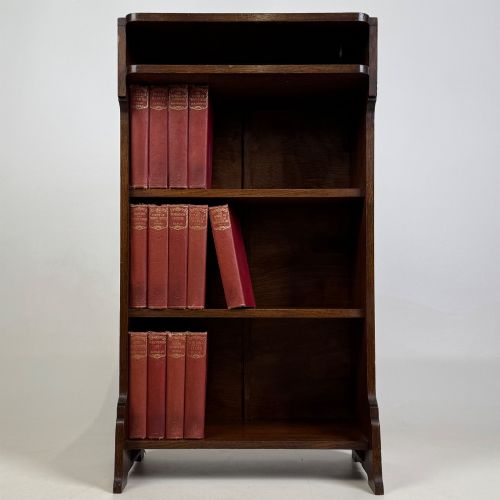
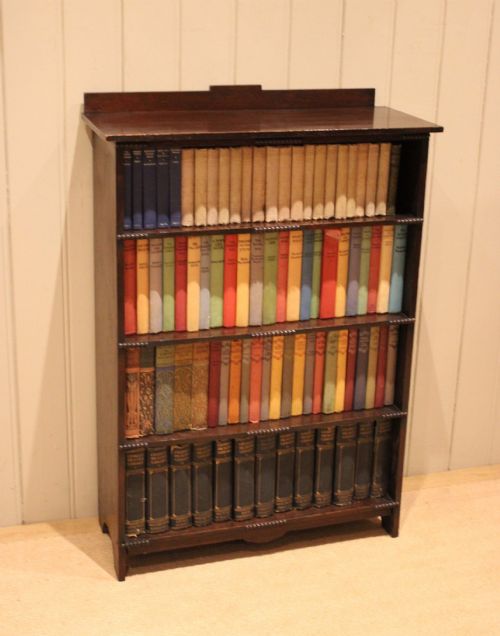
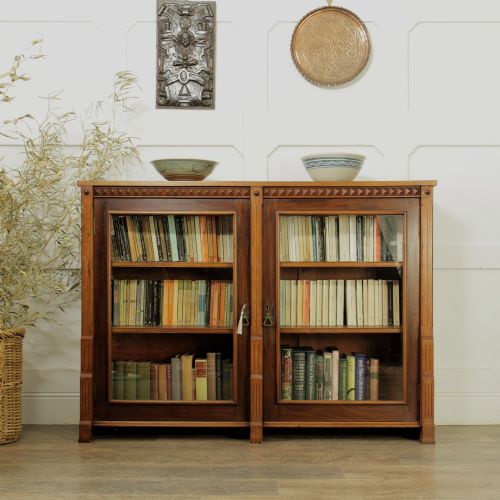
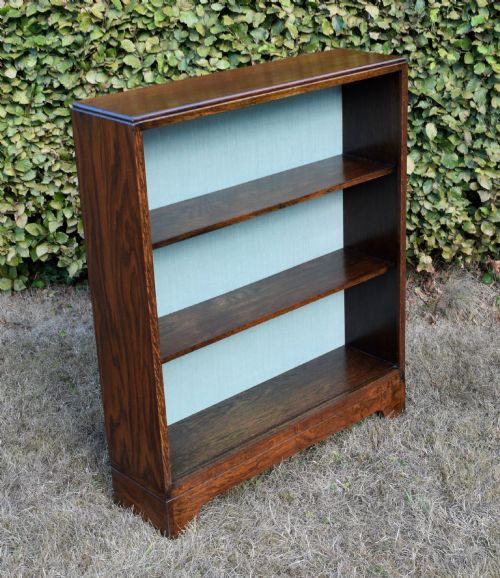
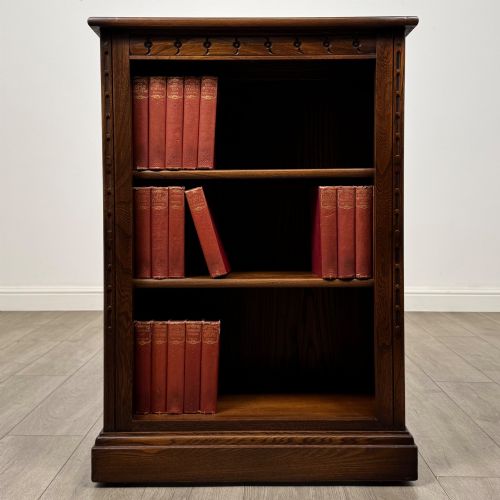
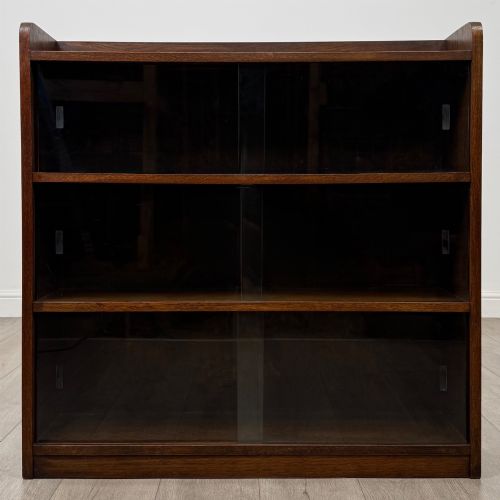
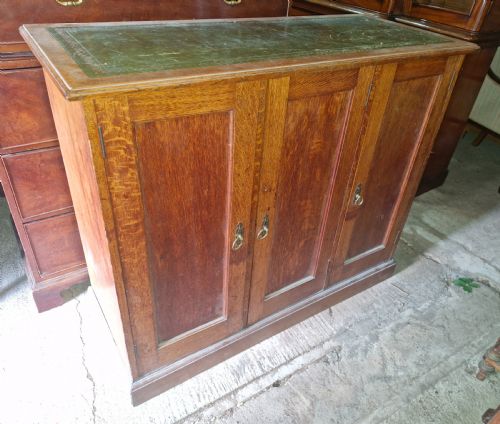
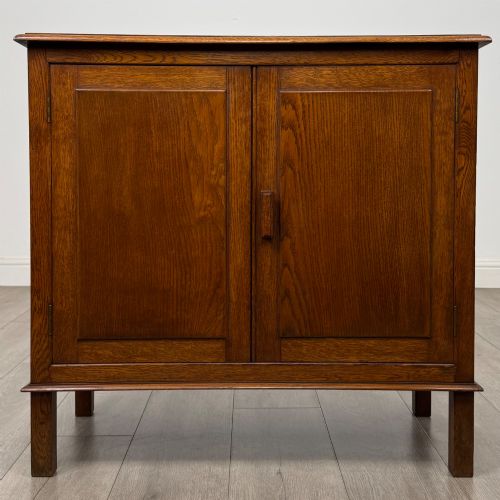
Low Oak Bookcase Cabinet
A low oak bookcase cabinet brings character and useful storage to a room, offering sturdy timber and accessible shelving.
Low Oak Bookcase Cabinet
A low oak bookcase cabinet combines display space with enclosed storage, keeping books and objects organised at a comfortable height. These pieces range from simple open shelving units to fitted cupboards with glass or timber doors.
Edwardian and Victorian examples appear frequently, alongside pieces from the 1930s and earlier Georgian or Regency periods. Solid oak construction dominates, often enhanced by decorative carving or specialised veneers.
Buyers encounter various stylistic interpretations, including Arts and Crafts, Gothic Revival, and Art Deco designs. Many items feature adjustable shelves or integrated lower cupboards for practical domestic use.
How They Were Made
Craftsmen utilised solid oak and sturdy timber frames, frequently applying pollard oak or burr veneers to feature surfaces. Brass hardware, leather inserts, and glass panels provide functional and decorative contrast to the warm wood grain.
Joinery methods range from traditional hand-cut joints in earlier periods to machine-assisted production in twentieth-century pieces. Carved ornamentation, beaded edges, and applied mouldings demonstrate the detailed handwork involved in finishing each cabinet.
Look closely for carved Green Man faces glaring out from Victorian foliage.
What Varies in Quality
Construction methods and timber selection determine the longevity and visual weight of each piece, from simple utilitarian cupboards to elaborately carved country house furniture. The crispness of carved details and the choice between solid oak or secondary timbers affect the overall character.
Fitted interiors, adjustable shelving mechanisms, and original hardware distinguish standard domestic storage from finer workshop productions. The condition of the polished surface and the integrity of glazed doors reflect the care a piece has received over time.
Richard Bridgens·William Trotter·Waring & Gillow·Gillows
The Low Oak Bookcase Cabinet Glossary
- Pollard oak
- Timber taken from trees that have been pollarded, producing a richly figured grain pattern with clustered knots. Cabinet makers utilised these decorative veneers on prominent doors and panels.
- Breakfront
- A piece of furniture where the central section projects forward from the flanking sides. This architectural arrangement adds depth and shadow to larger bookcases.
- Gothic Revival
- A nineteenth-century style drawing inspiration from medieval architecture, featuring pointed arches, tracery, and heavy mouldings. Bookcases in this manner often display dramatic carved details.
- Gallery
- A raised decorative border around the top surface of a cabinet or shelf, sometimes pierced or turned. It prevents items from sliding off the edge.
- Adjustable shelves
- Shelving supported by racks, pins, or sliding mechanisms that allow the height between tiers to be altered. This practical feature accommodates books of varying sizes.
Low Oak Bookcase Cabinet: Frequently Asked Questions
What is a low oak bookcase cabinet?
A low oak bookcase cabinet is a piece of furniture designed for storing books and displaying objects below standard eye level. These units often combine open shelves with lower cupboards.
They provide accessible storage while maintaining an open feel in a room. The low profile allows the top surface to function as extra display space.
How do I date an oak bookcase?
Dating relies on stylistic clues, construction techniques, and materials visible in the piece. Victorian and Edwardian examples often show specific revival styles or machine-made components.
Earlier Georgian and Regency pieces feature different proportions and hand-carved details. Examining the backboards and interior fixings helps confirm the period.
Are the shelves usually adjustable?
Many examples feature adjustable shelves supported by traditional wooden racks or metal pins. This adaptability makes them practical for storing volumes of varying heights.
Fixed shelves also appear, particularly in simpler utilitarian cupboards and earlier country pieces. Checking the interior sides reveals which shelving system is present.
Where were these cabinets used?
These cabinets served primarily in libraries, studies, and drawing rooms of houses large and small. Vestry cupboards and country house variants fulfilled specialised storage needs.
Their compact height suited them for placement beneath windows or along domestic walls. Today they adapt easily to modern living spaces for general storage.