


Low Narrow Bookshelf
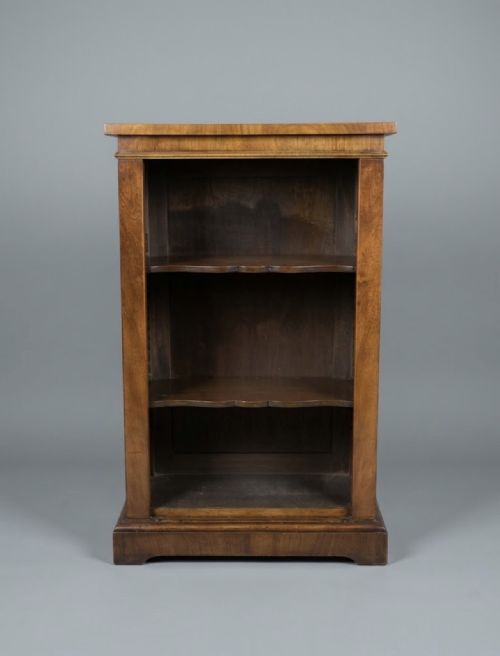
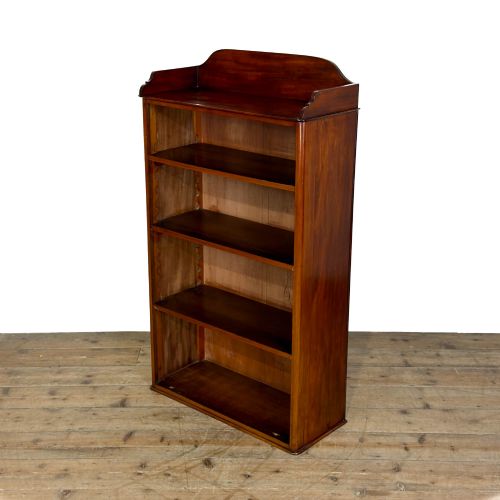
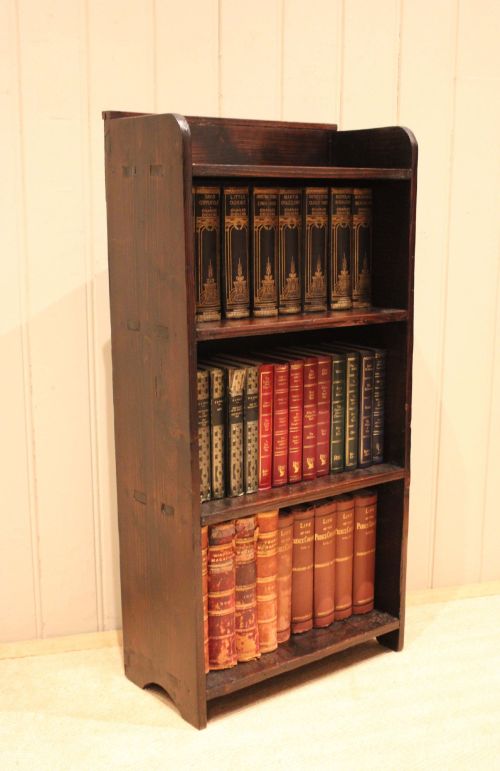
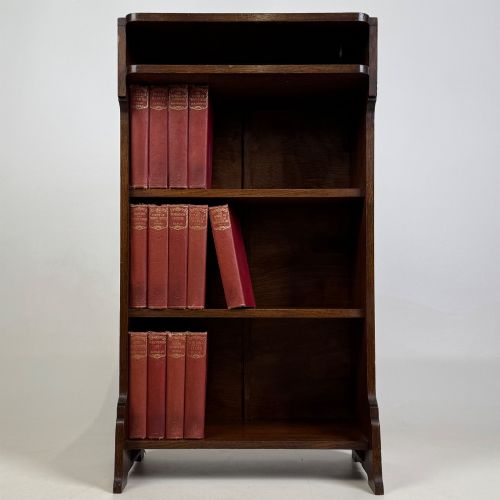
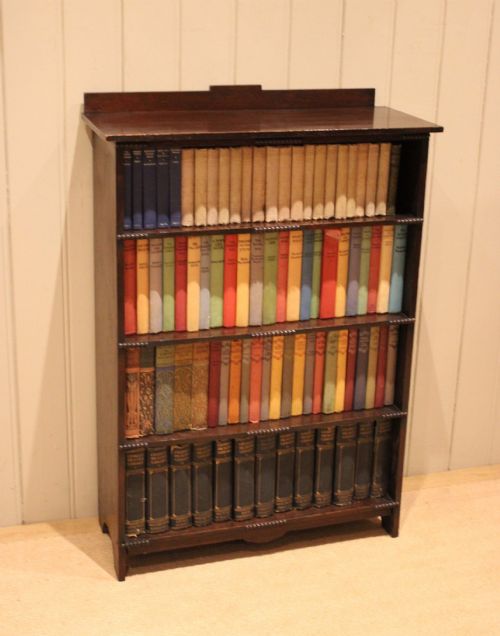
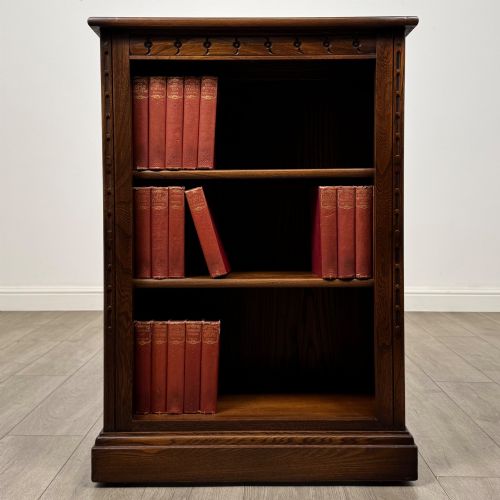
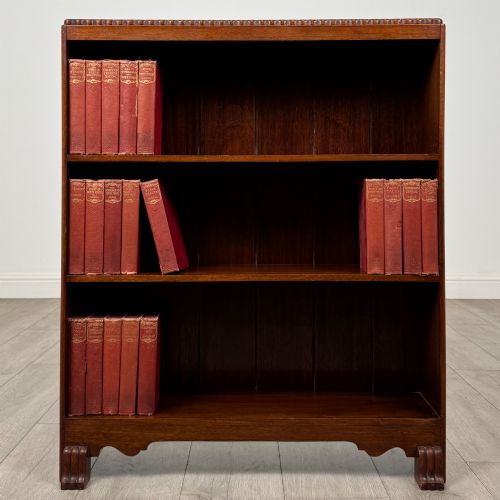
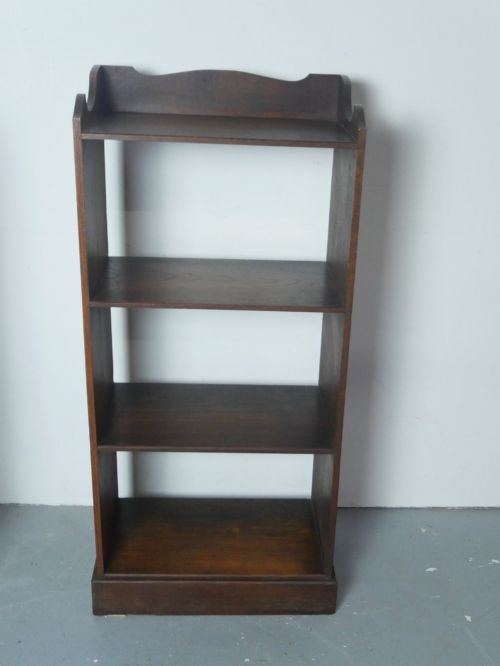
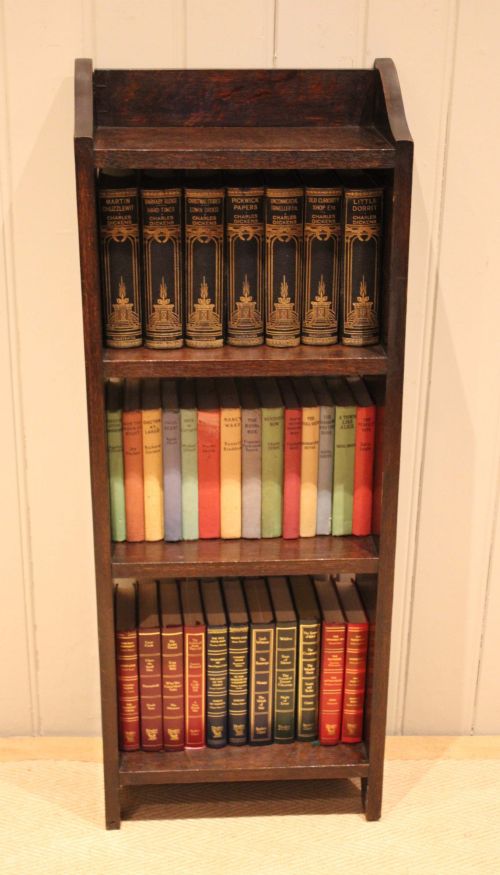
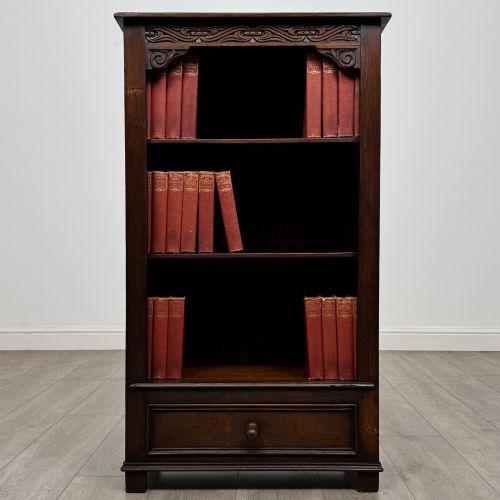
A low narrow bookshelf provides compact storage for tight spaces, combining sturdy timber construction with a modest footprint suited to smaller rooms.
Low Narrow Bookshelf
A low narrow bookshelf offers practical shelf space without dominating a room, making it a sensible choice for alcoves and compact corners. The pieces gathered here span from the late nineteenth century through the Edwardian era and into the nineteen-twenties, showing how cabinetmakers adapted upright storage for domestic interiors.
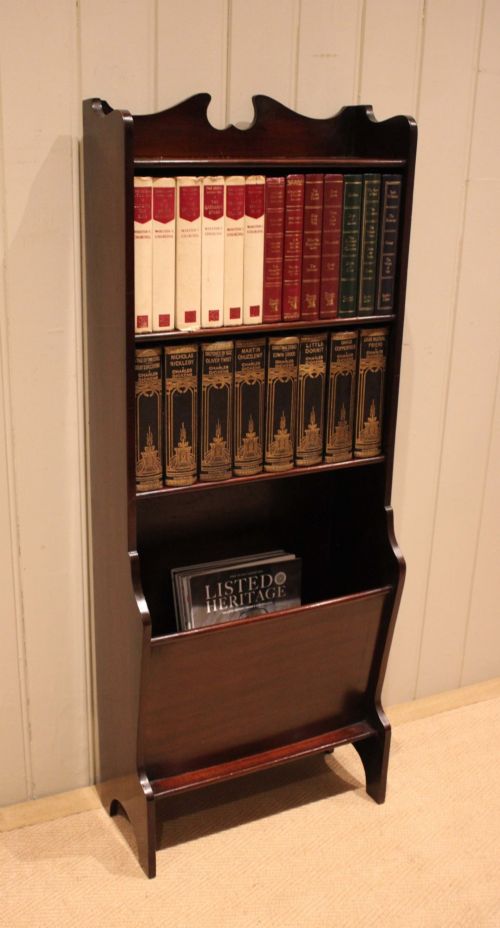
Most examples you encounter on this page are open bookcases designed to keep volumes within arm's reach. Forms range from straightforward standing open shelves to variants fitted with beaded edges, integrated magazine racks, or stepped waterfall tiers.
The prevailing aesthetic leans towards straightforward practicality, though stylistic echoes of the Arts and Crafts movement and Jacobean Revival appear among the selection. Whether rendered in unadorned timber or enhanced with subtle inlay, these items prioritise utility alongside traditional craftsmanship.
Materials and construction methods
Timber selection dictates the character of these items, with oak and mahogany dominating the available selection alongside pine and occasional faux burr walnut finishes. Cabinetmakers utilised solid woods and straightforward joinery to build durable frames capable of supporting heavy rows of books.
Decorative details remain restrained yet purposeful, ranging from beaded shelf edges to contrasting ebonised and inlaid elements. More elaborate expressions incorporate brass fittings and ormolu mounts, demonstrating varied levels of workshop ornamentation.
The listings on this page span several decades, featuring oak and mahogany as the predominant materials alongside pine and walnut finishes.
Factors of quality and finish
The execution of mouldings and edge treatments also reveals the maker's hand. Crisp beading and well-fitted joints indicate a higher standard of workshop production compared to simpler vernacular pieces.
The Low Narrow Bookshelf Glossary
- Waterfall bookcase
- A tiered shelving unit where each upper shelf is narrower than the one below, creating a stepped profile.
- Beaded edge
- A narrow rounded moulding carved along the border of a shelf or panel, adding subtle definition.
- Ormolu
- Gilded bronze ornamentation applied to furniture for decorative accent, seen on select nineteenth-century examples.
- Inlay
- Contrasting woods or materials embedded flush into the primary surface to create decorative patterns.
- Ebonised
- Wood treated to imitate the dark appearance of ebony, often used for contrasting trim.
Low Narrow Bookshelf: Frequently Asked Questions
Where should I place a low narrow bookshelf?
These compact units fit comfortably in narrow hallways, tight alcoves, or beneath low windows where standard tall bookcases would overwhelm the wall.
Their restricted height also allows the top surface to function safely for displaying lamps or decorative objects.
How do I identify an Edwardian bookcase?
Edwardian pieces, dating from roughly the start of the twentieth century, often feature lighter oak timbers and simplified revival styles.
Look for clean lines that distance themselves from heavier Victorian ornamentation while maintaining traditional joinery.
Are these bookcases suitable for heavy volumes?
Solid oak and mahogany construction provides inherent strength, making these sturdy enough for everyday library use.
Fixed or adjustable timber shelves are built to bear the substantial weight of books without bowing under normal conditions.
What is faux burr walnut?
Faux burr walnut refers to a painted or finished surface technique designed to mimic the swirling, mottled grain patterns of genuine burr walnut.
This method offered the decorative appeal of costly exotic timber at a more accessible production level.