


Low Foot Stool
A low foot stool brings small scale and comfort to a room, offering practical support by the fireplace or armchair.
Low Foot Stool
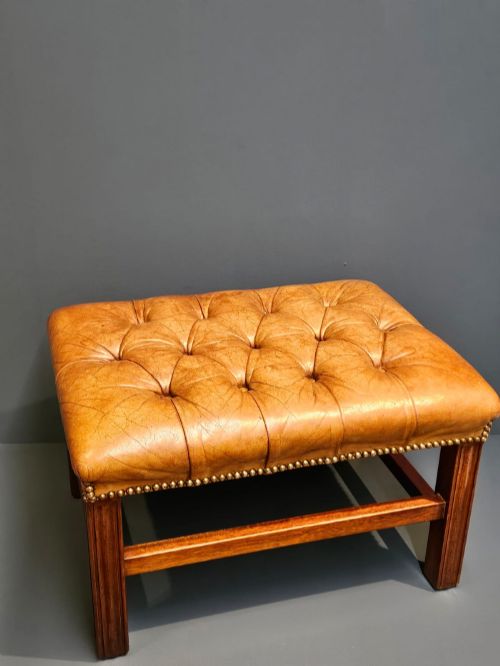
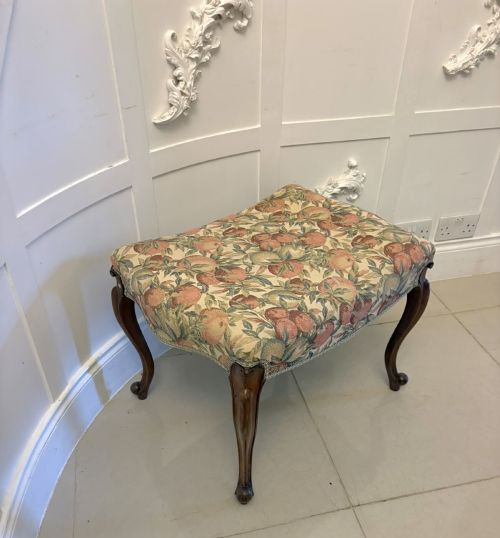
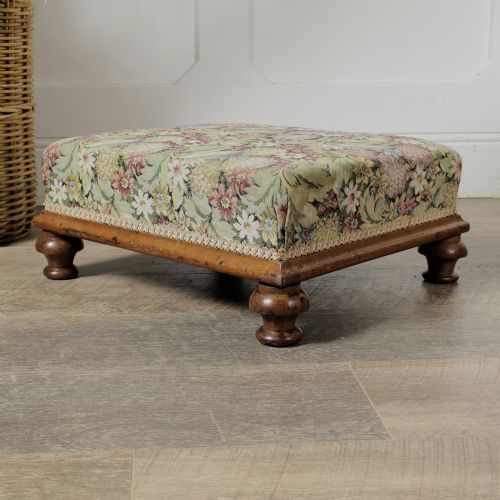
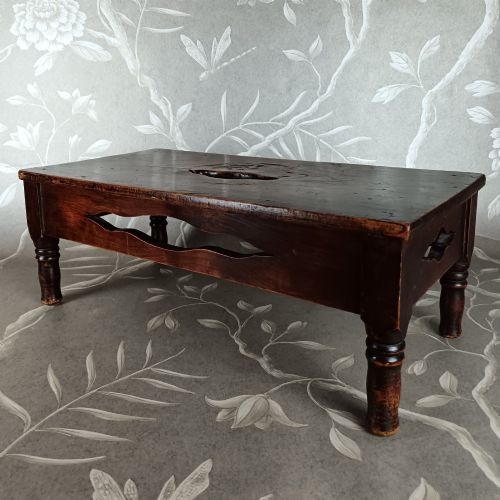
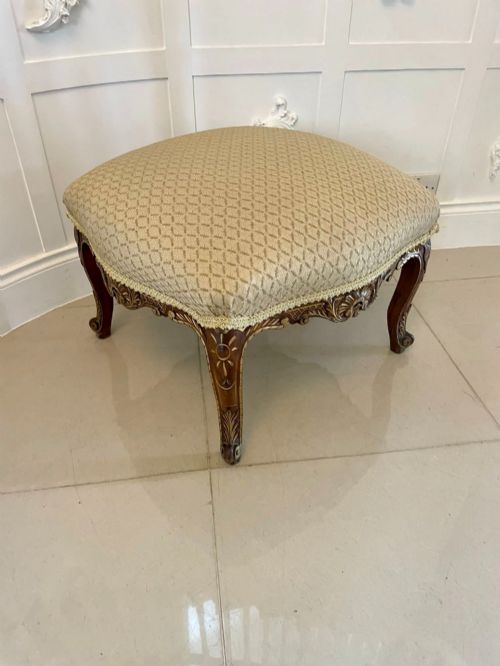
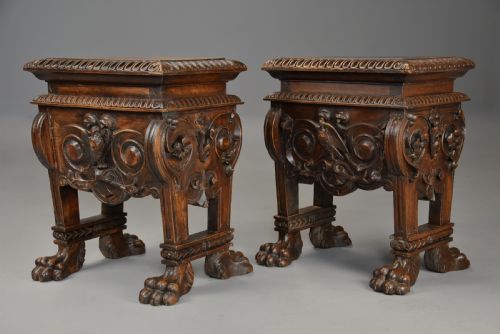
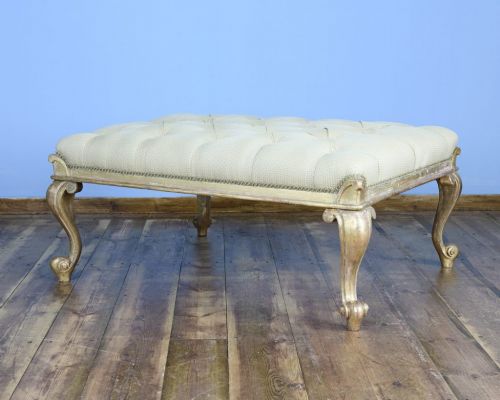
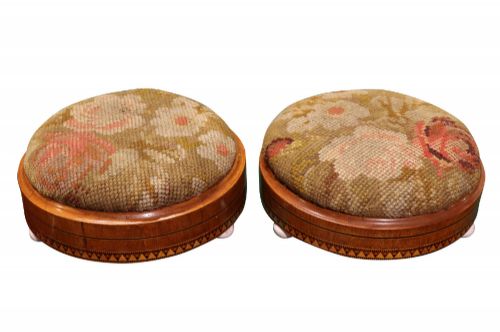
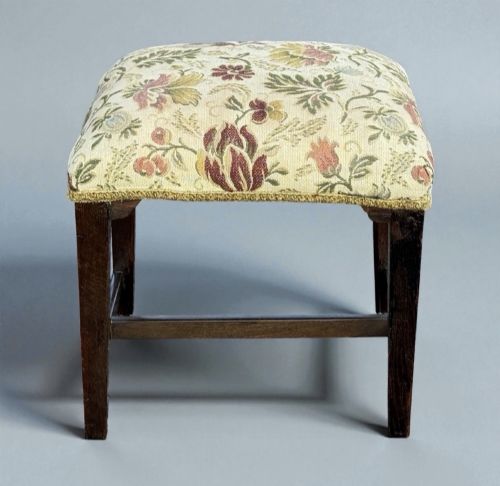
A low foot stool is a small seating form designed to support the feet when seated, appearing frequently in Victorian and Georgian incarnations on this page. These pieces range from simple wooden country forms with ball feet to grander parcel gilt or inlaid walnut examples.
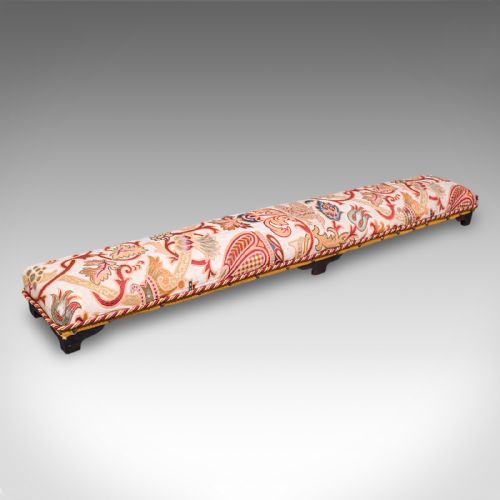
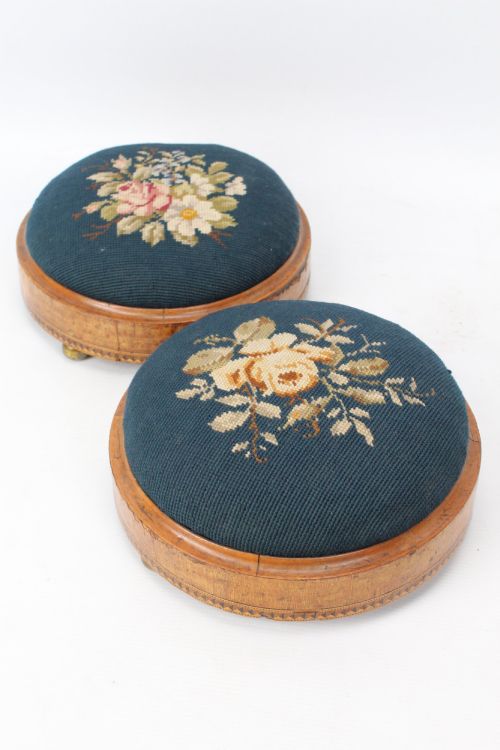
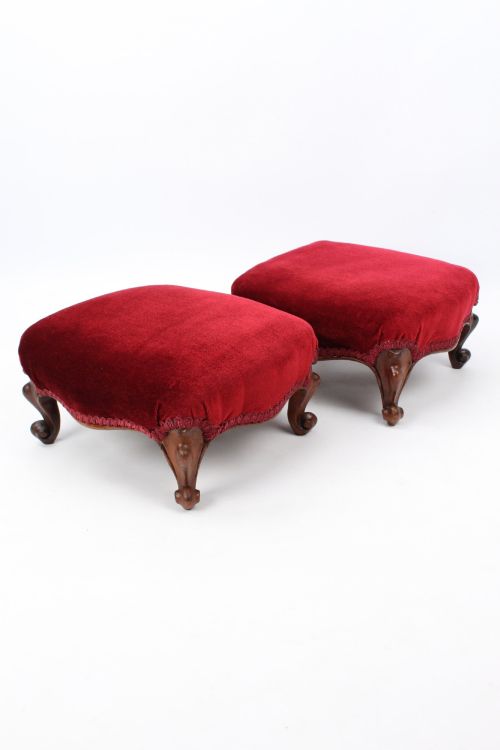
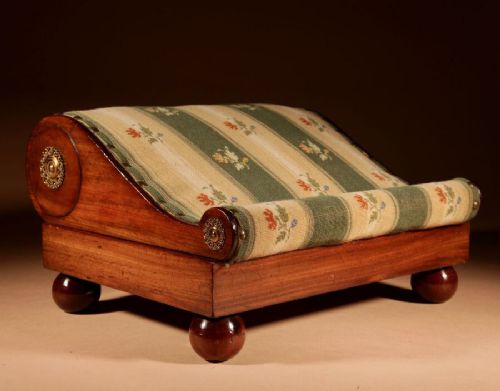
Makers produced these stools in various woods including mahogany, walnut, rosewood, and oak, often pairing the timber frame with textile upholstery. Forms include small round footstools, long carriage stools, and occasional pairs suited for fireside placement.
Stylistic influences span several periods, encompassing Regency scroll tops, Queen Anne style frames, and Anglo-Indian carving. Buyers searching for a low foot stool will encounter both compact circular designs and elongated benches intended for domestic comfort.
How they were made
Frames utilise solid hardwoods such as mahogany, walnut, rosewood, and oak, shaped through carving, turning, or joining. Artisans frequently integrated decorative elements like Tunbridge ware inlay, parcel gilt, or ebonised finishes into the wooden structures.
Upholstery techniques involve securing textiles over padded seats, utilising materials such as wool, needlepoint, tapestry, crewelwork, and kilim. Brass details occasionally appear as structural or decorative accents on these wooden and textile frames.
Low Foot Stool Retail Price Guide 2026
Typical asking prices for low foot stool among the pieces listed under this phrase on Sellingantiques today, from the lower quarter to the upper quarter. They describe what is for sale here now, not the wider market.
Upholstery materials found across these stools include wool, needlepoint, tapestry, crewelwork, and kilim textile finishes.
What varies in quality
Quality rests in the crispness of the timber carving and the sophistication of the joinery, distinguishing finely turned legs and detailed scroll work from simpler domestic turnings. The choice of primary wood, such as figured rosewood or dense mahogany, dictates the baseline refinement of the piece.
The integrity and execution of the upholstery contribute substantially to the character of the stool, particularly where original needlepoint, tapestry, or crewelwork remains intact. Harmony between the timber frame and the textile covering separates utilitarian workshop output from ambitious cabinet work.
Mathew Gregson
The Low Foot Stool Glossary
- Tunbridge ware
- Small mosaic woodwork created by gluing together many tiny blocks of different coloured woods to form geometric patterns. This technique decorates the wooden borders of certain Victorian stools.
- Needlepoint
- Stitched textile work executed on an even-weave canvas ground, frequently utilising wool threads. It forms the original top surface on many 19th-century footstools.
- Crewelwork
- Traditional embroidery style using wool yarn on a plain-weave fabric foundation. Examples appear on long carriage stools designed for fireside use.
- Parcel gilt
- Partial application of gold leaf to specific raised portions of a carved wooden frame. This method highlights carved details on grander Regency and Victorian pieces.
- Kilim
- Flat-woven textile produced using a tapestry technique, incorporating geometric motifs. It provides a textured upholstered surface on select antique stools.
Low Foot Stool: Frequently Asked Questions
What is a low foot stool used for?
These small seating pieces served primarily to elevate the feet while sitting in a parlour, drawing room, or by the fireside. Their compact height made them versatile additions for general domestic comfort.
Over time, they found placement near armchairs, dressing tables, and carriage seats. Their modest scale allowed them to move easily about the room as needed.
How do I identify a Victorian low foot stool?
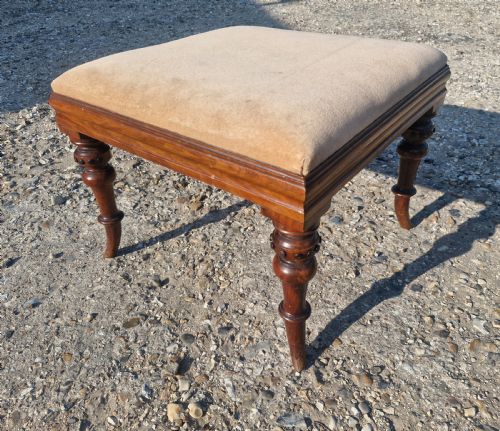
Victorian examples often employ walnut or rosewood timbers, frequently featuring turned legs, inlaid Tunbridge ware, or carved details. Upholstery on these pieces commonly includes needlepoint, wool tapestry, or geometric textile patterns.
Proportions tend to be compact and round, though long rectangular carriage stools also date to this era. The presence of specific 19th-century construction methods helps distinguish them from later revival pieces.
Are these stools comfortable to use daily?
Most antique stools retain sturdy wooden frames and padded tops that provide firm support for resting the feet. Many pieces feature traditional upholstery materials like wool and tapestry over padding.
While structurally sound, the comfort depends on the original padding and textile condition. Buyers often use them daily by living room armchairs.
How do Georgian stools differ from Victorian ones?
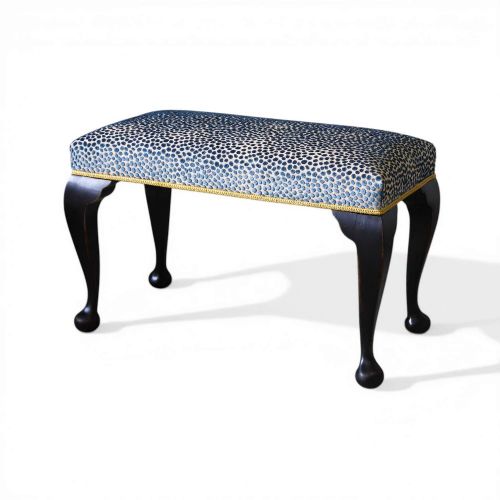
Georgian stools typically showcase earlier stylistic idioms such as mahogany frames, cabriole legs, or simpler carved wooden profiles. These pieces reflect the cabinet-making traditions of the 18th and early 19th centuries. N In contrast, Victorian pieces introduce a wider variety of revived styles, elaborate walnut turnings, and intricate needlepoint upholstery. The timber selection and decorative details generally align with the tastes of their respective periods.