

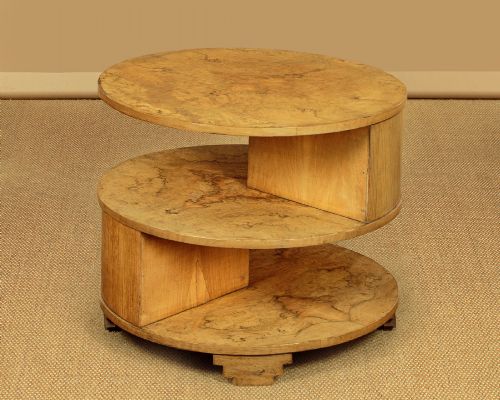
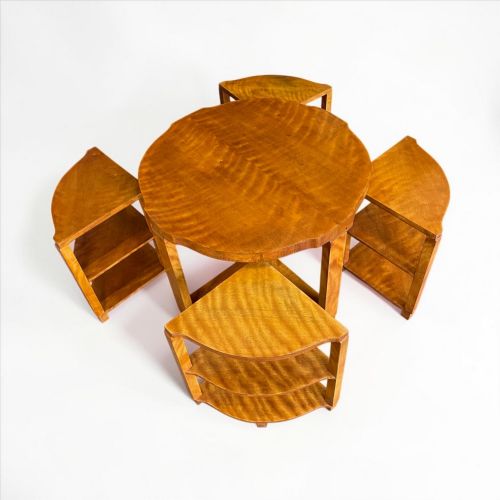


Low Circular Coffee Table
A low circular coffee table brings a grounded, sociable shape to a room, uniting seating with timber and brass craftsmanship.
Low Circular Coffee Table
A low circular coffee table gathers a room around a central, rounded surface designed for convenience and display. When searching for this form, buyers encounter diverse iterations ranging from early twentieth-century designs to nineteenth-century adaptations.
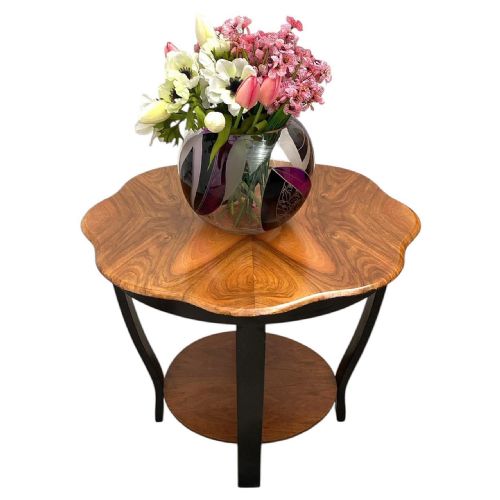
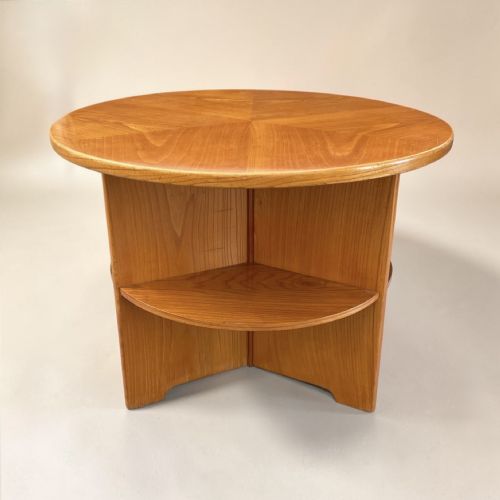
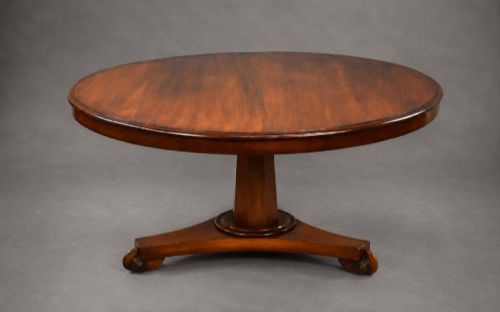
The selections span distinct stylistic movements, prominently featuring Art Deco figured walnut alongside nineteenth-century carved hardwoods and revival pieces. Buyers are most likely to meet twentieth-century walnut and burr walnut examples alongside oriental hardwood tables.
Originating from various eras and global workshops, these tables function as lower central surfaces adapted from earlier wine tables, stools, or reception tables. Their low profiles suit modern living spaces while retaining traditional joinery and materials.
Materials and construction
Construction relies on traditional joinery, turning, and carving techniques. Many pieces combine solid wood structures with veneered surfaces or integrated lower tiers and nests.
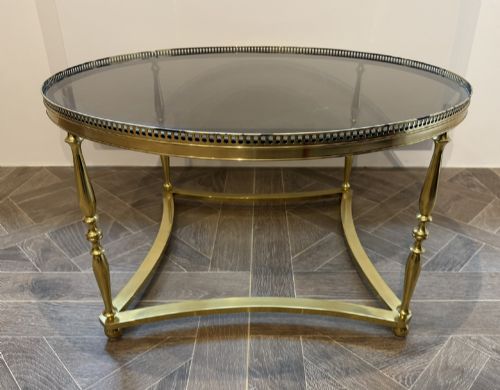
Some tables double as charts of the heavens, featuring brass tops engraved with the signs of the zodiac.
What separates the finest examples
Quality rests in the selection of timber figures, such as highly figured walnut or satin birch, and the crispness of hand-carved details found on oriental and European tables. Superior pieces demonstrate balance in proportion and precision in veneer matching across the round top.
The integrity of the construction, from stable pedestal bases to finely turned legs and substantial brass elements, distinguishes exceptional examples from simpler utilitarian forms.
The Low Circular Coffee Table Glossary
- Burr Walnut
- A timber harvested from the growths of walnut trees, prized for its swirling, highly figured grain patterns. It is frequently used for decorative table veneers.
- Pie Crust
- A raised, carved border shaped in undulating curves resembling pastry edges. This decorative rim appears on circular table tops.
- Chinoiserie
- European decorative art reflecting Chinese artistic styles, often featuring lacquered surfaces and painted motifs. It appeared frequently on early twentieth-century tables.
- Occasional Table
- A small, light table designed for intermittent use around a room. These pieces often double as coffee tables in modern settings.
- Drum Table
- A circular table with a deep cabinet-like top resembling a drum. They often incorporate drawers and rest on central pillar supports.
Low Circular Coffee Table: Frequently Asked Questions
What is a low circular coffee table used for?
These tables serve as central surfaces in sitting rooms for holding books, drinks, and decorative items. Their low height and rounded form encourage easy circulation and conversation around seating arrangements.
Historically, many were adapted from nineteenth-century wine tables, reception pieces, or stools to suit contemporary lounge requirements. They provide accessible utility without dominating the floor plan.
How do I identify an Art Deco low circular coffee table?
Art Deco pieces typically feature geometric simplicity, clean lines, and symmetrical wood grains. Figured walnut, blonde oak, and satin birch are common materials from this era.
They often date from around 1930 and focus heavily on the natural pattern of the timber rather than excessive carved ornamentation.
What woods were used for antique circular coffee tables?
Maker materials included walnut, burr walnut, mahogany, oak, teak, satin birch, and various oriental hardwoods. Brass also appears in frames and engraved table tops.
Solid timbers often form the structural frames, while highly decorative grains like burr walnut are applied as veneers to the circular tops.
How do I incorporate a round coffee table into my room?
A round table softens rigid furniture layouts and provides safe, corner-free movement in tighter spaces. Placing one centrally among sofas or armchairs creates a balanced focal point.
They pair well with both traditional revival seating and streamlined modern upholstery, bridging different design periods.