


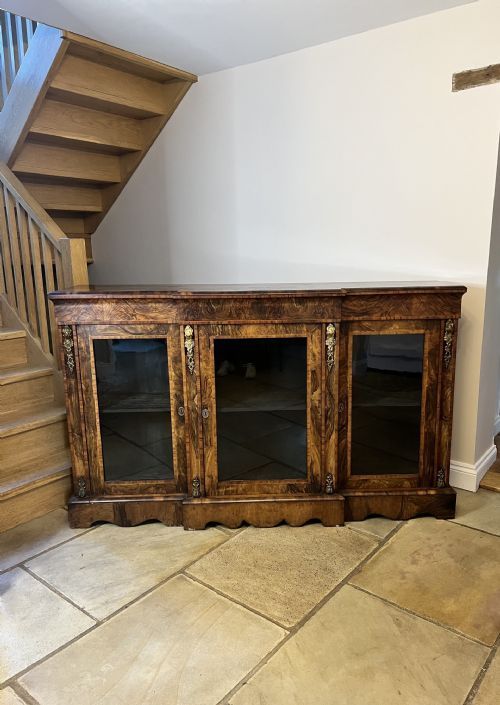


Low Breakfront Credenza
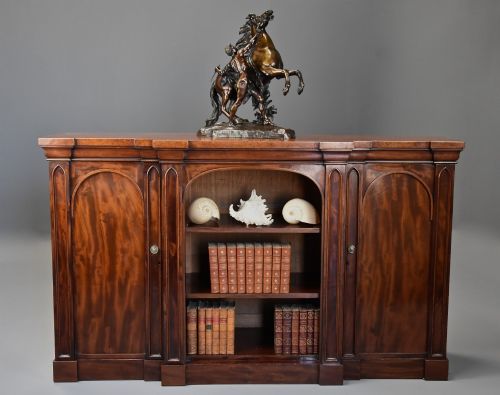
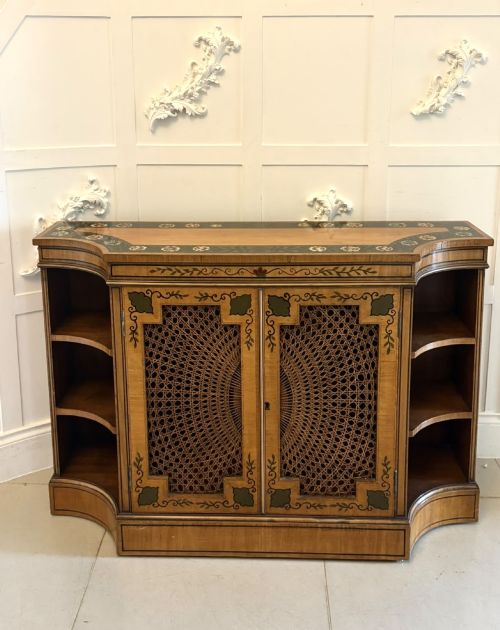
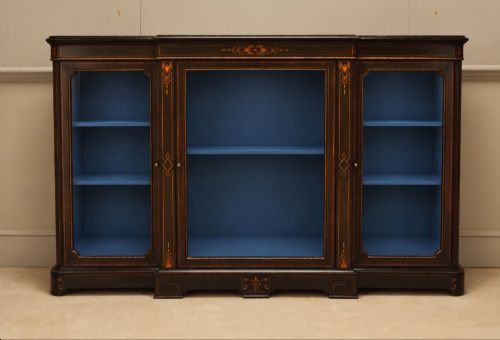
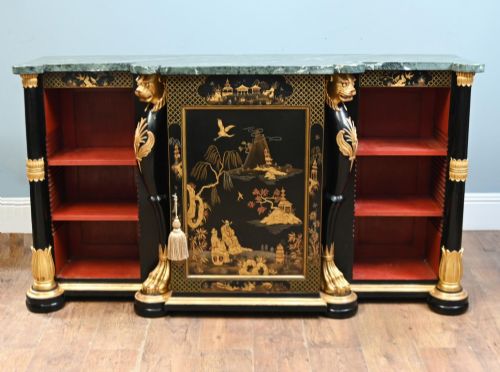
A low breakfront credenza offers substantial storage with a projecting central section, grounding a room with rich timber and classical proportions.
Low Breakfront Credenza
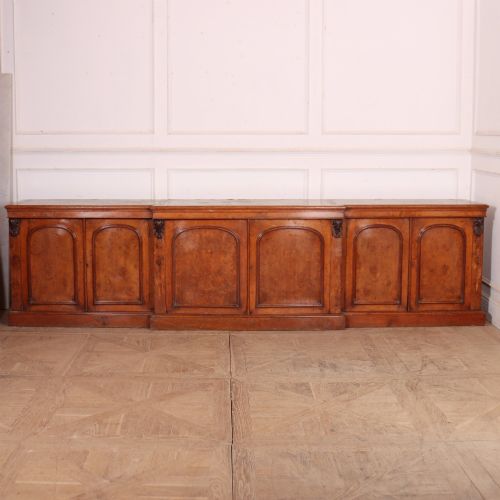
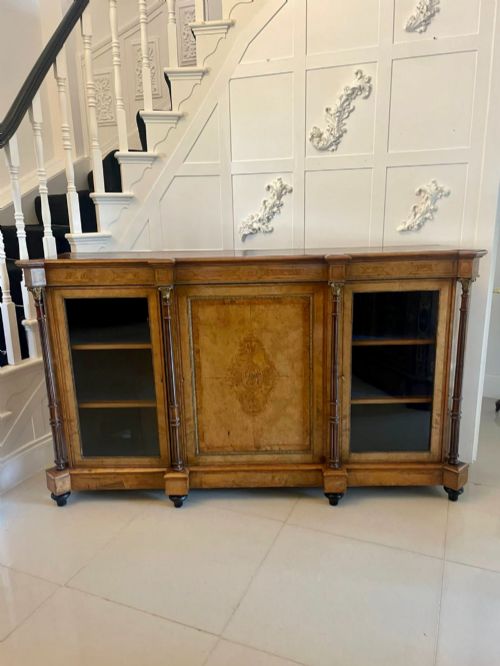
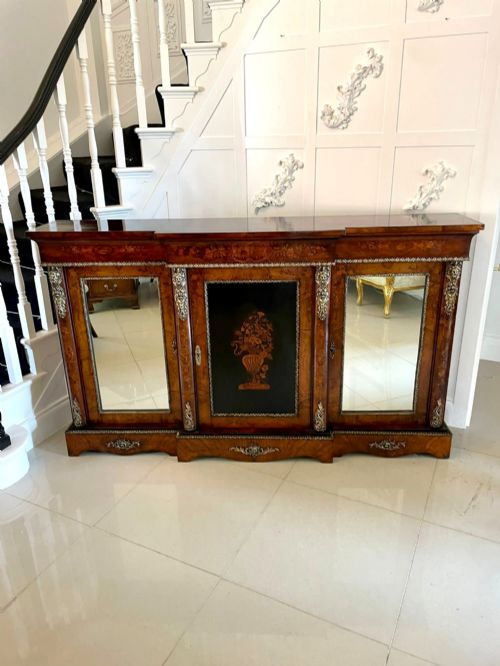
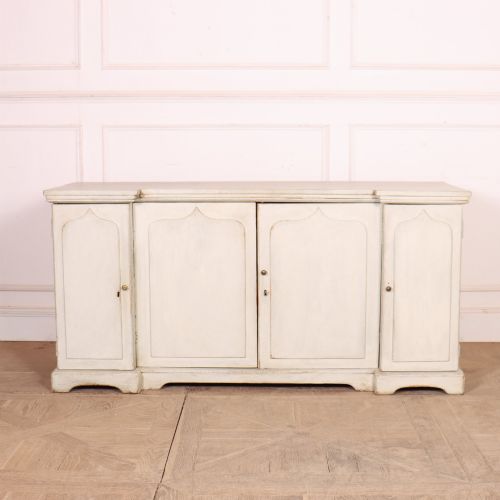
A low breakfront credenza combines the extended profile of a sideboard with the stepped-forward central section characteristic of breakfront furniture. These pieces span the Regency period, the Victorian era, and the early twentieth century, appearing in forms such as side cabinets, bookcases, and dresser bases. Walnut, burr walnut, and rosewood dominate the selection, often enriched with marquetry or brass inlay.
Craftsmanship and design
Quality rests in the selection of veneer and the continuity of the grain across the projecting central break. Superior examples display symmetrical figuring, particularly in burr walnut or rosewood panels, matched carefully across multiple doors.
The refinement of bronze or ormolu mounts, the crispness of marquetry cutting, and the integration of internal shelving separate standard production from exceptional cabinet work.
Low Breakfront Credenza Retail Price Guide 2026
Typical asking prices for low breakfront credenza among the pieces listed under this phrase on Sellingantiques today, from the lower quarter to the upper quarter. They describe what is for sale here now, not the wider market.
One notable Regency cabinet includes leather dummy books designed to conceal a functional open bookcase compartment.
Maple & Co.·Lamb of Manchester·Gillow
The Low Breakfront Credenza Glossary
- Breakfront
- A cabinet configuration where the central section projects forward from the flanking wings. This architectural device creates shadow and depth across the front elevation.
- Credenza
- A low dining room or parlour cabinet used for serving or display, typically standing on short legs or directly on a plinth.
- Ormolu
- Gilded bronze mounts applied to furniture for decorative effect. It gained widespread use during the eighteenth and nineteenth centuries.
- Marquetry
- The art of forming decorative patterns by fitting together small pieces of tinted wood veneer. Craftsmen applied these intricate designs to cabinet doors and friezes.
Low Breakfront Credenza: Frequently Asked Questions
What is a low breakfront credenza?
A low breakfront credenza is a long, low-profile cabinet featuring a central section that steps forward from the flanking sides. It provides concealed storage behind doors, which may be solid timber or glazed for display.
Cabinetmakers built these pieces primarily in rosewood, walnut, and mahogany, utilising them in formal rooms to store books, linen, or dining accessories.
How do I style a low credenza?
The flat top surface serves as an ideal stage for table lamps, bronze sculptures, and curated collections of ceramics. Keeping the items balanced avoids overwhelming the architectural lines of the timber below.
Positioning the piece against a principal wall allows the figured grain and ormolu mounts to command attention without competing with surrounding furniture.
Are these pieces suitable for modern homes?
Their low height and generous interior volume make them practical alternatives to modern media consoles or sideboard storage. They fit comfortably beneath standard window heights while offering deep shelving.
Solid construction and durable timber surfaces ensure these cabinets withstand daily use in contemporary living spaces.
How do I date a Victorian credenza?
Victorian pieces often display dark walnut or burr walnut veneers, sometimes paired with marquetry inlay, ebonised details, or glass doors. Heavier proportions and rich, warm polishes distinguish this era.
Examining the secondary woods inside the carcase and the style of the brass hardware helps confirm the mid-nineteenth-century manufacturing period.