
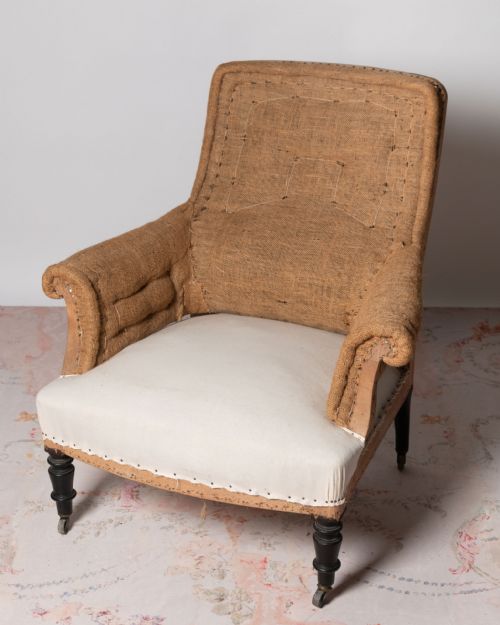

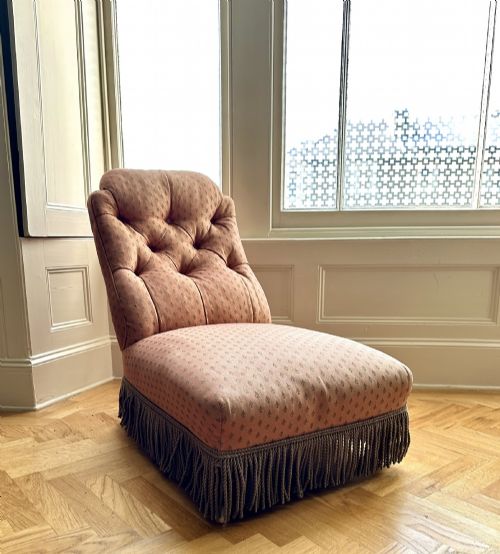


Low Back Easy Chair
A low back easy chair offers a deep seat and low profile designed for relaxed sitting in Victorian and Edwardian interiors.
Low Back Easy Chair
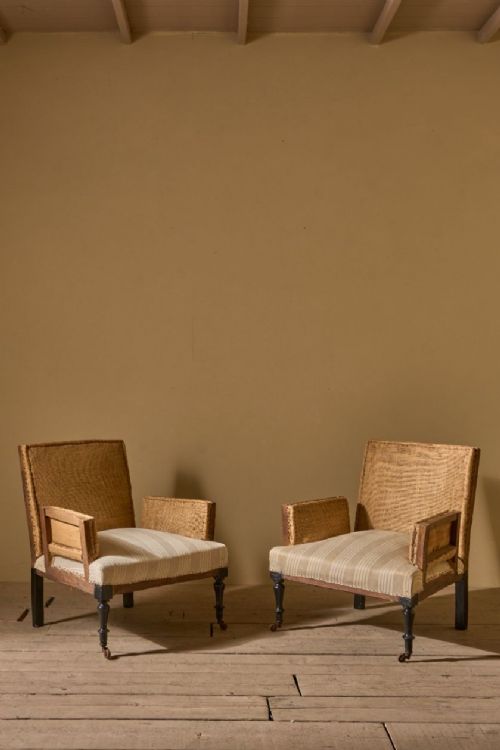
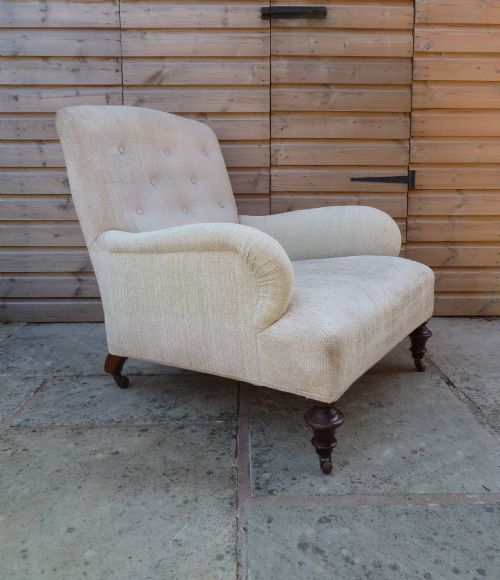
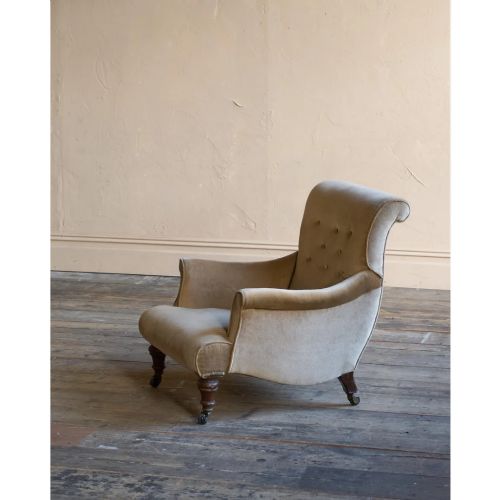
A low back easy chair combines a low-slung frame with generous proportions designed for lounging. The selection spans nineteenth-century Victorian pieces, Edwardian examples, and later twentieth-century styles.
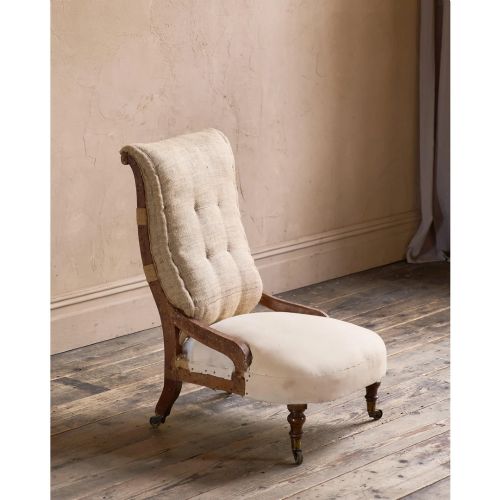
The form appears in various iterations including club armchairs, slipper chairs, and open armchairs. Makers from the nineteenth century onwards utilised robust timber frames upholstered for maximum comfort.
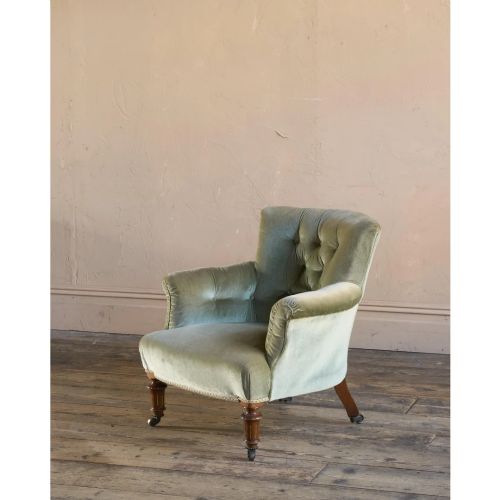
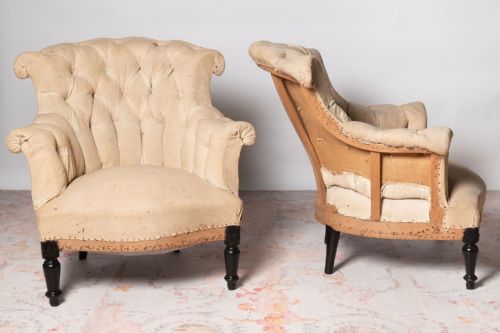
Makers such as Howard and Sons produced notable versions upholstered in ticking, velvet, or carpet remnants. Buyers encounter paired armchairs alongside individual seating options suited to drawing rooms and country houses.
What varies in quality
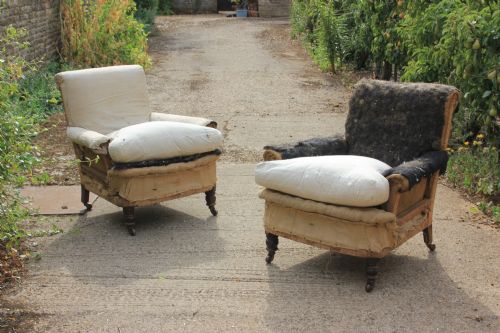
The integrity of the internal wooden frame determines structural longevity and resilience. Superior pieces retain original maker stamps, traditional stuffing materials, and intact brass hardware.
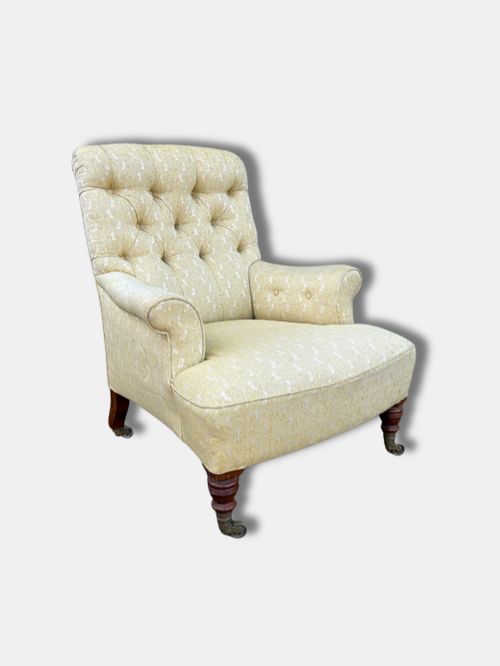
The execution of the upholstery work separates standard seating from exceptional examples. Quality shows in the precision of buttoning, the selection of period-appropriate textiles like ticking or velvet, and balanced proportions.
Some nineteenth-century club armchairs arrived upholstered in repurposed Ushak Turkey carpets, proving that recycling is not a modern invention.
Howard and Sons·Gillows·Shoolbred
The Low Back Easy Chair Glossary
- Slipper chair
- A low-seated upholstered chair originally designed for bedrooms to assist with putting on footwear. These pieces lack arms and sit close to the floor.
- Club armchair
- A deep, heavily upholstered comfortable chair designed for lounging. These pieces typically feature low backs and broad arms.
- Button back
- An upholstery technique where buttons are pulled deep into the padding to create a diamond pattern. This method secures the internal stuffing while adding texture.
- Castor
- A small wheel mounted on a swivel attached to the legs of furniture. These components allowed heavy Victorian and Edwardian armchairs to move across carpets.
Low Back Easy Chair: Frequently Asked Questions
How do I identify a Howard and Sons chair?
Look for stamped maker marks on the legs, inscribed brass castors, and distinctive numbering on the frame. These pieces often feature signature ticking fabric and robust low-slung proportions.
Original webbing and traditional stuffing methods also indicate authenticity, alongside the refined joinery typical of nineteenth-century workshop production.
Where should I place a low back easy chair?
A low back easy chair suits living rooms, studies, and bedrooms where a relaxed seating posture is desired. Their reduced height allows them to sit comfortably beneath windows without blocking light.
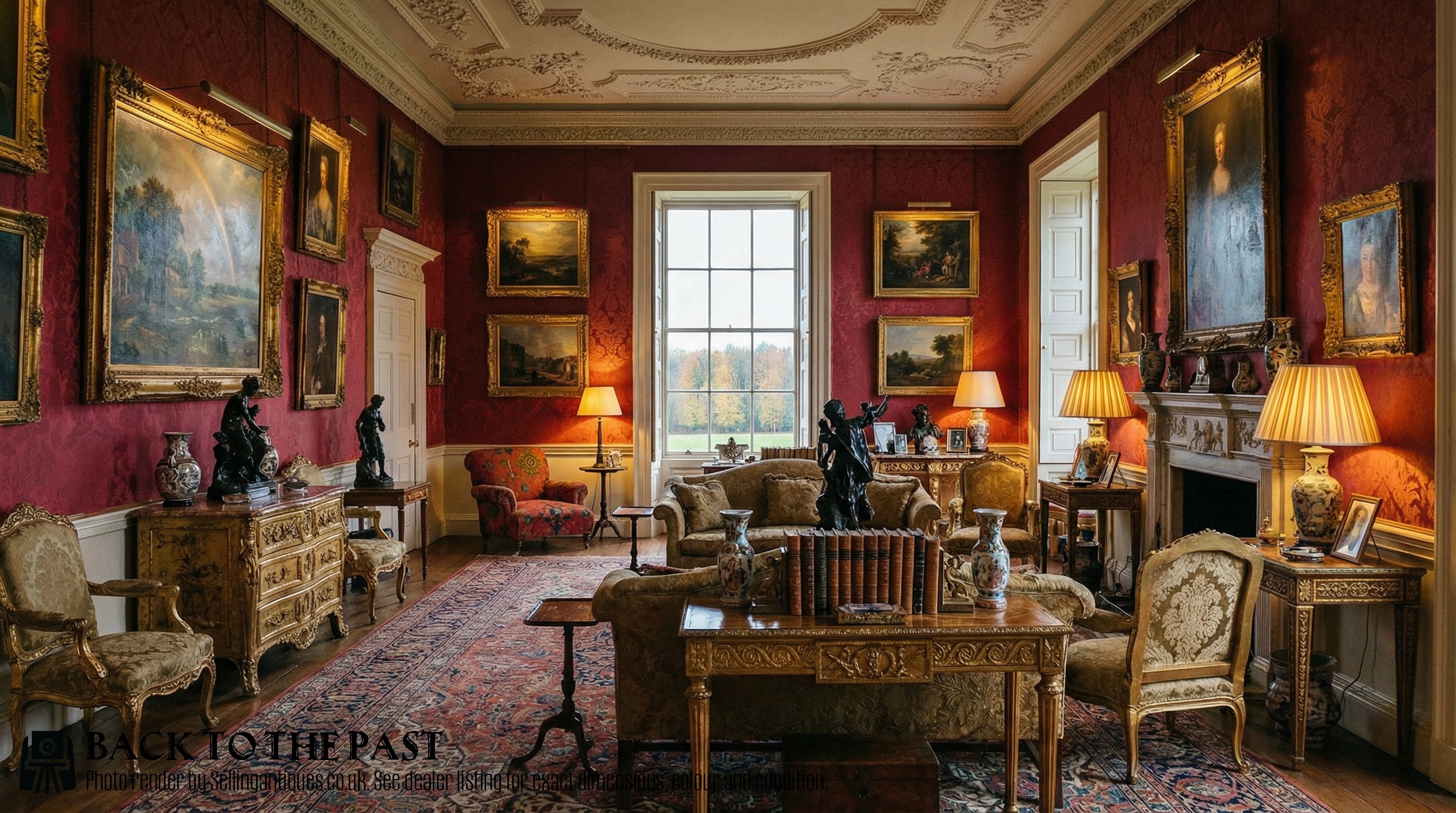
Pairing matching armchairs near a fireplace creates a balanced seating arrangement typical of nineteenth-century drawing rooms and country house interiors.
What is the difference between Victorian and Edwardian armchairs?
Victorian armchairs tend to feature heavier walnut or mahogany frames with deep button upholstery, rich velvets, and ornate fringes. Their silhouettes often emphasise dense comfort and formal presence.
Edwardian examples lean towards lighter proportions, sometimes utilising simpler fabrics like ticking and reflecting the relaxed aesthetic of country house interiors.
Are these chairs comfortable for daily use?
These upholstered armchairs were built specifically for lounging, offering deep seats and supportive padded backs. The generous proportions accommodate relaxed seating over extended periods.
Maintaining the internal webbing and traditional filling ensures the seating retains its supportive qualities for everyday domestic use.