

Louis XVI Urns
Louis xvi urns bring neoclassical balance to a room, combining cast gilt bronze with marble, porcelain, and glass in decorative pairs and clock garnitures.
Louis XVI Urns
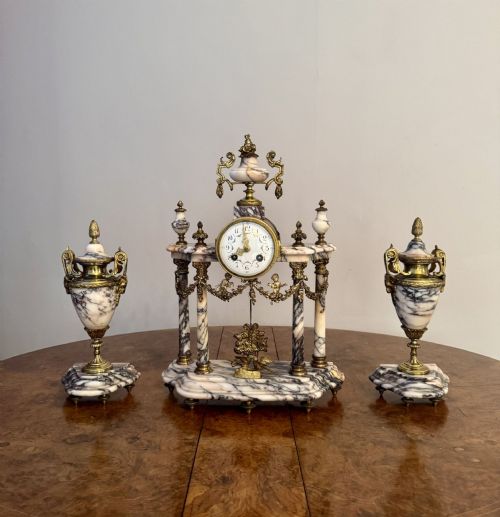
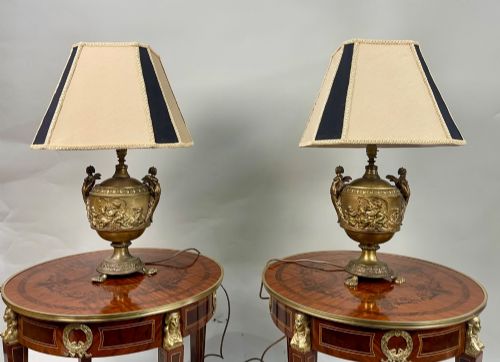
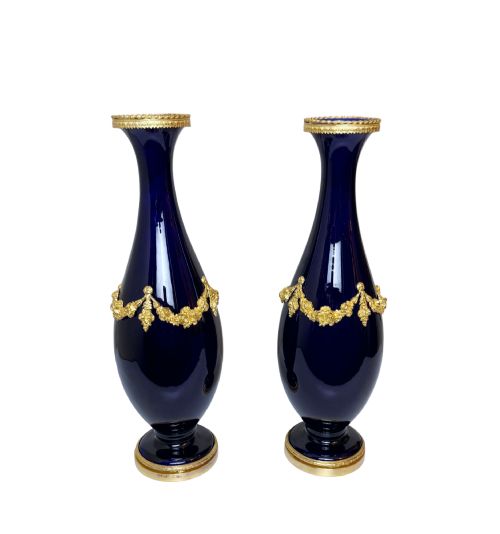
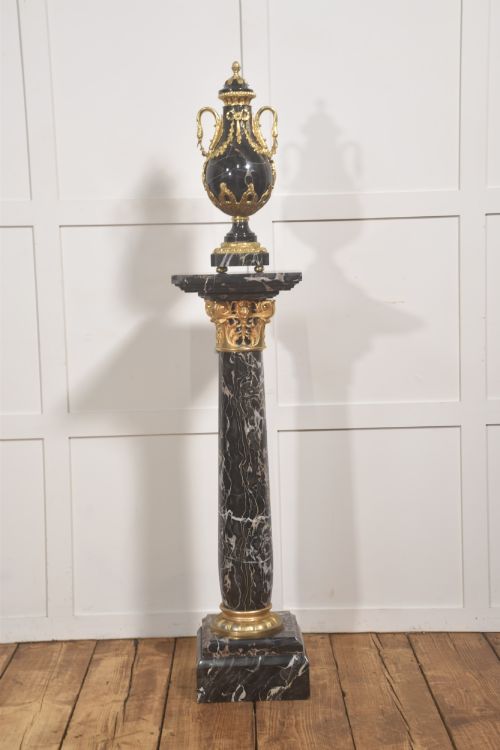
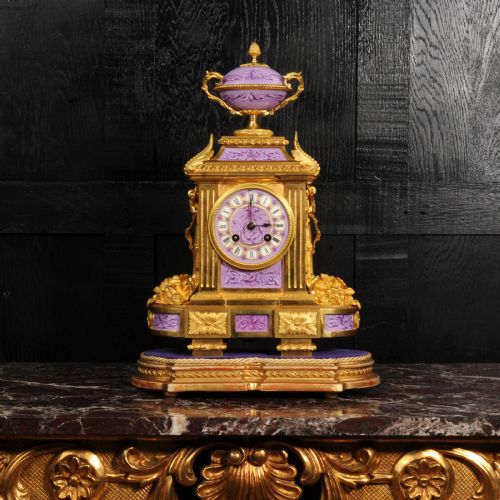
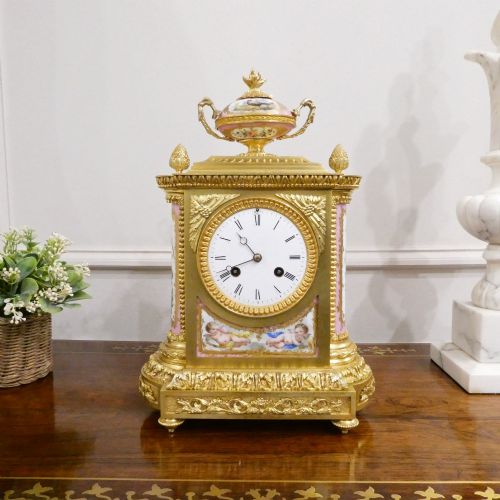
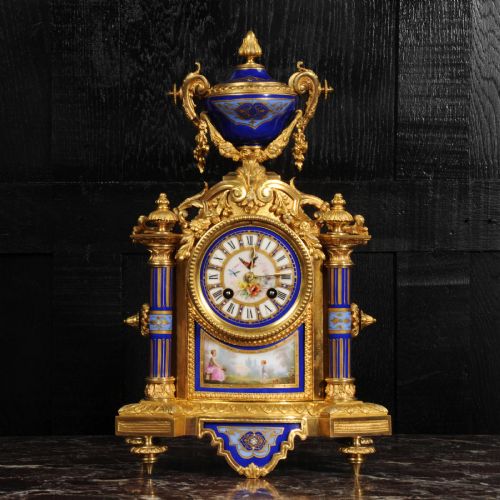
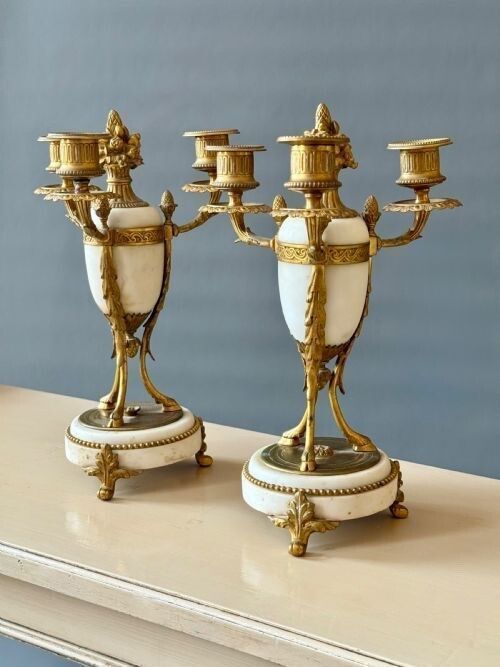
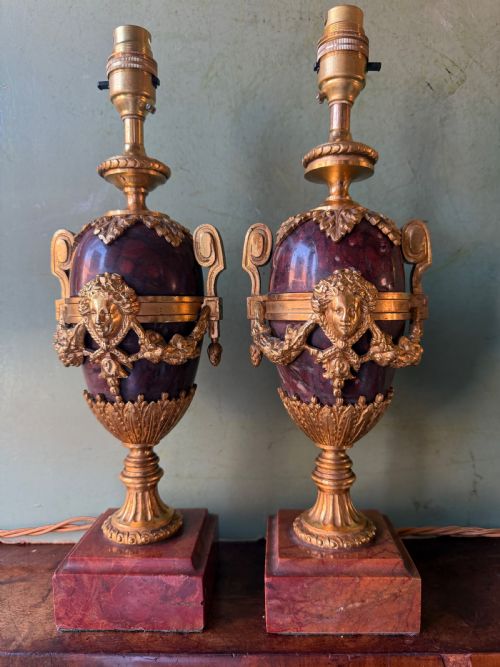
Louis xvi urns span decorative vessels, cassolettes, and clock garnitures created in the eighteenth century and reinterpreted through the nineteenth and early twentieth centuries. The selection here leans heavily toward nineteenth-century revival pieces, including mantel clocks flanked by urns and pairs of mounted vases designed for display on mantelpieces or console tables.
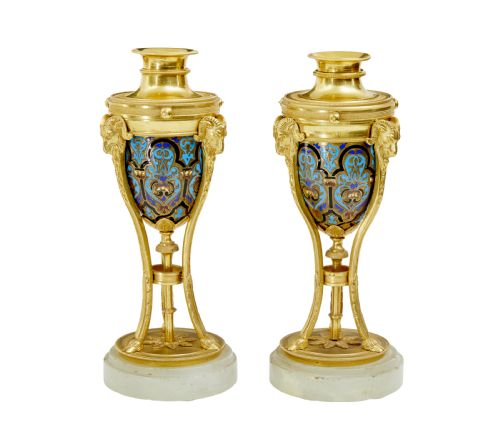
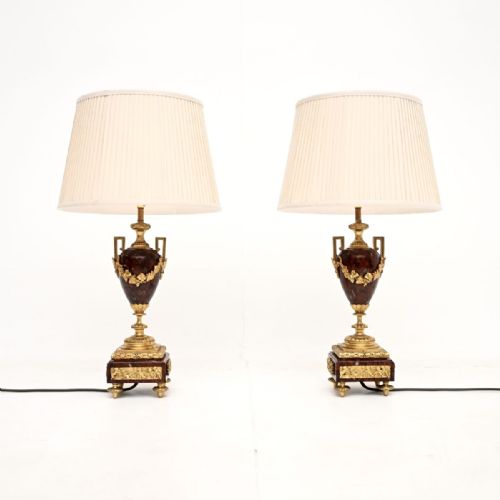
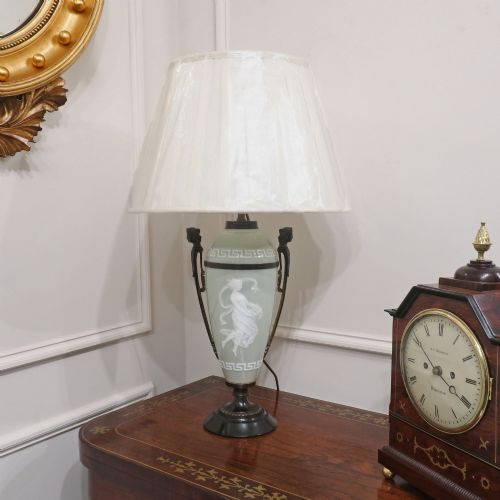
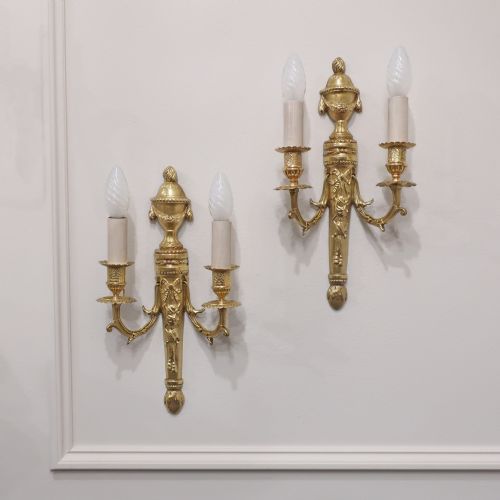
Makers and clockmakers of the nineteenth century utilised classic forms from the French Louis XVI period, incorporating architectural symmetry, ram's head masks, and foliate mounts. These pieces frequently appear paired as decorative objects or adapted into table lamps while retaining their classical silhouette.
Materials and Construction
Craftsmen built these pieces using heavy gilt bronze and ormolu mounts fixed to bodies of white or rouge marble, blue porcelain, and glass. Ormolu components required precise casting followed by mercury gilding or electrogilding to achieve a bright, durable finish against the stone and ceramic bodies.
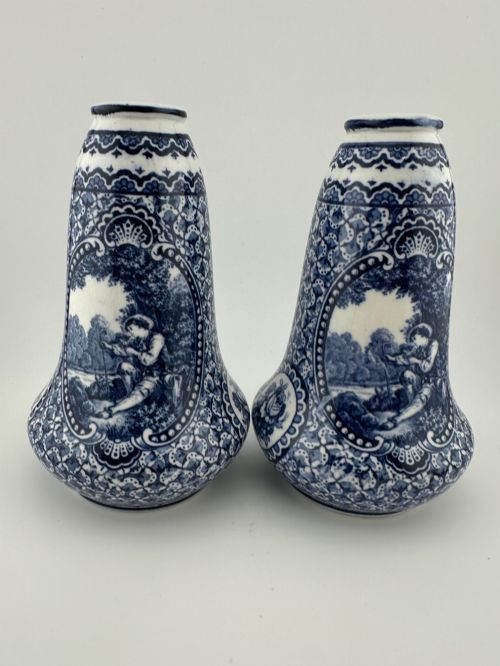
Porcelain elements often feature painted decoration or pate sur pate designs, held securely by cast bronze collars, handles, and feet. Marble bases and urn bodies were turned on lathes and polished before assembly with threaded bronze rods and nuts.
Louis XVI Urns Retail Price Guide 2026
Typical asking prices for louis xvi urns among the pieces listed under this phrase on Sellingantiques today, from the lower quarter to the upper quarter. They describe what is for sale here now, not the wider market.
Some urns hide a secret personality by flipping their lids over to turn from quiet mantel ornaments into glowing candleholders.
Assessing Craftsmanship
Quality rests in the crispness of the bronze chasing and the weight of the materials used in the body and mounts. Finer examples display deeply carved acanthus leaves, sharp facial details on masks, and heavy, solid marble rather than thin veneers.
The precision of the fit between metal mounts and the ceramic or stone body dictates the grade of the piece. Superior items show no gaps where gilt bronze collars meet porcelain vases or marble columns.
Japy Freres·Jean-Baptiste Delettrez·Achille Brocot·Casier·Louis Goret·Sacre
The Louis XVI Urns Glossary
- Ormolu
- Gilded bronze, where a layer of gold is applied to a base of cast bronze. This technique creates a rich, metallic yellow surface frequently found on nineteenth-century French decorative arts.
- Cassolette
- A reversible decorative vase or urn with a lid that can be turned over to function as a candleholder or left as a closed vessel. These dual-purpose objects often feature porcelain or marble bodies with gilt bronze mounts.
- Pate sur pate
- A ceramic decoration technique where layers of liquid white clay are painted onto a darker coloured body to build up a low relief cameo effect. It appears frequently on nineteenth-century porcelain panels and lamp bases.
- Garniture
- A set of matching decorative objects, typically consisting of a mantel clock and a pair of matching urns or candelabras. They were designed to sit together on a mantelpiece or sideboard.
- Neoclassical
- A style originating in the eighteenth century that draws inspiration from the classical art and architecture of ancient Greece and Rome. It emphasises symmetry, straight lines, and classical motifs such as urns and fluted columns.
Louis XVI Urns: Frequently Asked Questions
What is a cassolette?
A cassolette is a dual-purpose decorative vessel featuring a removable or reversible lid. One side presents a solid decorative urn profile, while the reverse holds a candle socket.
These pieces were popular in French interiors for easily shifting a room's function from formal display to ambient lighting.
How do I clean gilt bronze?
Gilt bronze and ormolu require gentle dusting with a soft dry brush to protect the delicate gold surface. Avoid chemical cleaners or abrasive cloths that can strip the gilding from the bronze base.
Accumulated grime can be addressed with a slightly damp cloth, followed immediately by thorough drying with a soft lint-free towel.
Are these urns eighteenth century?
Most pieces found in this category date from the nineteenth and early twentieth centuries, produced during active revivals of the eighteenth-century Louis XVI style. Makers of that later era reproduced classical forms with high skill.
Original eighteenth-century pieces do occur, though they are accompanied by later revival interpretations sharing the same aesthetic vocabulary.
How do I style a clock garniture?
A clock garniture is traditionally arranged with the central mantel clock flanked symmetrically by the matching pair of urns or candelabras. This balanced layout suits the top of a fireplace mantel or a long console table.
The pieces can also be separated if the room layout calls for balanced decoration across two different surfaces.