






Louis XVI Stool
A louis xvi stool brings formal neoclassical symmetry and carved proportion to an interior, shaped by giltwood, beech, and cane.
Louis XVI Stool
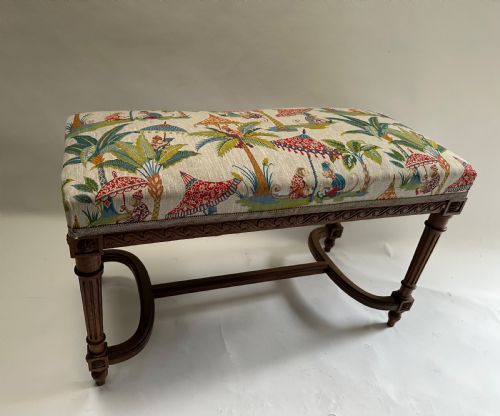
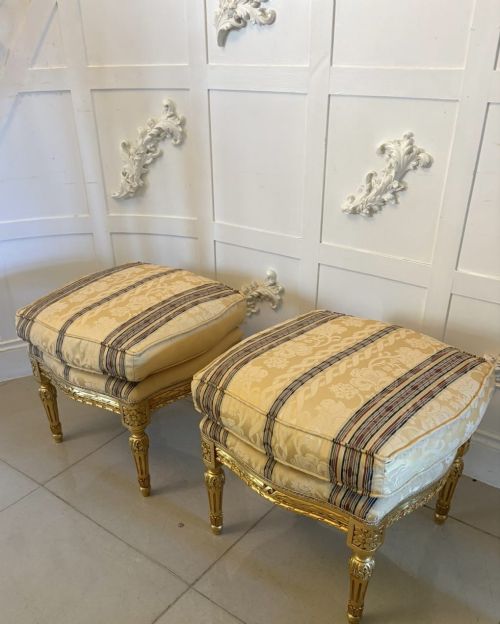
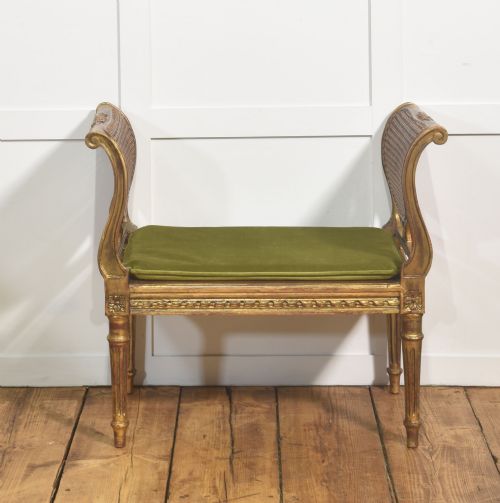
A louis xvi stool provides seating or foot support through formal French decorative forms, including window seats, banquettes, and circular boudoir stools. These pieces arrive in various guises from the nineteenth century and the early decades of the twentieth century, manifesting through revival periods and neoclassical design.
The version most frequently met on this page is the French window seat or giltwood stool reflecting Louis XVI style and French Neoclassical influence. Makers of these later iterations drew heavily on eighteenth-century proportions, employing carved wooden frames and upholstered or caned surfaces.
Forms extend from low footstools to larger duet stools and armchairs with matching elements, offering versatile placement at the foot of a bed or beneath a window. Gustavians and Adams interpretations also appear alongside strict French designs, broadening the stylistic range available.
How they were made
Workshops utilised solid timbers such as beech and walnut to carve the structural frames, applying surface decoration through gilding, paint, or natural wood finishes. Giltwood and white painted surfaces dominate the aesthetic, frequently complemented by brass details.
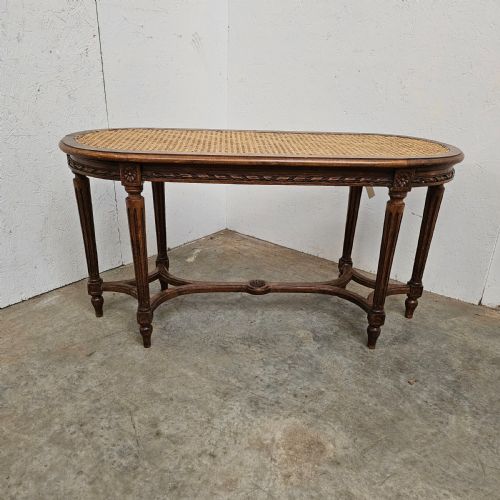
Upholstery and seating surfaces rely on traditional fabric, velvet, and woven cane panels fitted tightly into the wooden chassis. Carved relief work defines the legs and rails, echoing classical architectural motifs without excessive embellishment.
Louis XVI Stool Retail Price Guide 2026
Typical asking prices for louis xvi stool among the pieces listed under this phrase on Sellingantiques today, from the lower quarter to the upper quarter. They describe what is for sale here now, not the wider market.
Materials recorded across the selection include solid beech, walnut, giltwood, paint finishes, and woven cane panels.
What varies in quality
The integrity of the carved woodwork dictates the upper tier of quality, distinguishing crisp, deep hand-carving in beech or walnut from softer, mechanical shaping. Superior gilding and paint application show careful preparation of the underlying gesso rather than flat, uniform modern metallic washes.
Structural joinery and the retention of original cane or supportive webbing separate standard workshop output from finer artisan seating. Pieces retaining balanced proportions and harmonious decorative carving command greater visual authority in a room.
The Louis XVI Stool Glossary
- Giltwood
- Wood coated with thin gold leaf or powder over a prepared gesso ground. This finish provides a bright, reflective surface characteristic of formal seating.
- Cane
- Woven rattan material used for seat panels and backs. It offers lightweight flexibility and a textured contrast to solid wooden frames.
- Neoclassical
- A style reviving classical Roman and Greek motifs such as straight tapered legs, fluting, and symmetrical arrangement. It forms the core aesthetic of these pieces.
- Banquette
- An upholstered bench or long seat designed for domestic interiors. These pieces often feature carved wooden legs and padded top surfaces.
- Duet stool
- An extended bench designed to seat two players at a keyboard or to serve as a generous window seat. These items utilise elongated wooden frames.
Louis XVI Stool: Frequently Asked Questions
Where should I put a window seat?
A window seat suits low sills, long corridors, or the foot of a bed where formal seating is required without blocking light. Their compact footprint allows them to tuck neatly into alcoves.
In a bedroom or dressing room, these stools provide a practical perch that echoes the neoclassical lines of surrounding antique furniture.
How do I care for giltwood frames?
Giltwood requires gentle dusting with a soft, dry brush to protect the delicate gold leaf layer from abrasion or moisture damage. Avoid chemical polishes entirely.
Keeping the piece away from direct sunlight and damp environments ensures the underlying gesso and wood remain stable over time.
What defines Louis XVI style?
Straight lines, symmetrical geometry, and classical architectural motifs define the style, replacing the curving exuberance of earlier rococo designs. Look for fluted legs and square joinery.
Ornamentation draws on antiquity, featuring ribbon twists, acanthus leaves, and beaded mouldings carved directly into the beech or walnut frame.
Can I reupholster an antique stool?
Reupholstering is common for project pieces and allows the selection of textiles that match modern interiors while preserving the antique frame. Traditional webbing and stuffing can be renewed.
Retaining the original underlying upholstery structure is preferable when fabric survival permits, but new velvet or plain cloth breathes life into worn examples.