



Louis XVI Bergere Chairs
Louis xvi bergere chairs offer enclosed seating built for comfort, combining French neoclassical grace with deep, upholstered frames.
Louis XVI Bergere Chairs
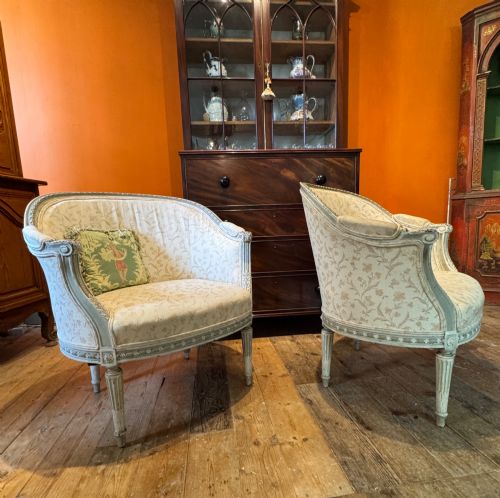
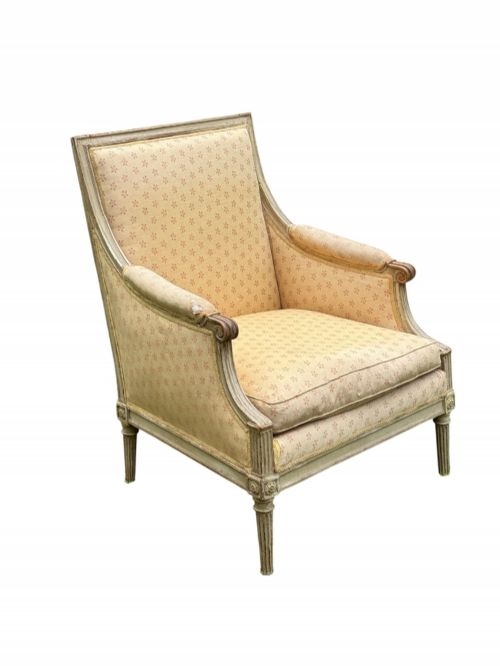
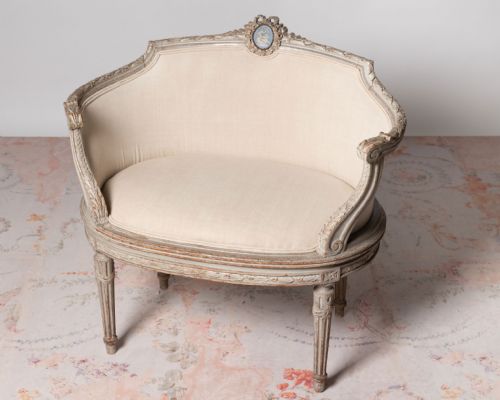
When you search for louis xvi bergere chairs, you encounter deep, enclosed armchairs with upholstered backs and sides, frequently accompanied by matching footstools or built as window seats. The forms span from authentic eighteenth-century examples to nineteenth-century revivals and twentieth-century interpretations.
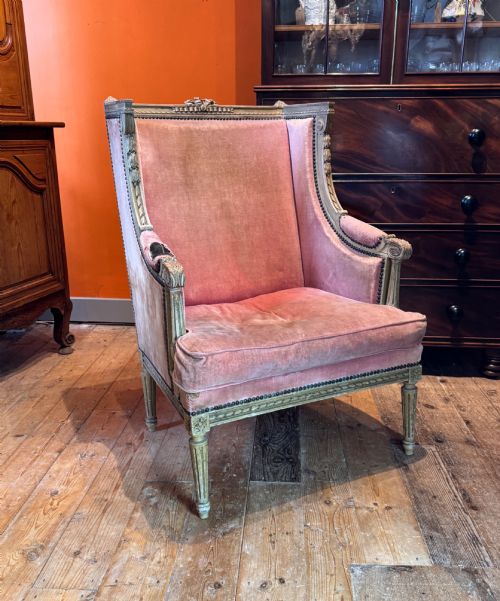
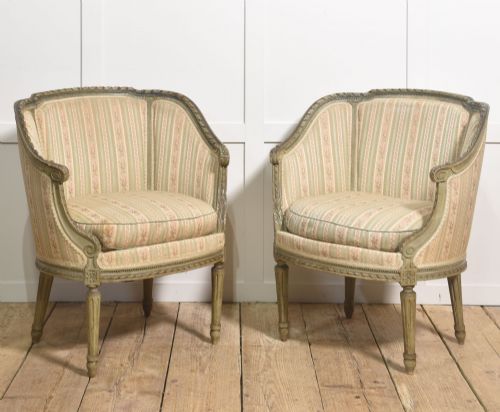
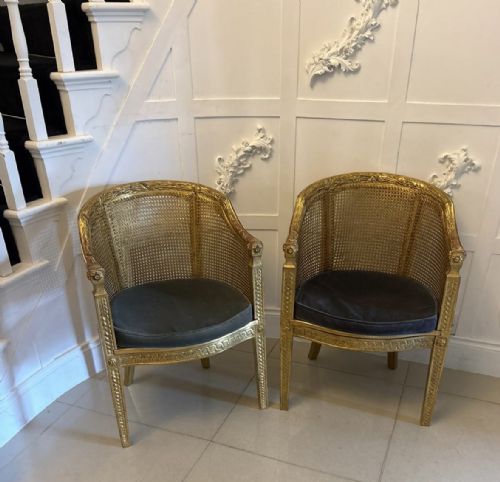
The version you are most likely to meet on this page is the nineteenth-century revival piece, often carved from beech or walnut, or finished in giltwood and original paint. These chairs maintain the classic neoclassical vocabulary of straight fluted legs and rectilinear frames while providing substantial seating for a salon or library.
What varies in quality
The refinement of the woodcarving dictates the visual strength of the frame, distinguishing crisp acanthus leaves and fluted legs from softer, simpler moulding. Original surface treatments, whether aged giltwood or untouched old paint, hold greater integrity than later repainting.
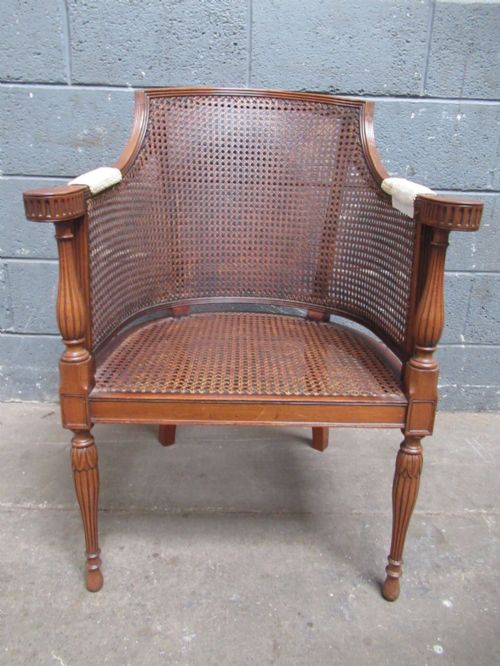
Structural heft and timber selection set apart standard production from exceptional seating, particularly in larger library or wingback formats. The survival of period caning and the quality of secondary framing timbers also mark the distinction between tiers of execution.
One tiny child-sized armchair survives complete with its original cane seat and back, ready for a very small aristocrat.
Henri Jacob
The Louis XVI Bergere Chairs Glossary
- Bergère
- An enclosed upholstered armchair with closed sides, usually featuring a loose seat cushion. This form developed in France during the eighteenth century.
- Giltwood
- Timber coated with thin gold leaf or powder over a prepared gesso base. This finish was favoured for formal salon seating.
- Caning
- Woven rattan or split cane used to form resilient panels for chair seats and backs. It provides flexible support without heavy upholstery.
- Neoclassical
- A style drawing inspiration from the classical art and architecture of ancient Greece and Rome. It defines the straight lines and geometric symmetry of this seating.
- Tub chair
- An armchair with a continuous curved back and armrest rail enclosing the sitter. This design offers snug, enveloping comfort.
Louis XVI Bergere Chairs: Frequently Asked Questions
What is a bergere chair?
A bergere chair is a French upholstered armchair characterised by closed upholstered sides between the armrest and the seat. It provides a deeper and more enclosed sit than an open armchair.
Most examples include a loose down or feather cushion resting on a webbed or caned base. The style originated to protect sitters from drafts in large rooms.
How do I spot a revival piece?
Revival pieces from the nineteenth and twentieth centuries often display machine tooling marks on hidden frame components or modern secondary woods beneath the finish. Their proportions can also feel slightly heavier than eighteenth-century originals.
Examining the construction joints and wear patterns helps determine whether a chair dates to the original neoclassical period or subsequent revival movements.
Where should I place these chairs?
These chairs suit formal sitting rooms, libraries, and bedrooms where their enclosed profiles create distinct reading or conversation zones. Pairing them with a window seat or footstool extends their function.
Because of their decorative backs, they sit well away from walls where their carved frames and finished woodwork remain visible from all angles.
Are caned seats durable?
Caned seats woven from rattan provide resilient and flexible support that withstands regular use if kept from drying out. They require careful handling to avoid puncturing the woven strands.
Many chairs supplement the caned frame with a removable upholstered cushion for added comfort and protection during daily seating.