
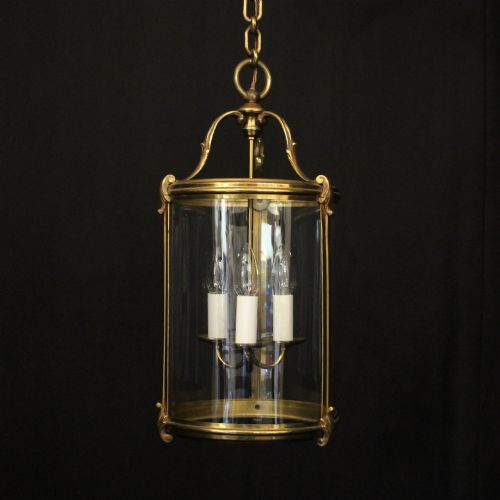
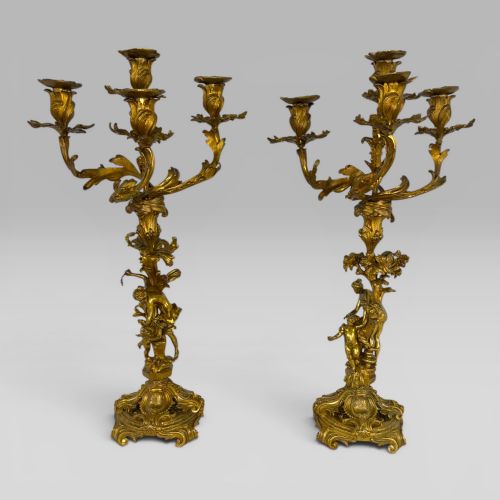


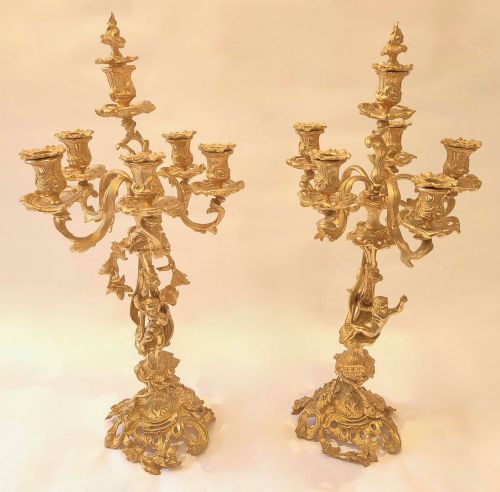


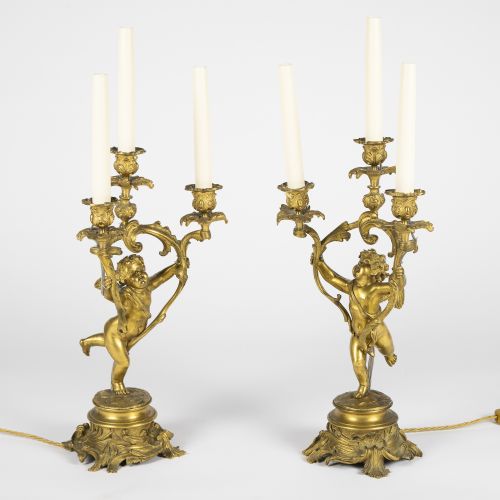

Louis XV Style Candelabra
Louis xv style candelabra bring elaborate French Rococo Revival character to a room through exuberant cast metalwork and branching candle holders.
What Louis xv style candelabra are
When searching for louis xv style candelabra, buyers encounter sculptural lighting pieces originating predominantly from nineteenth century France, alongside iterations reaching back to the eighteenth century. These decorative items function as table lamps, convertibles, or standard multi-light candle holders designed to create dramatic illumination.
The pieces appearing on this page encompass matched pairs featuring French Rococo Revival and French Chateau aesthetics. Common configurations include triple light candelabra, two-light arrangements, and single candlesticks incorporating figural elements like musicians, putti, and cherubs.
Originating largely from French workshops, these works frequently integrate contrasting elements such as porcelain figures or crystal drops. The selection balances historical eighteenth century examples with nineteenth century revivals and later twentieth century interpretations.
How they were made
The construction of these pieces relies heavily on metal casting techniques, utilising gilt bronze, ormolu, and gilded brass to achieve rich, reflective surfaces. Artisans sculpted intricate floral scrolls and asymmetric rocaille motifs that define the French Rococo Revival aesthetic.
Many examples incorporate mixed media components, combining the metal mounts with porcelain figures, carved alabaster, marble bases, and hanging crystal or glass drops. Enamel details occasionally add colour and surface texture to the bronze and ormolu armatures.
Retail Price Guide 2026
Typical UK retail prices for louis xv style candelabra, calculated from the Sellingantiques database of over a million retail prices indexed since 2003. This retail price guide relies exclusively on Sellingantiques data; no external sources or auction records are used, so the figures do not describe the wider market.
Listings feature pieces spanning the eighteenth, nineteenth, and twentieth centuries, executed in gilt bronze, ormolu, porcelain, alabaster, crystal, and glass.
What varies in quality
The standard of ciselure, or hand-chasing on the ormolu and gilt bronze, dictates the crispness and depth of the scrollwork and figural details after casting. Superior pieces display sharply defined facial expressions on cherubs and musicians, alongside clean junctions between branching arms.
Integration of secondary materials such as Sevres style porcelain, Meissen figures, and marble or alabaster bases separates standard production from exceptional examples. The weight and stability of the cast bronze armature, together with the clarity of crystal and glass pendants, further influence the standing of an individual pair.
Meissen·Clodion
The Louis XV Style Candelabra Glossary
- Ormolu
- Gilt bronze created by applying a mercury and gold amalgam to a bronze base, producing a warm golden finish characteristic of French decorative arts. This technique requires meticulous hand-chasing after firing to sharpen the decorative details.
- Rococo Revival
- A nineteenth century design movement that reinterprets the asymmetric, fluid curves and naturalistic motifs of the original eighteenth century French court style. It dominates the ornamentation found on these candelabra.
- Putti
- Depictions of chubby male infants, often winged, used as sculptural supports or decorative accents among the candle branches. They derive from classical art and frequent nineteenth century French metalwork.
- Ciselure
- The delicate hand-chasing and finishing work executed on cast bronze or ormolu with small chisels and hammers. This process restores texture and creates contrast between matte and polished surfaces.
- Sevres style
- A descriptor for porcelain decorated in the manner of the famous French royal manufactory, often featuring hand-painted floral motifs or figural scenes mounted within bronze frames.
Frequently Asked Questions
How were they used historically?
These candelabra stood upon dining tables, mantelpieces, and sideboards to provide ambient illumination during evening gatherings in grand interiors.
The branching arms allowed multiple candles to burn simultaneously, amplifying the flickering light through reflected surfaces on gilt bronze and crystal drops.
How do I style them today?
Position a matched pair on a dining table, sideboard, or mantelpiece to anchor a room with nineteenth century French character and warm metallic tones.
Some pieces are adaptable as table lamps, allowing integration with modern electrical wiring while retaining their historic metalwork and porcelain components.
How do I tell periods apart?
Eighteenth century examples display the original manufacturing techniques and wear patterns associated with the period of Louis XV, whereas nineteenth century pieces reflect the Rococo Revival movement of 1860.
Twentieth century interpretations often incorporate earlier stylistic elements while exhibiting different casting weights and material treatments compared to antique counterparts.