
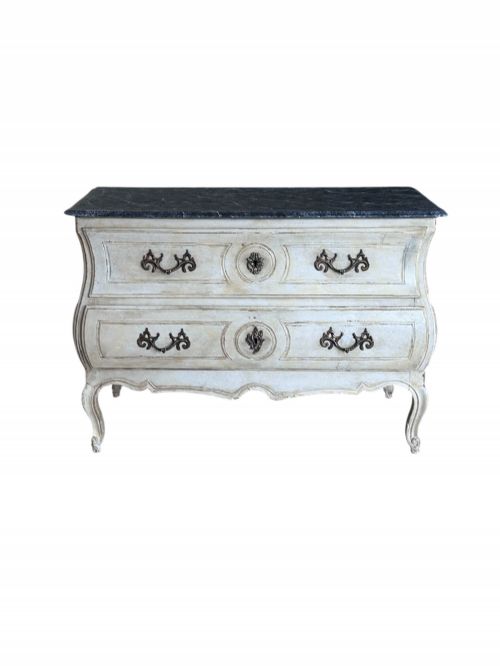
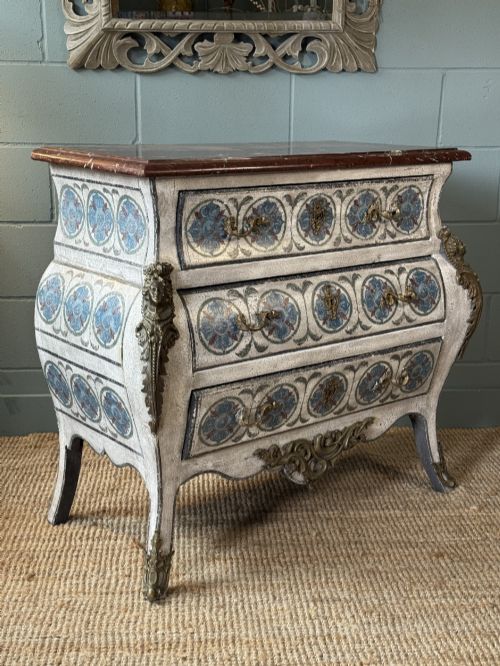


Louis XV Painted Chest
A louis xv painted chest brings fluid serpentine lines and decorative painted surfaces into a room, offering practical storage with distinct French character.
Louis XV Painted Chest
When you search for a louis xv painted chest, you encounter storage furniture defined by curved fronts, bombé profiles, and decorative painted or gilded finishes. These pieces originate primarily from France, spanning eighteenth-century provincial pieces to later nineteenth- and twentieth-century revivals.
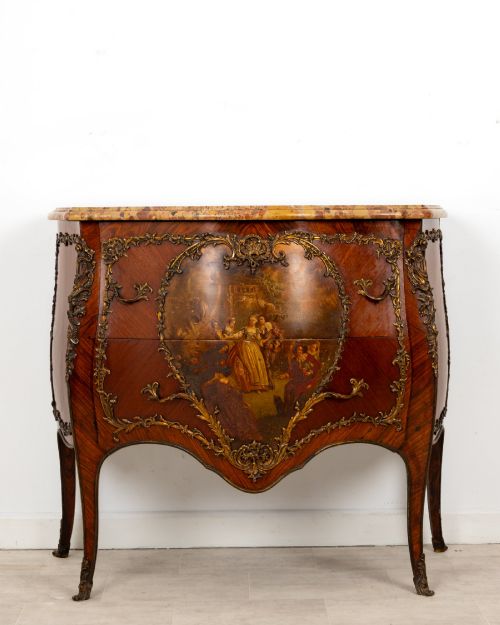
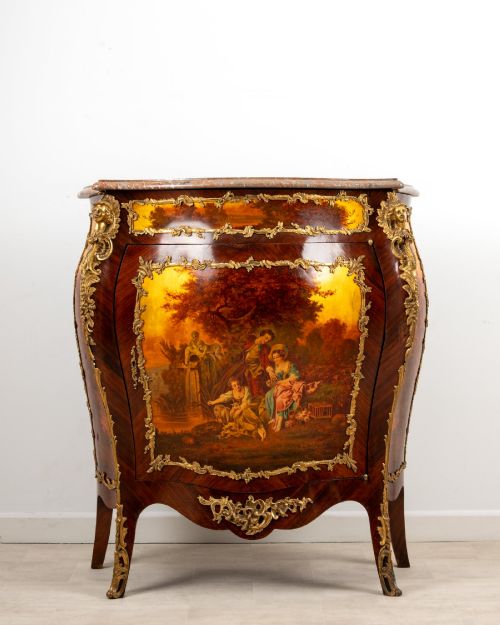
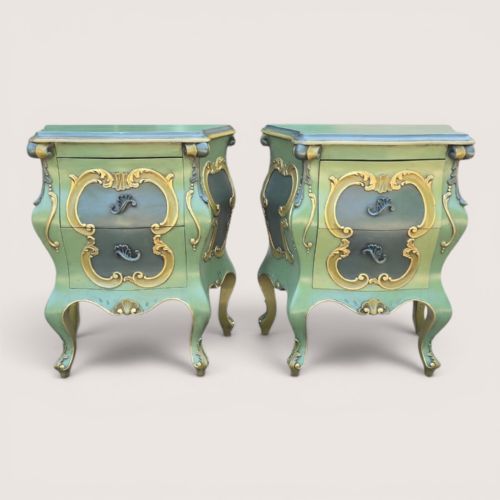
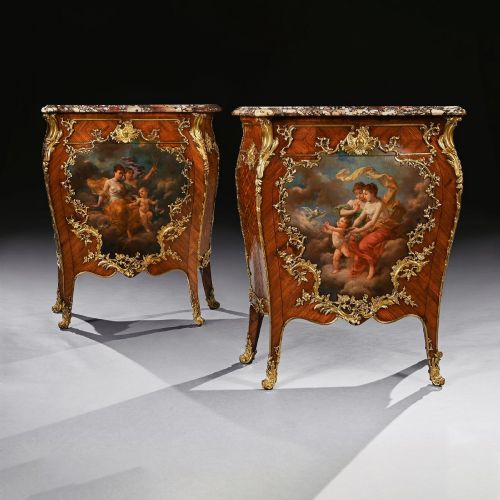
The selection ranges from grand marble-topped commodes with gilt-bronze mounts to smaller bedside chests and cabinets. Painted wood forms the primary visual surface, frequently complemented by carved oak details or elaborate lacquerwork.
Provincial examples show simpler regional interpretations of court styles, whereas revival pieces lean heavily into ornate rococo flourishes. Both types share the characteristic asymmetric scrollwork and sweeping lines associated with the period.
How They Were Made
Cabinetmakers constructed these chests using solid timbers like oak for structural integrity, often applying veneers of kingwood or exotic hardwoods to curved surfaces. Frames were shaped to create the characteristic serpentine and bombé silhouettes required by the style.
Decorative surfaces relied on skilled paint application, sometimes incorporating lacquer or Vernis Martin techniques to achieve glossy, multi-layered finishes. Gilding and cast or gilt-bronze or ormolu mounts highlighted the structural contours and drawer edges.
Many examples incorporated heavy marble tops, requiring sturdy joinery to support the stone slab securely atop the wooden carcase.
Listings feature pieces spanning the eighteenth century through to the 1930s, incorporating materials such as marble, ormolu, and lacquered wood.
What Varies In Quality
Quality reveals itself in the harmony of the proportions and the fluency of the carved or painted lines across the serpentine front. Superior examples display confident, hand-mixed painted surfaces that integrate well with the underlying timber.
The execution of the mounts and hardware distinguishes standard production from exceptional pieces. Finely chased gilt-bronze or ormolu hardware sits flush and matches the complexity of the cabinetwork, whereas lesser versions use simpler brass elements.
Construction details such as dovetailed drawer boxes and the weight of the fitted marble slab separate utilitarian storage from finer decorative furnishings.
The Louis XV Painted Chest Glossary
- Commode
- A low chest of drawers or cabinet, typically standing on relatively tall legs. The term originates from French and remains the standard descriptor for these decorative storage pieces.
- Bombé
- A swelling, outward-curving profile on the front and sides of a chest. This bulging shape requires advanced woodworking techniques to achieve successfully.
- Serpentine
- A furniture front or top shaped with a central concave curve flanked by two convex curves. It creates gentle, flowing movement across the face of the piece.
- Ormolu
- Gilded bronze mounts applied to furniture for decoration. It provides metallic contrast against painted or polished wooden surfaces.
- Vernis Martin
- A simulated Japanese lacquer developed in eighteenth-century France using resin and multiple layers of paint. It produced a luminous, polished finish often seen on fine revival pieces.
Louis XV Painted Chest: Frequently Asked Questions
How do I spot an eighteenth-century original?
Authentic eighteenth-century examples exhibit hand-cut joinery, aged timber patination beneath the paint layers, and regional construction methods typical of French provincial workshops. The wear patterns on the painted surfaces generally show genuine integration with the wood over generations.
Revival pieces from the nineteenth and twentieth centuries often feature machine-sawn elements, standardised hardware, and cleaner interior construction while still maintaining traditional forms.
Where should I place a bedside chest?
These compact chests suit bedrooms as bedside tables, providing surface space for lamps and concealed storage within a decorative footprint. Their curved profiles soften the angles of a room.
They also function effectively in hallways or reception spaces where floor space is limited but visual presence is desired.
How do I care for painted wood?
Dust surfaces regularly with a soft, dry cloth and avoid harsh chemical cleaners that can degrade aged paint or gilt details. Keep the furniture away from direct heat sources and strong sunlight to prevent the timber from warping and the paint from fading.
Marble tops require gentle wiping with a damp cloth and immediate attention to spills to prevent staining the stone.
What is the difference between provincial and revival styles?
Provincial pieces were made in the regions outside Paris during the original period, featuring simpler lines, local timbers like oak, and understated painted finishes. They reflect practical domestic needs alongside contemporary stylistic trends.
Revival pieces date from later centuries, specifically the nineteenth and early twentieth eras, and often adopt the most ornate aspects of court furniture with elaborate ormolu mounts and exotic veneers.