







Louis XV Lounge Chairs
Louis xv lounge chairs offer sweeping carved lines and deep seats, bringing eighteenth-century French elegance straight into a modern drawing room.
Louis XV Lounge Chairs
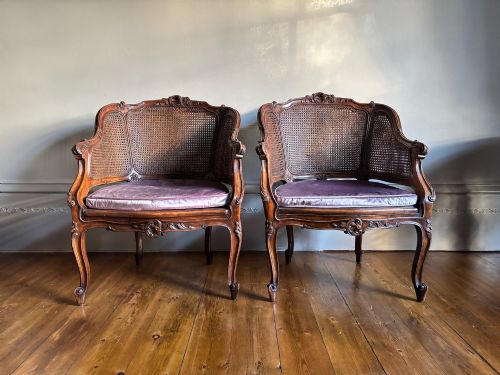
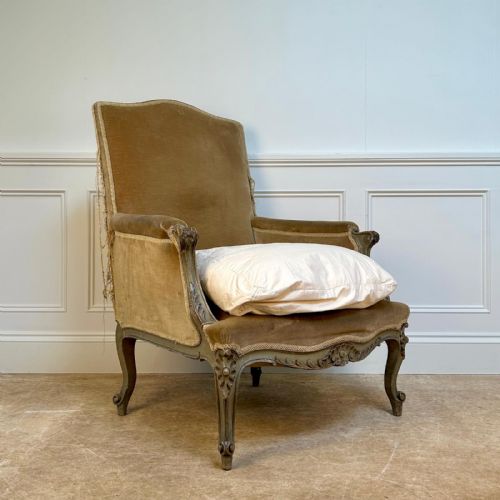
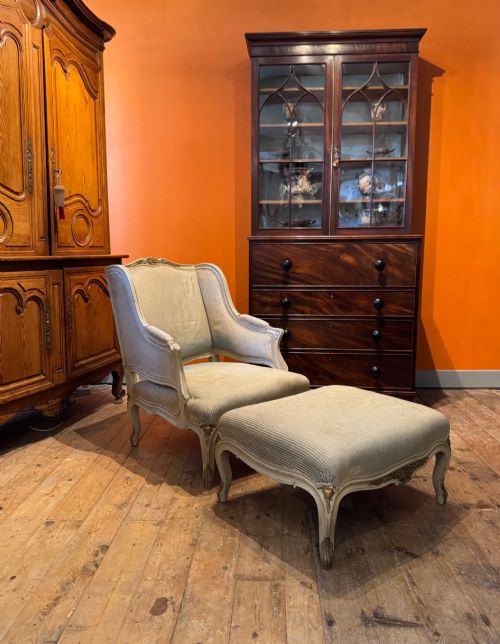
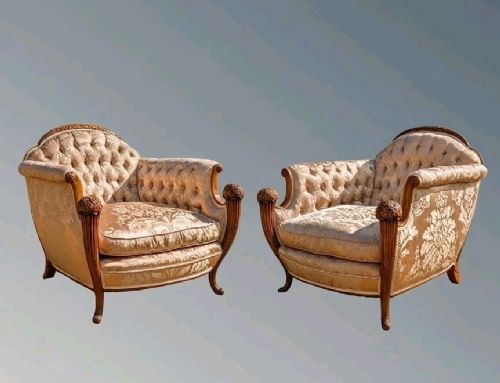
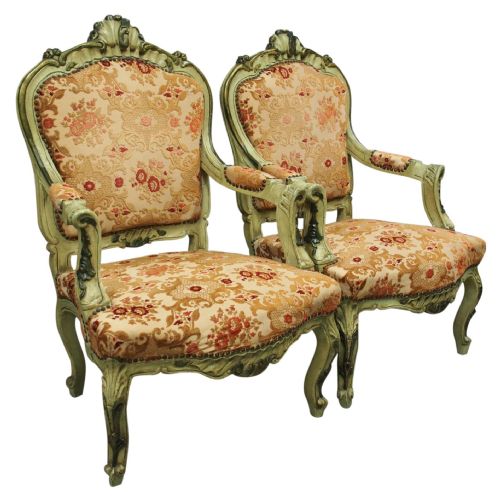
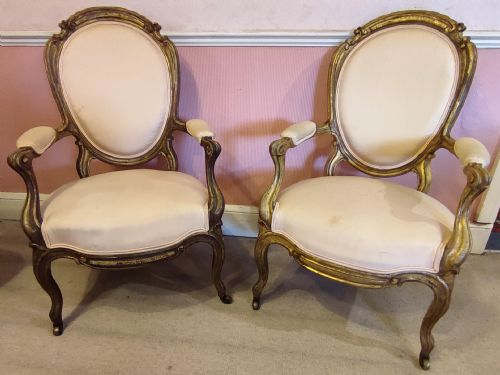
When you search for louis xv lounge chairs, you encounter nineteenth-century revivals and early twentieth-century interpretations rather than original court pieces from the reign itself. These items span armchairs, bergères, salon suites, and chaise longues created across several decades of European cabinetmaking.
The prevailing aesthetic leans heavily on French Rococo Revival and Louis XV styles, characterised by asymmetrical cartouche backs, cabriole legs, and flowing scrollwork. Most examples on this page are walnut, giltwood, or painted beech, often surviving in pairs or complete three-piece suites.
Makers drew directly on historical forms, producing walnut armchairs in silk, gilded bergères, and cane-seated variants. The selection bridges formal nineteenth-century walnut carving and lighter painted finishes from the early twentieth century.
Materials and construction methods
Cabinetmakers relied on solid walnut, beech, and giltwood to build sturdy frames capable of holding deep hand-carved ornamentation. Skilled carvers shaped floral motifs, acanthus leaves, and flowing cabriole legs directly into the timber before applying paint, gilding, or polished finishes.
Upholstery techniques involved traditional stuffing supported by webbing or cane panels, finished with silk, velvet, petit point fabric, or original paint. Brass tacks and detailed trim secured the textile coverings to the structural woodwork.
Louis XV Lounge Chairs Retail Price Guide 2026
Typical asking prices for louis xv lounge chairs among the pieces listed under this phrase on Sellingantiques today, from the lower quarter to the upper quarter. They describe what is for sale here now, not the wider market.
Some nineteenth-century makers snuck cheeky little carved whiskers onto their rococo scrollwork just to see if aristocrats were paying attention.
Distinctions in quality and execution
Superior pieces display deep, crisp hand-carved wooden details where the contours of the floral motifs and scrolls remain sharp and well-defined. Lesser examples show softer, shallower moulding cast or carved with less attention to the organic flow of the wood.
The integrity of the structural joinery and the authenticity of surface treatments, such as original paint or genuine period gilding, set finer examples apart. Frames that retain their original cane work or period upholstery textiles hold greater integrity than heavily altered pieces.
The Louis XV Lounge Chairs Glossary
- Bergère
- An enclosed upholstered armchair with wooden sides and a padded back, typically featuring a loose seat cushion. These seats provide a deeper, more enclosed lounge experience than standard open armchairs.
- Cabriole leg
- A furniture leg that curves outward in a convex arc and tapers inward in a concave arc, terminating in a scroll or pad foot. This iconic shape defines the silhouette of eighteenth-century revival seating.
- Duchesse brisée
- A chaise longue split into two or three modular sections, combining an armchair with one or two footstools. It creates an extended lounge format designed for reclining in formal salons.
- Petit point
- A very fine count tent stitch embroidery executed on canvas, often utilised for historic chair seat and back covers. It allows for intricate pictorial and floral patterns.
- Giltwood
- Timber coated with a thin layer of gold leaf or gilt paint to create a luminous metallic surface. This finish was favoured for formal salon seating throughout the nineteenth century revival periods.
Louis XV Lounge Chairs: Frequently Asked Questions
Are these chairs comfortable for daily use?
These lounge chairs are built with generous proportions and deep padding, making them suitable for everyday sitting in a living room or study.
Their supportive armrests and raked backrests offer a comfortable posture for reading or relaxing, though historic upholstery may feel firmer than modern foam cushions.
How do I distinguish revival pieces from originals?
Most pieces matching this search date from the nineteenth and early twentieth centuries rather than the actual reign of Louis XV. Examination of the timber ageing, tool marks, and secondary woods usually reveals the later nineteenth-century revival craftsmanship.
Revival pieces often incorporate machine assistance or nineteenth-century joining techniques while faithfully copying the earlier Rococo aesthetic.
Can I mix these chairs with modern decor?
Their sculptural carved wood frames and ornate silhouettes contrast well against clean, contemporary interior walls and neutral colour palettes. Pairing an antique armchair with minimalist furniture highlights the craftsmanship of the carved woodwork without overwhelming the space.