
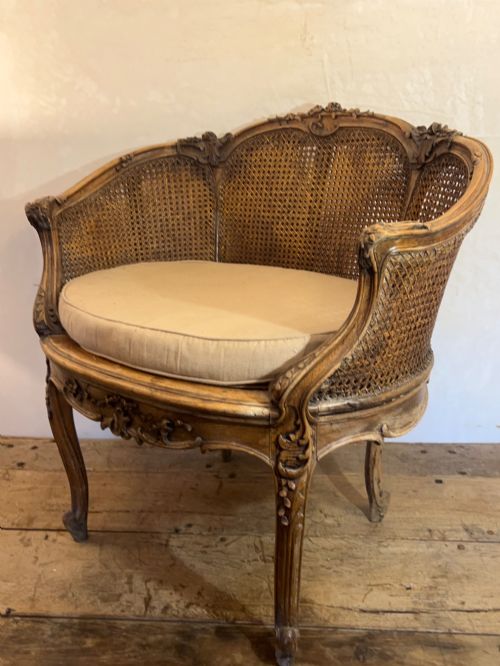
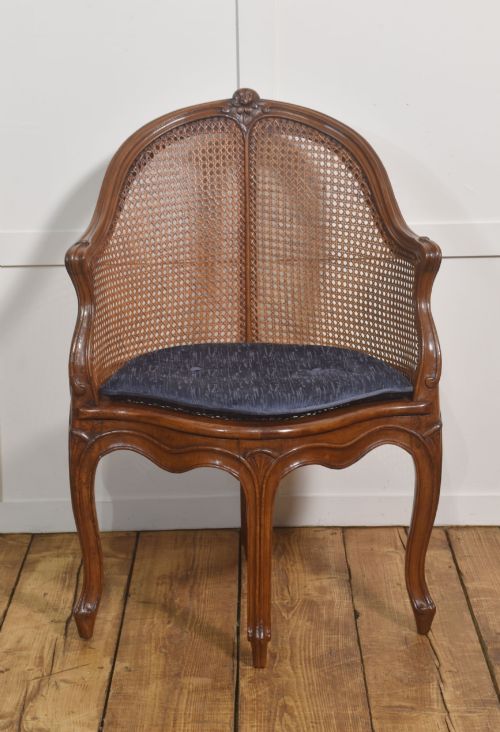
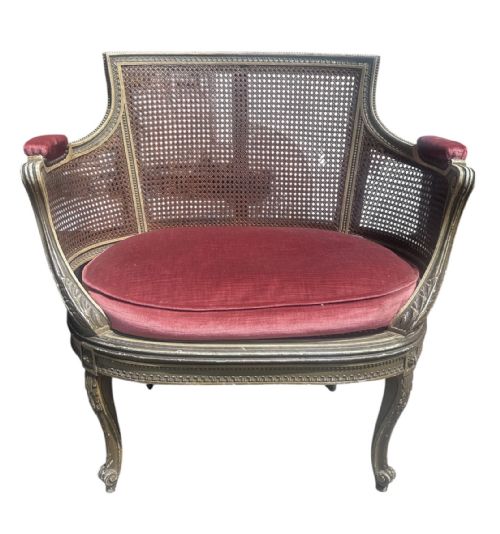


Louis XV Cane Armchair
A louis xv cane armchair brings authentic French curves and woven texture into a room, offering both sculptural grace and deep seating comfort.
Louis XV Cane Armchair
A louis xv cane armchair is defined by its sweeping cabriole legs, curved framework, and open woven seating or back panels. These pieces combine eighteenth-century aesthetic roots with nineteenth-century and early twentieth-century production dates found in the evidence.
Most examples encountered on this page belong to the revival and provincial styles, spanning the nineteenth century through the nineteen-twenties. They appear as tub chairs, salon chairs, and library bergères rather than original period pieces from the royal courts.
How they were made
Makers shaped the timber frames from walnut, beech, and oak, often finishing the wood with paint or carved ornamentation. Artisans worked these materials by hand to achieve the characteristic serpentine lines and flowing contours.
Panels of rattan cane and woven cane were hand-threaded into the frames to create supportive backrests and seats. These woven sections were frequently paired with upholstered cushions covered in velvet, textile, or fabric.
Listings feature pieces spanning from eighteen-eighty through the nineteen-twenties, incorporating beech, walnut, oak, paint, and rattan cane.
What varies in quality
The sophistication of the carved woodwork dictates the upper tier of quality, distinguishing deeply sculpted floral motifs from plain moulded frames. Firmer structural timber and finer grain selection in walnut or beech elevate certain armchairs above standard production.
The tightness and regularity of the cane weave separate superior examples from simpler ones. Preservation of the original painted finishes or quality upholstery fabrics also alters the visual weight and finish of the chair.
The Louis XV Cane Armchair Glossary
- Bergère
- An enclosed upholstered armchair with wooden sides and a built-in upholstered seat cushion. This form provides a deeper and wider seat than a standard salon chair.
- Cabriole leg
- A furniture leg that curves out and then narrows inward, terminating in a small foot. It mimics the natural shape of an animal limb and defines the silhouette.
- Cane
- Strips of peeled rattan woven into an open mesh pattern for chair seats and backs. This material offers lightweight flexibility and breathability.
- Corbeille
- A seat style featuring a rounded, basket-like back that curves continuously into the armrests. It wraps around the sitter for a secure enclosure.
- Revival style
- A design movement that revives historical aesthetics, such as eighteenth-century French motifs, during later periods like the nineteenth and early twentieth centuries. It reinterprets past forms for contemporary interiors.
Louis XV Cane Armchair: Frequently Asked Questions
How do I date these armchairs?
Dating relies on timber characteristics, construction methods, and stylistic revival markers seen across the nineteenth and early twentieth centuries. The evidence shows pieces originating from eighteen-eighty up to nineteen-twenty.
Examining the wear on the wood and the tightness of the cane weave helps place the chair within its revival period. Earlier nineteenth-century examples often display denser walnut frames compared to later twentieth-century iterations.
Where should I place a bergere?
A bergère suits living rooms, drawing rooms, or libraries where its deep seat provides a comfortable reading spot. Pairs work well flanking a fireplace or positioned opposite a sofa.
Because these chairs feature finished woodwork on all sides, they can sit away from walls as freestanding sculptural elements in a room.
How do I care for the cane?
Cane requires gentle dusting with a soft brush and occasional light moisturisation to prevent the rattan fibres from becoming brittle. Keeping the chairs away from direct heat sources protects the woven material.
Avoid placing excessive localized weight on the centre of the woven panels to maintain tension in the cane mesh.