

Louis XV Bronze Chandelier
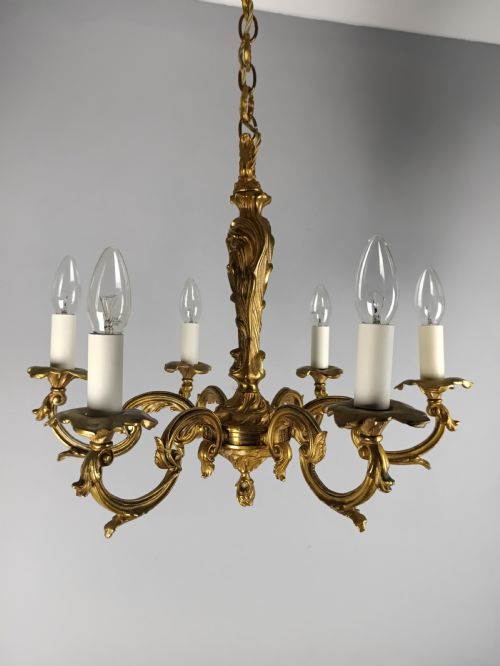
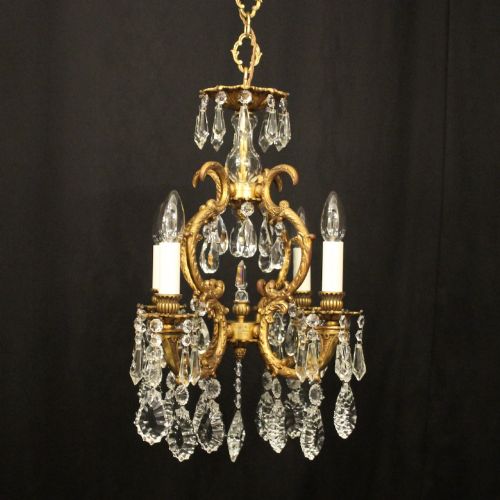
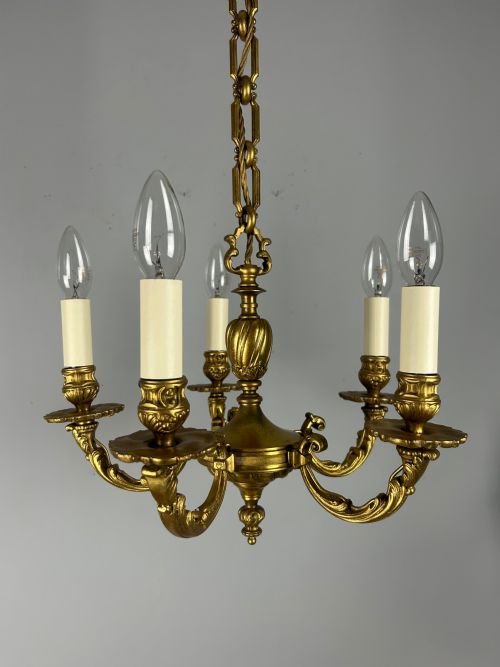
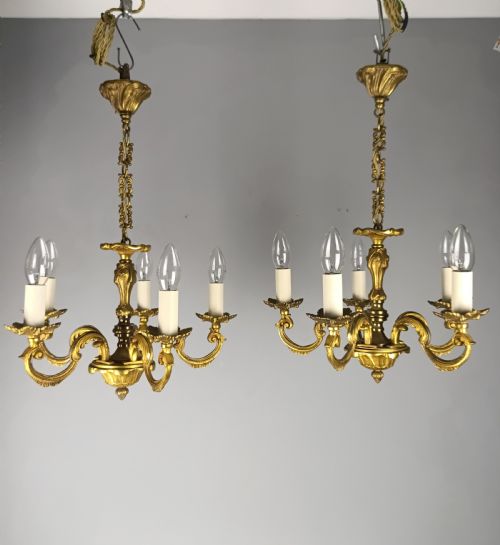
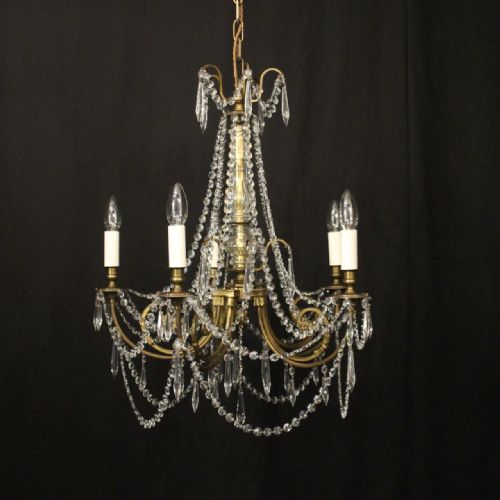
A louis xv bronze chandelier brings sweeping rococo curves and brilliant crystal drops to a high ceiling.
Louis XV Bronze Chandelier
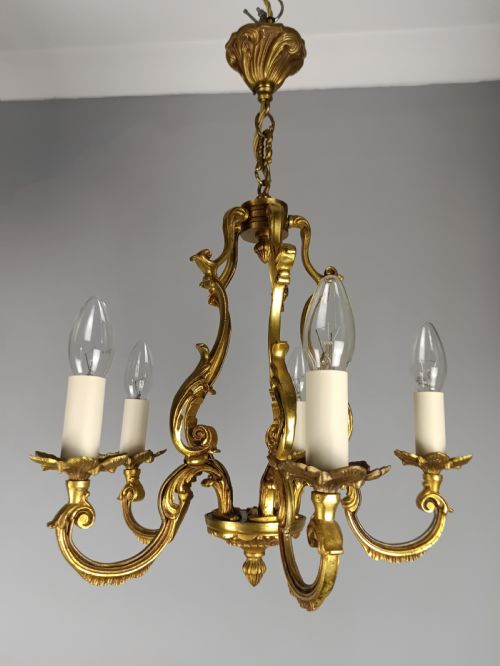
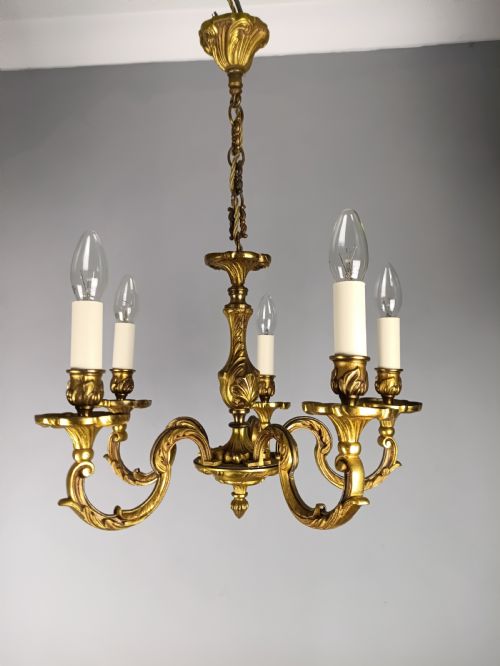
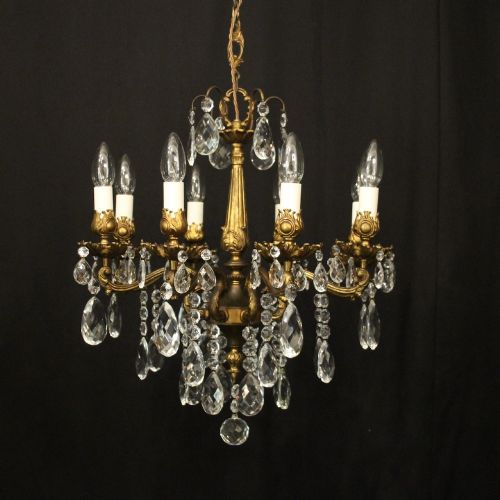
A louis xv bronze chandelier displays the ornate asymmetry and organic forms typical of the rococo style. Most examples encountered here originate from France, spanning the nineteenth and early twentieth centuries.
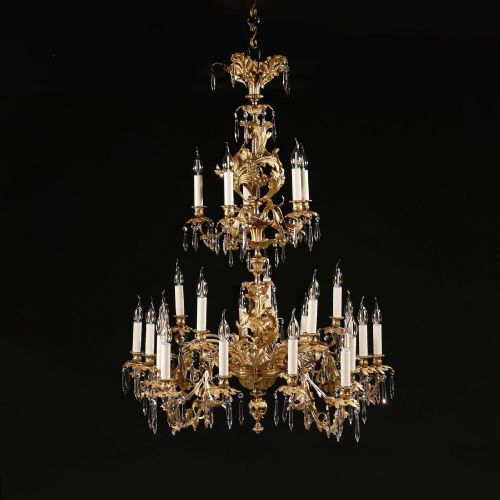
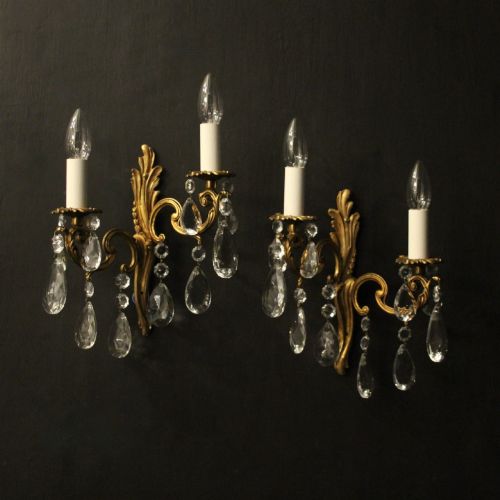
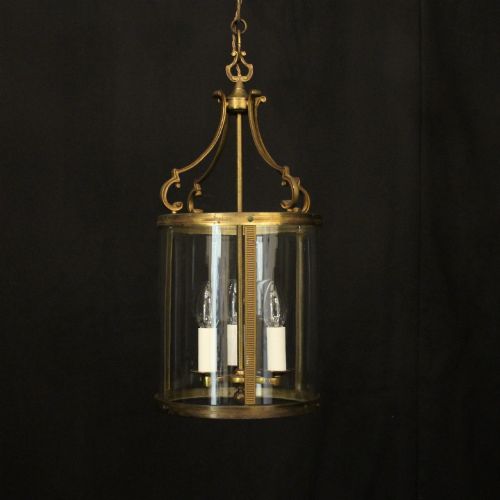
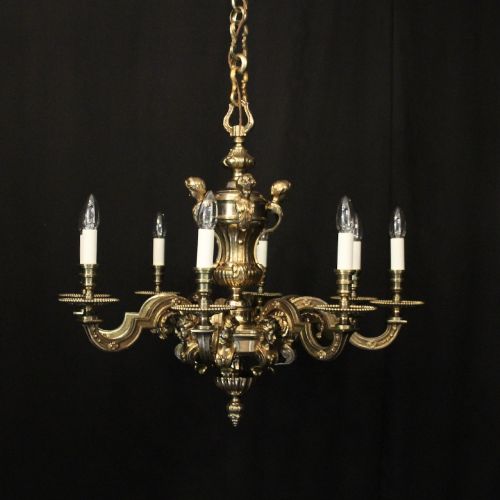
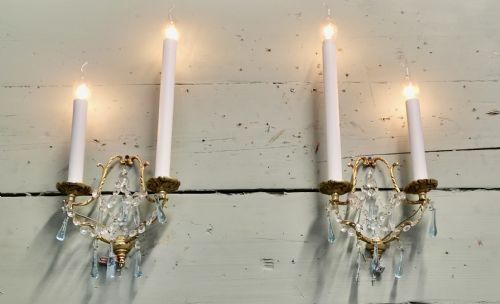
The selection extends beyond standard hanging lights to encompass hall lanterns, wall sconces and multi-tiered fixtures. These pieces range from modest three-light designs to grand multi-arm configurations intended for substantial reception rooms.
Materials and construction
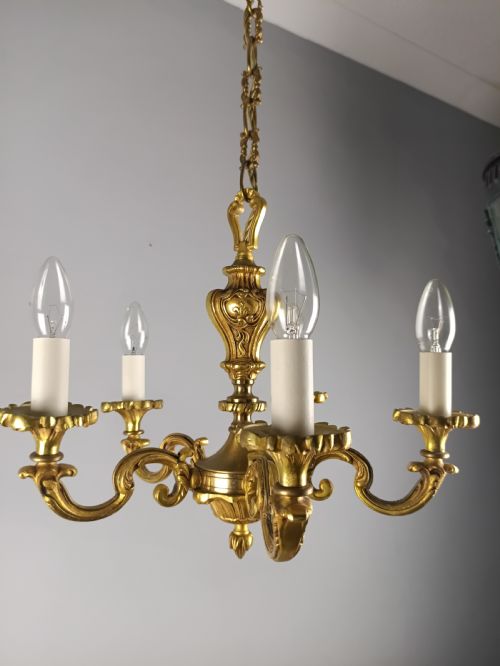
Foundry workers cast the primary frames in bronze, brass or metal before applying a gilt or gilded finish. This creates the warm metallic lustre characteristic of the style.
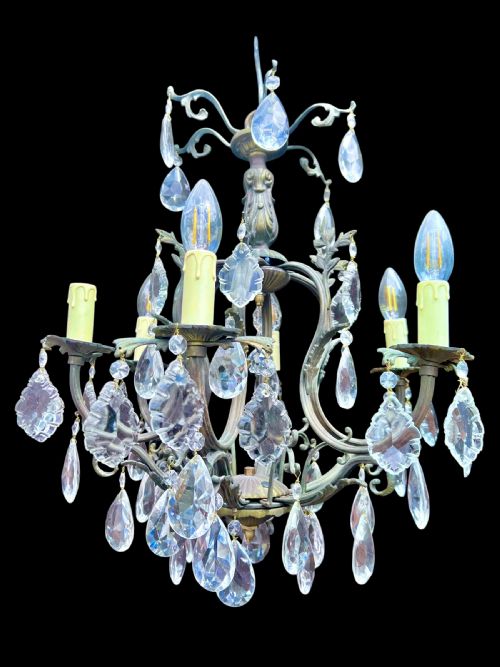
Artisans combined these metal armatures with cut glass and crystal pendants. These reflective elements refract the illumination from numerous candle-style lights.
Some multi-arm fixtures weigh more than a stout medieval hound, requiring serious reinforcement in the ceiling joists.
Assessing the craftsmanship
The refinement of the cast bronze ornament distinguishes finer examples from simpler production. Superior chasing provides crisp detail to the scrolling acanthus and floral motifs.
The density and cut of the crystal drops dictate how light disperses across the room. High-grade glass maintains clarity and precise faceting, whereas lesser work relies on simpler pressed components.
The Louis XV Bronze Chandelier Glossary
- Gilt bronze
- Metal coated with a thin layer of gold. It gives the chandelier a rich, enduring metallic finish.
- Birdcage chandelier
- A skeletal frame design resembling an avian enclosure. This construction supports internal tiers of crystal drops and candle arms.
- Convex hall lantern
- An enclosed ceiling fixture featuring curved glass panels. It protects the internal light source while dispersing illumination outward.
- Rococo revival
- A nineteenth-century artistic movement that reinterprets eighteenth-century decorative motifs. It champions asymmetrical scrolls and naturalistic shell forms.
Louis XV Bronze Chandelier: Frequently Asked Questions
How do I clean a crystal chandelier?
Maintenance requires gentle cleaning of each crystal pendant and bronze arm in situ using a mild cleaning solution and a soft cloth. Avoid harsh chemical sprays that might damage the gilt surface.
Take care not to twist individual arms or strain the wiring while wiping down the fixture. Regular dusting prevents grime accumulation in the intricate cast crevices.
Are these lights wired for modern ceilings?
Many antique fixtures arrive with older electrical wiring or require conversion to meet current domestic standards. A qualified electrician should inspect and adapt the internal components before installation.
Ceiling fixings must also support the substantial weight of cast bronze and crystal components. Secure anchoring to ceiling joists is essential for safety.
What rooms suit a hall lantern?
Convex hall lanterns serve as striking focal points in entranceways, stairwells and high-ceilinged corridors. Their enclosed design provides directed downward illumination.
Scale is key when placing these fixtures in smaller spaces. Ensure sufficient clearance beneath the lowest point for foot traffic.
How do I identify a nineteenth-century piece?
Nineteenth-century examples often exhibit heavier bronze casting and hand-cut crystal details. Stylistic cues draw heavily from French rococo traditions.
Examine the construction joints and fixing screws for signs of period manufacture. Older threaded components differ significantly from modern machine-made fixings.