

Louis Style Nightstands
Louis style nightstands bring continental elegance to a bedroom, offering practical surface space alongside classic carved or inlaid woodwork.
Louis Style Nightstands
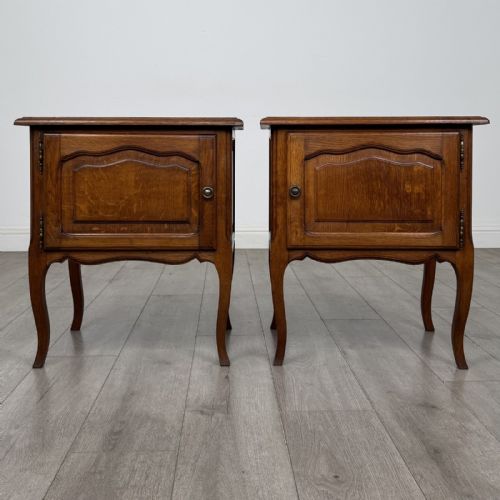
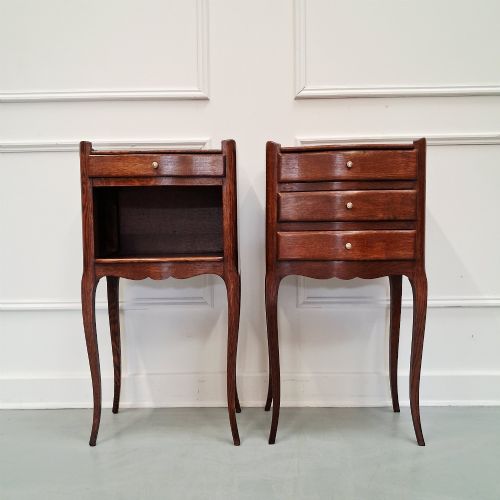
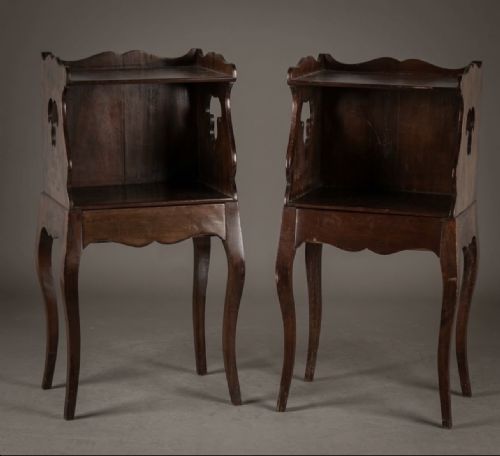
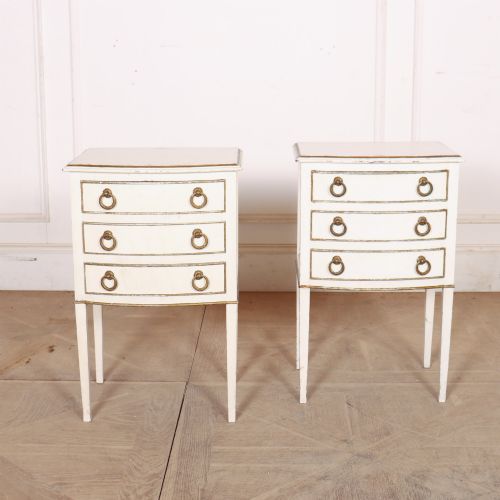
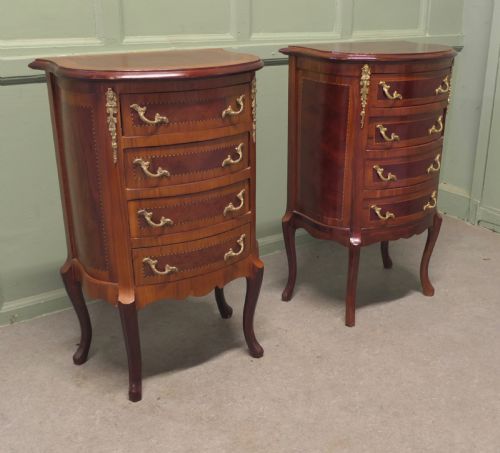
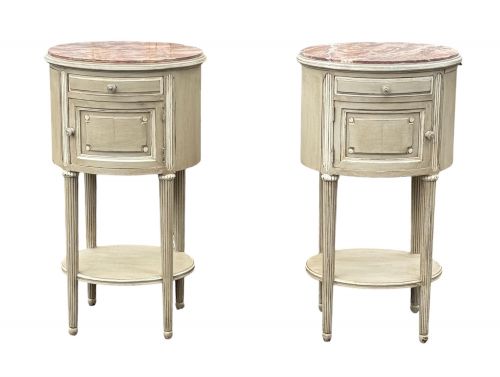
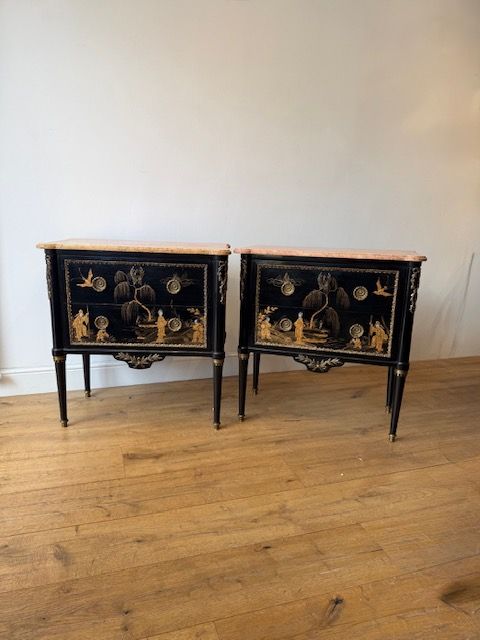
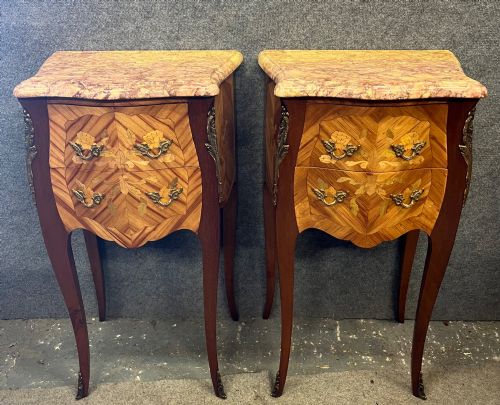
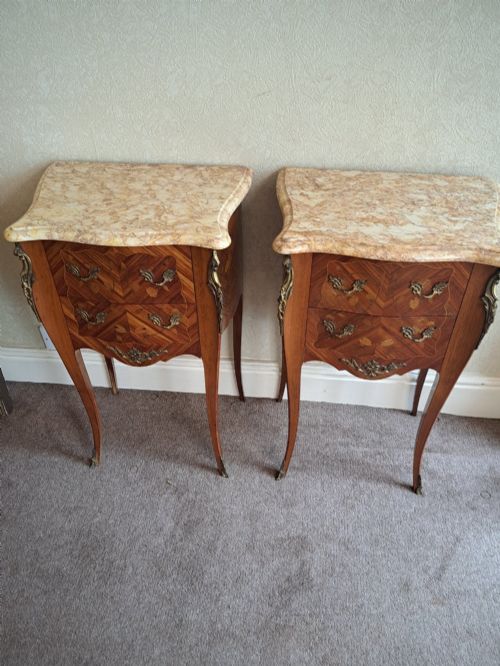
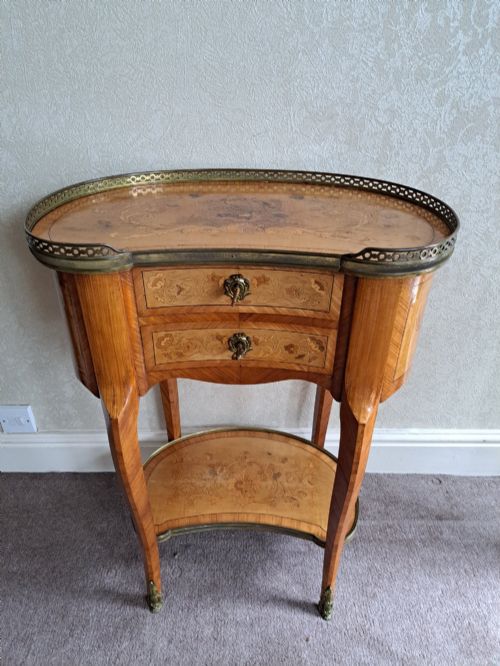
When buyers search for louis style nightstands, they encounter a range of bedside furniture rooted in eighteenth-century French design tastes. These pieces emerge primarily as revival items from the nineteenth and early twentieth centuries, spanning periods from the Victorian era through the 1930s. Common forms include compact bedside cabinets, small chests of drawers, commodes, and occasional lamp tables.
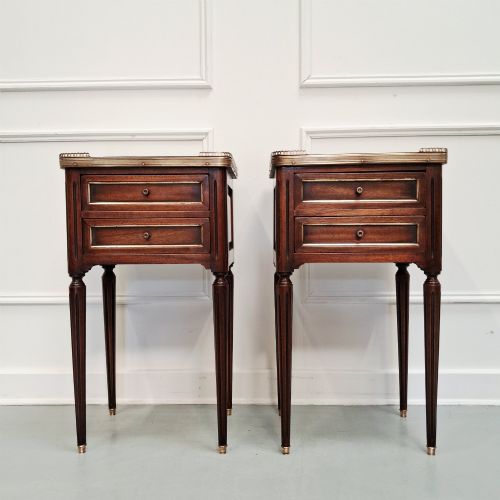
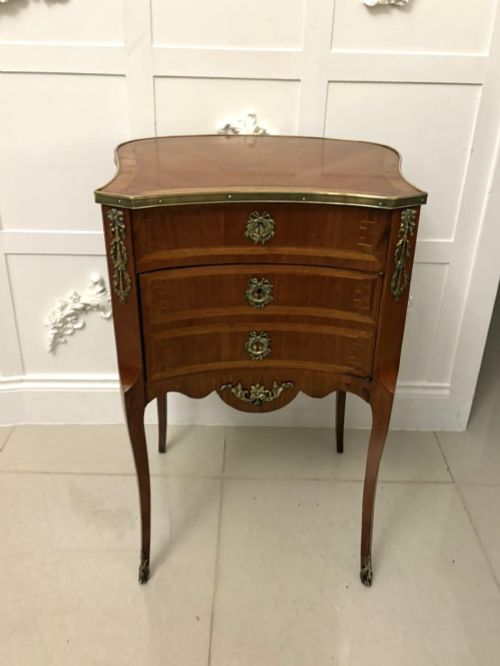
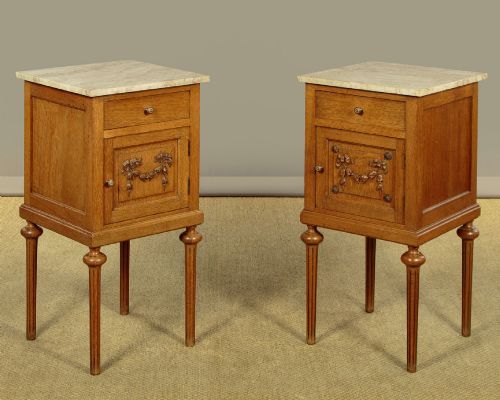
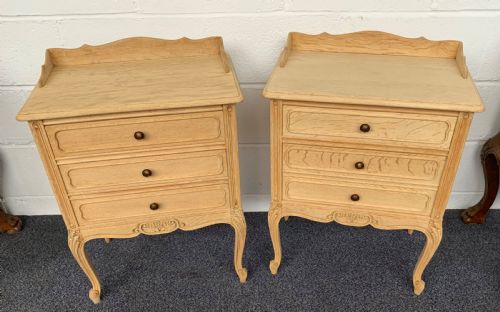
The selection centres heavily on pairs, often designed to flank a bed with matching symmetry. Formats vary from serpentine bow-front chests to kidney-shaped veneer tables and freestanding cabinets. Makers utilised traditional French provincial and chateau influences, applying the curved cabriole legs of the Louis XV style or the straighter, neoclassical lines associated with Louis XVI taste.
How they were made
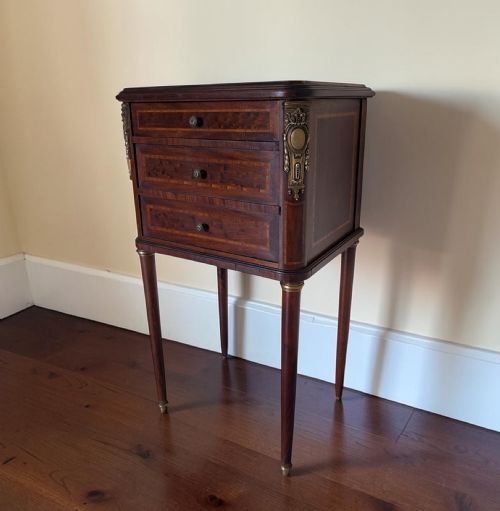
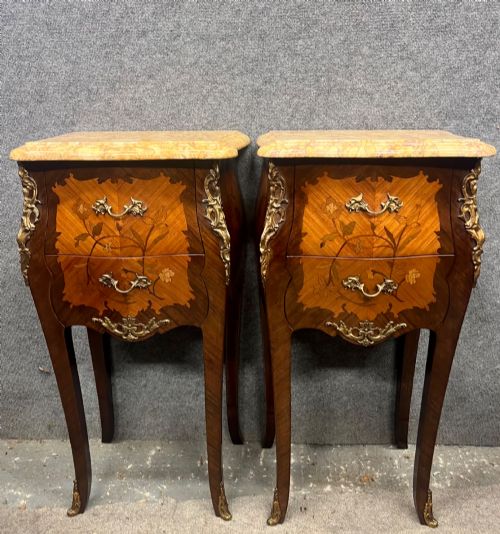
Cabinetmakers built these tables using sturdy carcases of oak, mahogany, or walnut, then embellished them with decorative timber veneers. Kingwood, rosewood, and satinwood appeared frequently in detailed marquetry and parquetry patterns, creating geometric designs or pictorial floral motifs across drawer fronts and tabletops. Painted wood surfaces and chinoiserie lacquering also offered alternative finishes.
Many examples incorporated inset polished marble tops, often in shades of white or variegated tones, providing a durable and decorative upper surface. Gilt bronze and brass ormolu mounts highlighted corners, handles, and apron rails, framing the woodwork with cast metal detailing.
Louis Style Nightstands Retail Price Guide 2026
Typical asking prices for louis style nightstands among the pieces listed under this phrase on Sellingantiques today, from the lower quarter to the upper quarter. They describe what is for sale here now, not the wider market.
Materials recorded across the inventory include marble, ormolu, brass, mahogany, walnut, kingwood, rosewood, and painted wood.
What varies in quality
Quality rests significantly in the precision of the timber work and the execution of the marquetry inlays. Finer pieces demonstrate tight, seamless veneer matching and sophisticated grain selection, whereas simpler versions rely on plain timber or basic painted finishes. The integration of materials marks another distinction.
The weight and crispness of the cast ormolu mounts also set examples apart. Heavier, finely chased bronze mounts reflect higher workshop standards than lighter stamped brass alternatives. Similarly, the structural integrity of fitted marble slabs and the smooth action of small bedside drawers indicate the original tier of production.
François Linke·Sormani
The Louis Style Nightstands Glossary
- Marquetry
- Decorative veneer work arranged in pictorial or patterned designs using various coloured woods. This technique was widely applied to cabinet doors and drawer fronts in revival furniture.
- Parquetry
- Geometric wood inlay patterns such as cubes or chequers. It creates a repeating decorative surface on tabletops and cabinet panels.
- Ormolu
- Gilt bronze mounts applied to furniture for decorative accent. These metal fittings typically adorn corners, legs, and handles.
- Chevets
- French term for small bedside tables or cabinets. They frequently feature small drawers and enclosed storage spaces.
- Cabriole leg
- A furniture leg that curves outward and then tapers inward with a pad foot. This form characterises much of the Louis XV style.
Louis Style Nightstands: Frequently Asked Questions
How do I identify Louis XV and Louis XVI styles?
Louis XV pieces typically feature flowing curves, asymmetrical details, and cabriole legs. In contrast, Louis XVI items display straighter lines, symmetry, and neoclassical geometric restraint.
Both styles appear frequently in twentieth-century revival furniture designed for modern bedrooms.
Are these bedside tables usually sold as pairs?
Many listings for these cabinets and tables appear as matching pairs intended to sit on either side of a bed. Single pieces also occur, serving as standalone lamp tables or occasional side storage.
Pairs often command stronger interest from buyers seeking symmetrical bedroom layouts.
What materials are most common on the tops?
Many of these tables feature fitted marble tops, often white or variegated in colour, designed to provide a hardwearing surface. Others display polished wood veneers in mahogany, kingwood, or walnut.
Marble-topped versions offer practical water resistance for bedside water jugs and lamps.
When were most of these revival pieces made?
While the design origins date to the eighteenth century, the physical pieces available typically originate from the nineteenth and early twentieth centuries. Periods range from Victorian times through the 1920s and 1930s.
Cabinetmakers during these decades frequently revived earlier French court styles for contemporary homes.