



Louis Style Loveseat
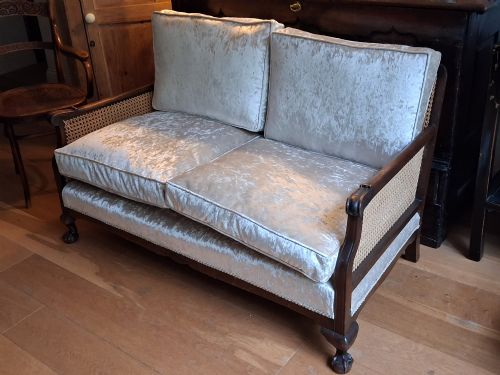
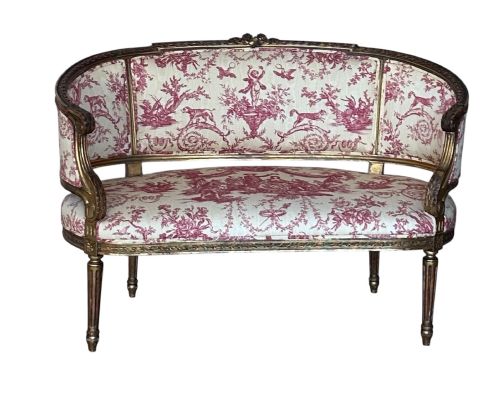
A louis style loveseat brings French seating elegance into a room through carved walnut, giltwood, and cane work.
Louis Style Loveseat
When buyers search for a louis style loveseat, they encounter two-seater settees and canapés rooted in French design traditions. These pieces span from the mid-nineteenth century through the early twentieth century, incorporating periods like Louis XV and Louis XVI revival.
The versions most commonly met on this page take the form of compact sofas, settee frames, and double bergères designed for intimate seating. Their origins stretch across French provincial workshops and elaborate chateau aesthetics, offering distinct carving and frame shapes.
Makers and craftsmen utilised standard double-seat proportions to create practical yet decorative furniture. Each louis style loveseat reflects specific revival movements spanning from eighteen-sixty to nineteen-thirty.
How they were made
Frames rely on carved walnut and gilded wood structures that provide structural integrity and ornate surface decoration. Woodworkers shaped these timbers into curved rails and cabriole lines typical of French rococo revival and neoclassical taste.
Giltwood finishes and painted surfaces applied over timber complete the construction process, sealing the wood while adding decorative sheen.
Louis Style Loveseat Retail Price Guide 2026
Typical asking prices for louis style loveseat among the pieces listed under this phrase on Sellingantiques today, from the lower quarter to the upper quarter. They describe what is for sale here now, not the wider market.
Some triple-back settees allow three people to converse while maintaining the illusion of royal court intimacy.
What varies in quality
The depth and crispness of the hand-carved woodwork separate standard frames from superior examples. Finely executed floral motifs and flowing scrollwork demand high skill from the carver, whereas simpler frames show flatter, less defined relief.
The integrity of the cane work and the finish applied to the wood frame dictate the overall standard of the piece. Intricate gilding and well-preserved painted surfaces indicate higher original investment compared to plain or heavily worn timber.
Proportion and structural balance in the double-seat design determine the elegance of the silhouette. Pieces retaining original cane panels and substantial walnut frames sit at the upper end of the range.
The Louis Style Loveseat Glossary
- Canapé
- An upholstered sofa or settee originating in France, typically featuring an exposed wooden frame and carved details. These pieces seat two or more people.
- Bergère
- An enclosed upholstered armchair or small sofa with wooden sides, often incorporating cane panels. This style provides deep and comfortable seating.
- Giltwood
- Timber coated with gold leaf or a gold-coloured metallic finish to create a brilliant decorative surface. It appears frequently on formal revival furniture.
- Cane
- Strips of woven rattan used to form resilient backrests and seats. Good cane work remains taut and evenly patterned.
Louis Style Loveseat: Frequently Asked Questions
How many people fit on a loveseat?
These two-seater settees accommodate two individuals comfortably for conversation and relaxation.
Their compact dimensions make them suitable for smaller drawing rooms or bedrooms where a full-size sofa proves too large.
Where did these settee styles originate?
The designs draw inspiration from seventeenth and eighteenth-century French royal courts, specifically the reigns of Louis the fifteenth and sixteenth.
Later nineteenth and twentieth-century makers revived these aesthetic movements to create decorative seating for period interiors.
How do I care for cane panels?
Cane requires gentle dusting and occasional light moisture to prevent the natural rattan fibres from becoming brittle.
Keep these pieces away from direct heat sources to maintain the flexibility of the woven material.