
Louis Style Commode
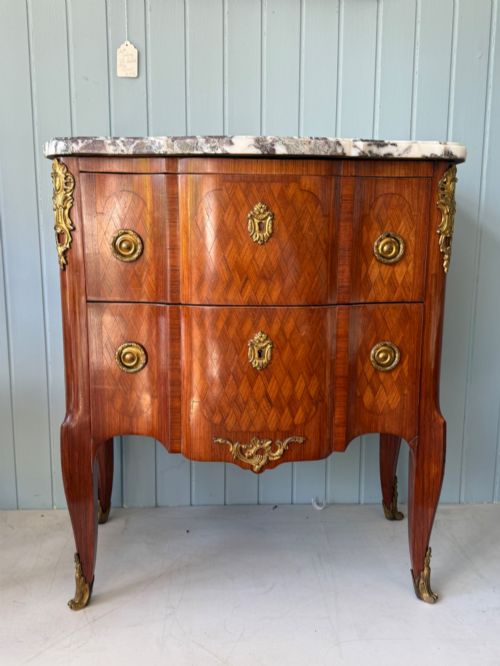
A louis style commode brings sculptural French curves, rich marquetry, and heavy marble tops into a room.
Louis Style Commode
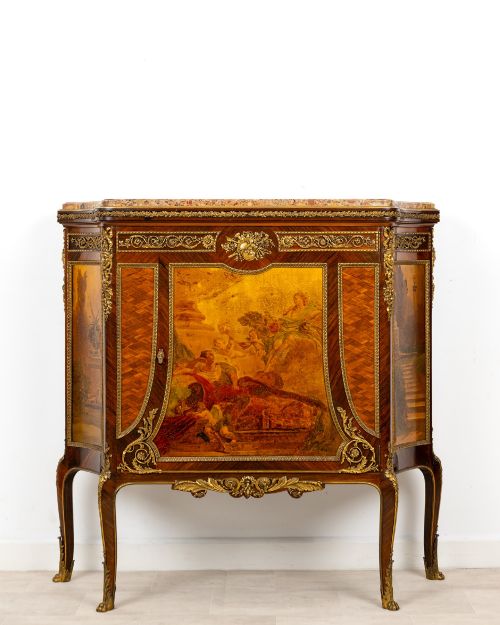
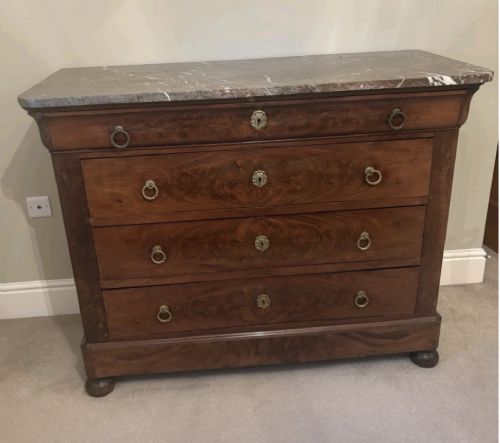
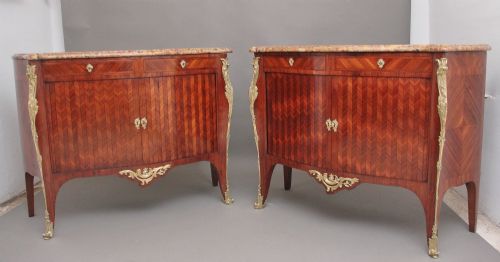
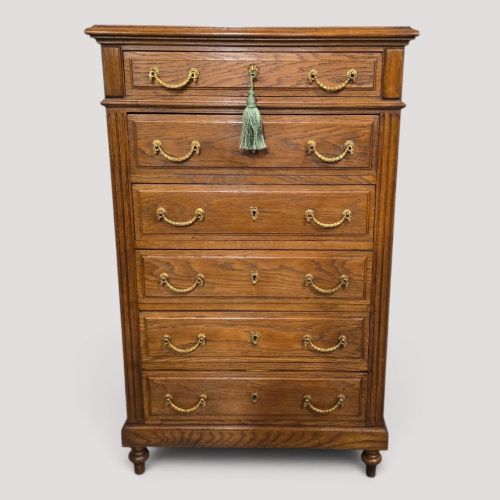
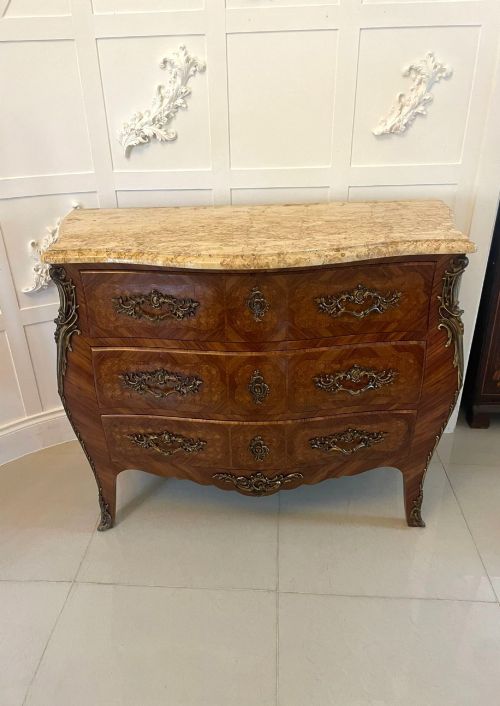
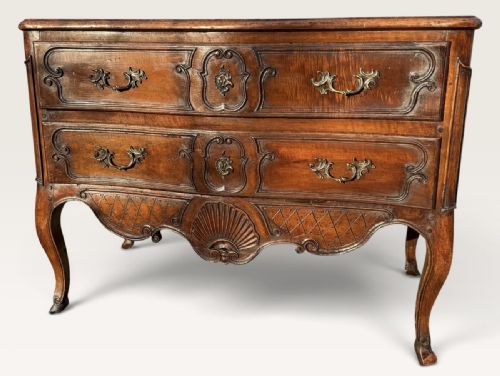
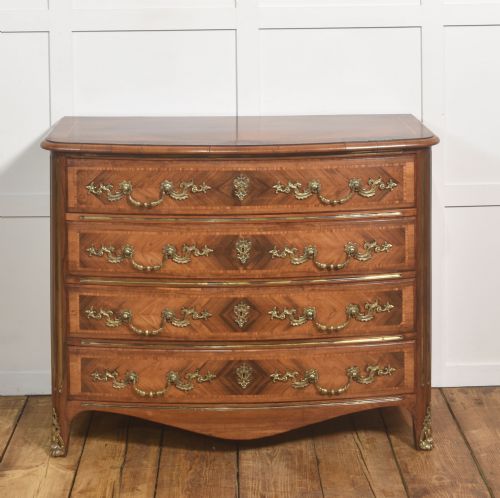
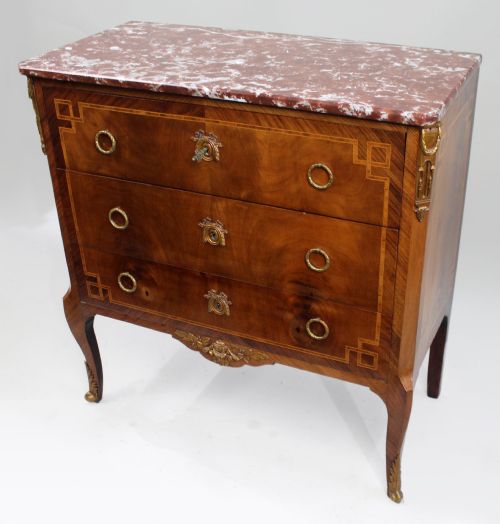
A louis style commode is a substantial storage piece, typically encountered as a marble-topped chest of drawers or side cabinet originating from French revival periods. The selections here span the eighteenth century through to the early decades of the twentieth century, capturing distinct iterations of French taste.
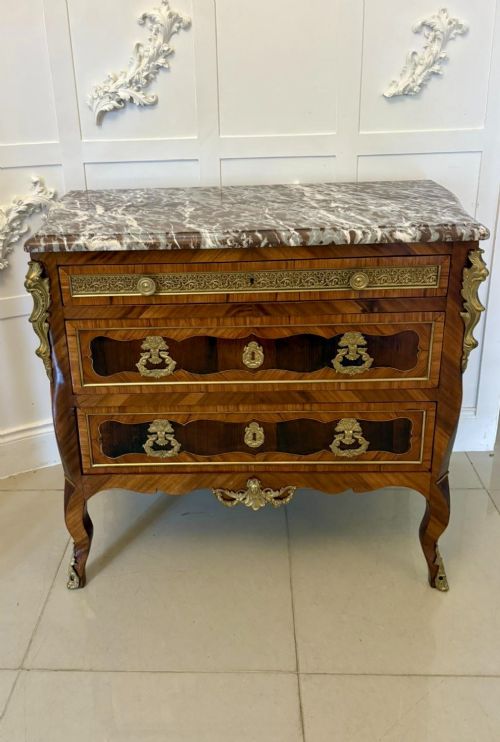
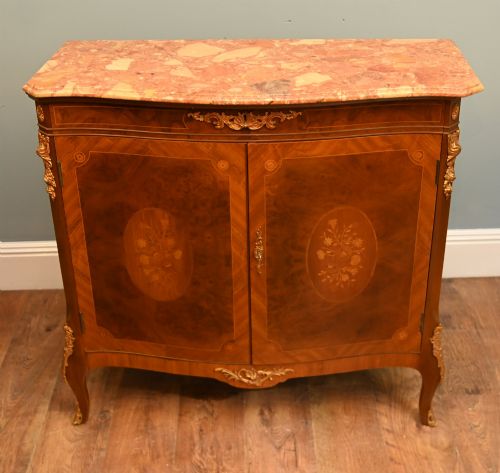
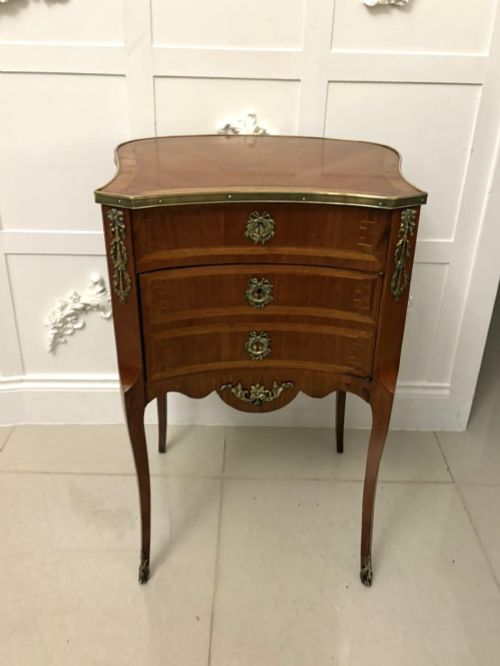
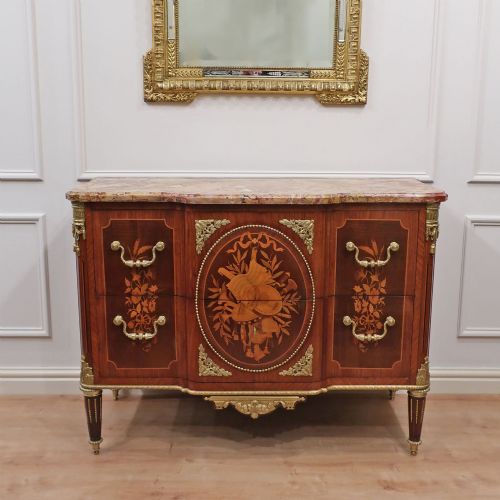
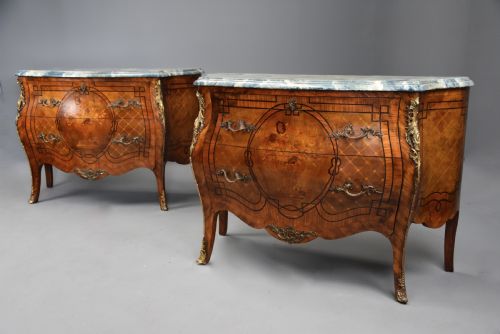
Most examples align with Louis XV and Louis XVI revivals, showcasing either serpentine fronts with prominent brass and ormolu mounts or stricter neoclassical geometry. Alongside full-sized chests, buyers will find smaller bedside cabinets and commodes utilising similar stylistic grammar.
How They Were Made
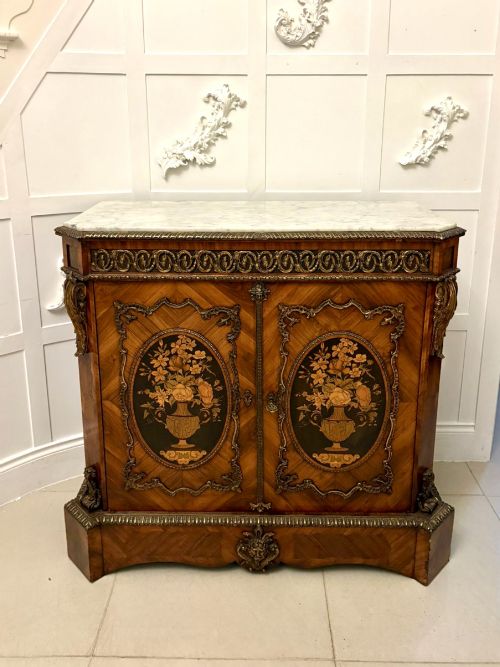
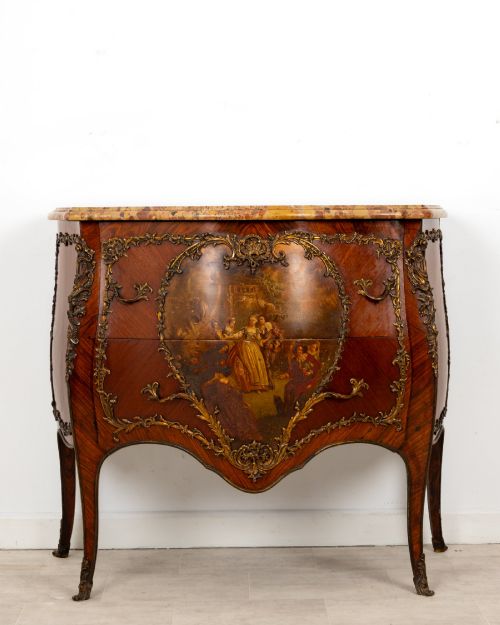
Cabinetmakers built these carcases using native and exotic timbers such as walnut, oak, mahogany, kingwood, and rosewood, often applying intricate parquetry and marquetry inlay patterns across the drawer fronts and sides. Vernis Martin finishes and lacquered panels also appear on select pieces.
Heavy marble slabs, varying in colour from white to rouge, sit flush atop the wooden carcases, paired with cast brass or ormolu mounts and gilt-bronze accents that follow the sweeping contours of the woodwork.
Some nineteenth-century makers hid their signature mounts so deeply inside the drawer runners that owners only found them during moving day.
What Varies in Quality
The distinction between standard production and top-tier execution lies in the sharpness of the cast ormolu mounts and the precision of the wood inlay. Finer makers employ hand-chased bronzes and meticulous botanical or geometric marquetry that integrates seamlessly with the underlying carcase.
The structural integrity of the serpentine or bombé shape dictates much of the value, alongside the thickness and natural figuring of the marble top. Superior pieces maintain crisp sightlines across curved drawer fronts without warping or ill-fitting joints.
Epstein·Henry Dasson·Sormani·Weisweiler
The Louis Style Commode Glossary
- Ormolu
- Gilded bronze mounts applied to furniture. This technique provides decorative highlights along corners and feet.
- Marquetry
- Inlaid wood veneers forming pictorial or geometric designs. Craftsmen cut contrasting timbers to create these decorative surfaces.
- Bombé
- A swelling, outward-curving chest profile. This curved shape requires advanced cabinetmaking skill to execute properly.
- Serpentine
- A front edge shaped with a concave centre flanked by convex curves. The profile adds fluid movement to the furniture front.
- Vernis Martin
- A type of simulated Japanese lacquer developed in France. It produces a glossy, translucent finish on decorative panels.
Louis Style Commode: Frequently Asked Questions
How do I spot a Louis XV style commode?
Look for asymmetrical cartouches, cabriole legs, and sweeping serpentine or bombé fronts that emphasise curved lines.
These pieces typically feature floral marquetry and prominent ormolu mounts framing the drawer sections.
What is the difference between Louis XV and Louis XVI?
Louis XV furniture relies on organic curves, asymmetrical details, and flowing rococo shapes.
Louis XVI pieces introduce straight lines, symmetry, neoclassical columns, and a return to geometric rigour.
How do I maintain the marble top?
Clean the marble surface using a damp cloth and mild soap, avoiding acidic cleaners that etch the stone.
Dry the top thoroughly after wiping to preserve the polished finish against moisture rings.
Where should I place a commode at home?
These cabinets work effectively as focal points in hallways, living rooms, or dining spaces for surface display.
Bedside versions fit smaller bedrooms while retaining the decorative timber and marble characteristics of larger commodes.