


Louis Style Chest
A louis style chest brings classical European elegance into a room through serpentine lines and fine marble tops.
Louis Style Chest
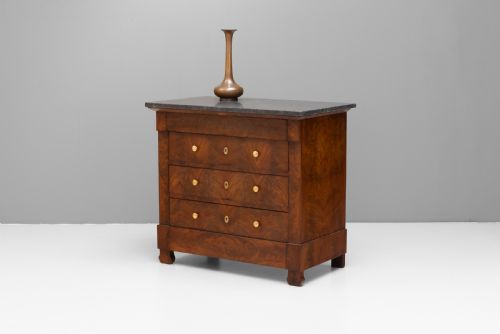
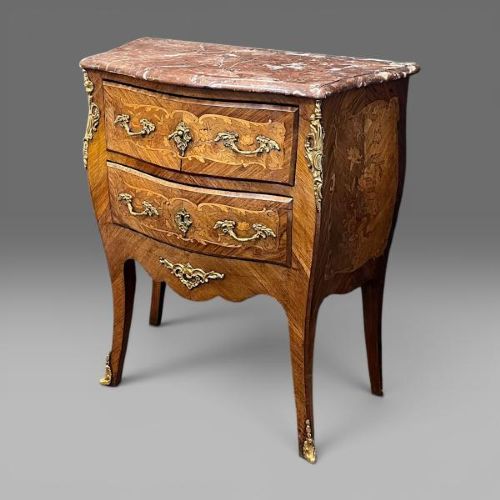
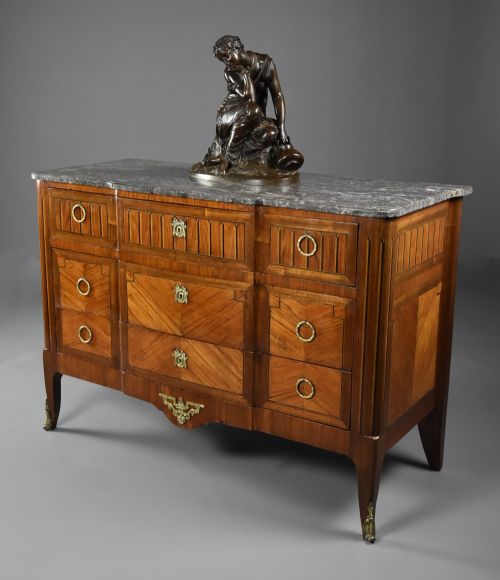
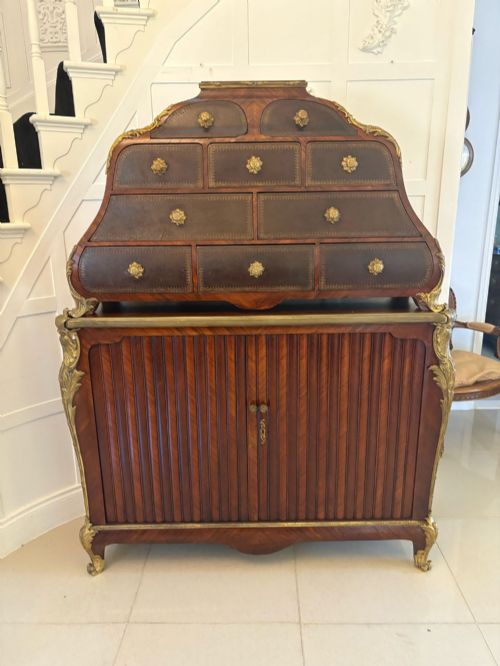
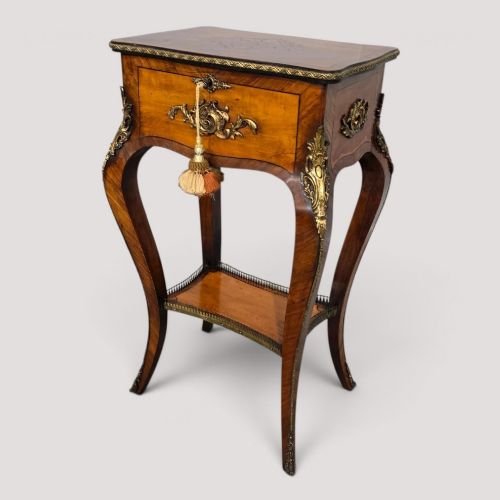
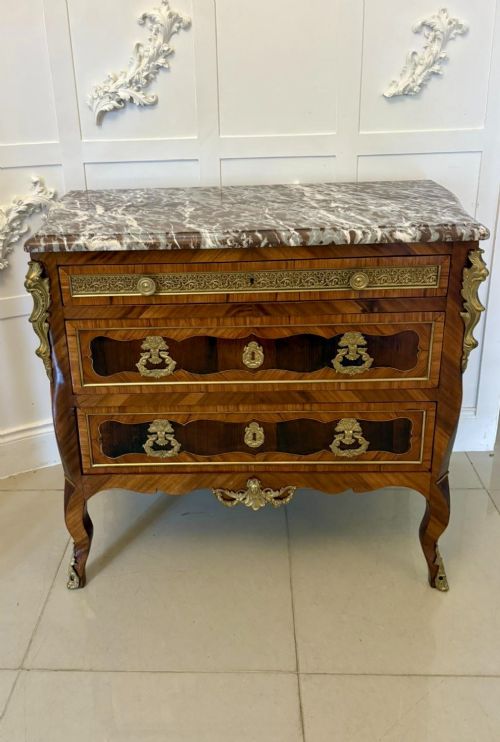
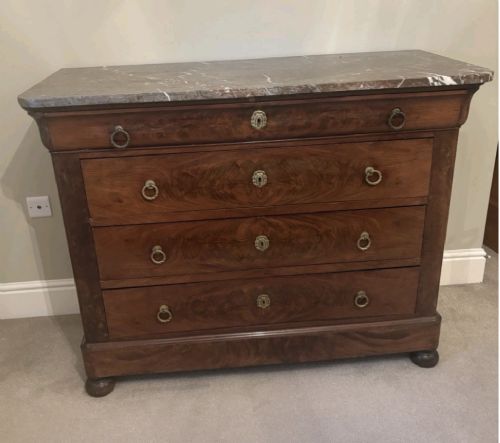
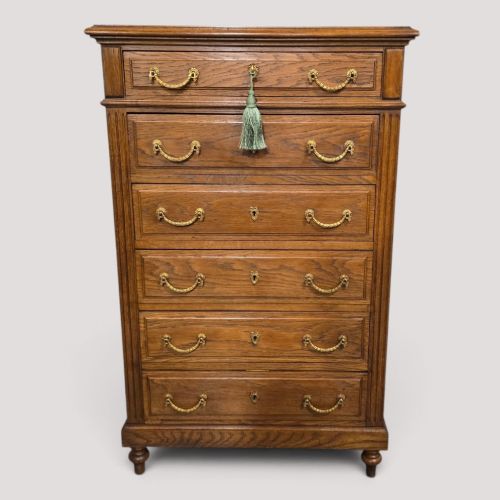
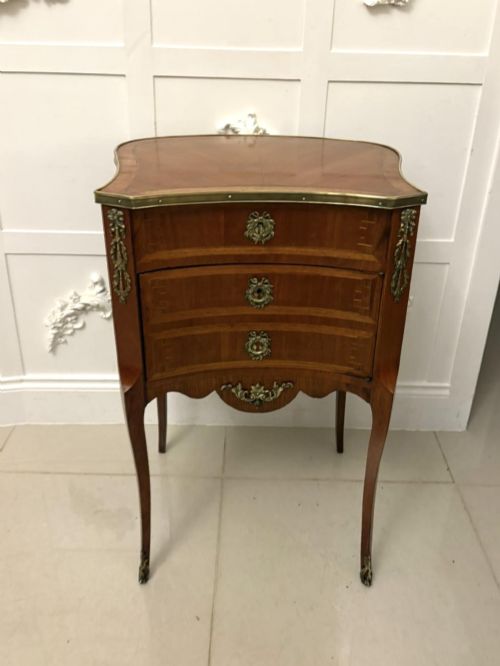
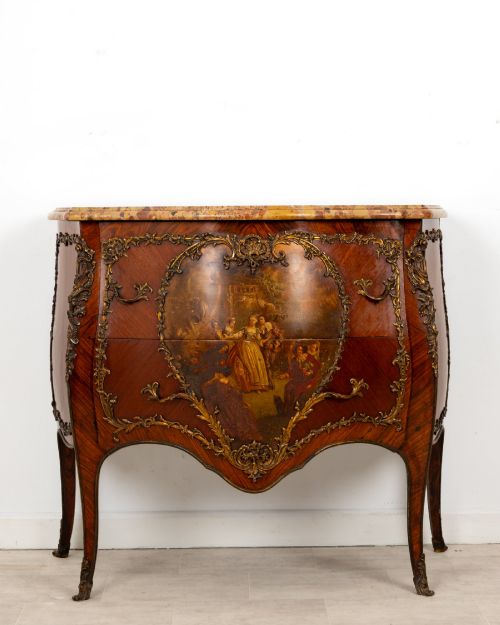
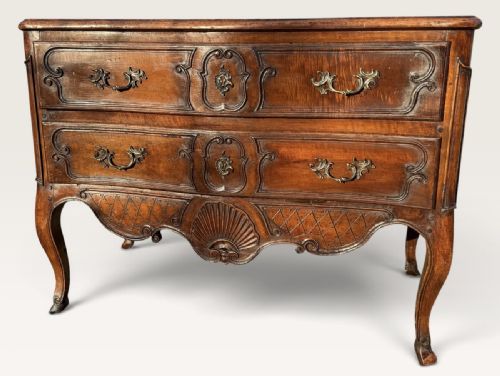
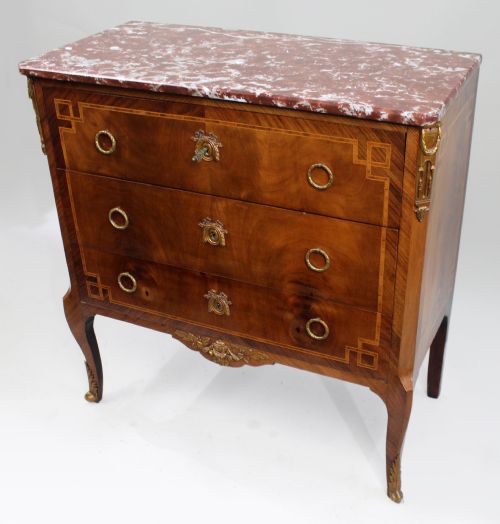
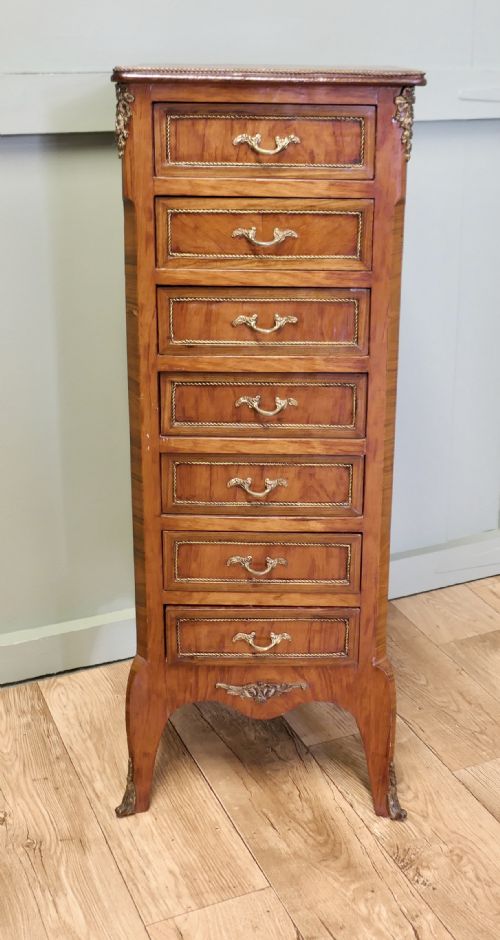
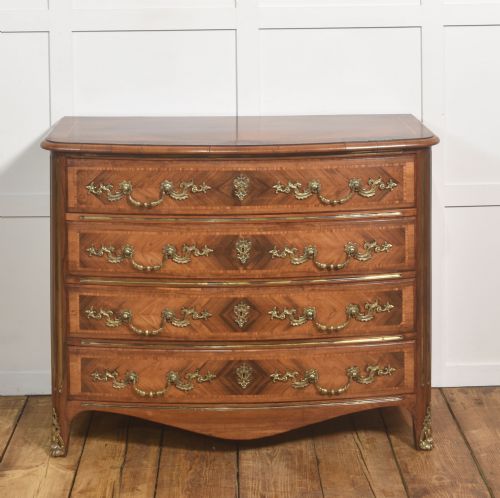
The most common examples on this page are 19th century commodes featuring shaped fronts and decorative mounts, alongside smaller bedside chests from the early decades of the 20th century. Makers often employed serpentine and bombé silhouettes to create movement across the timber facade.
Originating largely from French workshops, these chests balance decorative ambition with practical storage, utilising woods like kingwood, mahogany and oak. Buyers select them to anchor a bedroom or living space with period character and tangible craftsmanship.
How they were made
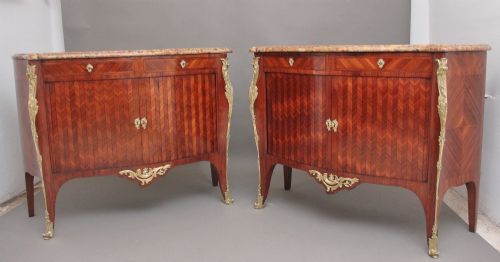
Cabinetmakers constructed these pieces using dense timber carcasses of walnut, mahogany, oak or pine, then veneered the visible surfaces in decorative woods such as kingwood and tulipwood. Marquetry and parquetry patterns were meticulously cut and fitted by hand to form geometric or floral designs across the drawer fronts and sides.
Gilt bronze and ormolu mounts were cast and chased to accentuate the corners, handles and aprons of the commodes, providing structural protection as well as visual contrast. Heavy marble slabs, cut to follow the serpentine or breakfront contours of the furniture, were fitted directly to the upper surface.
Louis Style Chest Retail Price Guide 2026
Typical asking prices for louis style chest among the pieces listed under this phrase on Sellingantiques today, from the lower quarter to the upper quarter. They describe what is for sale here now, not the wider market.
Listings on this page span the 18th, 19th and early 20th centuries, featuring walnut, kingwood, mahogany and oak.
What varies in quality
Quality in these chests rests upon the precision of the cabinetwork and the crispness of the bronze mounts. Finer examples display seamless veneer matching across moving drawer joints and hand-chased ormolu with sharp definition rather than soft, cast-line edges.
The choice of secondary woods and the integrity of the original marble top also separate standard production from high workshops. Pieces featuring detailed pictorial marquetry or signed bronze work demonstrate greater artistic investment during manufacture.
Henry Dasson·Weisweiler·Sormani
The Louis Style Chest Glossary
- Commode
- A low chest of drawers, typically originating from French design traditions and standing on prominent legs. These pieces often feature marble tops and decorative veneer work.
- Ormolu
- Gilt bronze mounts applied to furniture for decorative effect and edge protection. This technique involves coating cast bronze in a layer of gold amalgam.
- Marquetry
- Inlaid wood veneers arranged to form decorative pictures or patterns across a furniture surface. Artisans use contrasting natural timbers to achieve tonal variation.
- Bombé
- A swollen or bulging out-curved shape characteristic of certain cabinet fronts and sides. This form creates a sense of volume and movement.
- Parquetry
- Geometric wood inlay patterns resembling mosaics, commonly utilised on drawer fronts and table tops. The technique relies on precise cutting of small veneer blocks.
Louis Style Chest: Frequently Asked Questions
What is a louis style chest used for?
These pieces serve primarily as functional drawer storage in bedrooms, hallways or reception rooms while adding a distinct decorative focal point to the interior.
The surface space also accommodates lamps, decorative objects or mirrors above the drawers.
How do I identify a revival piece?
Revival pieces from the 19th and early 20th centuries emulate the 18th century Louis XV and Louis XVI aesthetics using contemporary construction methods and machine-cut elements.
Examination of the interior drawer linings, timber seasoning and hardware often reveals the later manufacturing date.
Are the marble tops original?
Many commodes retain their original shaped marble slabs, cut specifically to match the serpentine or breakfront contours of the wooden base below.
Replacement marble is sometimes fitted during restoration, identifiable by cleaner edge work or differing stone thickness.
How do I care for marble and wood?
Polishing the veneered surfaces with appropriate wax maintains the timber moisture and protects the delicate marquetry inlay from drying out.
Marble tops require prompt wiping of spills to prevent staining, avoiding acidic cleaners that etch the polished stone finish.