

Louis Style Chairs
Louis style chairs bring French court elegance into a room through carved frames and classical lines.
Louis Style Chairs
Louis style chairs encompass seating built in revival aesthetics that draw directly from French royal eras, dominated by the sweeping curves of the Rococo and the straight, disciplined geometry of Neo-classicism. Buyers searching for louis style chairs encounter pieces spanning the nineteenth and early twentieth centuries, created when European workshops revived earlier monarchical tastes.
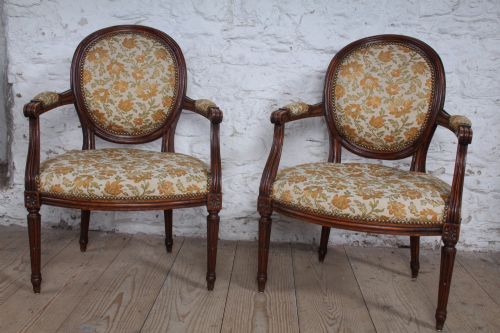
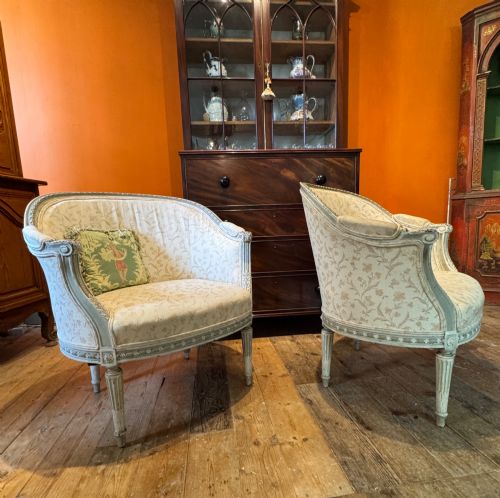
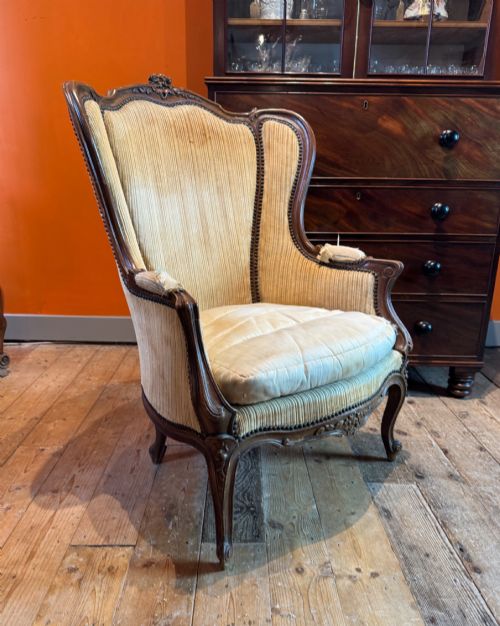
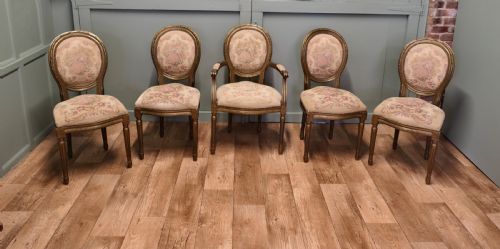
The selections on this page consist largely of nineteenth-century pieces, running from salon chairs and open armchairs to bergères and daybeds. Walnut, beech, and giltwood form the structural foundations of these seating types, often paired with traditional coverings such as silk, tapestry, and cane.
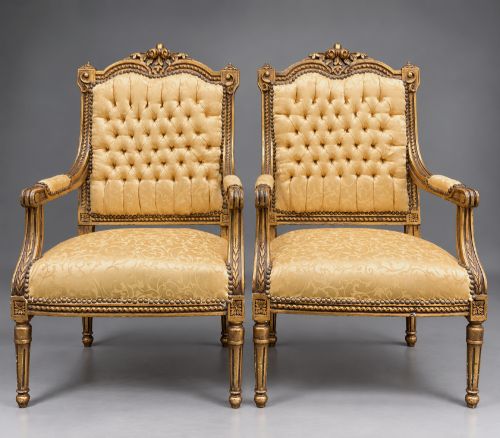
Originating predominantly from French makers, these chairs bring period character into domestic spaces through distinct regional interpretations of the Louis XV and Louis XVI repertoires. Examples range from simple bedroom chairs in polished walnut to heavily gilded salon suites designed for formal reception rooms.
Materials and construction
Cabinetmakers shaped structural frames from solid timbers such as walnut, beech, and mahogany, utilising traditional joinery methods to ensure stability under ornate carving. Giltwood finishes were applied through water gilding or oil gilding over prepared grounds, creating reflective metallic surfaces on the exposed woodwork.
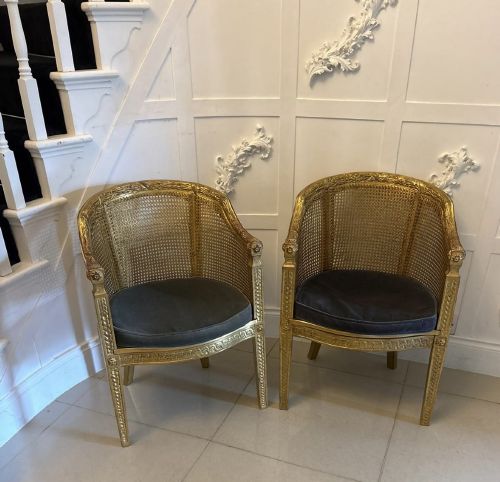
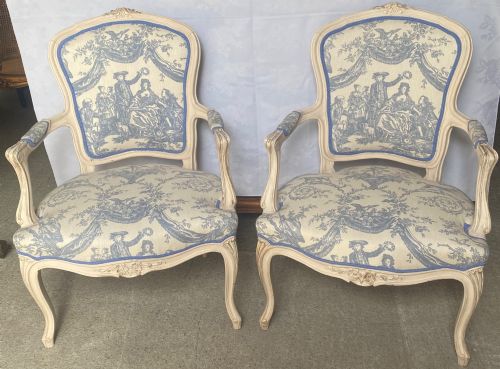
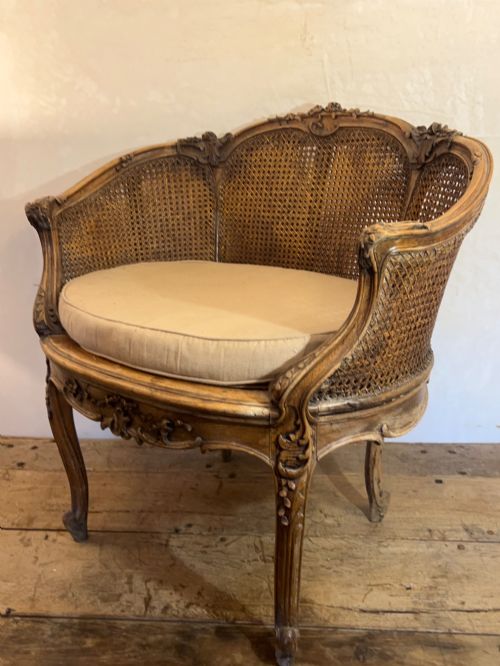
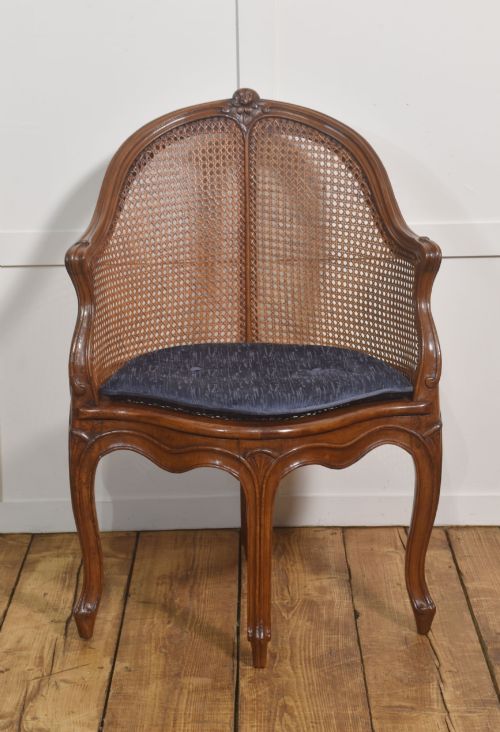
Upholstery techniques involved webbed foundations, horsehair stuffing, and hand-tacked textiles, securing decorative elements like Aubusson tapestries, silk damasks, and printed cottons. Caning provided a lighter seating alternative, woven directly through pierced framework on tub chairs and bergères.
Listings demonstrate that nineteenth-century revivals dominate the available selection of louis style chairs, with walnut and giltwood as primary materials.
The markers of quality
Superior quality rests upon the depth, crispness, and hand-carved execution of the wooden ornamentation, where floral swags, acanthus leaves, and cartouches retain sharp contours rather than soft, moulded edges. Frames constructed from dense hardwoods exhibit tighter joints and greater longevity under daily use than softer alternatives.
The choice and integrity of the upholstery materials dictate the upper tiers of craftsmanship, with hand-woven tapestries and heavy silks outlasting standard modern replacements. Original surface treatments, such as untouched paint or genuine period gilding, preserve the authentic visual weight intended by the original maker.
Colefax and Fowler·Blaise Maucuy
The Louis Style Chairs Glossary
- Bergère
- An enclosed upholstered armchair with solid wooden sides and a padded seat, designed for comfort during the eighteenth century and frequently revived later.
- Fauteuil
- An open-framed armchair featuring exposed wooden arms and upholstered back and seat panels, typical of French formal seating.
- Giltwood
- Timber treated with a thin layer of gold leaf applied over a prepared gesso and bole base, creating a luminous surface on carved frames.
- Cane
- Woven split rattan utilised for chair seats and backs to provide a lightweight, breathable surface.
- Duchesse brisée
- A two- or three-part daybed arrangement consisting of an armchair combined with one or two footstools to form a continuous resting place.
Louis Style Chairs: Frequently Asked Questions
What defines a Louis XV chair?
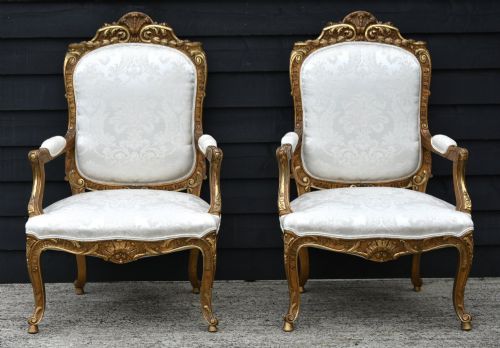
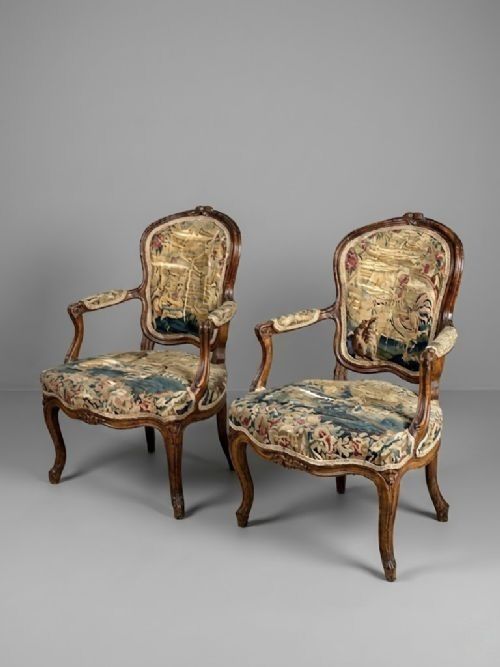
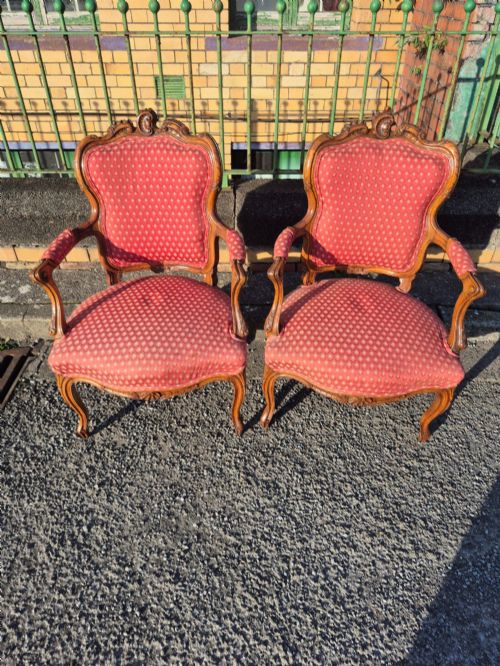
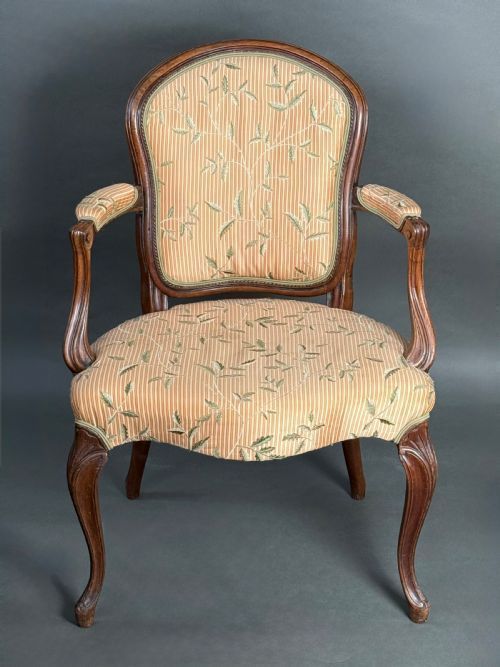
Louis XV chairs are characterised by asymmetrical curves, cabriole legs, and organic motifs derived from the Rococo movement. The framing avoids straight lines in favour of flowing contours.
Carved details typically feature floral sprays, shells, and scrollwork executed in walnut, beech, or giltwood.
How do Louis XVI chairs differ?
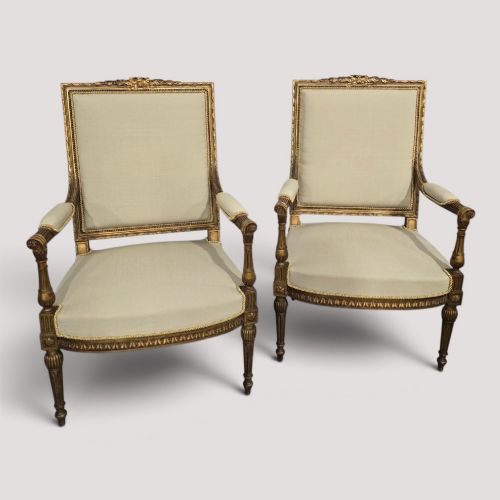
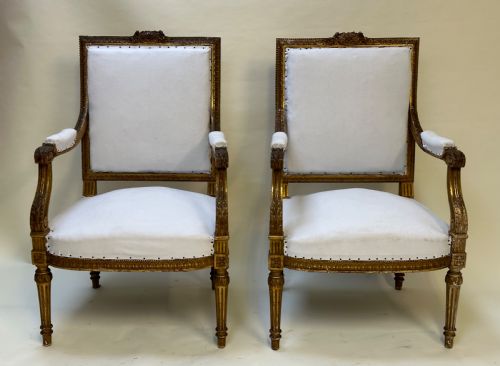
Louis XVI pieces introduce straight, fluted legs, symmetrical geometry, and neoclassical ornamentation inspired by archaeological discoveries. Rectangular or oval backs replace the undulating curves of the preceding reign.
Carvings incorporate classical elements such as laurel wreaths, bead reels, and architectural fluting.
Where should these chairs be placed?
These seating options suit formal drawing rooms, bedrooms, and studies where their decorative carved frames contribute historical character. Bergères and open armchairs function well as reading seats or fireside companions.
Pairing salon chairs with modern interiors creates a deliberate contrast between contemporary spaces and traditional French craftsmanship.