

Louis Style Bureau
These louis style bureau pieces bring continental elegance to a room, offering refined writing surfaces shaped by nineteenth-century revivalism.
Louis Style Bureau
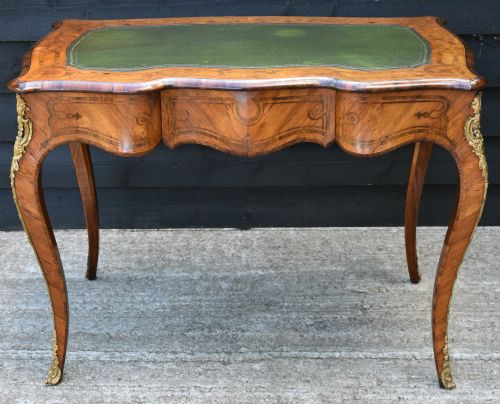
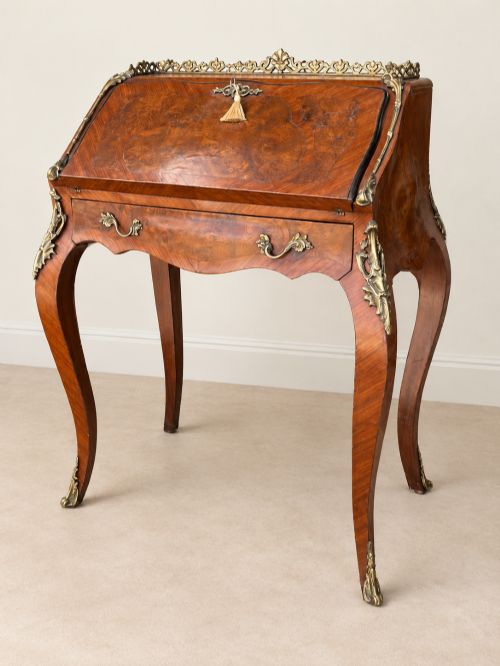
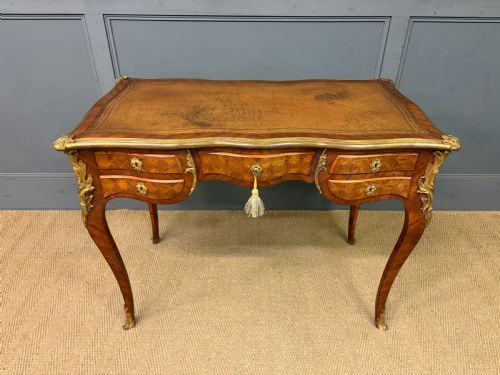
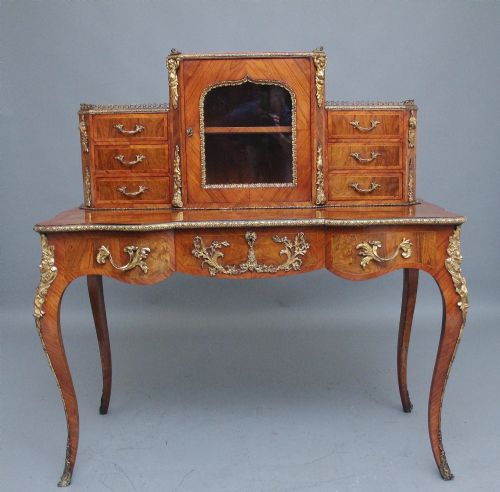
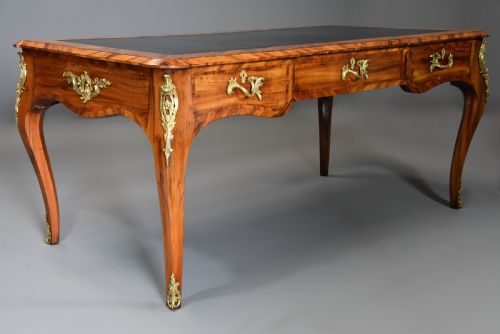
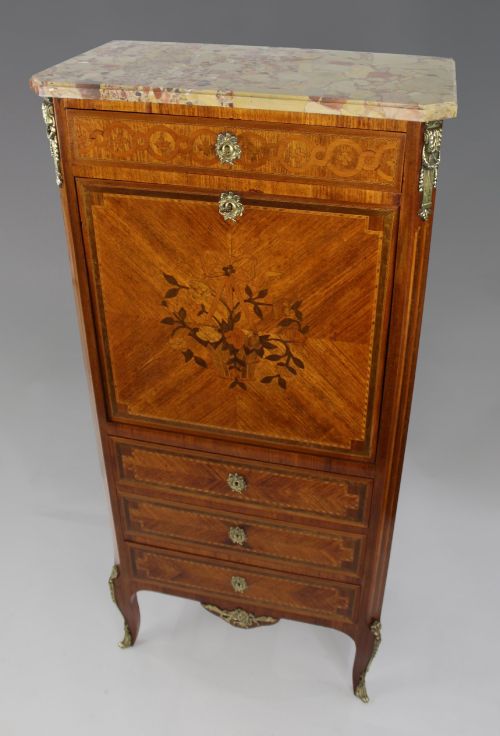
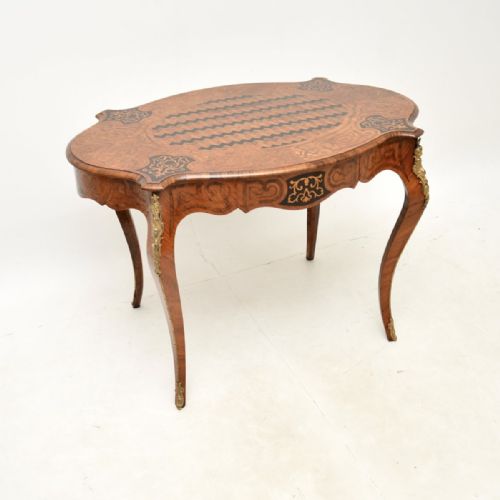
A louis style bureau encompasses writing desks, tables, and escritoires rooted primarily in nineteenth-century interpretations of French rococo and neoclassical design. The selection centres heavily on nineteenth-century pieces, including bureau plat writing tables and marquetry writing desks influenced by Louis XV and Louis XVI reigns.
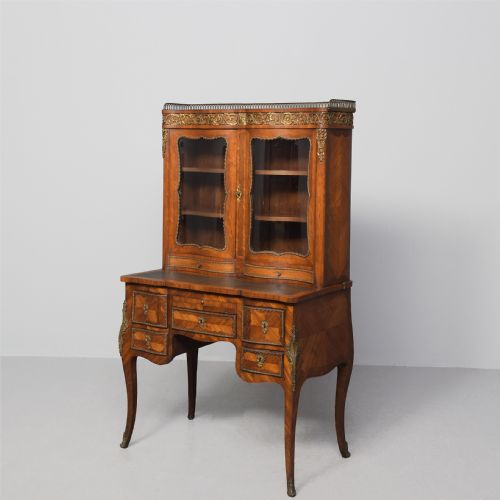
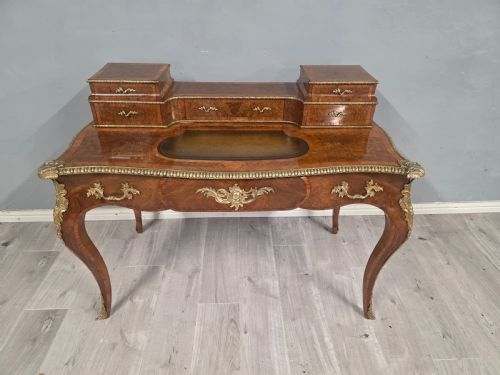
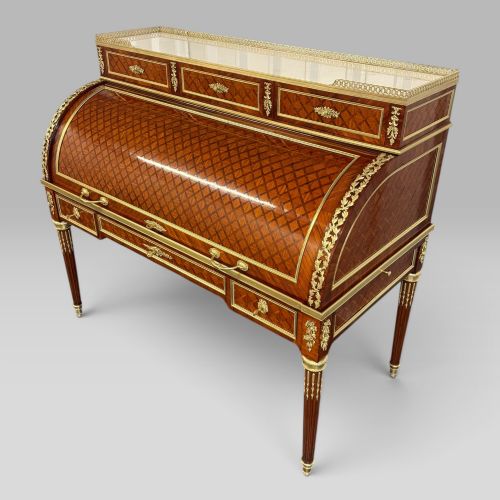
Makers and workshops from Victorian Britain and France produced these freestanding writing tables, cylinder desks, and bonheur-du-jour forms for domestic studies and salons. Pieces frequently incorporate serpentine fronts, leather inserts, and tiered upper compartments suited to formal correspondence.
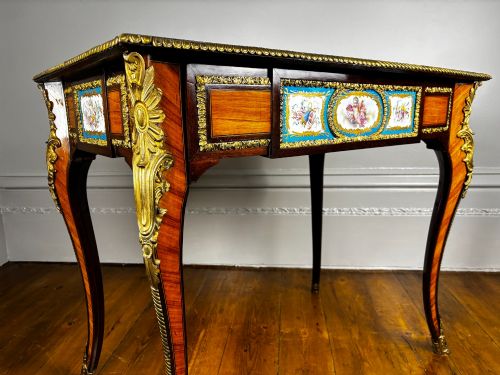
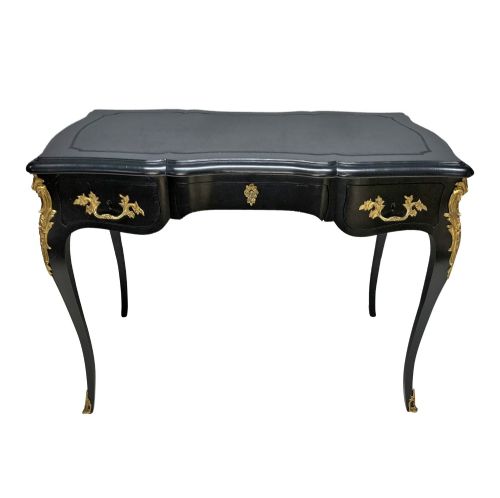
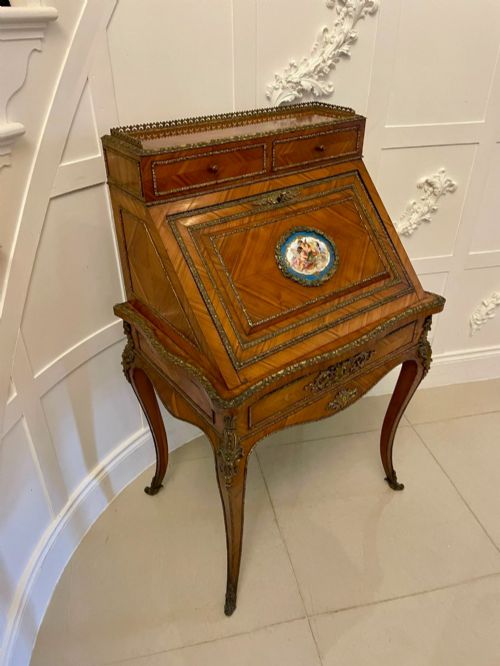
Expect to encounter walnut, kingwood, and mahogany constructions alongside specialised variations like ebonised surfaces, porcelain plaques, and marble tops. These variations reflect both French cabinet-making traditions and British adaptations from the Victorian era.
Materials and Technique
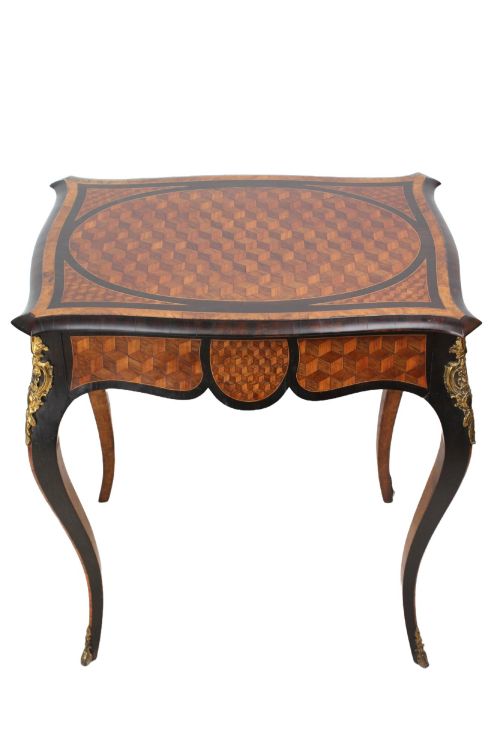
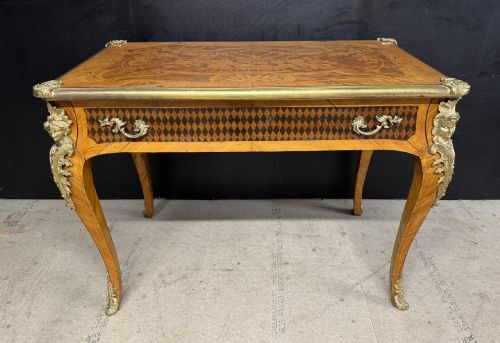
Cabinet makers utilised intricate timber veneers such as kingwood, tulipwood, satinwood, and rosewood arranged in geometric parquetry or floral marquetry patterns. Carcasses of walnut and mahogany provided stable foundations for these decorative surface treatments.
Gilt bronze and ormolu mounts were cast and chased to edge drawers, frame panels, and accent cabriole legs. Leather writing inserts were frequently tooled in gold, complementing the polished brass hardware and porcelain plaques integrated into select designs.
Louis Style Bureau Retail Price Guide 2026
Typical asking prices for louis style bureau among the pieces listed under this phrase on Sellingantiques today, from the lower quarter to the upper quarter. They describe what is for sale here now, not the wider market.
Evaluating Craftsmanship
Quality rests in the crispness of the ormolu mounts and the precision of the parquetry or marquetry interlocking veneers. Superior examples display fluid hand-chasing on the bronze hardware and seamless matching of timber grains across curved serpentine surfaces.
Maker attribution elevates standing, with signed pieces or stamps from notable workshops commanding greater regard for their structural joinery and material selection. The integration of supplementary elements like original marble tops and hand-painted porcelain plaques further distinguishes finer examples.
Gillows·JAS Shoolbred·CH. Jeanselme and Co·Durand·Blake
The Louis Style Bureau Glossary
- Bureau plat
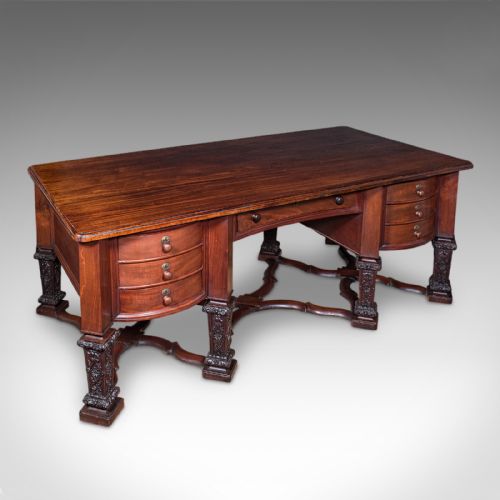
- A freestanding writing table fitted with drawers across the frieze, designed to sit away from the wall.
- Ormolu
- Gilded bronze applied as decorative mounts, feet, and edging on fine furniture.
- Marquetry
- Decorative patterns formed by fitting together contrasting veneers of wood onto a structural carcass.
- Bonheur-du-jour
- A light ladies writing desk featuring a small cabinet or shelving superstructure above the main writing surface.
- Parquetry
- Geometric mosaic woodwork arranged in repeating patterns such as cubes or chequers across tabletops.
Louis Style Bureau: Frequently Asked Questions
Where should a bureau plat be placed?
These freestanding desks are designed to be viewed from all sides, making them ideal for the centre of a study or library room rather than pushed against a wall.
Ensure adequate clearance around the piece for chairs and movement, allowing the ormolu mounts and finished backs to remain fully visible.
How do I care for leather desk inserts?
Leather writing surfaces require minimal moisture and occasional treatment with neutral wax or leather conditioner to prevent drying and cracking over time.
Avoid placing damp glasses or unprotected ink wells directly on the surface to preserve the gold tooling and the surrounding wood veneers.
Can these desks be used for daily writing?
Most antique writing tables and bureau forms function well for modern correspondence, provided proper care is taken with vintage veneers and leather surfaces.
Using blotters and exercising caution with modern writing instruments will protect the historic materials from unnecessary wear.