


Longines Dress Watch
A longines dress watch offers understated mid-century elegance, bringing together Swiss mechanical precision and refined precious metal or steel casework.
Longines Dress Watch
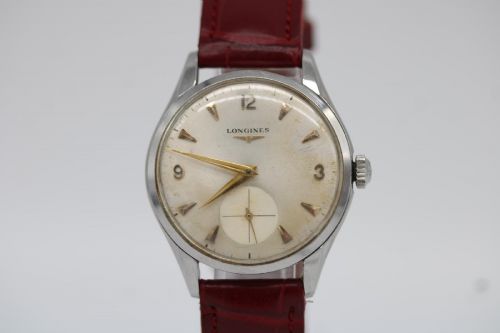
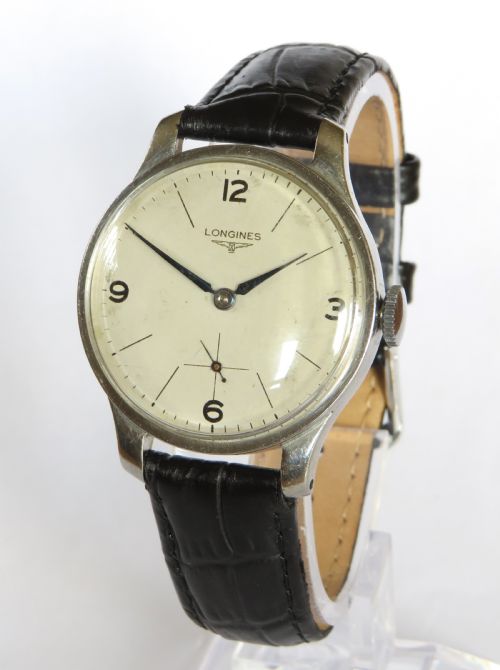
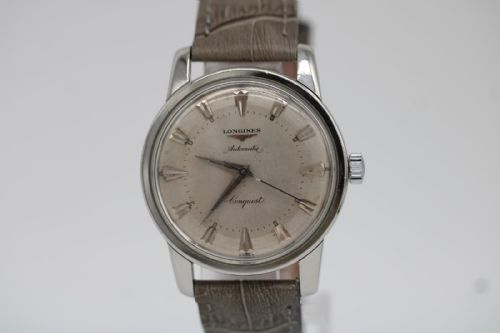
When you search for a longines dress watch, you encounter wristwatches spanning the 1940s, 1950s, and 1960s. These pieces include gents dress watches and cocktail watches influenced by Mid-Century Modern and Art Deco styles.
The most common versions on this page are gent's wristwatches featuring manual wind or automatic movements housed in stainless steel, gold plate, or solid 9K and 14ct gold cases. Specific models like the Flagship and Conquest appear alongside pieces featuring silver dials and diamond-set cocktail designs.
Originating from Swiss manufacture, these watches reflect the mid-century shift toward slim, elegant profiles suitable for formal and daily wear. They survive with leather straps or matching metal bracelets, often retaining their original character.
How they were made
Casework utilises traditional metals including stainless steel, gold plate, 9K gold, and 14ct white gold, frequently paired with acrylic crystals protecting the dial. Some specialised cases, such as the Denisteel variant, demonstrate the diverse metallurgical approaches utilised during the period.
Movements rely on mechanical ingenuity, encompassing manual wind mechanisms, mechanical calibres like the 12.68Z and 19.4S, and automatic systems. These movements often incorporate jewelled bearings, such as 17 jewels, to reduce friction and sustain accuracy.
Several pieces arrive accompanied by their original presentation boxes, preserving the complete mid-century unboxing experience after decades.
What varies in quality
The distinction between tiers rests upon the material composition of the case, moving from gold plate and stainless steel up to solid 9K and 14ct white gold set with diamonds. Models featuring precious metals and specific lines like the Flagship or Conquest represent the higher end of the range.
The integrity of the dial and the sophistication of the internal movement further define quality. Pieces retaining clean silver dials, original mechanical calibres, and documented servicing stand apart from standard variants.
The Longines Dress Watch Glossary
- Manual wind
- A mechanical movement wound by hand via the crown rather than by wrist motion. This traditional system allows for a slimmer watch case.
- Automatic
- A self-winding mechanical movement that uses the natural motion of the wearer's wrist to tension the mainspring. It removes the need for daily manual winding.
- Calibre
- The specific internal movement designation used by the manufacturer. Different calibres denote distinct mechanical layouts and development eras.
- Acrylic
- A lightweight, shatter-resistant plastic material utilised for watch crystals during the mid-century period. It can be polished to remove surface scratches.
- Jewels
- Synthetic rubies or sapphires placed at pivot points within a mechanical movement. They minimise friction and wear on metal components.
Longines Dress Watch: Frequently Asked Questions
How do I wind a manual wind watch?
Rotate the crown clockwise between your thumb and forefinger until you feel gentle resistance. Stop immediately to avoid over-winding the mainspring.
Do this at roughly the same time each day to maintain consistent tension and timekeeping accuracy.
Are vintage dress watches waterproof?
Vintage pieces lack modern waterproof seals and pressure resistance. Exposure to moisture, rain, or handwashing can cause internal condensation and rust.
Keep the watch dry and remove it before swimming or bathing to protect the movement.
What is a cocktail watch?
A cocktail watch is a small, decorative timepiece designed primarily for evening wear. These pieces frequently incorporate precious metals like white gold and diamond embellishments.
They function as both jewellery and timekeeper, reflecting Art Deco and mid-century design trends.
How do I date a Longines watch?
Dating relies on comparing the serial number found on the movement or case against historical manufacturer records. Stylistic cues such as dial typography and case geometry also provide period context.
Consulting hallmarks on gold cases helps narrow down the decade of production.