



Long Wooden Chest
A long wooden chest offers substantial storage and timeless domestic utility, spanning sturdy pine coffers to elegant mahogany drawers.
Long Wooden Chest
A long wooden chest encompasses traditional chests of drawers, coffers, and trunks spanning several centuries of cabinetmaking. When you search for a long wooden chest, you encounter pieces designed for utilitarian storage as well as refined household display.
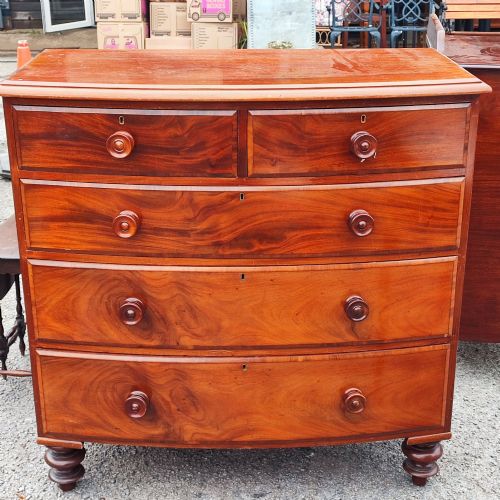
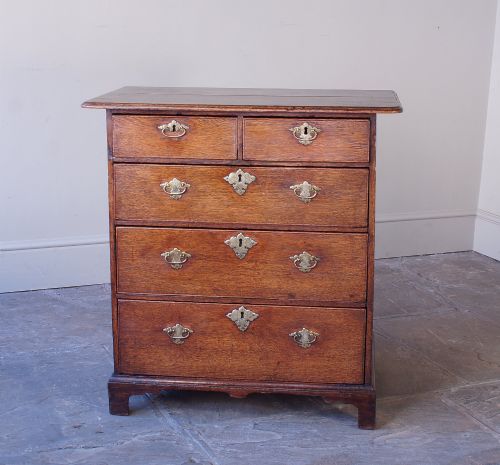
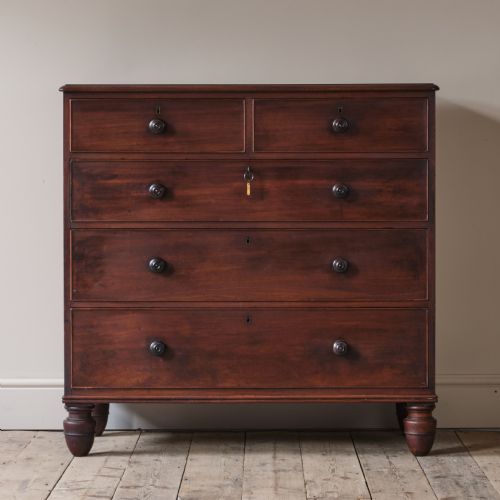
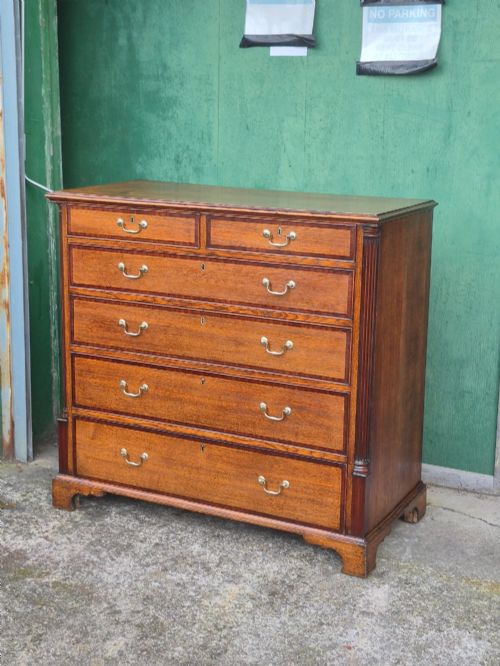
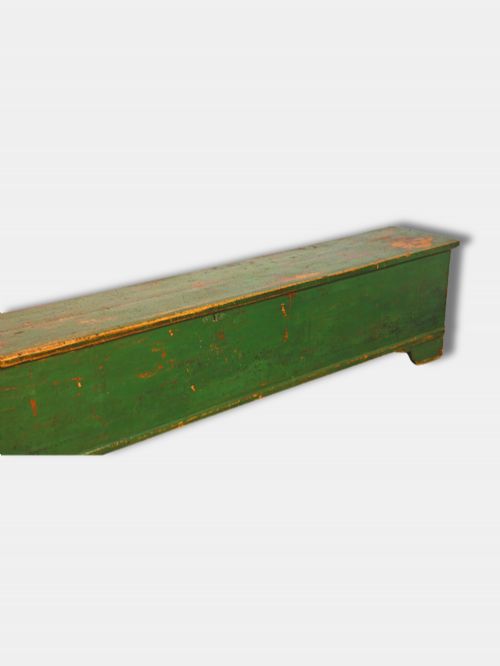
The selections available here lean heavily toward large mahogany and oak chests of drawers from the Georgian and Victorian eras, alongside robust pine coffers. These items served vital domestic functions in bedrooms and living spaces, holding linens, garments, and personal valuables.
Origins range from English country workshops to continental houses, incorporating styles such as Queen Anne, William and Mary, and Regency. Each piece reflects the functional demands of its period, whether built with simple tongue and groove pine or high-status flame mahogany.
Materials and Construction
Cabinetmakers utilised durable native and imported hardwoods like oak, walnut, and mahogany, alongside utilitarian softwoods such as pine. Hardwoods provided the structural stability needed for large drawer fronts and carcases, often enhanced by decorative veneers like flame mahogany or walnut.
Joinery techniques dictated the longevity of these items, employing dovetailed drawer construction and solid timber panels. Brass hardware, bone escutcheons, and painted finishes frequently completed the exterior appearance of the piece.
Long Wooden Chest Retail Price Guide 2026
Typical asking prices for long wooden chest among the pieces listed under this phrase on Sellingantiques today, from the lower quarter to the upper quarter. They describe what is for sale here now, not the wider market.
The listings feature pieces spanning the 18th century, Georgian, Regency, and Victorian periods, constructed from oak, mahogany, walnut, and pine.
Assessing Quality and Execution
Quality in these chests rests upon the selection of timber and the precision of the joinery rather than mere decorative flourish. Superior examples feature carefully matched grain patterns, such as flame mahogany or fiddle back veneers, applied to sound structural carcases.
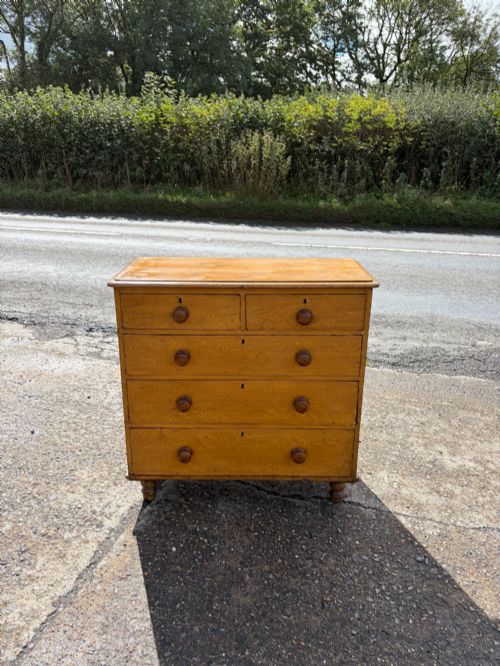
The retention of original elements, including handles, feet, and surface finishes like graining or patina, distinguishes exceptional pieces from heavily altered ones. Expert construction is evident in smooth-running drawers and tight, hand-cut dovetails that withstand centuries of use.
T & G Seddon
The Long Wooden Chest Glossary
- Coffer
- A large wooden box used for storage, often hinged at the top and occasionally fitted with a long drawer beneath. These pieces represent some of the earliest forms of household furniture.
- Dovetail
- A joint formed by interlocking wedge-shaped fingers, crucial for securing drawer corners. This method provides immense tensile strength without relying on metal fasteners.
- Flame Mahogany
- A veneer cut from the fork of a mahogany tree, displaying a distinctive flickering flame pattern. Cabinetmakers prized this figure for high-status drawer fronts.
- Bowfront
- A convex, curved front profile popular on chests from the Georgian period. This shape softens the angular appearance of large case furniture.
- Escutcheon
- A protective plate surrounding a keyhole, frequently made from brass or bone. It prevents the wood around the lock from splitting during use.
Long Wooden Chest: Frequently Asked Questions
What is a long wooden chest used for?
These chests were historically designed to store household linens, blankets, garments, and personal documents. In modern interiors, they function equally well as statement storage pieces in bedrooms or hallways.
Their robust construction allows them to support lamps, books, or decorative objects on the top surface while concealing substantial interior volume.
How do I tell a Georgian chest from a Victorian one?
Georgian pieces generally exhibit clean architectural proportions, often utilising solid mahogany or oak with subtle bracket feet. They frequently favour restraint and classical balance in their design.
Victorian chests tend to be larger, sometimes featuring bolder wood grains like flame mahogany, deeper drawer configurations, and applied decorative mouldings.
Are these chests made of solid wood?
The listings include both solid timber constructions, such as early oak and pine examples, and veneered pieces over secondary woods. High-status furniture from the 18th and 19th centuries regularly employed fine veneers on carcases.
This technique prevented warping while allowing cabinetmakers to showcase highly figured woods like walnut and mahogany on the exterior surfaces.
How do I care for an antique wooden chest?
Maintain stable humidity levels in your home to prevent the timber from drying out or splitting. Avoid placing the chest in direct sunlight or near heat sources.
Dust the surface regularly with a dry cloth and apply a quality wax polish sparingly to preserve the natural patina and finish of the wood.