

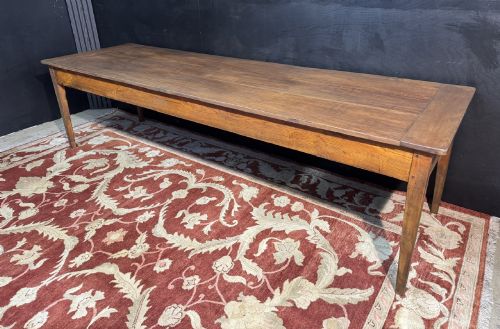
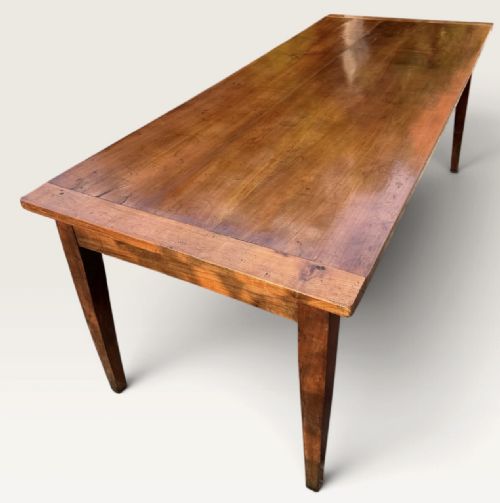
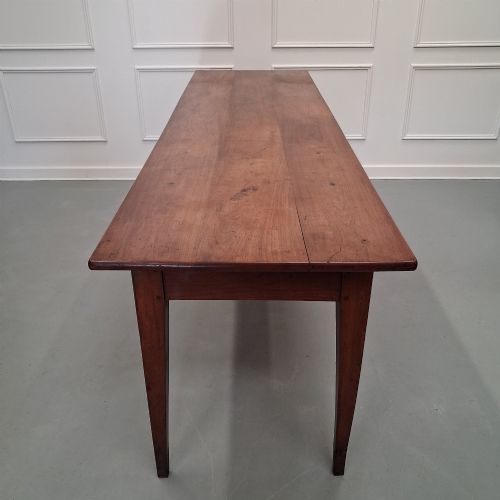
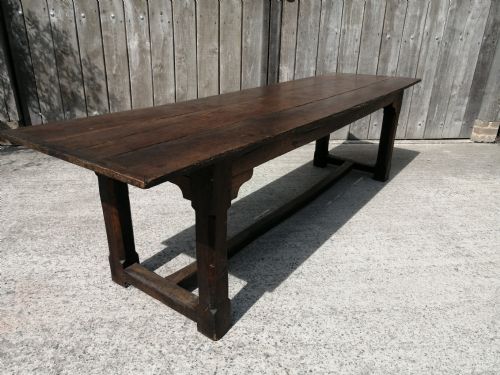
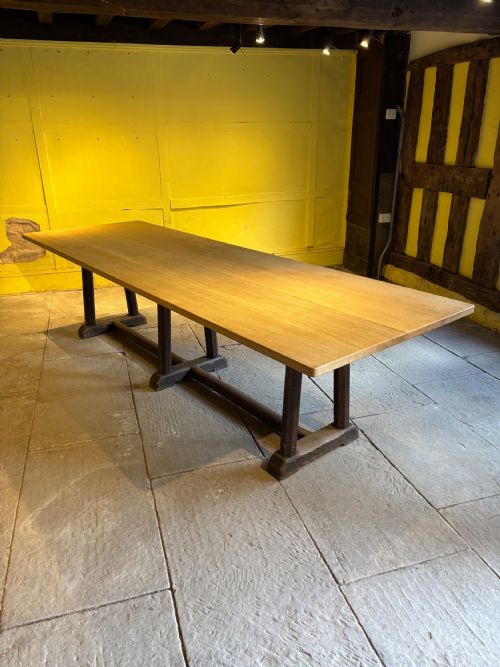
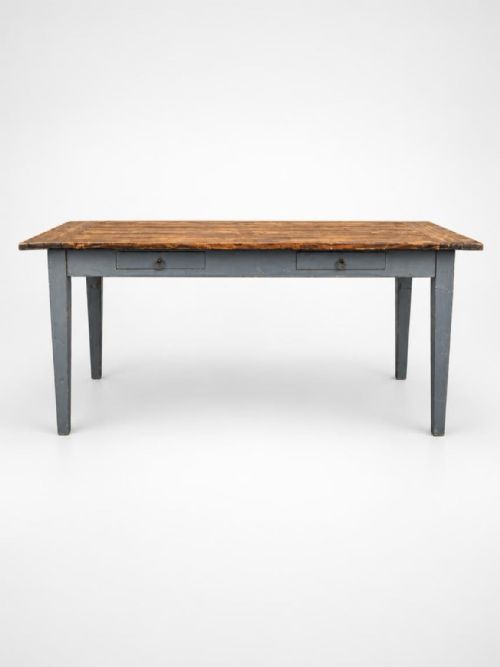
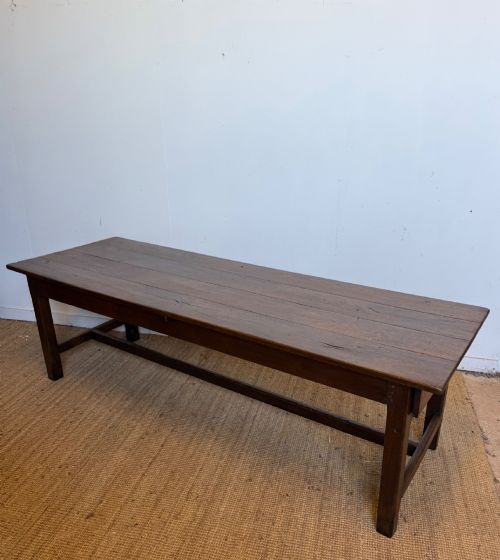
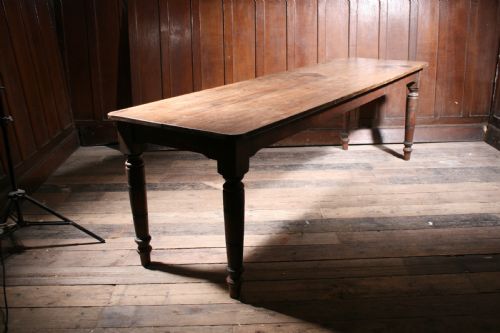
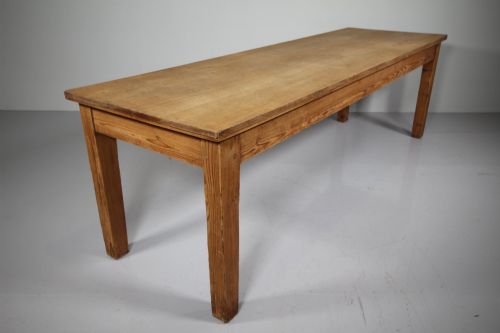
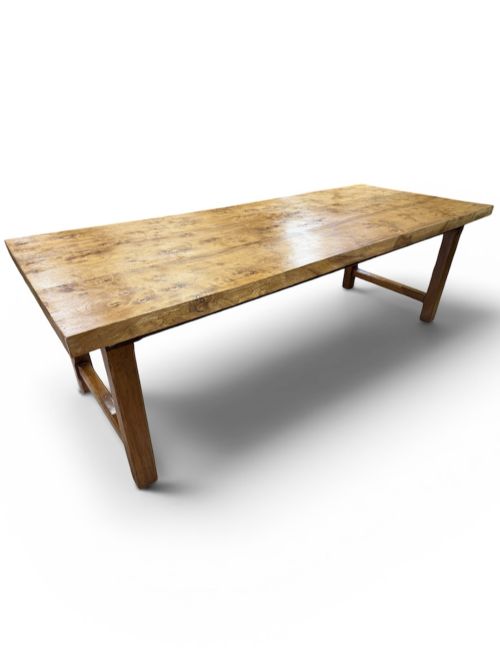
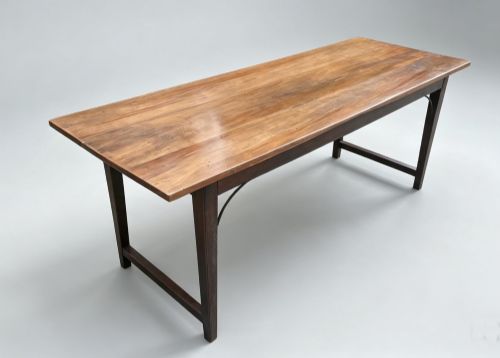
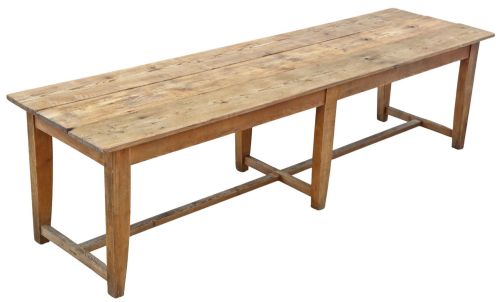
Long Plank Top Table
A long plank top table brings centuries of sturdy utility and rich grain into a room, offering vast surface space for gathering.
Long Plank Top Table
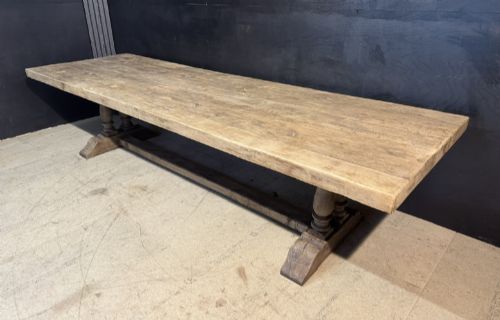
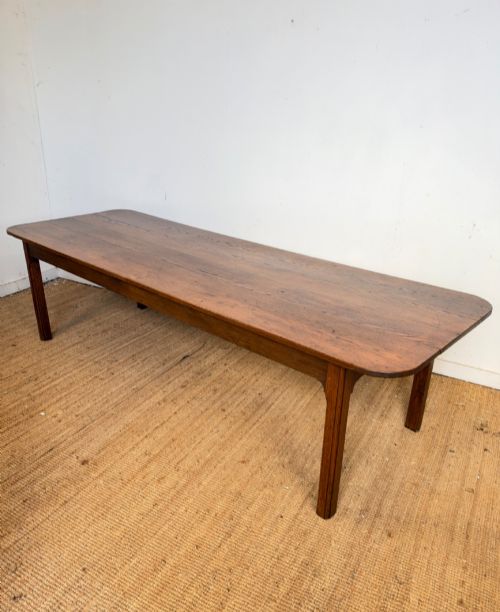
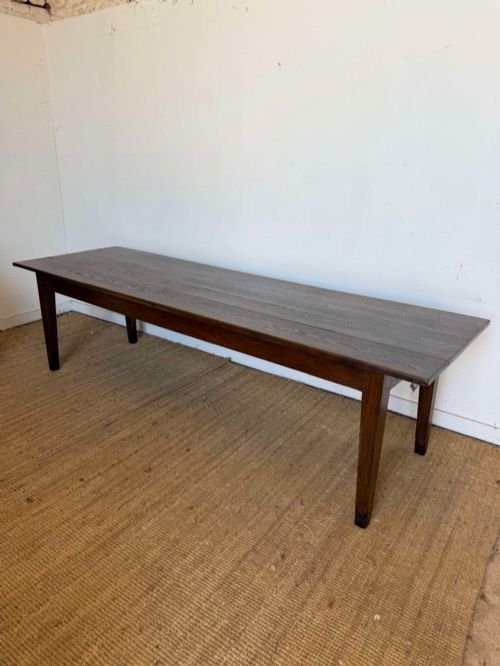
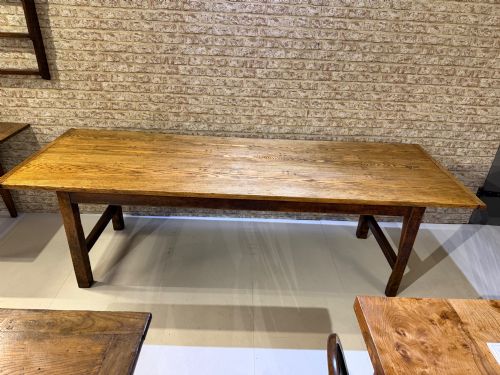
A long plank top table is a substantial piece designed for communal dining or heavy kitchen work, appearing frequently in robust timber constructions across this selection. These tables span several centuries, with particular emphasis on the eighteenth and nineteenth centuries, alongside earlier seventeenth-century examples.
The forms on this page include large dining tables, refectory tables, console tables, and kitchen tables. Most pieces rely on generous timber boards joined lengthwise to create an expansive working or eating surface.
Origins range across English, Welsh, and French country traditions, bringing distinct regional proportions and timber choices to each piece. Buyers encounter rustic farmhouse styles alongside more formal refectory formats.
Judging Quality and Character
Quality in a long plank top table lies in the integrity of the timber selection and the structural honesty of the frame. Superior examples display thick, stable planks that have aged uniformly without excessive distortion.
The balance between the top boards and the underframe dictates the visual weight of the piece. Tables with well-proportioned legs and tight joinery demonstrate superior craftsmanship from their period of origin.
Patina separates exceptional pieces from simpler utilitarian items. Centuries of scrubbing, waxing, and handling impart a depth of colour and texture that cannot be artificially replicated.
Long Plank Top Table Retail Price Guide 2026
Typical asking prices for long plank top table among the pieces listed under this phrase on Sellingantiques today, from the lower quarter to the upper quarter. They describe what is for sale here now, not the wider market.
Several tables here include integrated drawers, proving that ancestors appreciated a tidy place to stash crumbs and cutlery.
The Long Plank Top Table Glossary
- Refectory table
- A long, narrow dining table originally built for monastic dining halls and later adapted for domestic use. These pieces often feature H-stretchers or multiple legs for added stability.
- Plank top
- A table surface constructed from wide boards joined side by side. This method allowed makers to utilise mature trees before the advent of industrial sheet timber.
- H-stretcher
- A horizontal timber brace connecting the legs of a table in the shape of the letter H. It strengthens the entire underframe against lateral movement.
- Patina
- The surface sheen and colour developed by timber over years of exposure, polishing, and handling. It serves as a visual indicator of age and genuine use.
- Fruitwood
- A collective term for timber harvested from fruit-bearing trees such as pear, cherry, or apple. Makers valued it for its fine grain and warm tone.
Long Plank Top Table: Frequently Asked Questions
How do I clean a wooden plank top?
Maintain the surface by wiping it down with a damp cloth and mild soap, avoiding harsh chemical cleaners that strip the historic finish.
Periodically nourish the timber with natural beeswax to preserve the moisture and enhance the depth of the grain.
Can I use an antique table daily?
These tables were built for heavy domestic labour and communal dining, making them exceptionally well-suited for modern family life.
Use coasters and placemats to protect the historic surface from excessive moisture and heat while enjoying the sturdy construction.
What timber is most durable?
Oak and elm offer exceptional structural strength and resistance to heavy impacts, which explains their frequent use in early refectory designs.
Softer woods like pine and poplar provide a lighter visual presence while still offering robust support for everyday tasks.
How do I date an old table?
Examine the underside and joinery for tool marks, peg construction, and the method used to secure the top planks to the frame.
Changes in timber availability and regional style markers help narrow the period down from the seventeenth century through to the Victorian era.