
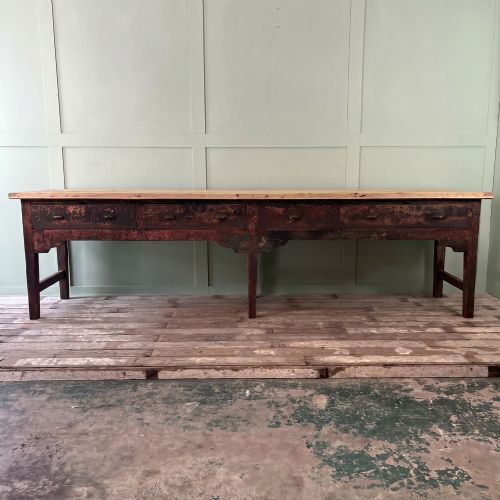


Long Pine Sideboard
A long pine sideboard offers generous storage and sturdy character, anchoring a kitchen or dining room with practical surface space.

Long Pine Sideboard
A long pine sideboard brings substantial utility and rustic presence to domestic spaces, drawing on forms made during the nineteenth century and the Victorian period. These pieces originate from traditions including English country, Georgian country, and French country aesthetics.
The items found here encompass large painted dresser bases, serving tables, shop counters, and pitch pine cupboards. Buyers seeking a long pine sideboard will encounter various proportions, often spanning several feet to accommodate extensive storage requirements.
Makers utilised resilient softwoods and hardwoods, creating heavy furniture intended for daily domestic or commercial use. The inventory reflects a predominance of nineteenth-century craftsmanship, including specific dates such as 1850 and 1880.
How they were made
Construction relies heavily on pine and pitch pine timbers, frequently augmented by painted finishes, brass, and iron hardware. Workshops shaped these materials into functional forms like drapers counters and serving tables.
Surfaces often display original paint layers or remnants of historical finishes applied over timber frames. The integration of metal fittings such as iron or brass handles secures doors and drawers built for heavy service.
Materials recorded across the inventory include pine, pitch pine, painted timber, brass, iron, and hardwood.
What varies in quality
Distinction across pieces rests on the integrity of the timber and the survival of original painted surfaces. Items featuring untouched historical paint finishes command attention for their visual depth.
Structural proportions and the scale of the piece dictate its utility, ranging from standard dresser bases to monumental country house examples. The retention of original hardware, including brass and iron pulls, distinguishes superior examples.
The Long Pine Sideboard Glossary
- Dresser base
- A low cabinet featuring drawers or cupboards, designed originally for food preparation and storage in large country houses. It forms the foundation upon which plate racks occasionally sit.
- Pitch pine
- A dense, resinous softwood sourced from pine species, known for its durability and prominent grain patterns. It provided robust material for nineteenth-century cupboards and tables.
- Drapers counter
- A long shop fixture fitted with numerous drawers or shelving, utilised in retail establishments for displaying fabrics. These counters transitioned into domestic settings for their expansive surface area.
- Serving table
- A long table placed in dining areas to hold dishes during meals before formal service. They frequently lack the extensive cupboard space found in standard sideboards.
Long Pine Sideboard: Frequently Asked Questions
What is a long pine sideboard used for?
These pieces serve primarily as storage units and display surfaces within kitchens, dining rooms, or hallways. Their extensive tops accommodate serving dishes or decorative objects while interior cupboards hold tableware.
Historically, similar forms functioned as work surfaces in country houses and retail shops. Today, they integrate into modern homes to provide substantial concealed storage.
How do I identify a Victorian pine sideboard?
Victorian examples date from the nineteenth century and often exhibit characteristics of English or French country styles. Look for construction methods typical of the period, including hand-cut joints and heavy timber frames.
Materials frequently include standard pine or pitch pine, sometimes finished with original paint. Hardware such as iron or brass handles offers further clues to the manufacturing era.
Are these sideboards made from solid pine?
The pieces listed utilise solid timber construction, predominantly pine and pitch pine, alongside painted timber and occasional hardwood elements. This heavy material composition provided the strength needed for daily use.
Makers selected these softwoods for their availability and workability in regional workshops. The heavy construction accounts for the enduring survival of these items.
Can I use a drapers counter as a sideboard?
A drapers counter functions exceptionally well as a sideboard due to its elongated proportions and numerous storage drawers. Originally designed for retail shops, these large pieces offer deep surfaces suited for domestic serving and storage.
Their sturdy build and distinctive configuration bring character to residential dining spaces. They share similar functional qualities with traditional serving tables and dresser bases.