



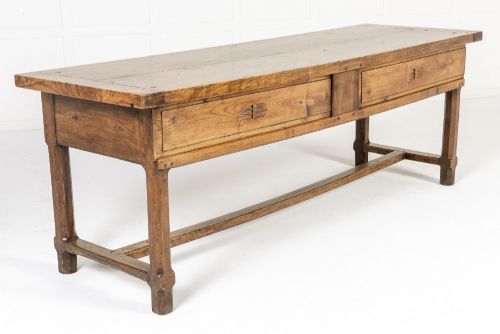


Long Oak Console
A long oak console brings substance and history to a room, offering a surface built from timber that carries decades or centuries of honest use.
Long Oak Console
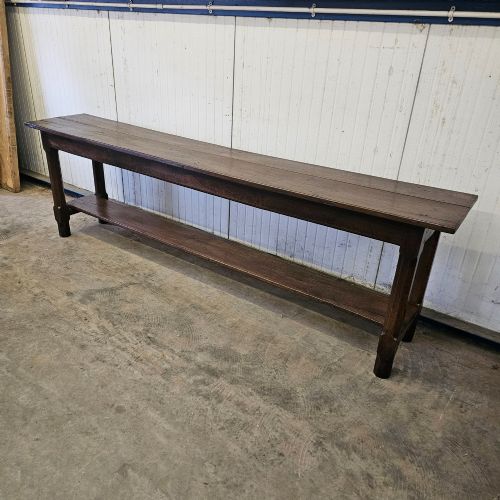
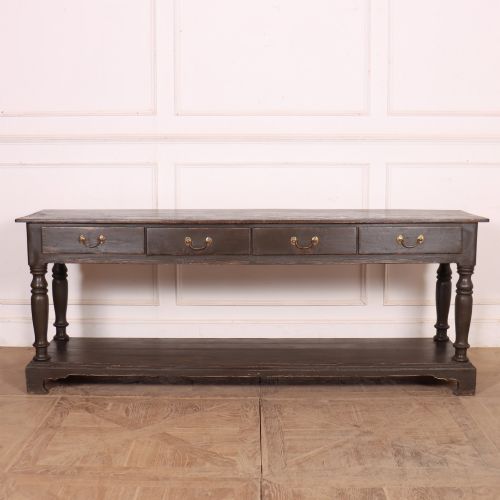
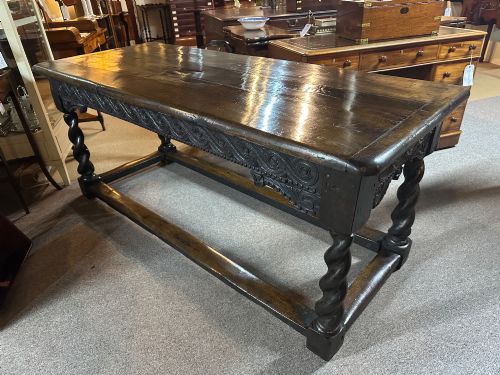
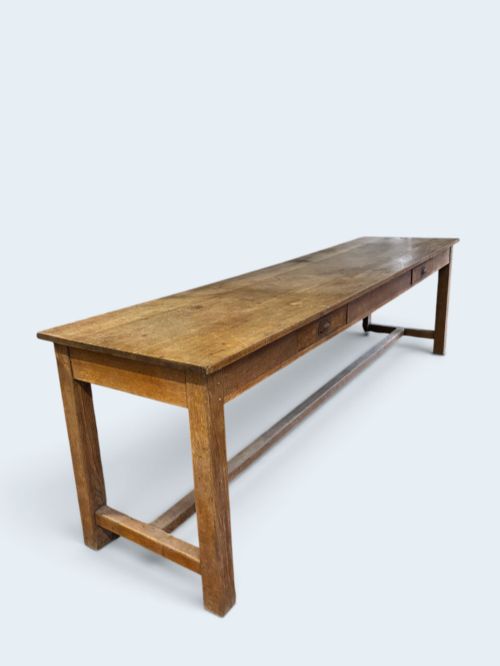
A long oak console encompasses a variety of substantial timber tables, including serving tables, drapers tables, refectory tables and dresser bases, spanning the eighteenth and nineteenth centuries. Buyers searching for a long oak console will encounter pieces originating from English country houses and French provincial settings, reflecting regional domestic and utilitarian traditions.
The versions most common on this page are French drapers tables, eighteenth century refectory formats, and nineteenth century serving tables. These forms provide considerable length and depth, designed originally for display, preparation or dining in large rooms.
Materials and construction
Construction relies heavily on solid oak, frequently paired with secondary timbers such as pine and poplar, alongside structural elements in iron and brass. Joinery methods reflect the period of origin, from pegged mortise and tenon joints on earlier refectory tables to simpler framing on later workshop pieces.
Surfaces show various treatments, ranging from natural waxed timber to bleached oak finishes and painted wood surfaces. Tables such as ships tables and workbenches incorporate metal underframes and cast iron components, adding industrial utility to the wooden top.
Long Oak Console Retail Price Guide 2026
Typical asking prices for long oak console among the pieces listed under this phrase on Sellingantiques today, from the lower quarter to the upper quarter. They describe what is for sale here now, not the wider market.
The listings span the eighteenth, nineteenth and early twentieth centuries, featuring oak alongside iron, brass and bleached timber.
Judging quality in oak tables
Quality depends upon the integrity of the timber and the honesty of the surface finish, distinguishing tables with original patination from heavily altered or over-restored examples. Grain density, board width and the depth of the colour achieved through age dictate the visual weight of the piece.
Structural stability in long formats separates superior examples from lesser ones, particularly where timber movement over centuries has been managed without compromising the original underframe or trestle support.
The Long Oak Console Glossary
- Drapers table
- A long utility table originally utilised in cloth merchandising, characterised by a shallow drawer line and an open lower potboard shelf.
- Refectory table
- A long dining table historically designed for communal dining halls, featuring substantial timber legs connected by low stretchers.
- Dresser base
- A low cabinet form with surface boards and drawers, lacking the upper plate rack structure.
- Potboard
- A lower slatted or solid shelf built into the base of a table or dresser to store heavy kitchen vessels.
- Bleached oak
- Timber that has been treated to lighten the natural dark tannin tones while retaining the grain texture.
Long Oak Console: Frequently Asked Questions
Where should I place a long oak console?
These long tables suit hallways, dining rooms or living spaces where length balances large wall areas.
Their narrow profile allows placement behind sofas or along corridors without blocking movement.
How do I care for a historic oak surface?
Maintain the timber with traditional beeswax to nourish the dry grain and protect against moisture.
Avoid placing these tables in direct sunlight or near heat sources to prevent timber splitting.
Are these tables suitable for everyday dining?
Many of these forms, such as refectory and serving tables, were engineered for heavy daily use.
Use heat mats and coasters to protect historical wax or oiled finishes from everyday marking.
How do I distinguish French from English oak tables?
French examples often display lighter bleached finishes or trestle underframes associated with provincial workshops.
English pieces frequently utilise bolder potboard bases and traditional four leg refectory framing.