
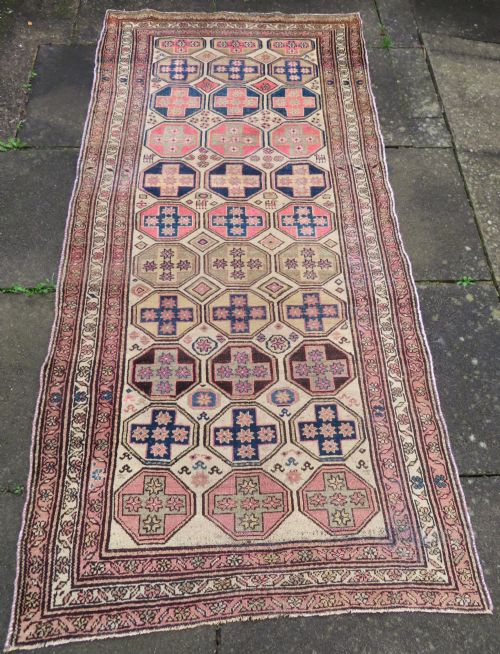
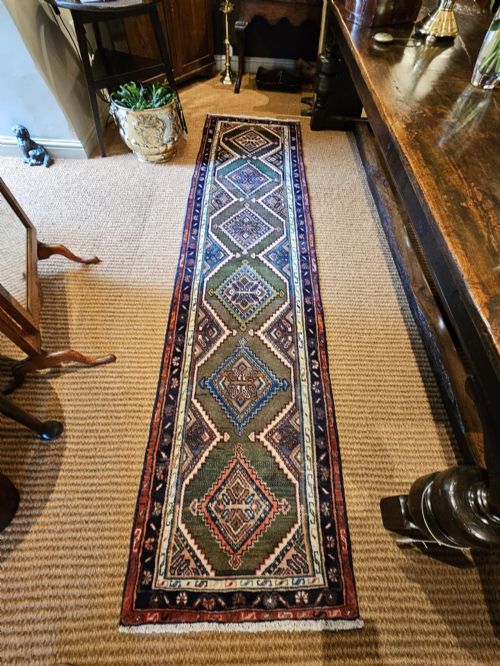
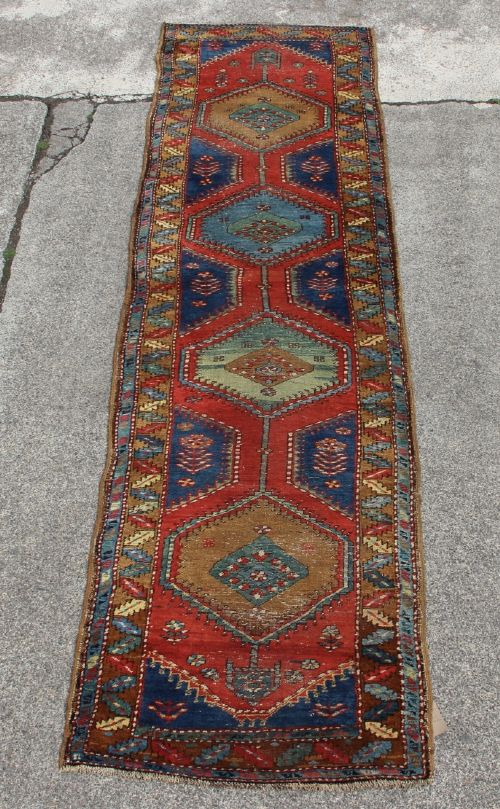
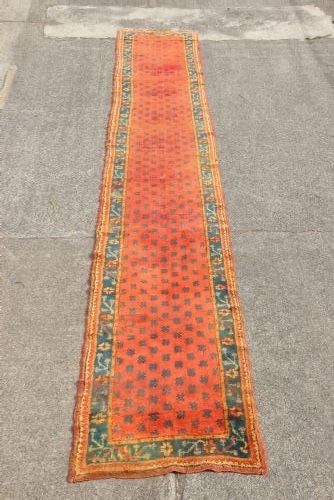
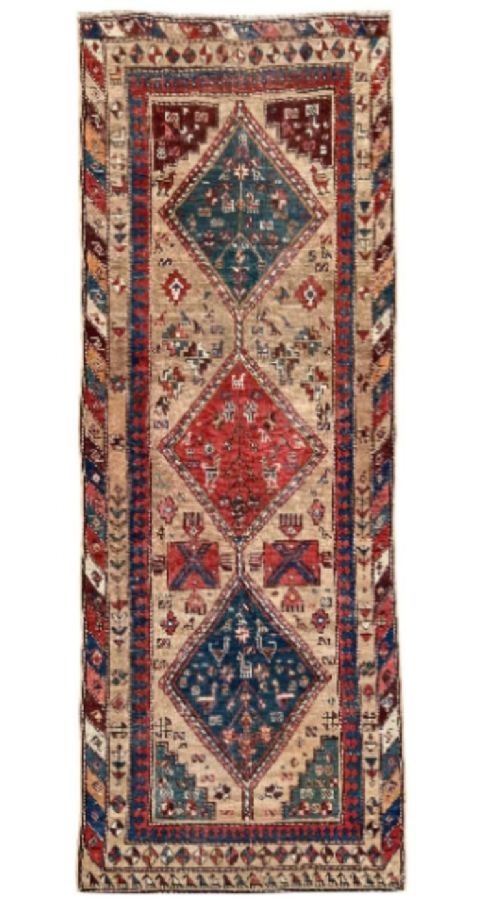
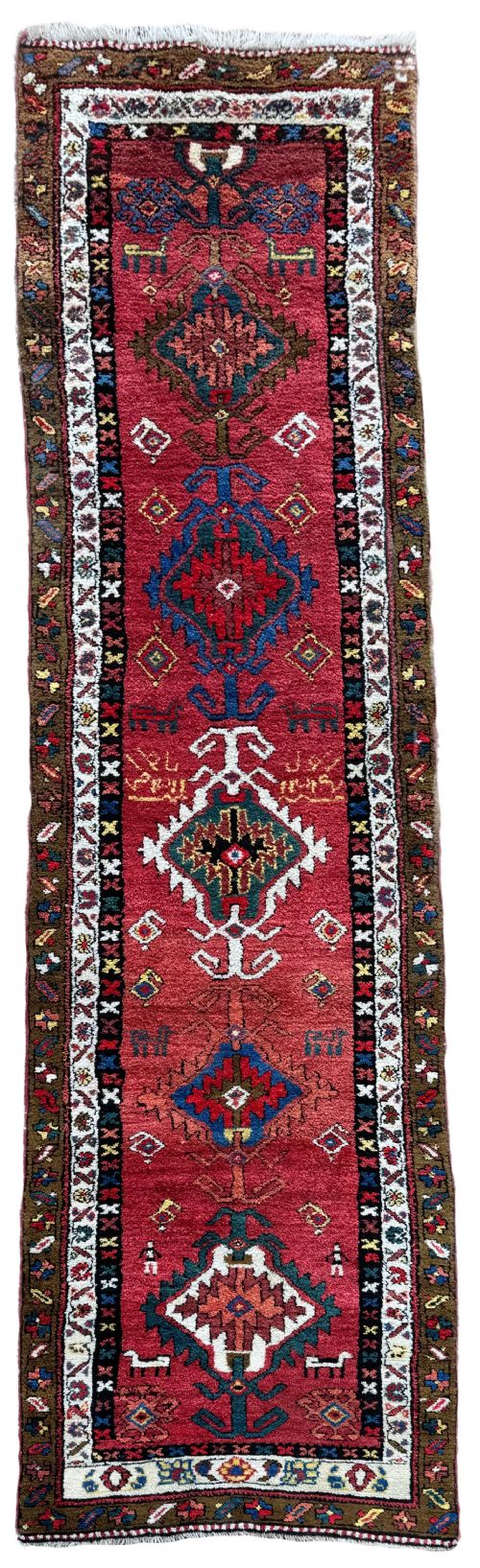
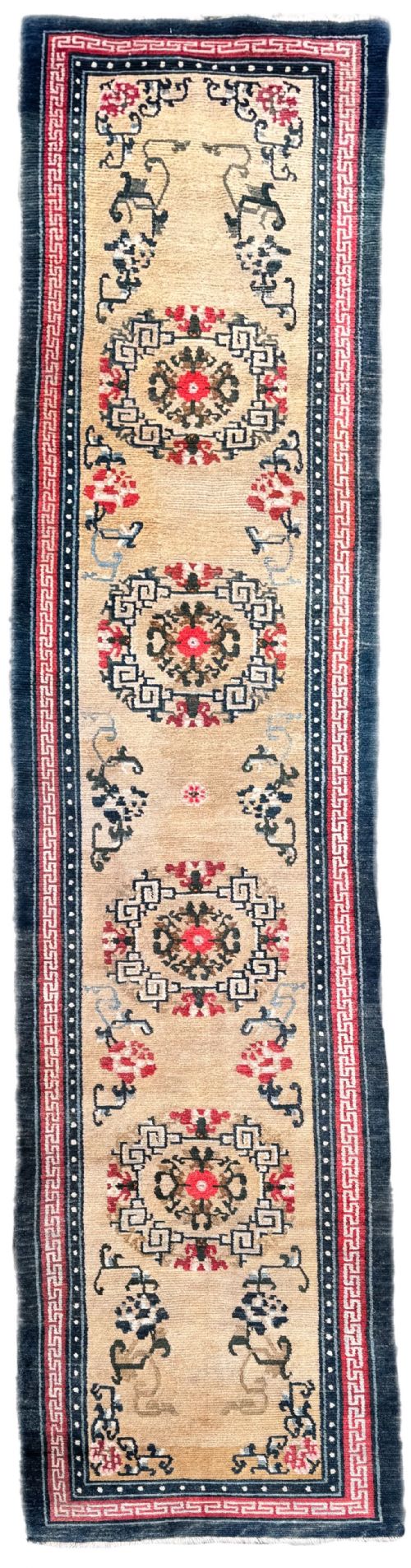
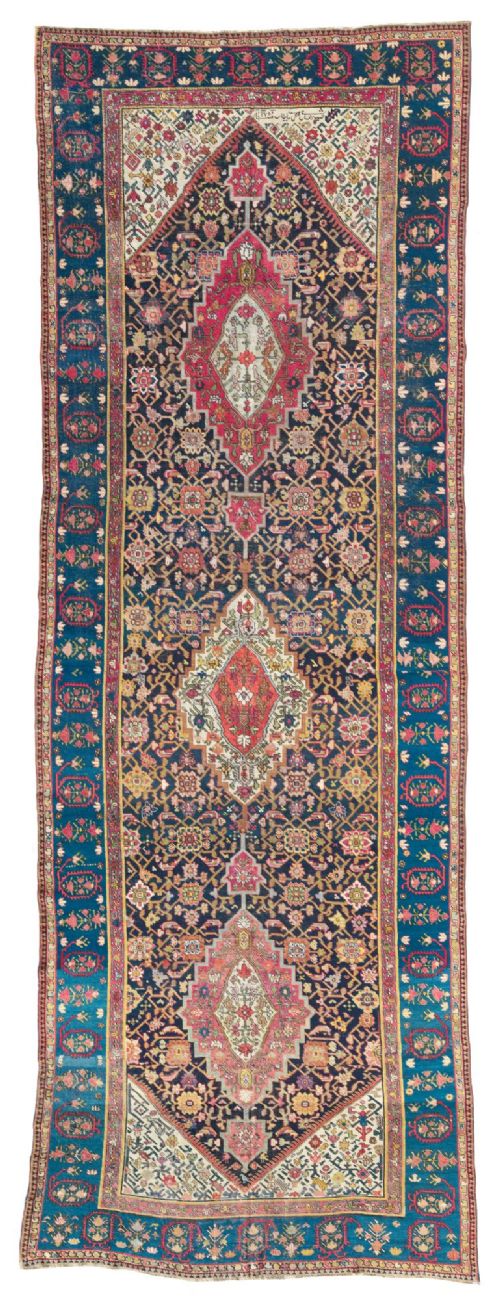

Long Runner
A long antique runner brings narrow floors and corridors to life with woven history from Persian, Caucasian and Anatolian traditions.
Long Runner
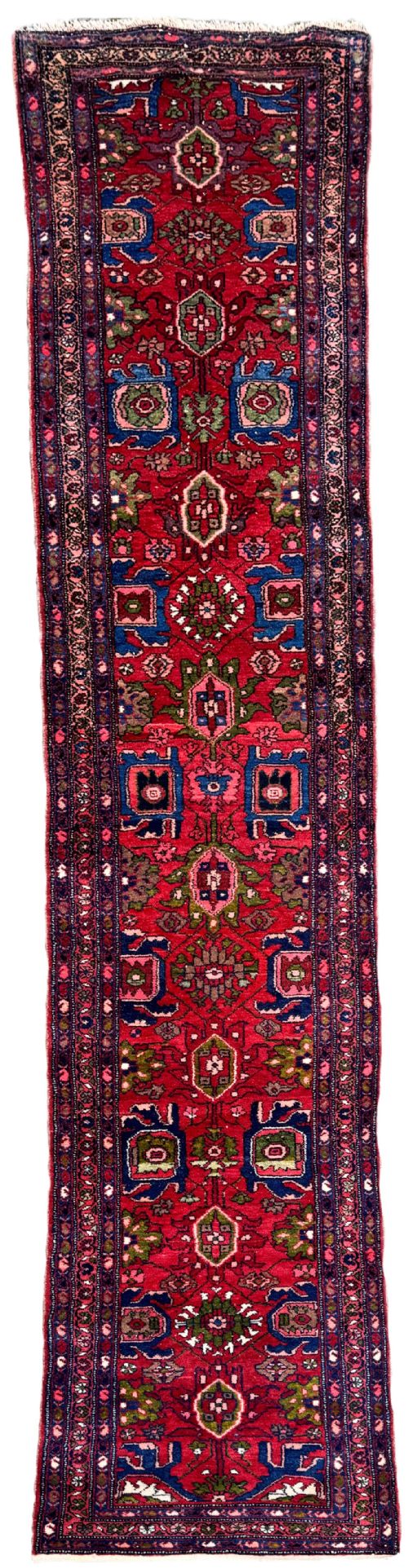
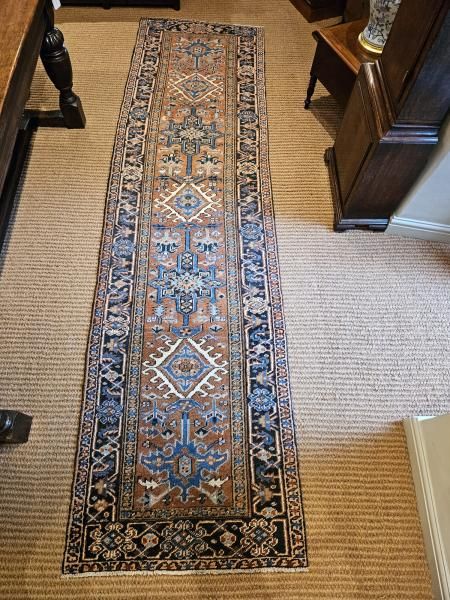
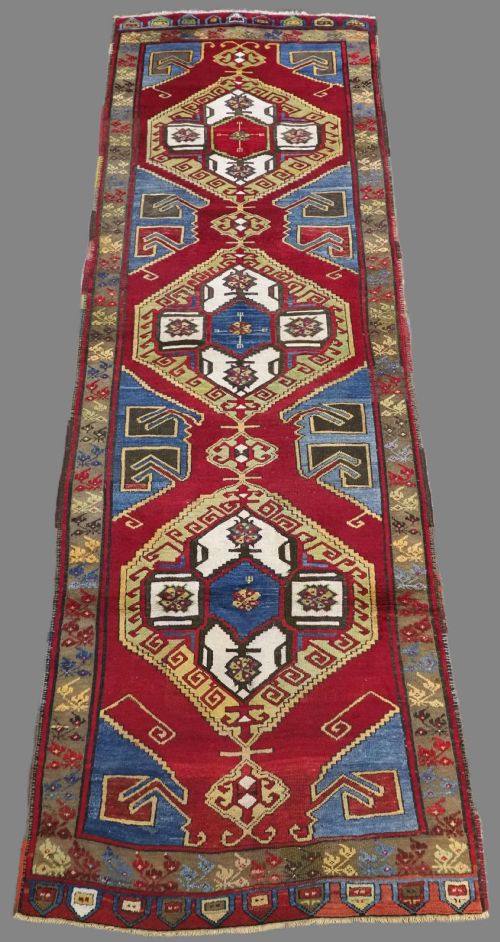
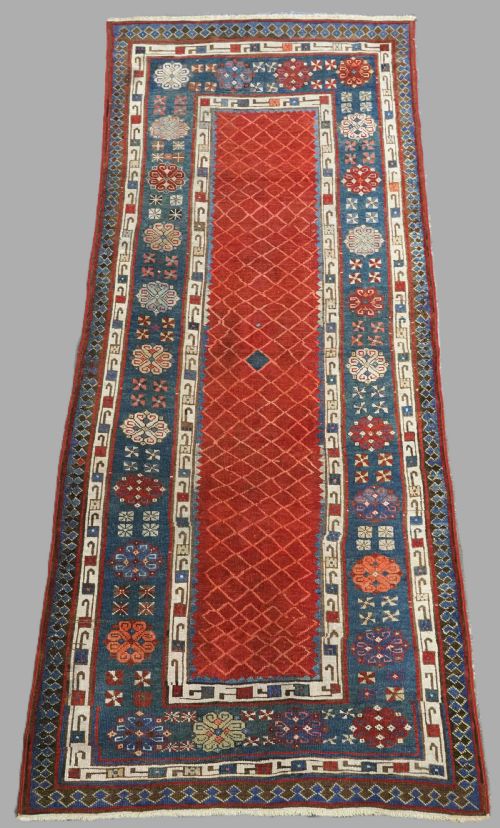
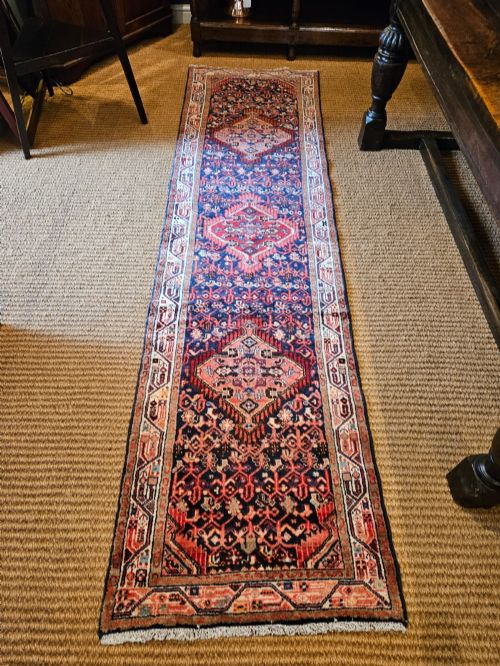
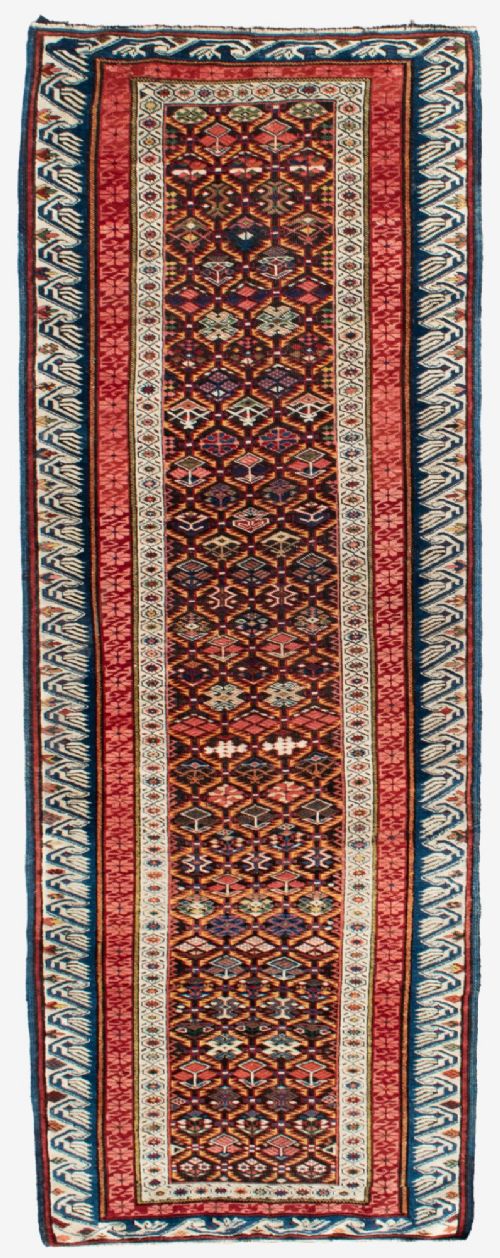
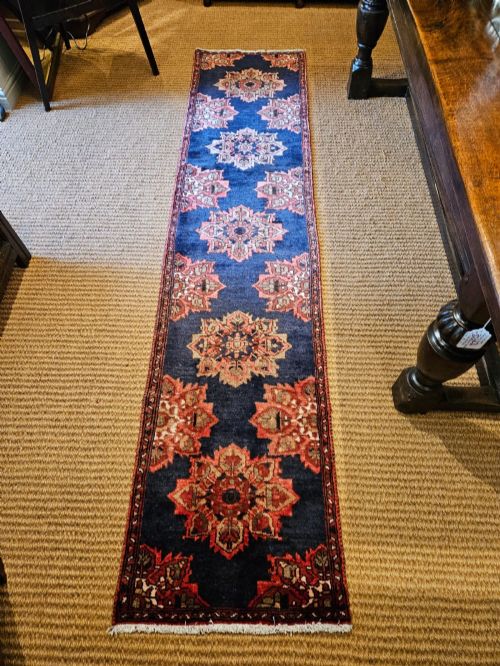
A long antique runner is a narrow, elongated rug designed specifically to span hallways, corridors, and landings in period and contemporary homes. These textiles originate primarily from Persian, Caucasian, and Anatolian weaving traditions, dating from the mid-nineteenth century through the early twentieth century.
The selection ranges from robust Kurdish and Heriz tribal weaves to finely patterned Shirvan and Oushak pieces. Dimensions frequently stretch well beyond standard proportions, with lengths reaching several metres while maintaining narrow widths suited to domestic corridors.
How They Were Made
Weavers constructed these pieces predominantly using wool and hand-spun wool on sturdy cotton or wool foundations, knotted by hand to withstand generations of foot traffic. Natural dyes provide the palette, yielding rich tones that age with considerable depth.
Techniques varied by region, encompassing geometric tribal knotting in the Caucasus and curvilinear medallion designs across Persian workshops. Flatweave methods also appear in specific kilim and gallery formats.
Listings feature traditional formats spanning Kurdish, Heriz, Shirvan, and Oushak regions, dated predominantly from the late nineteenth century to 1930.
What Varies in Quality
Quality rests upon the precision of the knotting, the resilience of the wool, and the integrity of the structural foundation. Higher grade pieces display tight knot counts that secure intricate geometric or floral motifs without distortion along the extended length.
The choice of dyes dictates visual harmony, where natural colour variations elevate the piece while maintaining structural soundness across the warp and weft.
The Long Runner Glossary
- Kelleh
- A large format rug or runner of extended proportions, often narrower than a standard carpet but broader than a typical corridor runner.
- Warp
- The vertical foundation threads stretched lengthwise on the loom onto which individual knots are tied.
- Weft
- The horizontal threads passed across the warp strands after each row of knots to bind the structure securely.
- Gul
- A medallion or repeating octagonal motif frequently found in Turkmen and related tribal weaving traditions.
- Kilim
- A flatweave textile produced without pile, created by tightly interweaving warp and weft strands.
Long Runner: Frequently Asked Questions
Where should I place a long antique runner?
These runners suit narrow high-traffic areas such as hallways, corridors, and long landings where floor coverings soften footsteps and protect timber boards.
Their elongated proportions also make them effective alongside large pieces of furniture or in gallery spaces.
How do I care for an antique wool runner?
Regular gentle vacuuming without a beater bar removes trapped dirt from the wool pile without damaging the foundation threads.
Professional cleaning tailored to antique textiles preserves the natural lanolin in the wool and protects the traditional dyes.
How do I identify a Persian runner from a Caucasian one?
Persian examples often feature curvilinear floral patterns, medallion layouts, and softer botanical palettes derived from regional traditions.
Caucasian runners typically display sharper geometric motifs, lattice frameworks, and crisp primary colours unique to northern weaving communities.
Do these runners work on modern floors?
Their enduring geometric and floral designs complement contemporary hardwood, stone, and painted floorboards alike.
Using a breathable underlay prevents slipping and cushions the traditional weave against modern subfloors.