


London Maritime Artwork
London maritime artwork captures the capital's historic river traffic, bridges and bustling port through paintings, watercolours and etchings.
London Maritime Artwork
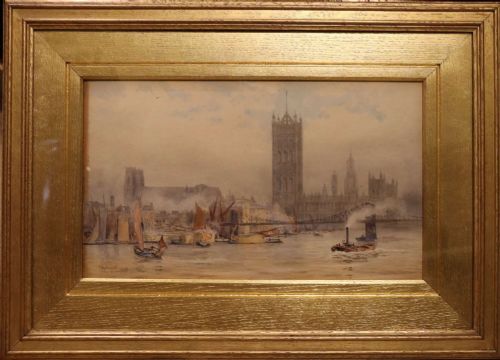
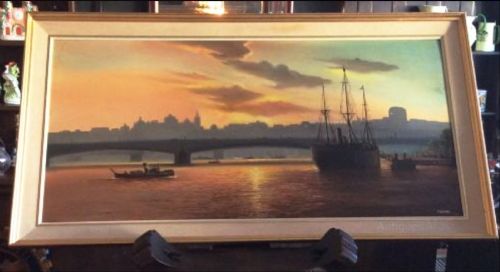
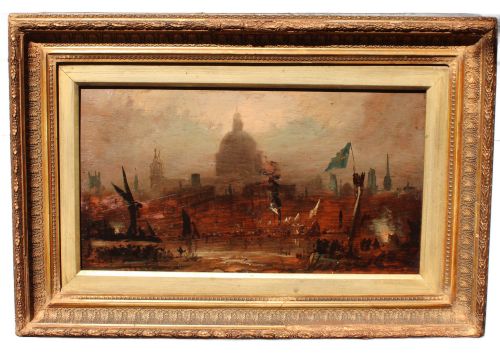
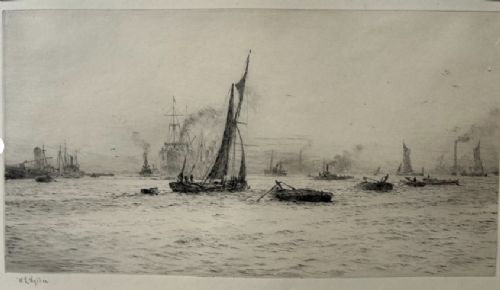
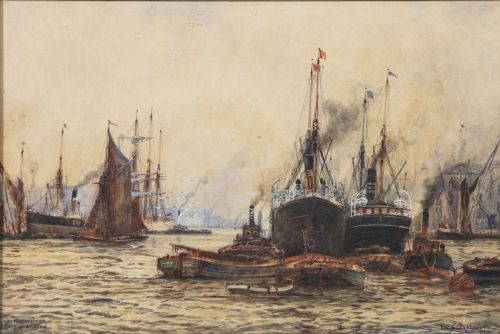
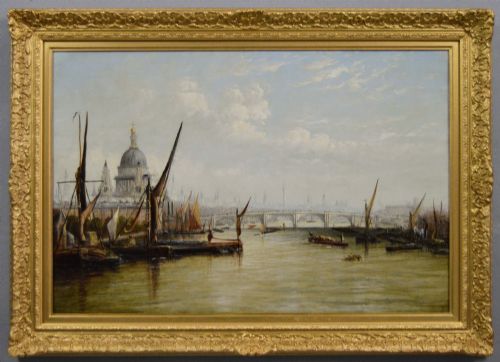
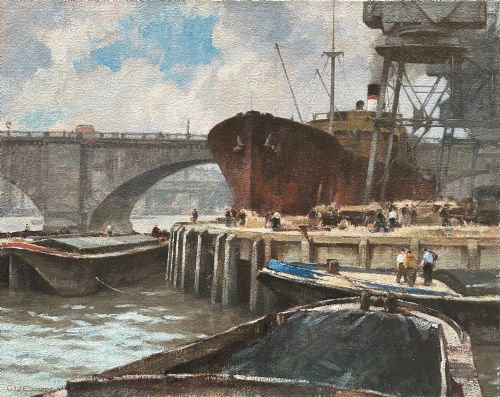
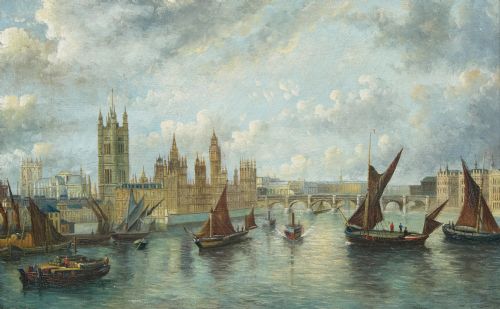
London maritime artwork encompasses paintings, watercolours, etchings and engravings depicting the River Thames, its bridges, docks and shipping from the nineteenth century into the twentieth century. These pieces record the changing face of the capital's waterway, featuring landmarks such as St Paul's Cathedral, the Houses of Parliament and London Bridge alongside barges and steam tugs.
The version most frequently met on this page is the watercolour or oil painting dating from the Victorian and Edwardian eras. Artists rendered the busy river scenes with specific attention to maritime activity in the Upper and Lower Pools of London, capturing contemporary vessels against the urban townscape.
Materials and Technique
Artists employed oil on canvas or delicate watercolour on paper to capture the atmospheric conditions of the Thames. Many works utilise traditional framing with gilt or wood surrounds to house these paintings, etchings and engravings.
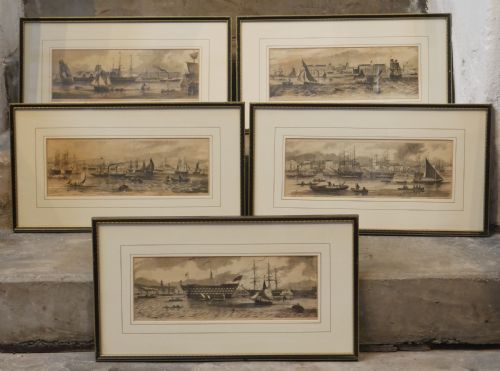
Techniques range from fine pencil-signed etchings and naval engravings to fluid watercolour washes and textured oil studies. Painters often worked in the manner of established marine traditions, applying pigment to canvas or paper to delineate shipping, architecture and river movement.
Listings feature works created using oil on canvas, watercolour, paper, wood, glass and gold leaf.
Judging Quality
Quality rests upon the artist's ability to render the specific topography of the Thames alongside accurate depictions of river craft. Superior examples demonstrate confident brushwork or precise etching lines that bring clarity to complex urban townscapes and busy port activity.
The distinction between standard decorative prints and finer original works lies in the handling of light, water and architectural detail. Well-preserved paper supports and original framing further elevate the standing of individual watercolours and engravings.
Frank Watson Wood·William Lionel Wyllie·FRANK WILLIAM SCARBROUGH·Francis Moltino·Edward Fletcher
The London Maritime Artwork Glossary
- Etching
- A printmaking technique where lines are bitten into a metal plate with acid before being inked and pressed onto paper. William Lionel Wyllie utilised this method for detailed river scenes.
- Watercolour
- A paint consisting of pigment suspended in a water-soluble vehicle, applied to paper. Frank W. Scarborough employed this medium extensively for views of the Pool of London.
- Oil on canvas
- Pigment mixed with a drying oil applied to a stretched fabric support. Francis Moltino and Edward Fletcher utilised this medium for substantial river townscapes.
- Engraving
- A method of cutting design lines into a hard plate to produce printed impressions. Naval engravings on this page record historical dock scenes.
- Marine painting
- Artwork focusing primarily on ships, shipping, harbours and coastal or river views. This genre forms the core of the London maritime category.
London Maritime Artwork: Frequently Asked Questions
What periods do these London maritime artworks cover?
The pieces span from the early nineteenth century through the Victorian and Edwardian periods up to the mid-twentieth century. This timeline captures the evolving architecture and vessel types on the Thames.
Works range from early oil studies to later twentieth-century interpretations of river traffic.
Which landmarks appear in these river scenes?
Common landmarks include St Paul's Cathedral, the Houses of Parliament, London Bridge, Westminster Bridge and Tower Bridge. Artists frequently positioned these structures as backdrops to the bustling port.
The Upper and Lower Pools also feature prominently alongside historic wharves and docks.
What types of vessels are depicted?
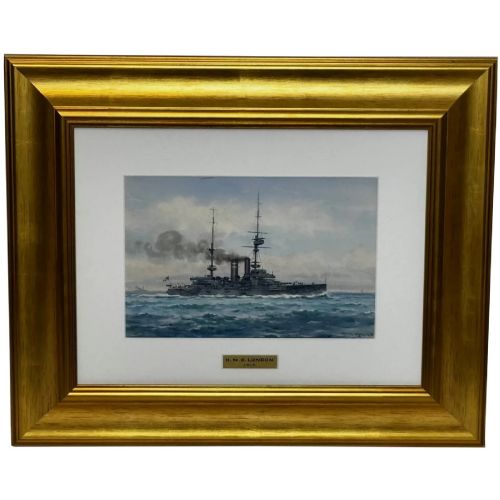
Depicted vessels include traditional Thames barges, steam tugs and various commercial shipping craft operating on the river. Naval vessels such as HMS London also appear in specific military commissions.
These boats reflect the heavy industrial and commercial traffic once vital to the capital.
How should I frame and display these artworks?
Watercolours and etchings require protection behind glass with acid-free mounts to prevent paper degradation from light exposure. Oil paintings on canvas generally suit traditional wood or gilt frames.
Position pieces away from direct sunlight and excessive humidity to preserve the integrity of the paper or canvas supports.