



Locking Side Cabinet
These pieces sold as a locking side cabinet are secure timber chests and cabinets designed for private papers and valuables.
Locking Side Cabinet
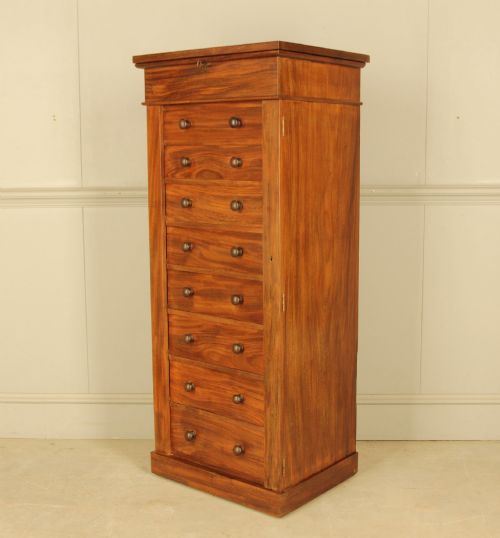
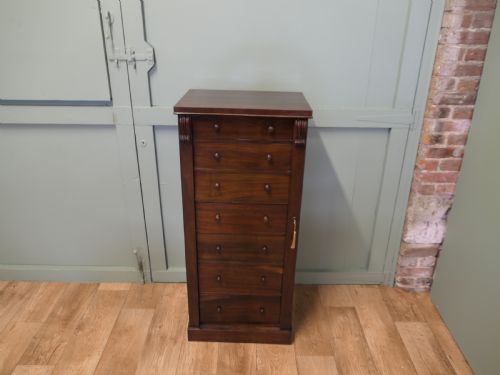
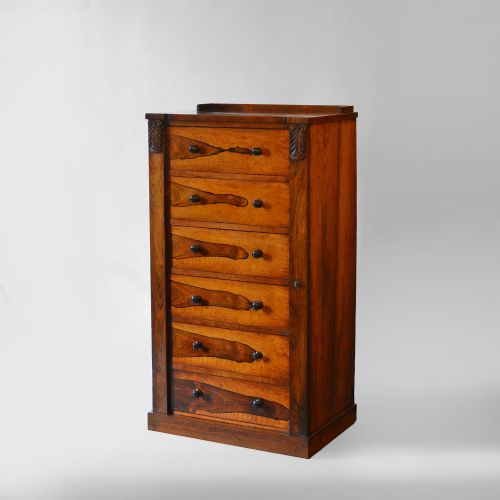
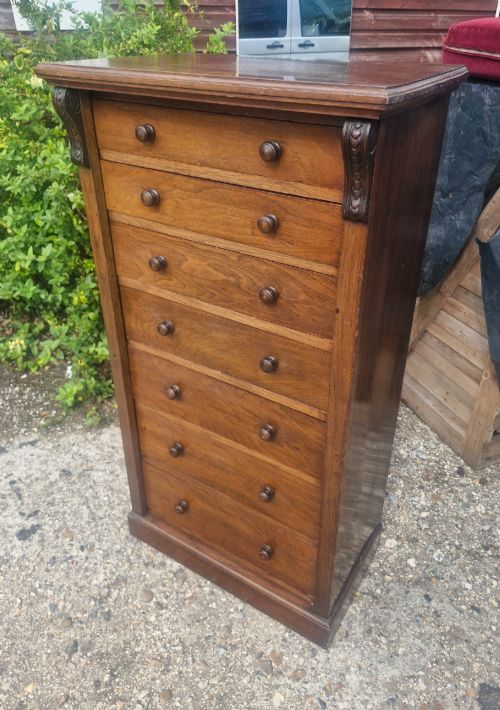
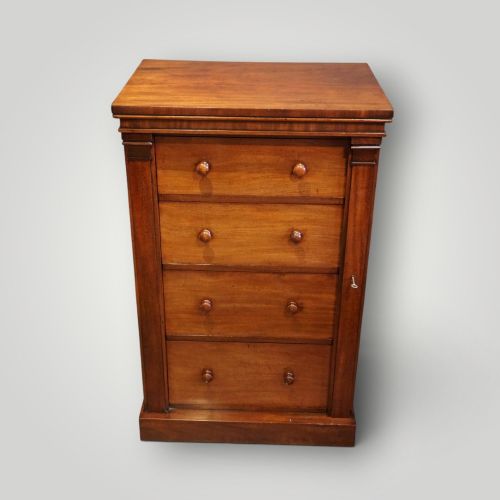
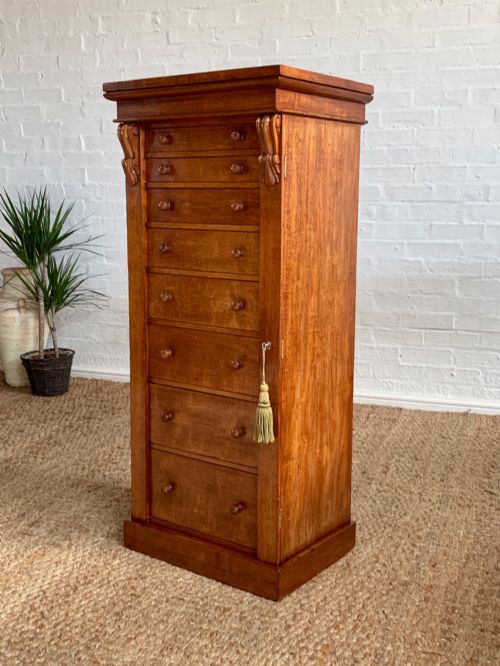
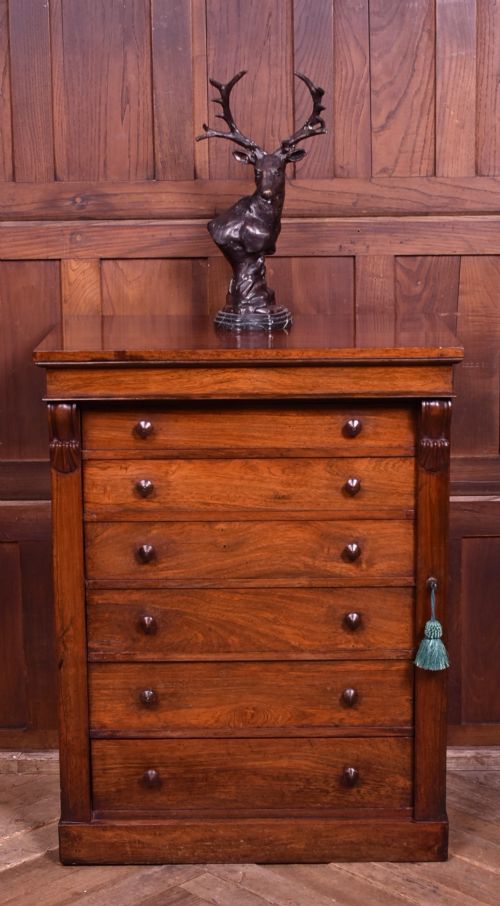
A locking side cabinet on this page typically takes the form of a vertical Wellington chest with a hinged, lockable stile securing multiple drawers.
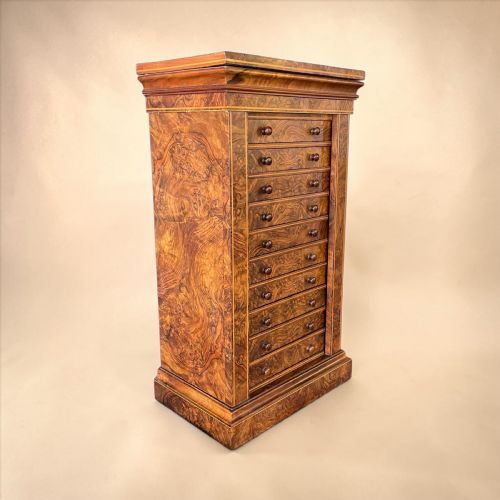
Makers constructed these compact storage units from dense timbers including mahogany, rosewood, walnut, and burr walnut during the nineteenth century.
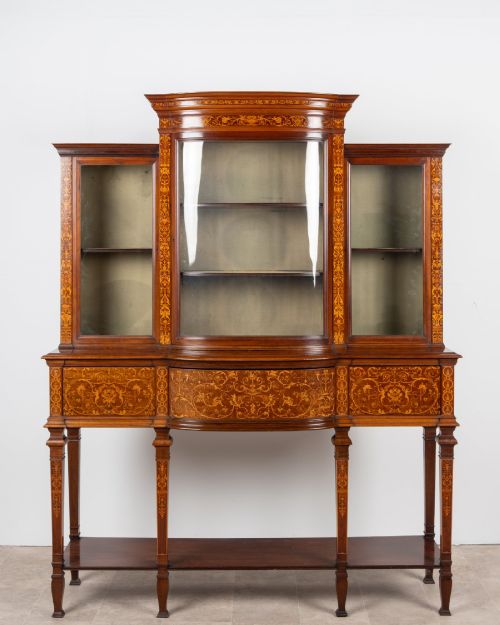
The selection ranges from tall Victorian drawer stacks to sideboards and cabinets incorporating marquetry inlay and specimen drawers.
How they were made
Cabinet makers utilised solid and veneered timbers such as mahogany and rosewood, applying figured burr walnut and maple for decorative visual contrast on drawer fronts.
Construction involved fitted locking stiles, hinged side locking bars, and turned wooden knobs alongside brass hardware to secure the internal drawers.
Surface ornamentation included marquetry inlay work executed in workshops during the Victorian and Aesthetic Movement periods.
Locking Side Cabinet Retail Price Guide 2026
Typical asking prices for locking side cabinet among the pieces listed under this phrase on Sellingantiques today, from the lower quarter to the upper quarter. They describe what is for sale here now, not the wider market.
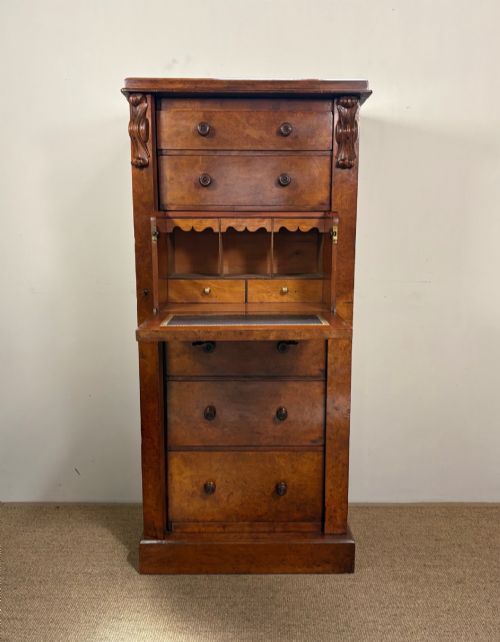
Object forms include standard chests of drawers, miniature versions, secretaire compartments, and sideboards with marquetry inlay.
What varies in quality
The choice of timber grain defines the visual standard, with highly figured burr walnut, rosewood, and matched mahogany veneers setting finer pieces apart from plain pine carcasses.
Precision in the mechanism of the locking side stile and the tightness of drawer dovetailing demonstrate the original maker's skill.
Collinson and Lock·Druce and Co·Stephen Webb
The Locking Side Cabinet Glossary
- Wellington chest
- A tall, narrow chest of drawers featuring a hinged locking side bar that secures all drawers simultaneously. This form was popular throughout the nineteenth century.
- Secretaire
- A desk drawer fitted with a drop-front writing surface and internal pigeonholes or small compartments. It conceals writing materials within a standard chest configuration.
- Specimen drawers
- Shallow drawers designed for organising collections of natural history items, coins, or small objects. They are often lined or partitioned for careful storage.
- Marquetry
- The art of applying decorative pieces of veneer to a structure to form geometric or pictorial designs. Makers used varied wood tones for contrast.
Locking Side Cabinet: Frequently Asked Questions
How does the locking mechanism work?
A vertical timber locking bar or stile is hinged to one side of the chest frame. When the cabinet drawers are fully closed, this bar swings into place and is secured with a key.
This single action fastens every drawer simultaneously, protecting confidential papers and valuable items kept inside.
What woods were commonly used?
Mahogany and walnut appear frequently in these nineteenth-century pieces, often selected for their strength and rich grain. Rosewood and burr walnut also feature prominently on high-grade examples.
Some larger storage pieces incorporate pine carcasses faced with decorative hardwood veneers.
Where should I place one?
These vertical chests have a narrow footprint designed to fit into tight wall spaces or beside larger pieces of furniture. They suit studies, hallways, and drawing rooms where vertical storage is practical.
The locking function makes them useful for keeping personal items secure in domestic spaces.
How do I date a piece?
Dating relies on timber selection, construction methods, and stylistic details associated with the Victorian period. Mahogany and rosewood pieces commonly date from the mid-nineteenth century.
Later Victorian examples often incorporate burr walnut or specific maker attribution marks from the final decades of the century.