



Lion Sculpture Bookends
These lion sculpture bookends bring heavy sculptural presence to a shelf, pairing classical authority with practical utility.
Lion Sculpture Bookends
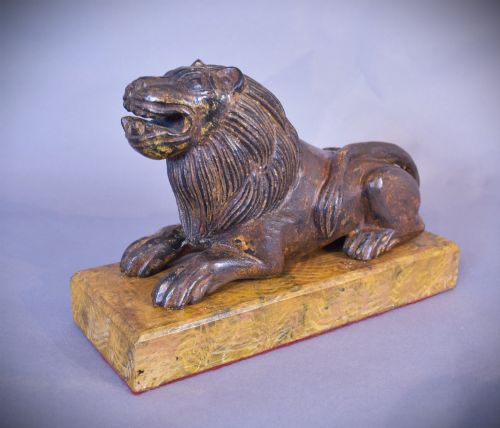
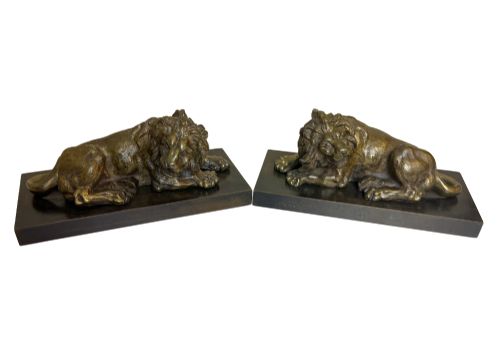
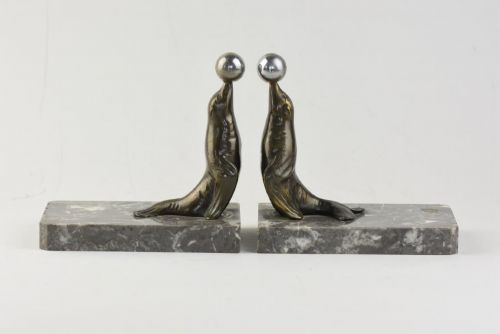
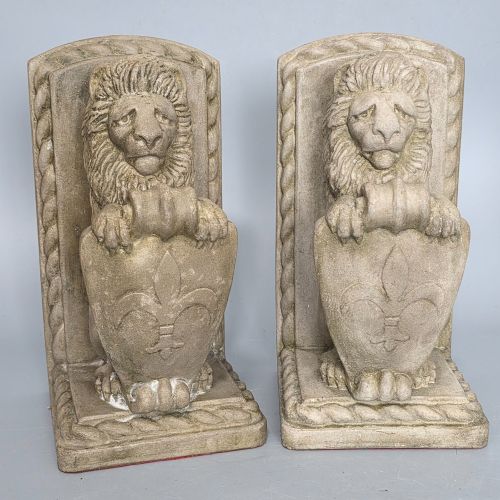
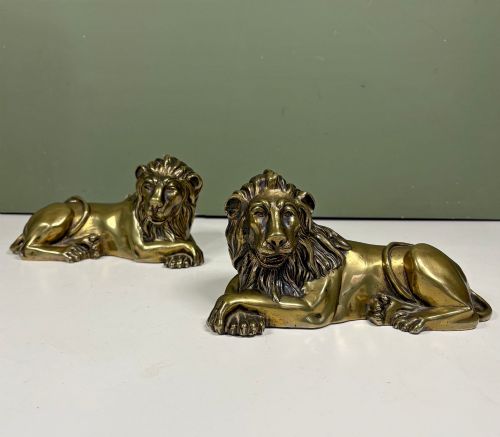
Lion sculpture bookends encompass a variety of sculptural forms designed to support books, appearing frequently in pairs across the nineteenth and twentieth centuries. You will encounter models ranging from classical Grand Tour interpretations to heavy cast iron desk accessories.
The selection on this page leans heavily toward nineteenth-century bronze and cast iron castings, alongside carved wood and stone variants. Styles stretch from Victorian Gothic Revival and Neoclassical to Art Deco.
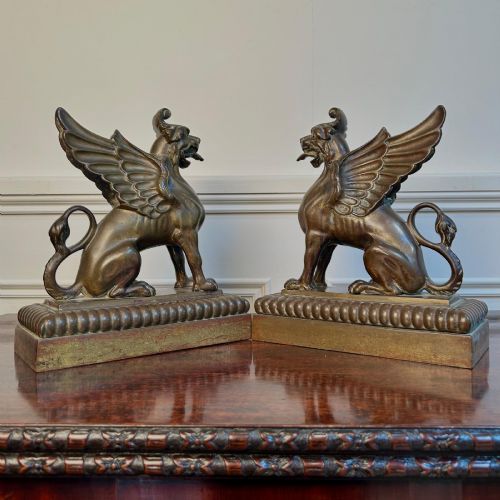
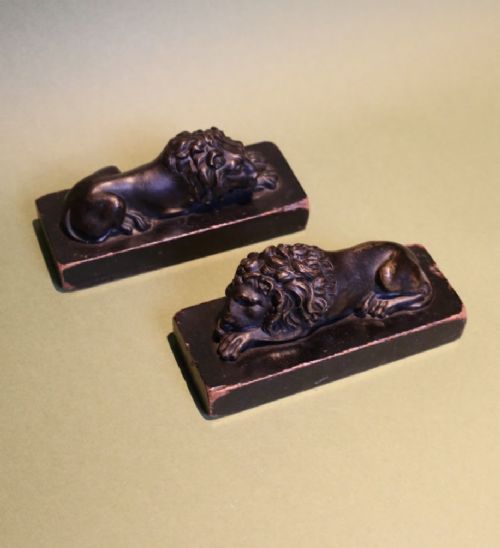
Many examples draw directly on famous sculptural traditions, such as the Canova lions or the winged lion of Saint Mark. These desk accessories combine utility with decorative ambition, functioning simultaneously as sculptures and functional book supports.
Materials and construction methods
Foundry work dominates the metal pieces, utilising bronze, brass, and cast iron to achieve durable weight and sharp detail. Patinated surfaces and dark finishes give these metal sculptures an aged appearance.
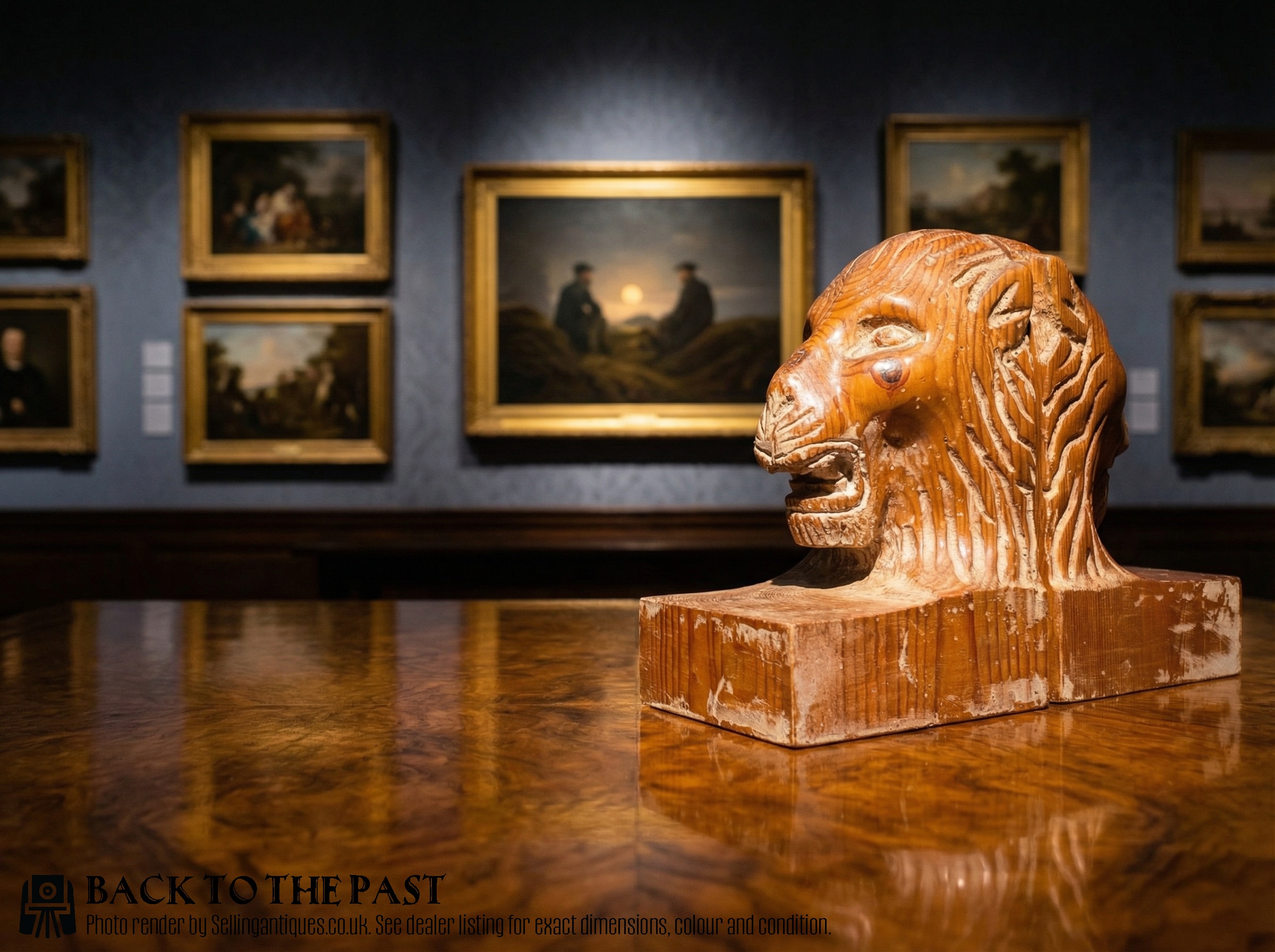
Carved pieces rely on dense timbers like pine or natural stones including marble, serpentine, and soapstone. Hand-carved elements demonstrate traditional woodworking and stonemasonry skills applied to domestic utility.
Chinese foo dogs and mythical griffins occasionally sneak into the pack, guarding your bookshelves with ancient mythological authority.
Distinctions in quality and execution
Substantial physical weight distinguishes superior bookends, ensuring they can securely hold heavy volumes upright without tipping. The quality of the underlying material, whether solid bronze or dense stone, dictates this stability.
C Omin
The Lion Sculpture Bookends Glossary
- Canova lions
- Replicas of the famous neoclassical lions sculpted by Antonio Canova for the tomb of Pope Clement XIII in Rome. Grand Tour travellers frequently collected smaller bronze versions of these monuments.
- Grand Tour
- A traditional trip through Europe undertaken by upper-class Europeans in the eighteenth and nineteenth centuries to study classical art. Travellers bought small bronze sculptures and architectural models as souvenirs.
- Recumbent
- Lying down or resting in a horizontal position. Many antique bookends depict lions in this relaxed posture to fit the low profile required for shelves.
- Neoclassical
- A style reviving the art and architecture of classical Greece and Rome. This aesthetic prioritizes symmetry, restraint, and classical motifs like lions and griffins.
- Serpentine
- A dark green silicate mineral resembling snakeskin, often polished and used for decorative objects and small sculptures. It provides a heavy, cool-to-the-touch base for nineteenth-century carvings.
Lion Sculpture Bookends: Frequently Asked Questions
What materials are used for lion bookends?
These pieces appear most frequently in cast bronze, brass, and heavy cast iron, providing the necessary weight to support heavy books.
Other examples utilise carved pine, soapstone, marble, and serpentine, reflecting the material preferences of various nineteenth and twentieth-century workshops.
How do I date a pair of lion bookends?
Dating relies on examining the casting technique, the material composition, and stylistic clues such as the presence of Art Deco geometry or Victorian Gothic Revival motifs.
Base construction, screw types, and the character of the metal patina or stone weathering also offer reliable indicators of age.
Are all these bookends antique?
The selection spans multiple centuries, incorporating seventeenth-century carvings, nineteenth-century Grand Tour bronzes, and mid-twentieth-century cast stone pieces.
Individual listings specify the exact period or estimated decade of manufacture based on style and material evidence.
How should I style them at home?
Their primary function remains supporting rows of books on a desk, mantlepiece, or open bookshelf, where their substantial weight keeps volumes upright.
They also function purely as decorative desk accessories or mantel sculptures when displayed independently without books.