




Lion Paw Feet
Lion paw feet anchor heavy mahogany, oak, and brass pieces with neoclassical weight.
Lion Paw Feet
When searching for lion paw feet, a buyer encounters heavy timber furniture and metalwork from the eighteenth, nineteenth, and early twentieth centuries. These supports lift large case pieces, seating, and tables off the floor with deliberate neoclassical strength.
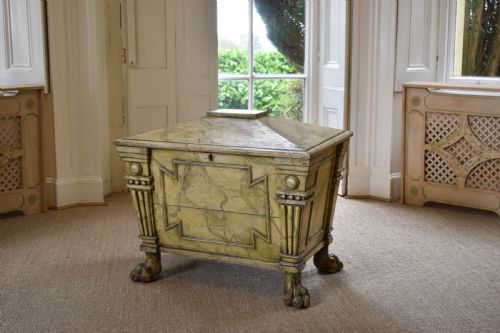
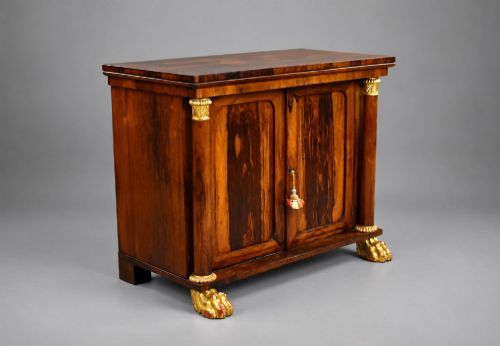
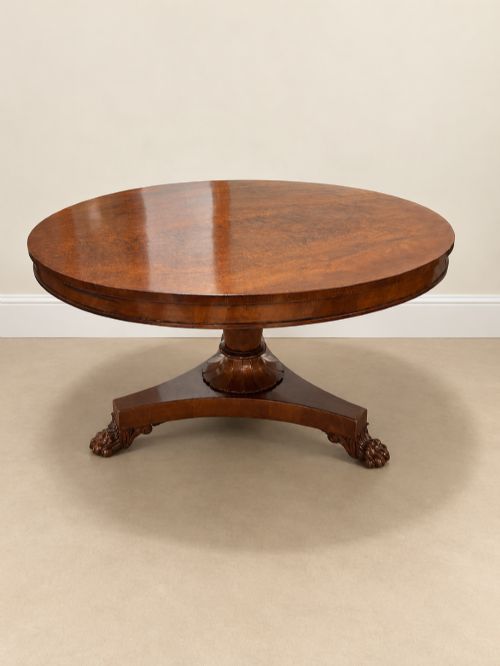
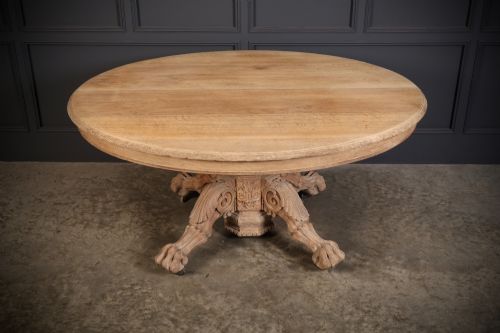
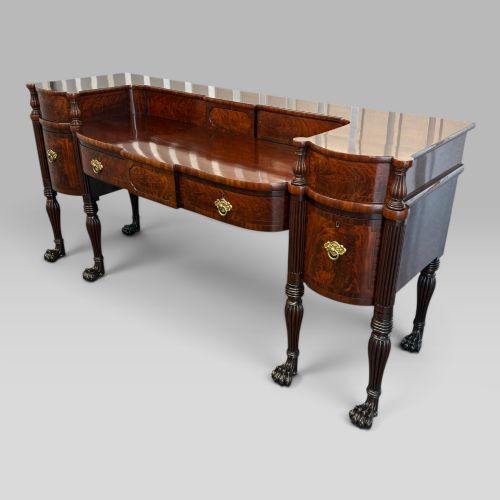
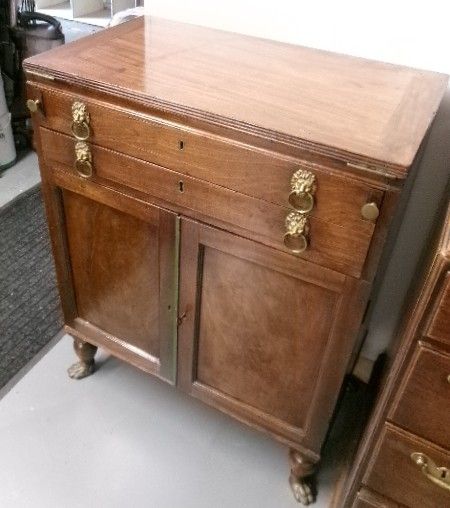
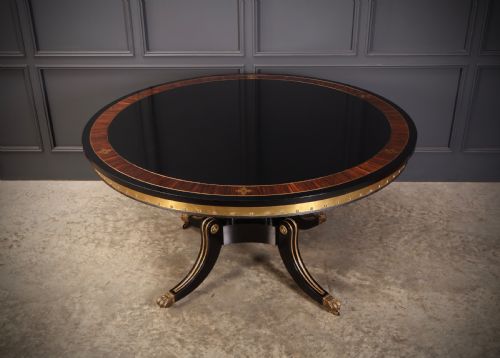
Mahogany and oak dominate the offerings here, taking the form of sarcophagus cellarettes, centre tables, armchairs, and sideboards. Regency and Victorian examples appear frequently, showing how makers adapted classical animal forms for British domestic interiors.
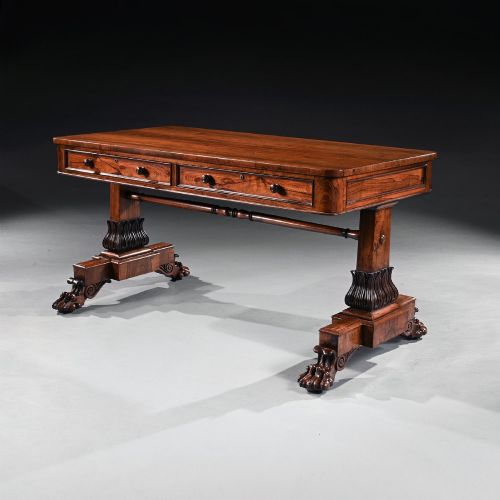
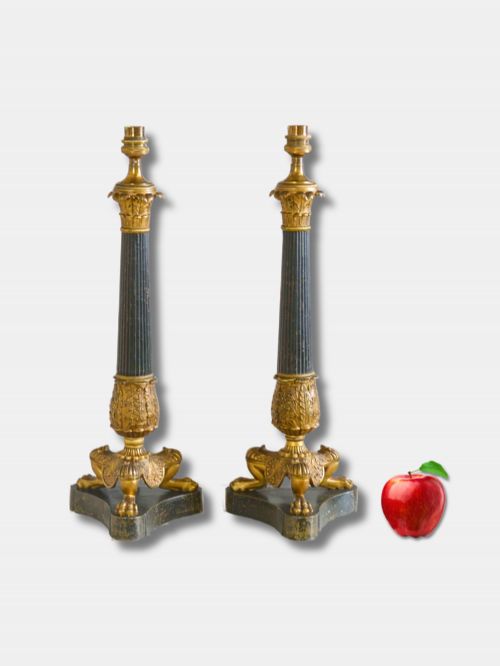
The heaviest concentration of these supports sits beneath dining furniture, wine coolers, and library tables where stability matched the grand scale of the room. Smaller decorative items, such as table lamps and marble carvings, also utilise the motif on a domestic scale.
What varies in quality
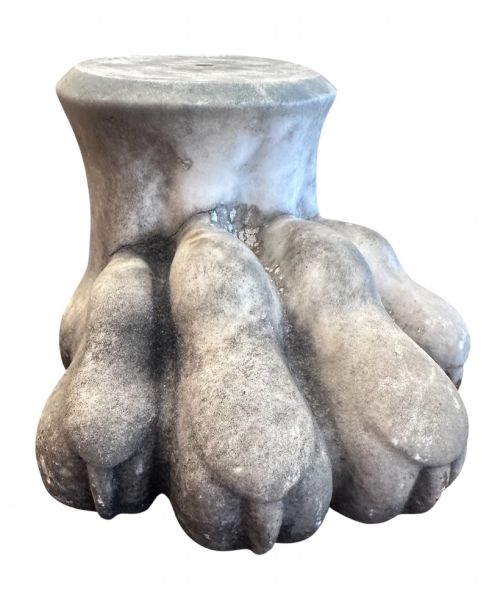
The depth and anatomical precision of the carving separate standard production from superior workshop output. Skilled carvers rendered the knuckles, fur texture, and talons with naturalistic proportion, whereas simpler pieces rely on blocky, generalised contours.
The integration between the leg and the paw dictates the visual harmony of the piece. Top tier items show a seamless transition from the main timber shaft or metal column down into the claws, maintaining balance across heavy tables and cellarettes.
Lion Paw Feet Retail Price Guide 2026
Typical asking prices for lion paw feet among the pieces listed under this phrase on Sellingantiques today, from the lower quarter to the upper quarter. They describe what is for sale here now, not the wider market.
Listings feature items from the eighteenth, nineteenth, and early twentieth centuries, spanning Regency, Victorian, and Georgian periods in mahogany, oak, and brass.
Gillows·Thomas Hope·George Smith
The Lion Paw Feet Glossary
- Cellarette
- A large container used for storing wine bottles near the dining table, often heavily carved with timber feet. These pieces date predominantly from the Georgian and Regency periods.
- Monopodia
- A furniture support consisting of a single animal leg and foot, frequently styled as a lion. This classical form heavily influenced Regency designers.
- Ormolu
- Gilded bronze or brass used for mounts, lamps, and decorative feet. The technique involves applying a gold amalgam to a metal base.
- Sarcophagus
- A coffin-shaped container form adopted by cabinetmakers for wine coolers and cellarettes during the Regency era. They usually rest directly upon carved paw feet.
- Curule stool
- An X-framed seat design originating in antiquity and revived during the Regency period. These stools often feature ornamental metal or wood feet.
Lion Paw Feet: Frequently Asked Questions
What furniture styles feature lion paw feet?
Regency, Victorian, Georgian, and Neoclassical designs utilise these supports on heavy tables, seating, and storage pieces. The motif draws directly on classical antiquity to project stability and status.
Cabinetmakers applied the form to both timber and metal, ensuring the heavy feet anchored the visual weight of large mahogany sideboards and sarcophagus cellarettes.
How do I date furniture with paw feet?
Dating relies on the secondary timbers, construction methods, and overall stylistic period rather than the foot design alone. Regency and Georgian pieces tend to show finer hand-carved mahogany details.
Later Victorian and early twentieth-century examples often feature machine-tooled elements or heavier cast brass mounts attached to alternative woods like ebonised timber or walnut.
Were these feet made of wood or metal?
Makers utilised both carved hardwoods and cast metals depending on the object type. Heavy tables and seating usually feature carved mahogany or oak feet integrated into the frame.
Smaller items like table lamps, desks, and coal buckets more commonly employ cast brass or ormolu mounts screwed directly to the base.
How do I care for antique wood and brass paws?
Timber surfaces require gentle dusting and occasional wax application to nourish the grain without building up heavy residues. Avoid placing wooden pieces near direct heat sources.
Brass and ormolu mounts should be cleaned sparingly with a dry cloth to preserve the natural patina. Avoid abrasive polishes that strip the historical surface.