


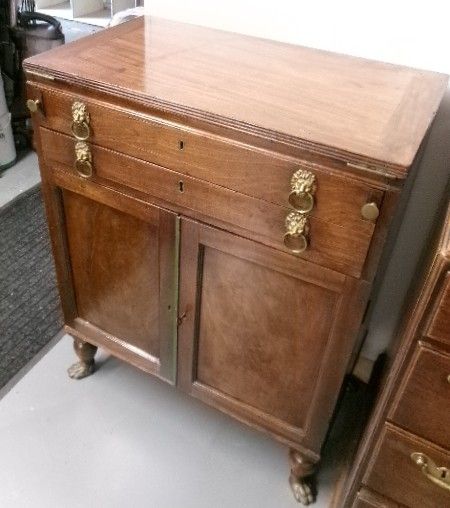


Lion Head Desk
A lion head desk anchors a room with carved majesty, bringing heavy timber and sculptural brass into a study.
Lion Head Desk
The desks you meet on this page range from compact Davenport forms to large freestanding pedestal tables equipped with green man and lion head carvings. Alongside proper desks, the evidence reveals library armchairs and centre tables sharing the same fierce sculptural vocabulary.
Originating predominantly from the Victorian era, these desks reflect a nineteenth-century taste for revivalism and historicist grandeur. They serve as functional workspaces that double as heavy decorative statements in traditional libraries and studies.
What varies in quality
The depth and crispness of the hand carving separate standard commercial pieces from superior examples. Sharp definition in the lion mane, teeth, and facial structure denotes skilled craftsmanship rather than hurried workshop production.
Timber selection and structural scale dictate the hierarchy of these desks. Dense, figured oak or well-grained mahogany combined with integrated pedestal construction and intact period leather surfaces represent the upper tier of the range.
Listings for this phrase combine 19th-century oak and mahogany desks with Victorian Gothic library armchairs and ormolu-mounted clocks.
The Lion Head Desk Glossary
- Pedestal desk
- A heavy writing table supported by two banks of drawers rather than four simple legs. It provides substantial storage and a commanding presence in a room.
- Ormolu
- Gilded bronze used for decorative mounts and accents on furniture and clocks. It adds a bright metallic contrast to dark woods.
- Davenport desk
- A compact Victorian writing desk featuring a sloping lid and a bank of drawers accessed from the side. It suits smaller studies while maintaining ornate detailing.
- Green man
- A sculptural architectural motif depicting a face made of or surrounded by leaves and vines. It frequently accompanies lion masks on Victorian Gothic woodwork.
- Satinwood
- A pale, hard timber utilised for fine veneers and accent banding on 19th-century furniture. It offers a luminous golden contrast to darker primary woods.
Lion Head Desk: Frequently Asked Questions
Where do the lion carvings usually appear?
Lion masks typically decorate the upper corners, drawer fronts, and pedestal columns of the desk. They also appear on the armrests of associated library chairs.
Carvers positioned these fierce heads to command attention, often integrating them with handles or structural brackets.
What is a Davenport desk?
A Davenport is a compact writing desk with a sloped leather-inset top over a set of side drawers. It gained popularity in the 19th century for domestic correspondence.
These pieces offer writing space and storage in a footprint much smaller than a twin-pedestal partner desk.
How do I care for the leather surface?
The leather inset requires gentle cleaning with a damp cloth and occasional application of appropriate leather dressing. Avoid harsh chemical cleaners that strip the original tone.
Keeping the leather conditioned prevents cracking and preserves the gold-tooled borders often found on period writing surfaces.
What periods do these desks date from?
The pieces matching this search span the 19th century, with a heavy concentration in the Victorian era. Earlier Georgian and Regency examples occasionally appear with related brass paw feet.
Revival styles such as Gothic and Tudor revivals dominate the Victorian production dates.