
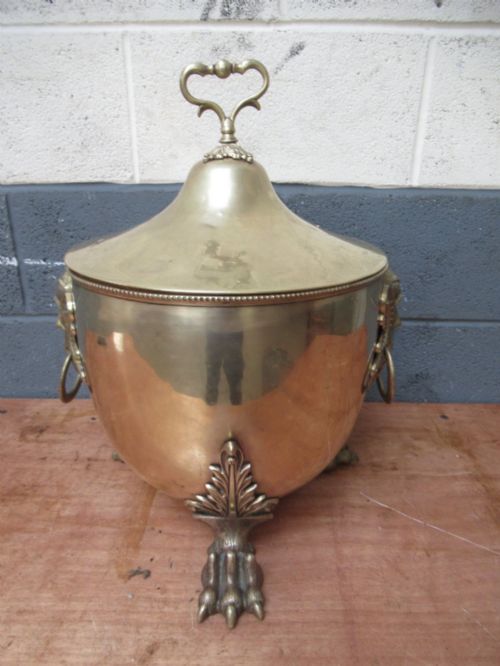
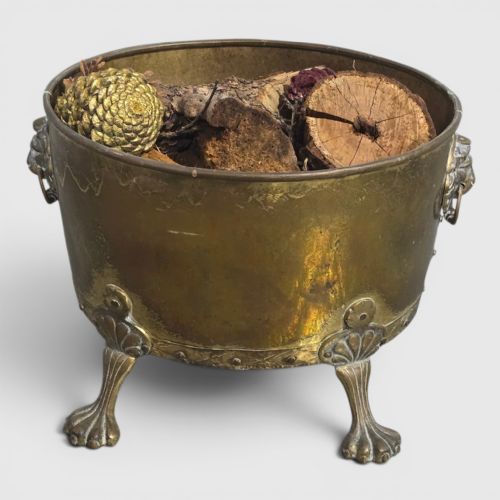


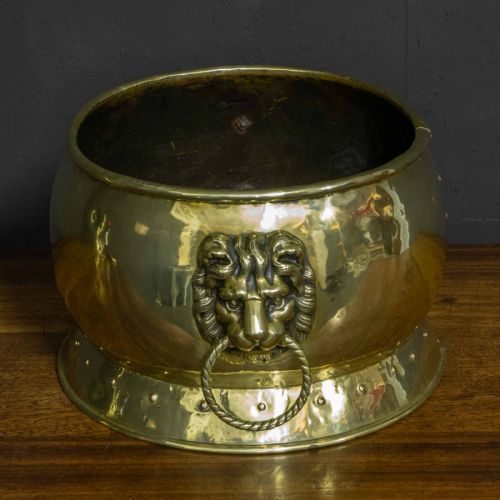

Lion Head Coal Bucket
A lion head coal bucket brings heavy metal and character to a hearth, holding fuel with the weight of the Victorian or Edwardian eras.
Lion Head Coal Bucket
A lion head coal bucket is a functional hearth container designed to hold coal, logs, or peat beside the fire. These vessels appear in forms such as log bins, scuttles, and cauldrons, dating from the nineteenth and early twentieth centuries.
The pieces on this page span Victorian, Edwardian, and Regency periods, alongside specific years like 1860, 1900, and 1910. Buyers most frequently meet brass and copper constructions, often featuring the distinctive cast ring handles held in lion jaws.
Beyond holding fuel, many of these metal vessels serve as planters or jardinières within the reception room or country house interior. Their decorative presence bridges the gap between utilitarian fireside equipment and formal display pieces.
Materials and construction
Brass and copper dominate these pieces, shaped through hammering, spinning, or casting into robust vessels designed to withstand daily hearth use. Iron, silver plate, base metal, and ebony appear alongside the primary metals to form handles, bands, and internal structures.
Embossed decoration and applied copper banding lift plain metal sheets into ornate fireside furniture, particularly within the Victorian and Art Nouveau styles. Master metalworkers utilised casting techniques to secure heavy brass lion mask handles that double as lifting grips.
Petrus Ramus signed at least one French brass fireside basket, ensuring heavy coal storage came with a continental signature.
Distinctions in quality
The integrity of the construction, from secure riveted seams to solid ring attachments, separates robust country house vessels from lighter decorative items. Subtle details like contrasting copper bands or ebony accents elevate the craftsmanship of individual pieces.
Petrus Ramus
The Lion Head Coal Bucket Glossary
- Coal scuttle
- A container designed for carrying coal to the fire, often featuring a pivoted handle and a slanted opening for easy pouring.
- Jardinière
- An ornamental pot or stand for holding plants and flowers, frequently repurposed from metal fuel buckets.
- Dinanderie
- Objects made of beaten brass or copper, originating from the Belgian town of Dinant and applied to various historical metal vessels.
- Regency
- A British design period spanning the early nineteenth century, known for neoclassical influence and restrained classical forms.
- Embossed
- Ornamented with raised patterns or designs moulded into the surface of the metal sheet.
Lion Head Coal Bucket: Frequently Asked Questions
How were these buckets used?
These vessels sat beside the fireplace to store fuel such as coal, logs, or peat until needed for the fire. Servants carried them from cellars to fill the hearth containers.
Over time, many of these metal bins transitioned from purely utilitarian duties to decorative interior objects, doubling as plant holders or umbrella stands.
What metals are most common?
Brass and copper form the vast majority of these fireside containers, chosen for their durability and warm metallic lustre. Some pieces combine both metals using copper bodies and brass accents.
Iron, base metal, and silver plate appear less frequently, reflecting different domestic budgets and interior aesthetic choices across the nineteenth century.
How do I date a piece?
Dating relies on stylistic clues, manufacturing techniques, and recorded periods such as Victorian, Edwardian, or Regency. Heavy embossing and dark patination often point towards Victorian production.
Specific design markers like Art Nouveau curves or Neoclassical Revival motifs help narrow the decade of manufacture when combined with physical construction evidence.
Can I use it for plants?
Many buyers repurpose these metal vessels as indoor planters or jardinières to house large house plants. Their waterproof metal construction handles soil and moisture well.
Line the interior if the metal shows vulnerability to damp earth, preserving the antique fabric while enjoying the piece in a modern room.