





Lion Carved Sideboard
A lion carved sideboard brings heavy timber and muscular carving into a dining room, offering deep cupboards for heavy plate.
Lion Carved Sideboard
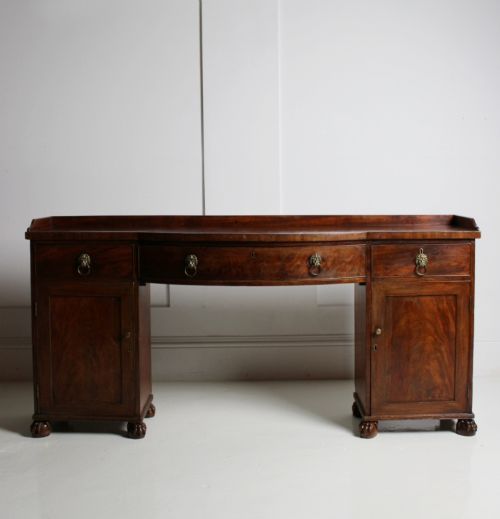
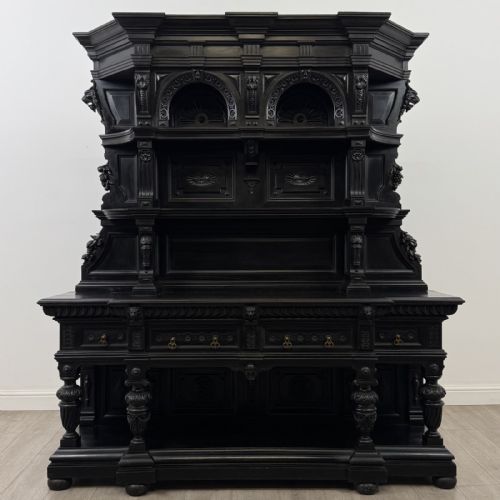
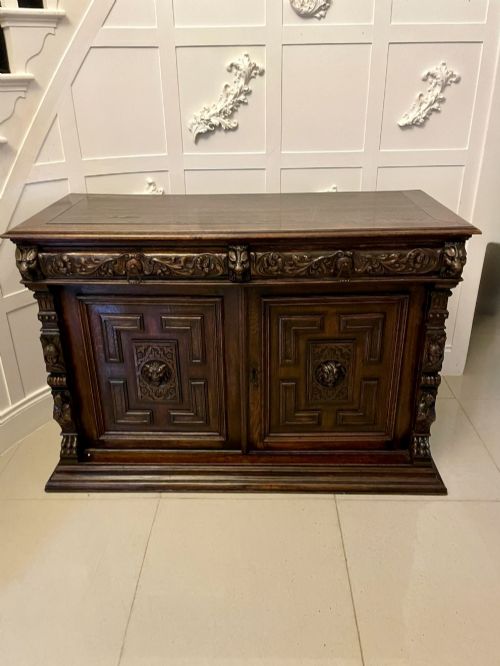
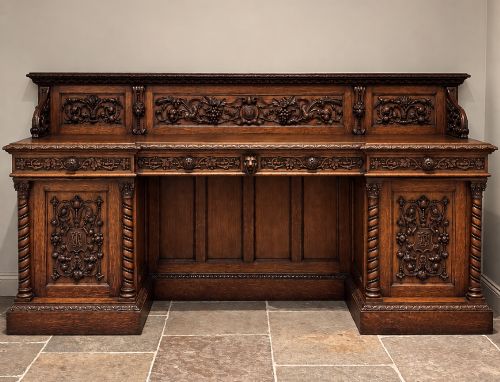
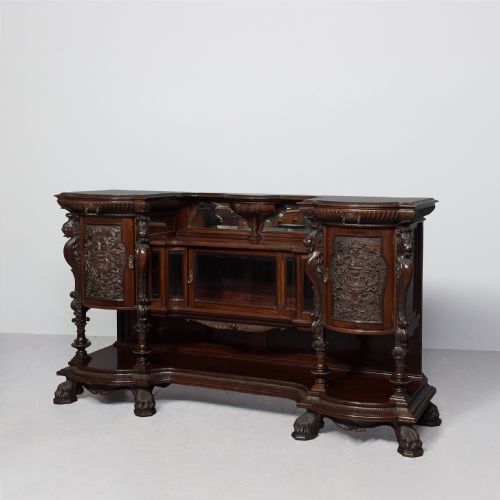
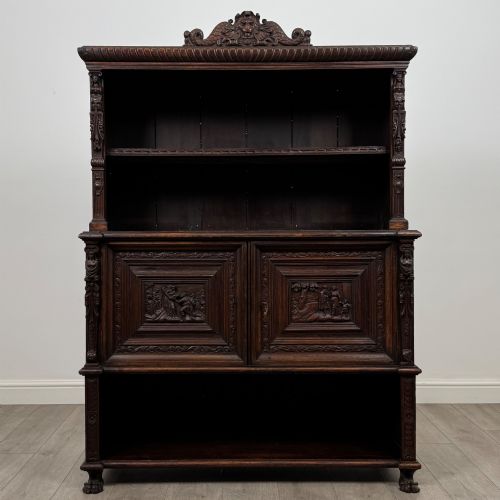
A lion carved sideboard represents the heavier end of dining room furniture, typically appearing in oak or mahogany across Victorian, Regency, and seventeenth-century periods. These pieces serve as serving tables, credenzas, and large cupboards featuring prominent feline motifs.
The most common form met here is the Victorian carved oak piece, often decorated with lion masks, green men, and deep panel doors. Alongside these, buyers find earlier Regency serving tables and Flemish Renaissance revival cabinets.
The scale ranges from small court cupboards to massive standing livery cupboards and mirrored cabinets. They function as both display surfaces and heavy storage for china and glass.
What varies in quality
Quality rests upon the depth and crispness of the carving, distinguishing sharp hand-cut lion masks from softer, mechanical work. Timber selection also dictates value, with figured pollard oak and dense padauk standing above standard commercial grades.
Proportion and architectural integrity separate superior pieces from heavier, awkward constructions. Better sideboards integrate their carved decoration harmoniously into the overall architectural frame rather than applying ornament as an afterthought.
Lion Carved Sideboard Retail Price Guide 2026
Typical asking prices for lion carved sideboard among the pieces listed under this phrase on Sellingantiques today, from the lower quarter to the upper quarter. They describe what is for sale here now, not the wider market.
Listings feature solid oak and mahogany across periods spanning the seventeenth century through to the Edwardian era.
Mack Williams And Gibton
The Lion Carved Sideboard Glossary
- Lion mask
- A carved feline face often used as a drawer pull or central door motif on nineteenth-century furniture. It draws directly upon classical and Renaissance ornament.
- Court cupboard
- A short, two-tier oak cupboard used for storing food and plate in earlier centuries. The upper section is typically recessed behind turned columns.
- Credenza
- A large sideboard or buffet designed for dining rooms, frequently featuring mirrored backs and extensive cupboard space. The form gained massive popularity during the Victorian era.
- Livery cupboard
- A standing cupboard used for the distribution of rations or provisions in great houses. Early examples utilise heavy pegged oak construction.
- Padauk wood
- A dense tropical timber valued for its rich reddish colour and ability to hold intricate carving. Burmese examples show exceptional grain depth.
Lion Carved Sideboard: Frequently Asked Questions
How do I date a carved oak sideboard?
Look to the construction methods, secondary woods, and the style of the carving. Seventeenth-century pieces show pegged joints and boarded backs, while nineteenth-century revivals use machine-sawn timbers and applied ornament.
Hardware and hinges also offer firm clues. Hand-wrought iron or brass hinges belong to earlier periods, whereas mass-produced brass butt hinges point firmly to the Victorian era.
Where should I place a heavy sideboard?
These large timber pieces require a principal dining room or a spacious hallway with sufficient wall length to anchor their visual weight. Ensure the floor can support heavy oak and mahogany construction.
Keep them away from direct sunlight and strong heat sources to prevent the solid timber panels from splitting. Leave a small gap behind the backboards for air circulation.
How do I care for antique carved timber?
Dust the deep recesses of the lion carvings regularly with a soft, natural bristle brush to prevent dirt accumulation. Apply a quality beeswax sparingly once or twice a year to nourish the grain.
Avoid modern silicone polishes, which build up a sticky film over time and dull the finish. Gentle buffing brings out the natural warmth of the oak or mahogany.
What is the difference between a buffet and a sideboard?
A buffet traditionally refers to a serving table with cupboards below, used specifically for laying out food during large meals. Sideboards often incorporate more diverse storage, including cellarets and cutlery drawers.
In nineteenth-century usage, the terms frequently overlap. Both forms utilise heavy carving and architectural details to dominate the dining room wall.