


Linke Style Table
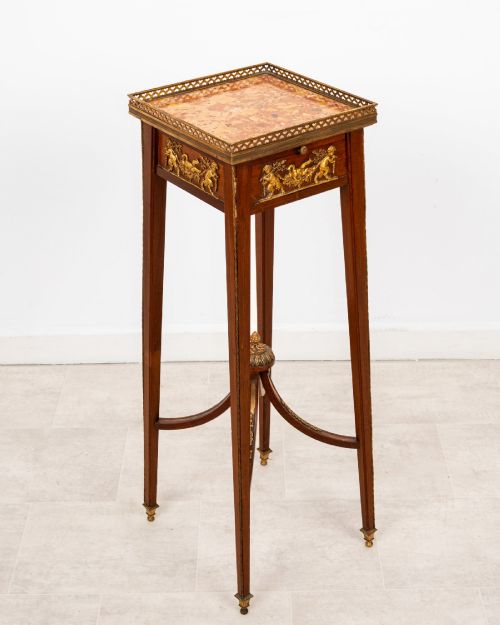
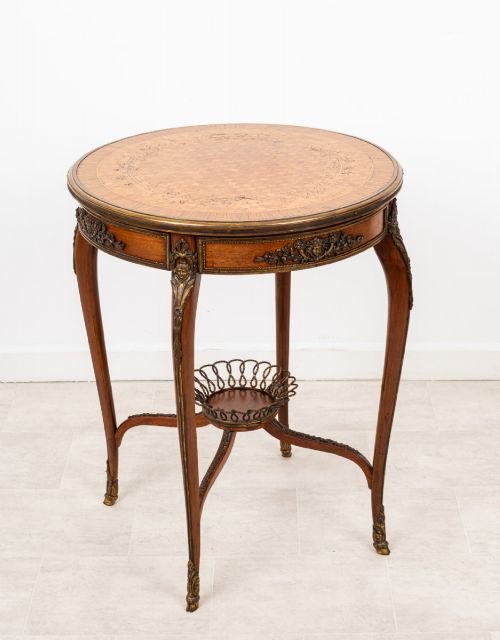
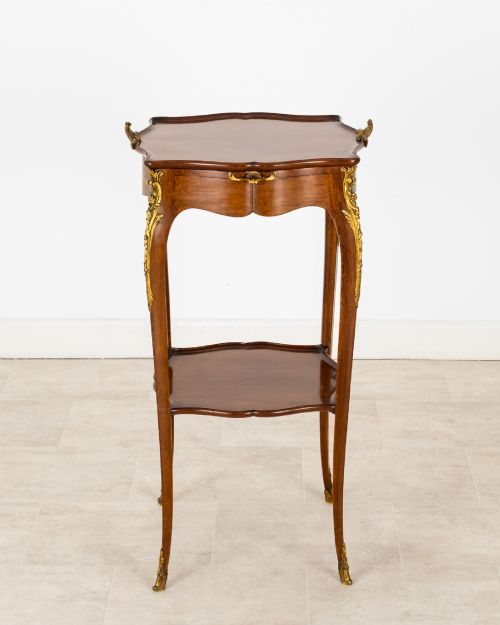
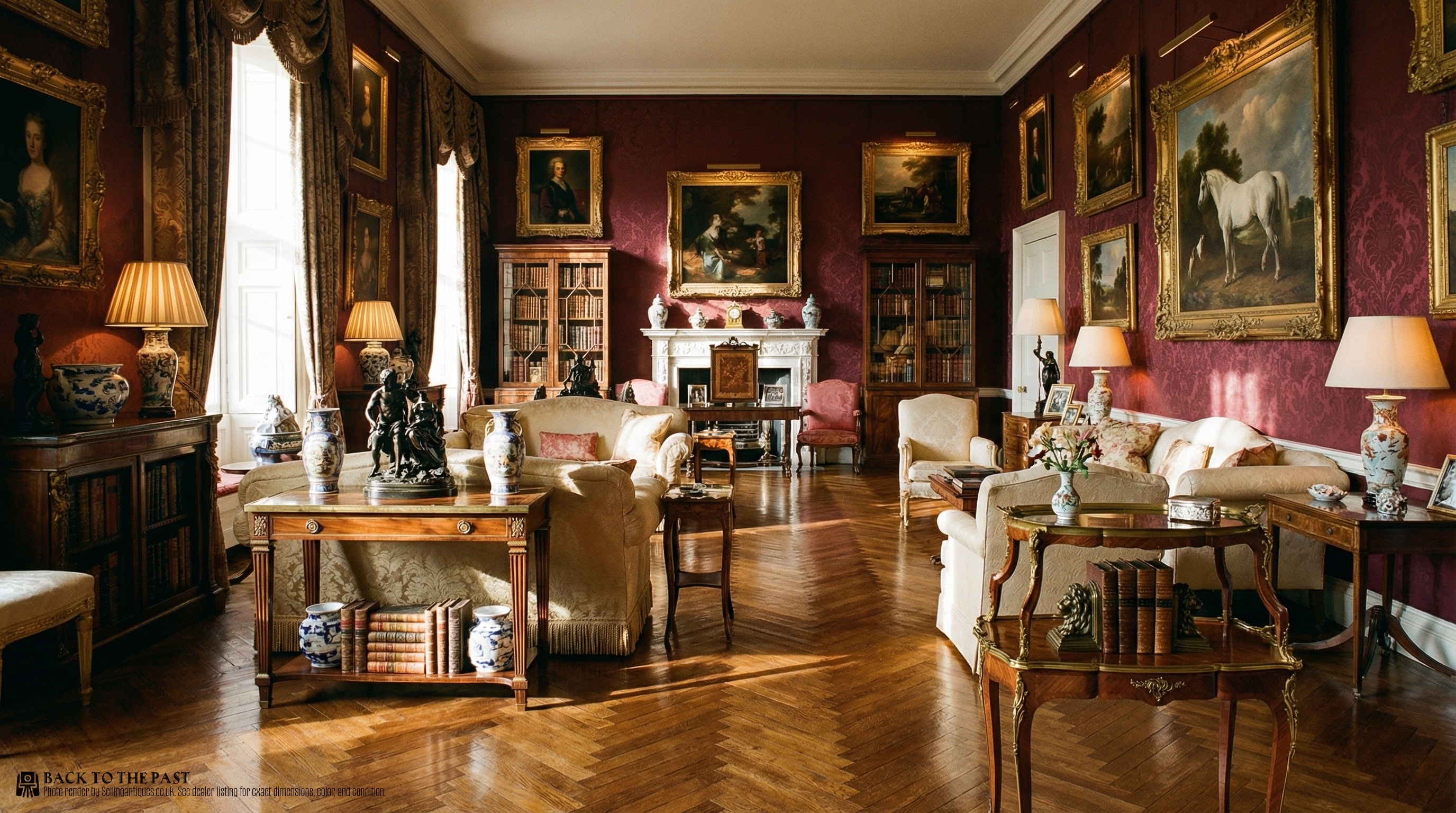
A linke style table brings nineteenth century French revivals into a room, offering polished timber and gilt bronze work for practical use.
Linke Style Table
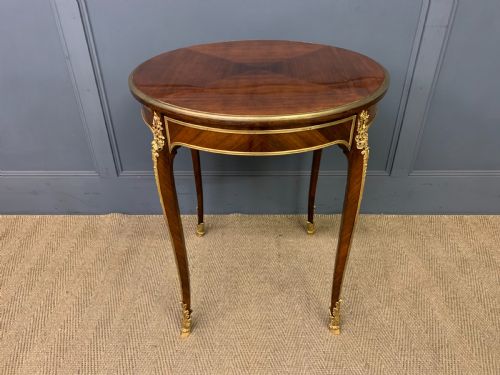
A linke style table draws on the French cabinet making traditions associated with François Linke, appearing primarily as centre tables, writing desks, and side tables. These forms follow Louis XV and Louis XVI revival designs produced in the nineteenth century, alongside later interpretations.
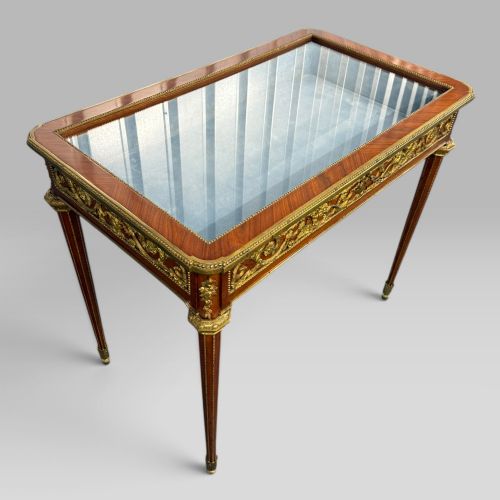
Buyers encounter pieces ranging from signed examples by the maker to workshop productions and later mid twentieth century items made in the same idiom. The selection includes occasional tables, bedside tables, and vitrines sharing the same vocabulary of mounts and timber.
The proportions follow French eighteenth century precedents adapted for nineteenth century interiors, offering surfaces suited to display or writing while carrying heavy cast metal ornament.
Materials and construction
Makers built these pieces using dense hardwoods including kingwood, rosewood, and mahogany, frequently laid in geometric parquetry patterns across the tops and sides. Satine and other contrasting timbers appear within the veneer work to create border details.
Cast gilt bronze and ormolu mounts define the silhouette, pinned or screwed to the wooden carcase around corners, aprons, and legs. Marble inserts, particularly in rouge and white varieties, provide heavy contrasting tops for certain centre tables and gueridons.
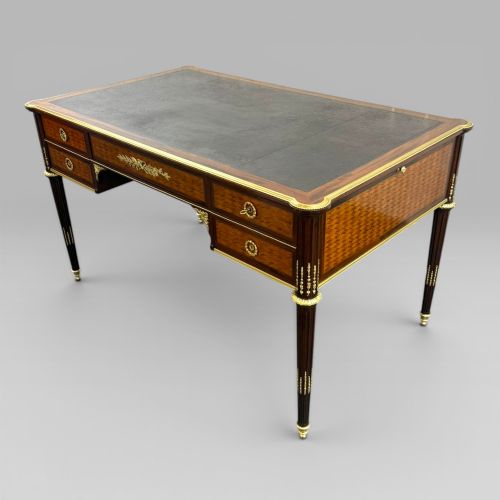
Some tables hide tiny pull out writing slides at the sides, ready for a sudden burst of nineteenth century correspondence.
Factors of quality
The standard of chasing on the gilt bronze mounts separates workshop tiers, where sharper chisel work and deeper relief distinguish finer castings from softer secondary production. Timber selection and the precision of the parquetry ground also mark the division between standard items and exceptional workshop output.
Signature placement and numbering on the bronze mounts or timber carcase provide tangible evidence of origin, connecting pieces directly to the Linke workshop rather than generic revival production.
François Linke·Edwards and Roberts
The Linke Style Table Glossary
- Ormolu
- Gilt bronze ornamentation applied to furniture. The technique involves mercury gilding cast bronze to achieve a lasting golden surface.
- Gueridon
- A small circular table supported by a central column or multiple legs. These pieces function as occasional or lamp tables in reception rooms.
- Parquetry
- Geometric wood veneer patterns arranged across a surface. Makers utilise contrasting grain directions to create optical depth.
- Marquetry
- Pictorial or ornamental inlay work using diverse veneer timbers. This technique forms floral or scroll motifs on tabletops and drawer fronts.
Linke Style Table: Frequently Asked Questions
What is a bureau plat?
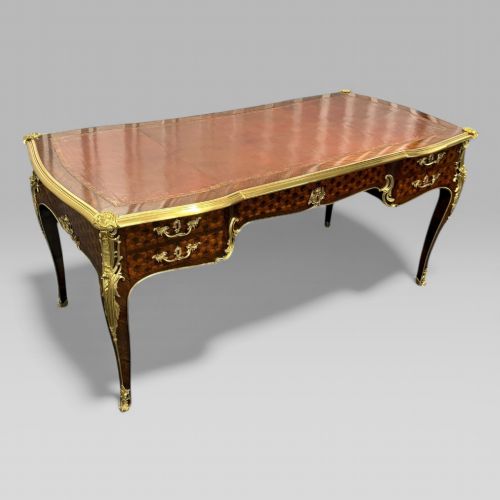
A bureau plat is a flat topped writing desk designed to stand freestanding in the middle of a room rather than against a wall. These desks usually incorporate drawers integrated into the apron beneath the writing surface.
They appear frequently in nineteenth century French revival forms, often fitted with leather writing inserts and elaborate gilt bronze mounts at the corners and keyholes.
How do I identify Louis XVI style?
Louis XVI style furniture is characterised by straight tapering legs, often fluted, and a return to classical symmetry and geometric restraint. Ornamentation draws on classical antiquity rather than the asymmetrical curves of the earlier rococo period.
In these tables, you will see rectangular or circular tops accompanied by guilloche banding, acanthus leaf mounts, and restrained parquetry layouts.
Where should I place a centre table?
A centre table stands away from walls as a focal point in a large hallway, library, or drawing room. Because the parquetry and bronze mounts ornament all four sides, the piece is visible from every angle.
They serve well for displaying decorative objects, lamps, or small collections, provided the surrounding floor space allows movement around the perimeter.
Are marble topped tables heavy?
Marble topped tables carry substantial weight due to the solid stone slab inset into the wooden frame. The stone sits within a raised gallery or flush rebate on the table top.
When moving these pieces, lift from the wooden carcase beneath rather than the top or the decorative mounts to prevent structural strain.