



Linen Needlepoint Panel
Linen needlepoint panel pieces bring historic domestic stitchwork into modern rooms, offering tactile connection to centuries of meticulous handcraft.
Linen Needlepoint Panel
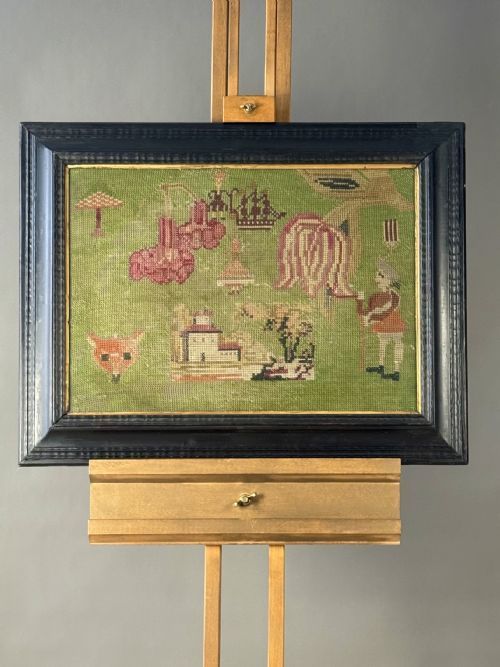
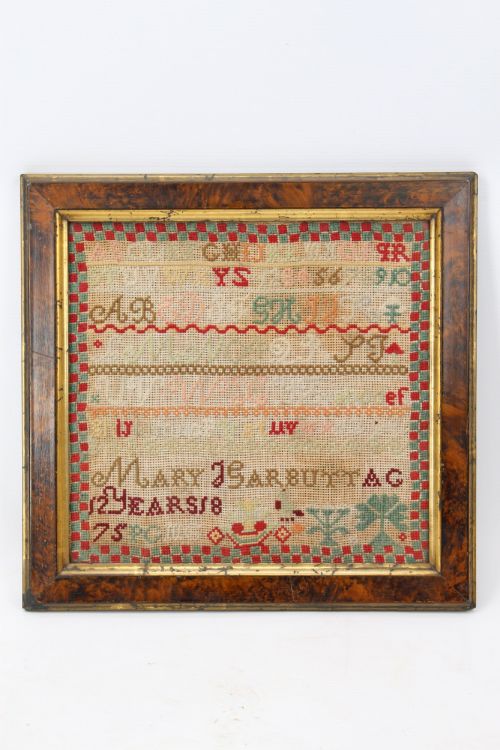
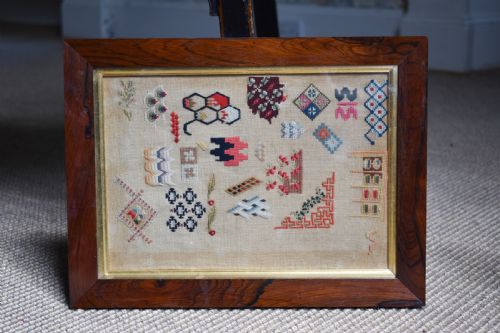
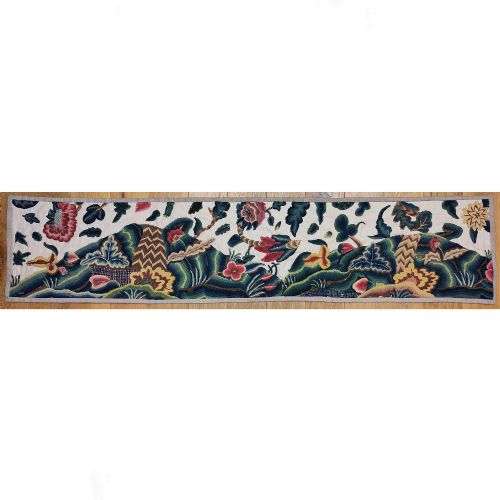
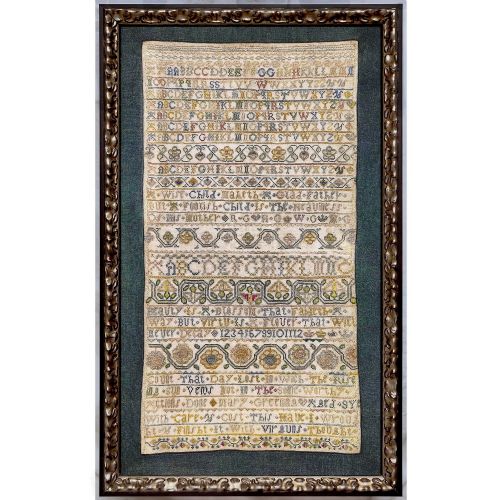
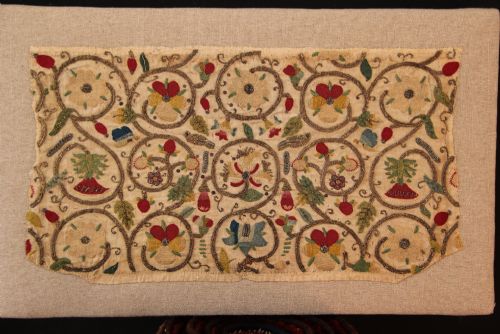
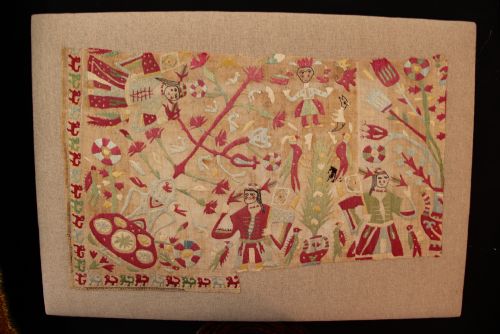
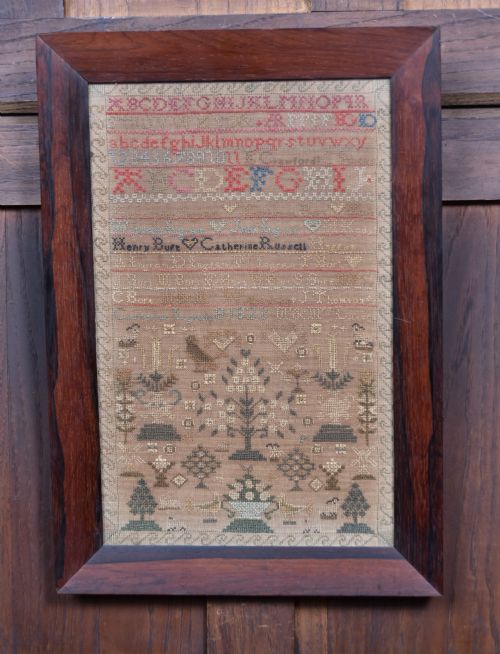
A linen needlepoint panel encompasses historic samplers, embroidered borders and framed textile art created across the seventeenth, eighteenth and nineteenth centuries. These works range from intricate alphabets and religious texts to folky pictorial scenes and Greek island bedsheet borders. Buyers encountering this selection most frequently meet Victorian and Georgian samplers worked by young girls, alongside earlier English crewelwork and coifs.
The objects take various forms including wall art, framed textiles and textile wall art designed for display. Originating from English workshops and Greek islands alike, they demonstrate domestic diligence through stitched alphabets, names, ages and dates. Each panel records the hand of a specific maker, often a child or young woman whose name survives in the thread.
Judging quality and execution
Quality in a linen needlepoint panel rests upon the fineness of the linen ground and the precision of the stitching. Superior examples exhibit dense, even needlework with secure tension, maintaining structural integrity across the entire surface of the textile. The complexity of the design, such as intricate pictorial motifs or detailed lettering, further distinguishes finer works from simpler exercises.
The preservation of the original silk and wool threads contributes significantly to the visual appeal of a panel. Examples retaining vibrant colour and minimal thread loss display superior material longevity. Additionally, the inclusion of fully legible inscriptions recording names, dates and locations enhances the historical interest of the textile.
One Victorian Scottish sampler preserves an intentional stitch error by young Maggie Muir, reminding us that schoolroom perfection was occasionally elusive.
The Linen Needlepoint Panel Glossary
- Sampler
- A piece of needlework produced as a demonstration or test of skill in various stitches and patterns. These often feature alphabets, numbers, verses and the maker's name.
- Crewelwork
- A type of surface embroidery utilising wool thread on a linen ground. This technique creates textured, flowing designs often associated with seventeenth-century English textiles.
- Band sampler
- A long, narrow format of needlework displaying horizontal rows of distinct patterns and stitches. This style was particularly popular during the seventeenth and eighteenth centuries.
- Coif
- A close-fitting cap worn in early periods, frequently decorated with intricate embroidery. Surviving panels often originate from these historic headwear items.
- Silk floss
- Untwisted or loosely twisted silk fibres used in historic needlework. This material provides a glossy, light-reflecting quality to specific motifs within a panel.
Linen Needlepoint Panel: Frequently Asked Questions
What is a linen needlepoint panel?
A linen needlepoint panel is a historic textile piece featuring hand-stitched embroidery on a linen foundation, frequently taking the form of a framed sampler or decorative border.
These works were created using wool and silk threads to record alphabets, religious verses, family trees and pictorial scenes by makers of various ages.
How old are these textile panels?
The pieces available span from the seventeenth century through the eighteenth and nineteenth centuries up to the 1930s. Earlier examples include Jacobean crewelwork and seventeenth-century coifs, while nineteenth-century Victorian samplers form the most common group.
Dates and ages are frequently documented directly within the stitching by the original makers alongside their names.
How should I display antique needlework?
Antique textiles require protection from direct sunlight to prevent the fading of wool and silk threads. Framing behind glass helps shield the delicate linen ground from dust and atmospheric pollutants.
Displaying panels in rooms with stable humidity levels ensures the preservation of both the fabric and the historic wooden frames.
How can I identify the period of a sampler?
Periods are often identified through a combination of lettering styles, motifs, framing materials and any inscribed dates. Georgian and Victorian samplers commonly feature alphabets and signed names with specific years.
Earlier seventeenth-century examples typically display band patterns or crewelwork designs distinct from later educational schoolroom exercises.