

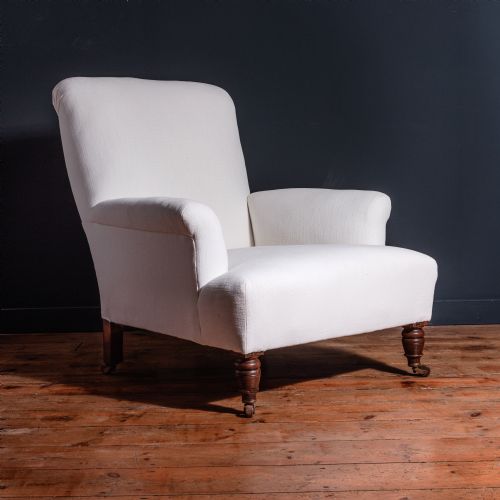
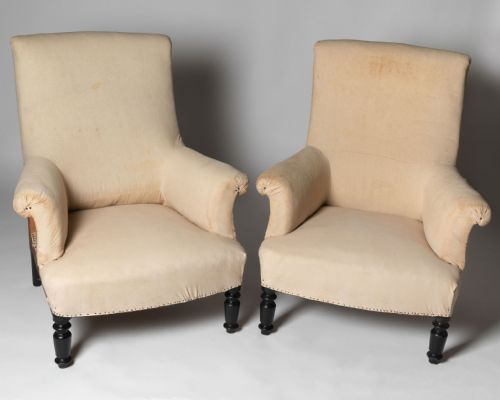
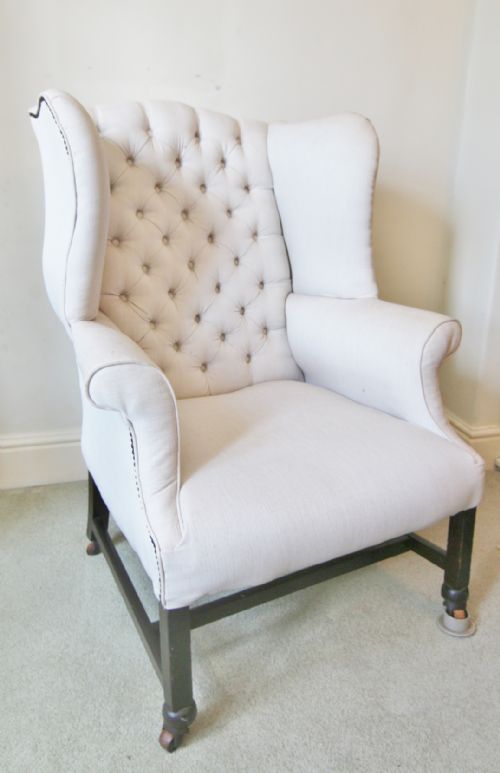
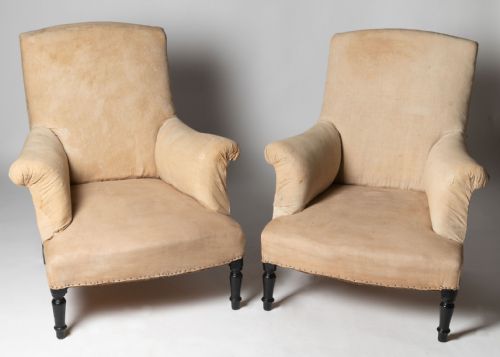


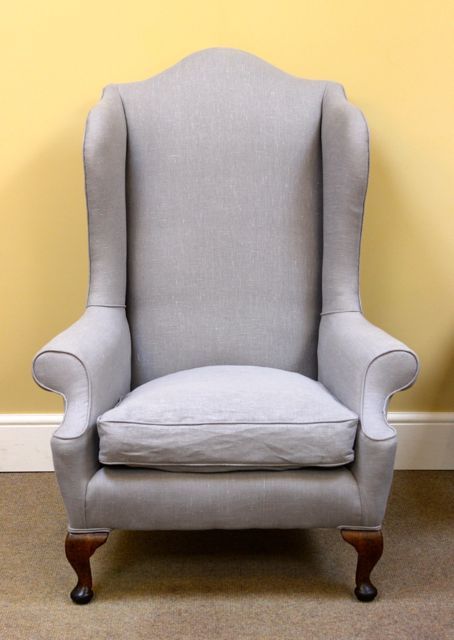


Linen Fireside Armchair
A linen fireside armchair brings character and practical comfort to a room, offering sturdy timber frames wrapped in traditional fabric.
Linen Fireside Armchair
When you search for a linen fireside armchair, you encounter robust seating designed for domestic warmth and extended repose, typically featuring high backs and supportive upholstered sides. The selections span several eras, including the 18th century, Victorian period, and Edwardian age.
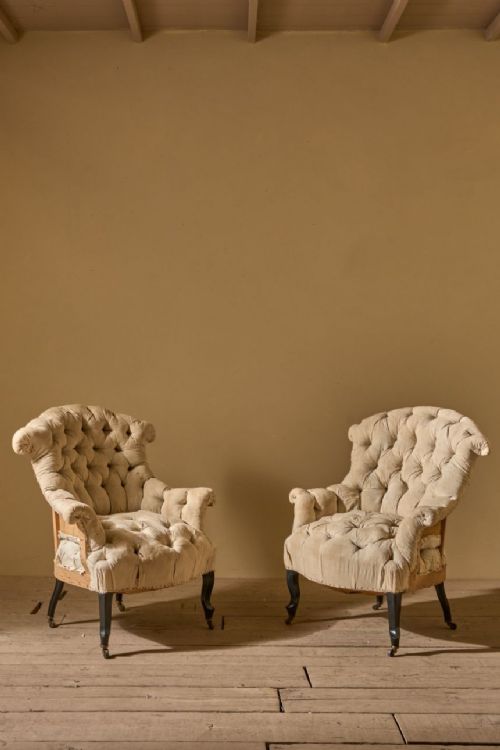
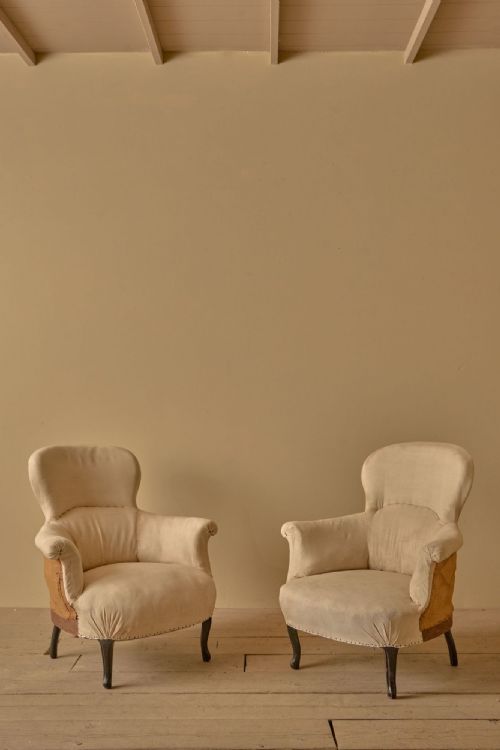
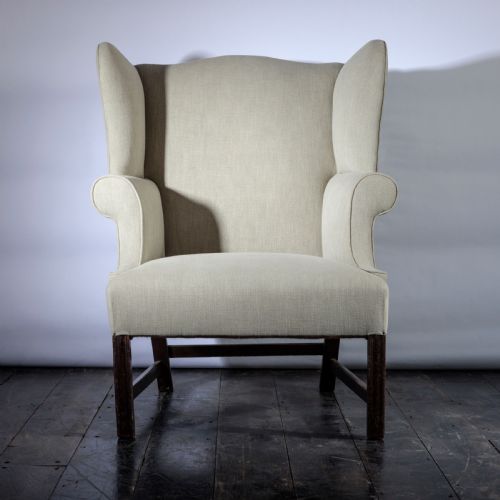
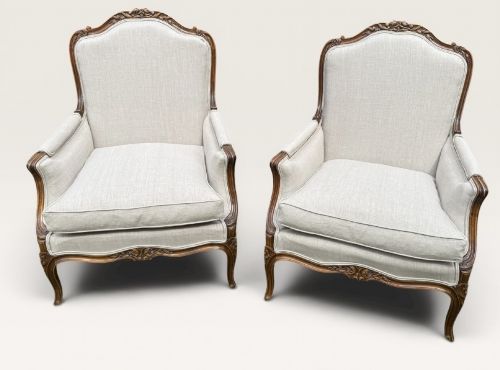
You are most likely to meet wing armchairs and barrel back designs among these listings, alongside pairs of French seating. These pieces originate from various historical workshops, employing classic forms such as the Georgian wingback and Napoleon III spoon back.
How they were made
These armchairs rely on solid timber frames fashioned from mahogany, walnut, beech, and general hardwood timber, providing structural integrity. Joinery techniques connect these wooden supports to bear the weight of daily use.
Upholstery layers utilise linen, calico, and hessian over internal padding, often secured with brass detailing. Frames receive hand-carved finishing touches depending on the specific period style.
Linen Fireside Armchair Retail Price Guide 2026
Typical asking prices for linen fireside armchair among the pieces listed under this phrase on Sellingantiques today, from the lower quarter to the upper quarter. They describe what is for sale here now, not the wider market.
Some chairs retain their original hessian stuffing, whispering tales of long-forgotten drawing rooms.
What varies in quality
The sophistication of the timber frame construction and the precision of the woodwork distinguish different tiers of seating. Finer examples display meticulous carving on mahogany or walnut structures, whereas simpler pieces utilise basic turned beech supports.
The integrity of the original framing and the depth of the upholstery work establish the overall standard. Pieces retaining their substantial proportions and authentic period frames command greater interest than heavily altered variants.
William Birch
The Linen Fireside Armchair Glossary
- Wing armchair
- An upholstered seat with side panels designed to shield the occupant from draughts. These projections originated to trap heat from an open fireplace.
- Barrel back
- A seating form where the upholstered back curves continuously into the arms in a semicircular shape. This configuration creates a snug, enclosed resting place.
- H stretcher
- A horizontal wooden brace connecting the legs of a chair in the shape of the letter H. This component reinforces the lower frame against lateral movement.
- Bergere
- An enclosed armchair with upholstered back and sides set within an exposed wooden framework. The style gained popularity during the 18th century in France.
- Spoon back
- An upholstered chair back shaped in a concave oval resembling the bowl of a spoon. This Victorian profile fits the contour of the human spine.
Linen Fireside Armchair: Frequently Asked Questions
What is a linen fireside armchair?
A linen fireside armchair is a traditional upholstered seat designed for placement near a hearth, featuring supportive arms and a high back covered in durable fabric.
These pieces combine sturdy timber frames with padded upholstery to provide reliable comfort during long periods of sitting.
How do I date a wing armchair?
Dating relies on examining the timber species, leg design, and the shaping of the wings and arms. Earlier 18th century examples often display mahogany or walnut with H stretchers, while later Victorian and Edwardian pieces show different upholstery techniques and wood choices.
Matching the construction methods and stylistic quirks to recorded periods helps establish the precise era of manufacture.
Were these chairs used only by the fire?
While originally positioned near hearths to block cold drafts with their upholstered wings, these armchairs served various rooms including libraries and parlours.
Their comfortable proportions made them versatile seating choices for reading and general relaxation throughout the home.
How should I live with an antique armchair?
Living with these chairs involves placing them in stable environments away from direct heat sources and excessive sunlight to protect the timber and fabric.
Regular gentle maintenance preserves the structural frame and the integrity of the upholstery over time.