
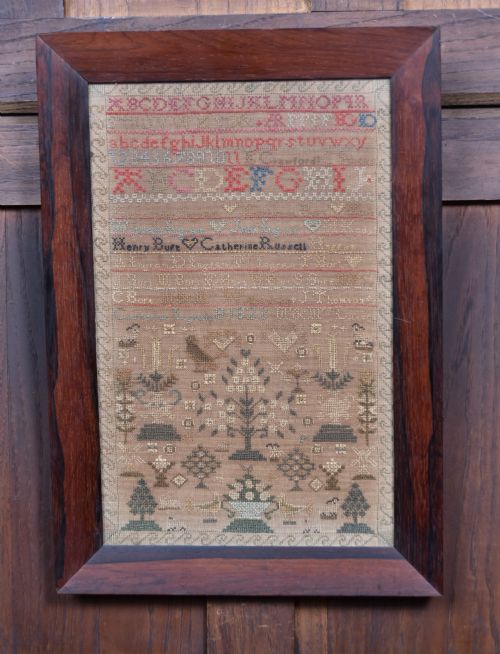


Linen Cross Stitch
Linen cross stitch samplers preserve historical needlework traditions through intricate thread compositions on woven fabric.
Linen Cross Stitch
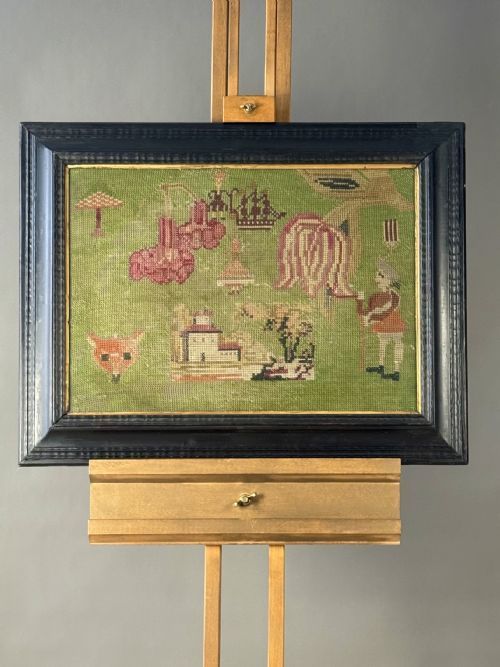
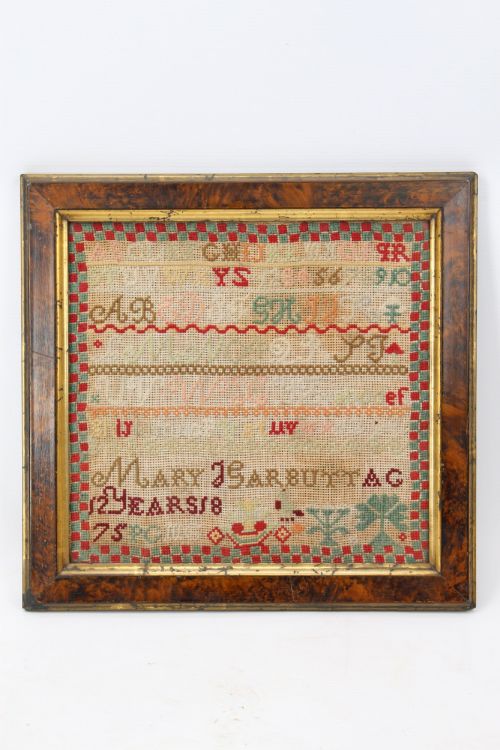
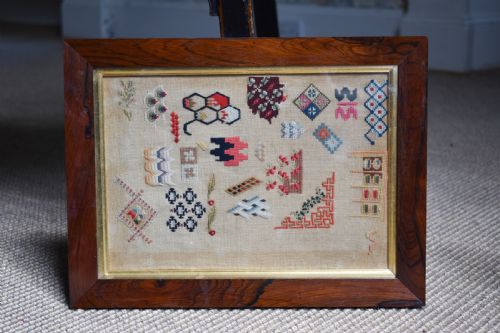
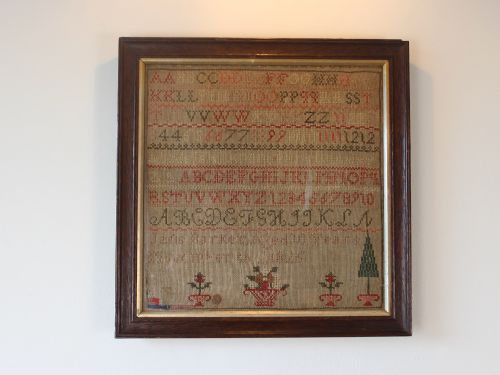
When you search for linen cross stitch, you encounter historic needlework samplers spanning the eighteenth, nineteenth, and mid-twentieth centuries. These textile pieces record alphabets, verses, numerals, and pictorial motifs worked by hand.
The nineteenth century provides the majority of examples on this page, often bearing the names, ages, and dates of young makers. Georgian pieces also appear regularly, alongside occasional eighteenth-century works and mid-twentieth-century textile art.
Forms range from compact miniature formats to large framed wall art. Surviving examples frequently retain their original timber frames and glass protection.
What varies in quality
Execution and legibility separate finer examples from simpler student work. The regularity of the stitch count, the complexity of the motifs, and the preservation of the thread colours define the upper tier.
Documentation adds distinction, particularly when pieces record the maker's full name, age, specific date, and location. Original framing and the stability of the underlying linen ground also influence the character of each piece.
One Victorian Scottish sampler proudly records an intentional stitch error left by the maker Maggie Muir in eighteen eighty.
The Linen Cross Stitch Glossary
- Alphabet sampler
- A textile piece featuring rows of letters and numbers used by learners to demonstrate stitch control. These works often include decorative borders and pious verses.
- Linen
- A durable woven textile derived from the flax plant that serves as the foundation fabric for historic needlework. Its visible weave structure guided the placement of each stitch.
- Needlework
- General term for decorative stitching executed by hand on a fabric support. It encompasses samplers, embroidered panels, and tapestry work.
- Silk thread
- A fine protein fibre spun from silkworm cocoons used for detailed embroidery work. It provides a subtle lustre to specific motifs within older samplers.
- Georgian
- The stylistic period covering the reigns of the four King Georges from 1714 to 1830. Pieces from this era often display distinct regional lettering styles.
Linen Cross Stitch: Frequently Asked Questions
What is a linen cross stitch sampler?
A linen cross stitch sampler is a historic piece of textile art created by stitching letters, numbers, and motifs onto a woven linen ground. Young makers traditionally worked these items to demonstrate their needlework proficiency.
Surviving examples frequently include personal details such as names, ages, dates, and religious verses. They offer direct insight into domestic education and needlecraft traditions from past centuries.
How old are these samplers usually?
The pieces listed here primarily date from the nineteenth and eighteenth centuries, with occasional examples extending into the mid-twentieth century. Georgian and Victorian eras are strongly represented.
Many bear specific dates and maker signatures worked directly into the fabric. This stitched documentation allows for precise dating of individual textile works.
How should I display a textile sampler?
Display these framed textile works away from direct sunlight to protect silk and wool threads from fading. Maintaining stable indoor humidity levels helps preserve both the fragile linen ground and the original timber frames.
Most pieces come ready for wall mounting as framed art. Professional framing with conservation glass provides optimal long-term protection.
Why do some samplers record ages and dates?
Makers stitched their names, ages, and dates to record their progress and proficiency in needlework. Schools and families encouraged this practice to document milestones in a child's education.
These personal inscriptions transform domestic exercises into valuable historical records. They connect modern observers directly with the individual makers.