

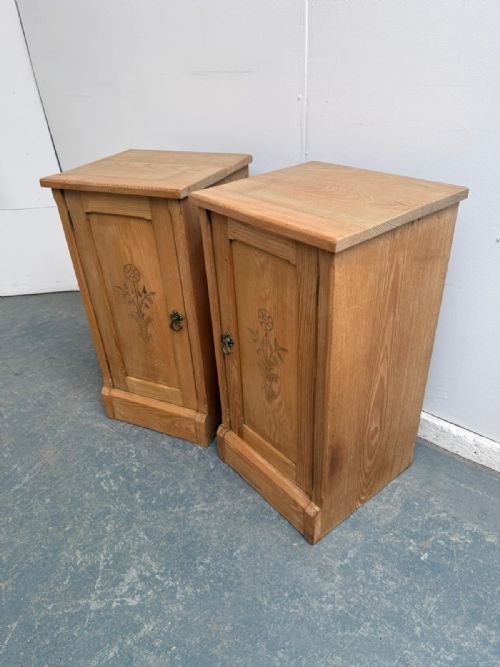


Light Wood Bedside Cabinets
Light wood bedside cabinets bring warmth and clean grain to the bedroom, offering practical surface space alongside period character.
Light Wood Bedside Cabinets
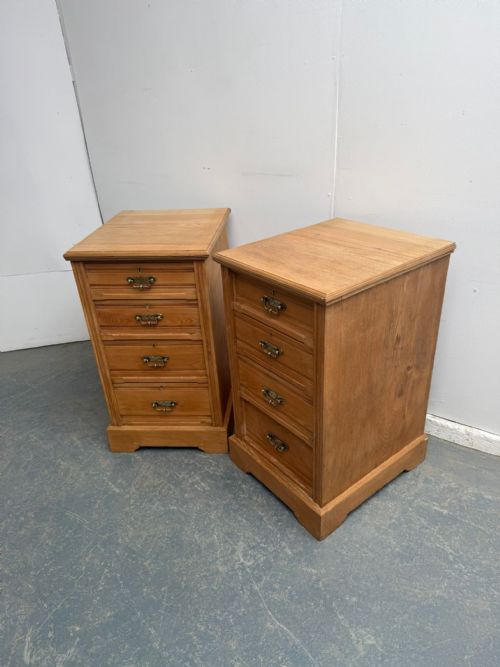
Light wood bedside cabinets encompass a range of compact bedside storage pieces finished in pale timbers, designed to sit neatly beside a bed. The selection includes individual tables and matched pairs spanning the Victorian era through the Art Deco period, offering both cupboard doors and open or multi-drawer configurations.
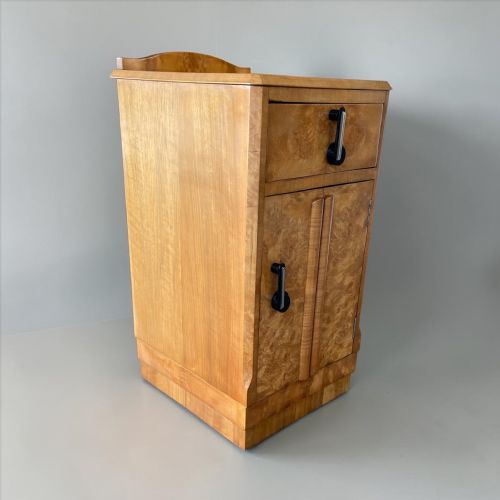
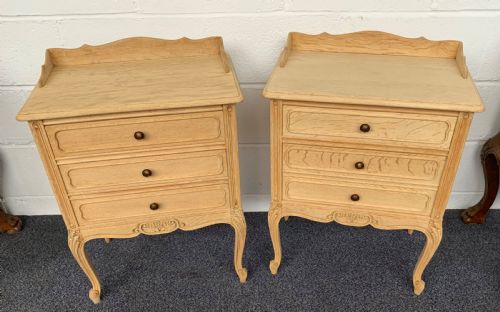
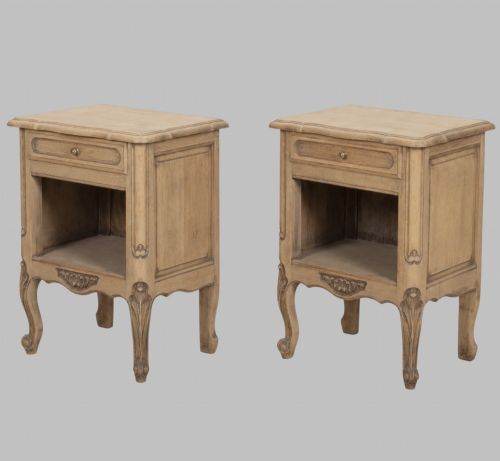
The most common versions encountered here are matching pairs finished in bleached oak, ash, or satinwood, often reflecting French Provincial or Art Deco sensibilities. Pieces range from straightforward utilitarian cabinets of the early twentieth century to more decorative examples featuring marble tops or distinctive brass and chrome hardware.
Origins vary across British, French, and Swedish workshops, bringing different regional takes on pale timbers like satin birch and blonde maple. Buyers will find everything from Arts and Crafts ash pieces with waxed finishes to streamlined 1930s designs with integral bedside structures.
Materials and construction methods
Cabinet makers utilised a variety of pale hardwoods and veneers, most notably ash, oak, satinwood, maple, and burr walnut veneer. These timbers were selected for their distinctive grain patterns and pale natural tones, sometimes enhanced through bleaching or waxing.
Metal fittings played a key role in the construction and detailing of these pieces, incorporating brass handles, chrome accents, and occasionally early synthetic elements like bakelite. Structural integrity relied on traditional joinery methods suited to smaller case goods, ensuring stability for daily bedside use.
Design influences range from Victorian columned forms and Arts and Crafts simplicity to Swedish Biedermeier and French Provincial styles.
Judging quality in light wood furniture
Quality rests primarily in the selection of the timber and the harmony of the grain across matched pairs. Superior examples display carefully chosen veneers or solid pale woods with consistent colour and minimal disruption from knots or repairs.
Construction refinement marks the difference between standard production and finer workshops, visible in the smoothness of drawer operation, the neatness of panel fitting, and the integrity of applied decorative details such as marble tops or metal hardware.
Betty Joel·Maple & Co
The Light Wood Bedside Cabinets Glossary
- Bleached oak
- Oak timber treated with chemical agents to lighten its natural dark tone, creating a pale, Scandinavian-inspired finish popular in twentieth-century furniture design.
- Satinwood
- A durable, hard timber featuring a natural sheen and a golden-yellow colour, frequently used for fine cabinet-making and decorative veneer work in the nineteenth and early twentieth centuries.
- Art Deco
- A design style emerging in the 1920s and 1930s characterised by streamlined geometric forms, clean lines, and modern materials such as blonde maple and chrome.
- Arts and Crafts
- A movement prioritising traditional craftsmanship, visible construction, and simple forms, often executed in solid ash or oak with waxed surfaces.
- Biederman
- A Central and Northern European style focusing on utilitarian comfort and clean lines, often utilising pale Birch timbers.
Light Wood Bedside Cabinets: Frequently Asked Questions
Are these cabinets sold as pairs?
Many of the listed pieces appear as matching pairs, which is particularly common for twentieth-century French and Art Deco examples.
Single cabinets also feature frequently, representing older Victorian or Edwardian periods where bedside furniture was not strictly produced in symmetrical sets.
What woods should I expect to see?
The selection relies heavily on pale timbers such as ash, oak, satinwood, birch, and blonde maple. Some pieces also incorporate burr walnut veneer or painted finishes over pine.
Surfaces are typically treated with wax or bleaching techniques to maintain a light, natural aesthetic that suits modern and traditional bedrooms alike.
How do I identify an Art Deco piece?
Art Deco cabinets usually date from the 1930s and display geometric silhouettes, smooth blonde maple or satinwood surfaces, and occasional chrome or bakelite details. They often prioritise streamlined forms without heavy ornamentation.
Earlier Victorian or Arts and Crafts pieces tend to show more traditional joinery, visible wood grain with wax finishes, and brass hardware.
How do I care for antique light wood?
Keep wooden surfaces away from direct heat sources and strong sunlight to prevent the pale timber or bleach finish from yellowing or drying out. Dust regularly with a dry cloth and apply a quality beeswax sparingly if the finish is waxed rather than varnished.
Take care with marble-topped variants by wiping up moisture promptly to protect both the stone and the surrounding wood framework.