


Light Timber Desk
A light timber desk brings practical workspace and distinct grain character into a room.
Light Timber Desk
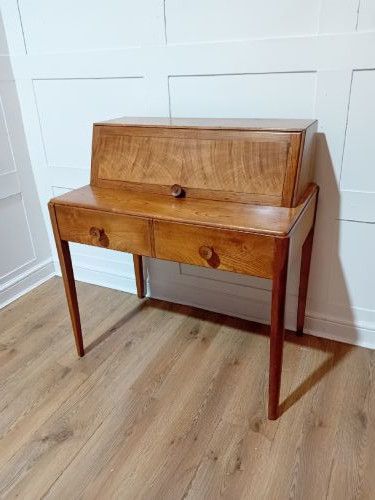
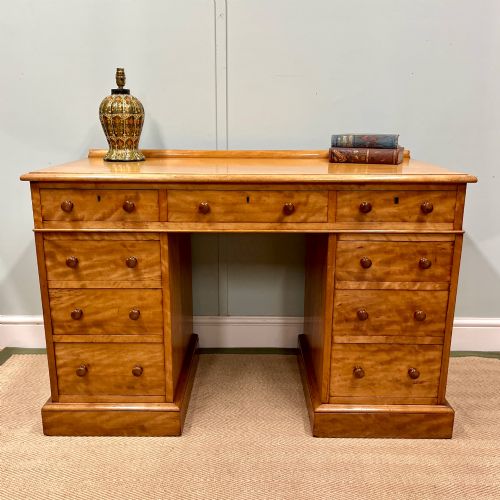
When buyers search for a light timber desk, they encounter items built from pale woods such as satin birch and oak spanning the nineteenth and early twentieth centuries. These pieces serve as functional work surfaces while showcasing the natural figuring of the timber.
The selection here includes pedestal desks and bureau forms that reflect periods from the Georgian era through to the 1930s. Each example demonstrates the utilitarian yet decorative approach of its maker.
Buyers will find that timber selection dictates the visual weight of these desks, allowing them to fit comfortably into both traditional and more contemporary interiors.
What varies in quality
The calibre of a piece rests upon the selection of the timber and the precision of its construction. Uniformity in grain alignment and careful attention to drawer construction distinguish finer examples from standard workshop output.
Proportion and the integrity of the original hardware also influence the standing of a desk. Pieces that retain their original surfaces without excessive intervention command greater appreciation among collectors.
Arthur Basil Reynolds·Heal and Son
The Light Timber Desk Glossary
- Pedestal desk
- A flat-top writing table supported by two pillars or pedestals containing drawers. This form provides substantial storage beneath the main working surface.
- Satin birch
- A pale, lustrous hardwood frequently utilised in nineteenth-century cabinet making for its fine texture. It offers a bright finish distinct from darker timbers like walnut or standard mahogany.
- Bureau
- A desk featuring a sloping hinged lid that opens to reveal interior compartments and pigeon holes. It combines writing utility with concealed storage.
- Oak
- A durable hardwood characterised by prominent growth rings and strength. It forms the backbone of many early twentieth-century and revival pieces.
- Joinery
- The wooden joints used to assemble furniture without relying excessively on metal fasteners. Quality joinery ensures longevity and structural resilience.
Light Timber Desk: Frequently Asked Questions
How do I date a timber desk?
Dating relies on examining construction methods, timber types, and hardware styles. Secondary woods inside drawers often provide clues regarding the period of manufacture.
Stylistic cues such as Arts and Crafts influences or Georgian proportions help narrow down the decade in which the desk was built.
Are light timber desks practical for daily use?
Most antique desks offer robust writing surfaces and functional drawer space suitable for contemporary laptop use and paperwork. Their sturdy construction handles regular placement of modern equipment.
Care should be taken with historical polish finishes by using protective pads for writing instruments and hot drinks.
How do I care for satin birch surfaces?
Satin birch benefits from dusting with a soft, dry cloth to prevent micro-scratching of the polished finish. Avoid placing timber furniture in direct sunlight or near heat sources to prevent warping.
Applying a traditional beeswax polish occasionally helps nourish the wood and maintain its pale lustre without building up heavy residues.
What is the difference between oak and satin birch?
Oak is a heavy, open-grained hardwood known for its strength and prominent medullary rays. It appears frequently in Arts and Crafts and Gothic Revival pieces.
Satin birch presents a finer, smoother grain with a naturally pale, reflective quality that brightens smaller study spaces.