



Light Blue Gemstone Pendant
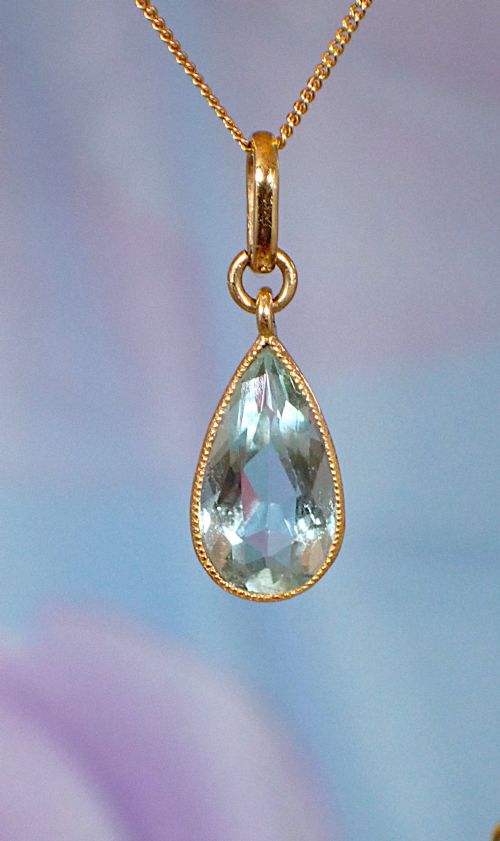
A light blue gemstone pendant brings cool colour to the neck, prized for clear aquatic tones set in yellow gold or platinum.

Light Blue Gemstone Pendant
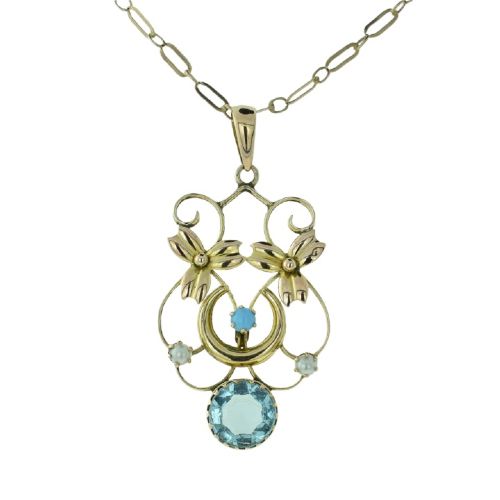
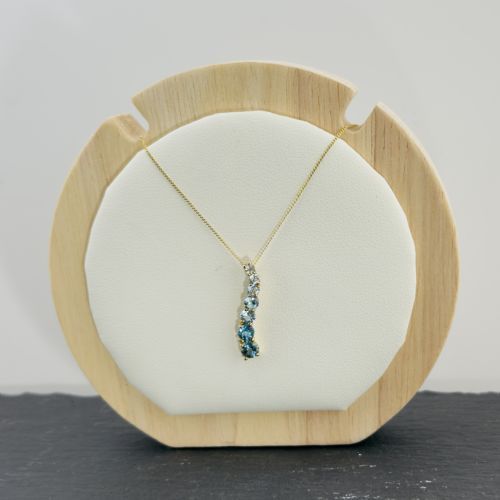
A light blue gemstone pendant takes many forms across periods from the Victorian era through the Edwardian years and into Art Deco and Mid-Century designs. Buyers searching for a light blue gemstone pendant encounter delicate drop necklaces, cluster drops and geometric frames.
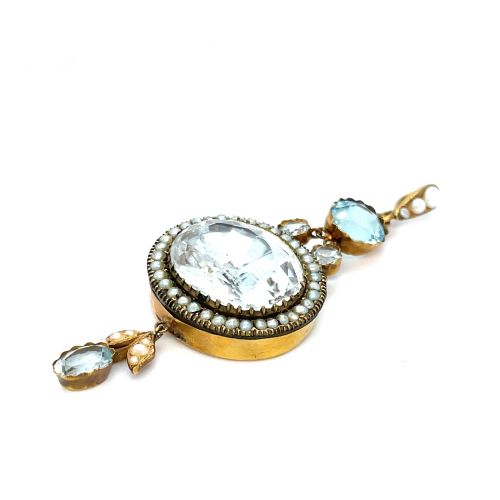
The materials span Aquamarine and Blue Topaz mounted in gold varieties alongside platinum. Edwardian and Victorian examples pair aquamarines with seed pearls, while later decades use diamonds to flank the central blue stone.
Materials and construction
Goldsmiths shaped mountings in 9ct and 18ct gold, rose gold, and platinum to hold aquamarines and blue topaz securely. Many items incorporate claw or bezel settings alongside foil backs in older Victorian pieces.
Cluster configurations combine central blue stones with surrounding diamonds or pearls. Drop mechanisms allow the pendant to move freely from its linked chain or necklace.
Listings span the Victorian, Edwardian, Art Deco, and Mid-Century periods, utilising aquamarine, blue topaz, gold, and platinum.
Quality variations
The clarity and saturation of the aquamarine or blue topaz dictate the visual impact of the piece. Fine examples balance clean crystal depth with precise metalwork in gold or platinum.
Period integrity matters greatly, where original settings, matching seed pearls and well-matched diamond accents distinguish finer specimens from altered or later assembled items.
C'est Laudier
The Light Blue Gemstone Pendant Glossary
- Aquamarine
- A pale blue to light greenish-blue variety of beryl. This mineral forms the principal blue gemstone in Edwardian, Art Deco, and Mid-Century pendants.
- Blue Topaz
- A silicate mineral of aluminium and fluorine treated or natural to show a blue hue. It appears frequently in twentieth-century pendant designs.
- Seed Pearl
- A very small natural or cultured pearl used widely in Edwardian jewellery. These tiny pearls accent floral and openwork frames.
- Foil Back
- A thin sheet of metallic foil placed behind a gemstone to enhance its brilliance and colour. This technique is typical of Victorian pieces.
- Cluster Drop
- A pendant design featuring a central stone surrounded by smaller gems that hangs from a chain. It swings freely when worn.
Light Blue Gemstone Pendant: Frequently Asked Questions
What periods do these pendants come from?
The listings include pieces from the Victorian and Edwardian eras, alongside Art Deco, 1940s, 1950s, and 1960s examples.
Designs shift from delicate seed pearl filigree in the early twentieth century to bolder geometric shapes in mid-century items.
What metals are used in these necklaces?
Metals span yellow gold, rose gold, 9ct and 18ct gold, and platinum.
White gold and platinum appear frequently in Art Deco and later twentieth-century mountings.
How do I wear a pendant necklace?
These pendants hang from matched chains and sit centrally on the collarbone.
Their drop designs suit open necklines for daily wear or evening events.
Are aquamarine and blue topaz the same?
Aquamarine is a natural beryl variety, while blue topaz is a distinct silicate mineral.
Both deliver pale blue tones but possess different crystal structures and refractive properties.