


Antique Pearl Lavalier Pendant
An antique pearl lavalier pendant brings delicate swinging drops of gold and gems to the neckline, defined by graceful Edwardian and Art Nouveau lines.

Antique Pearl Lavalier Pendant
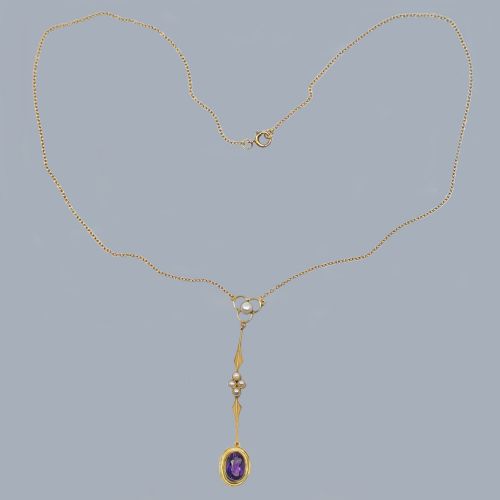
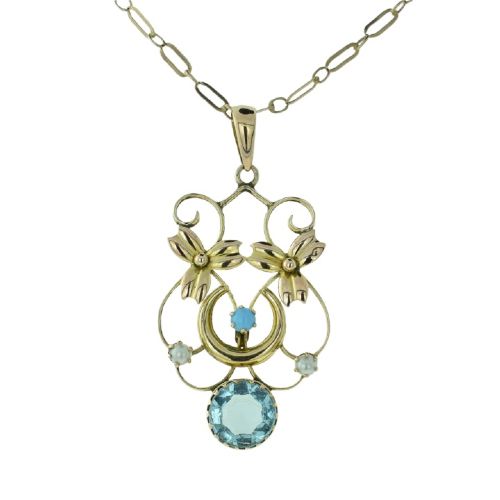
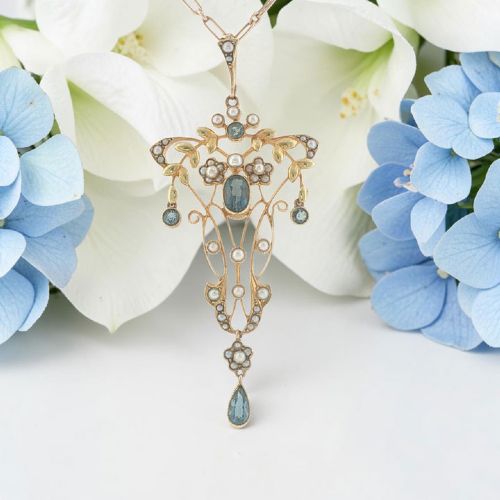
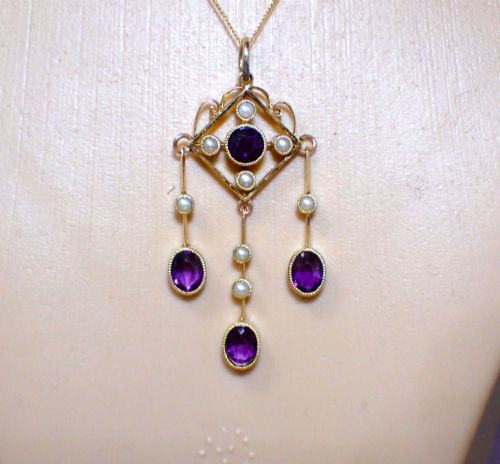
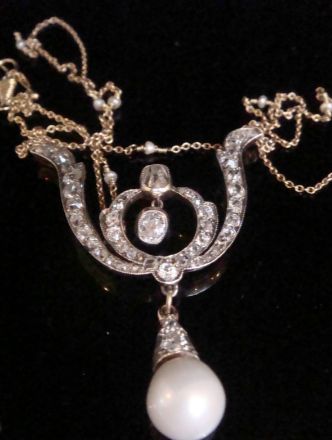
An antique pearl lavalier pendant is a suspended drop necklace defined by a central swinging element hanging from a finer link chain. These jewels emerge predominantly from the Edwardian and Victorian eras, often carrying the flowing organic motifs of Art Nouveau design.
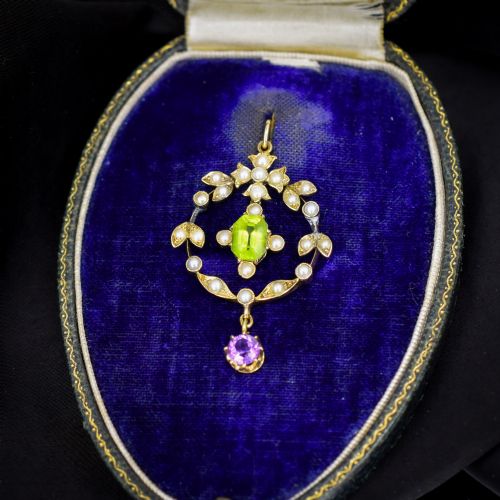
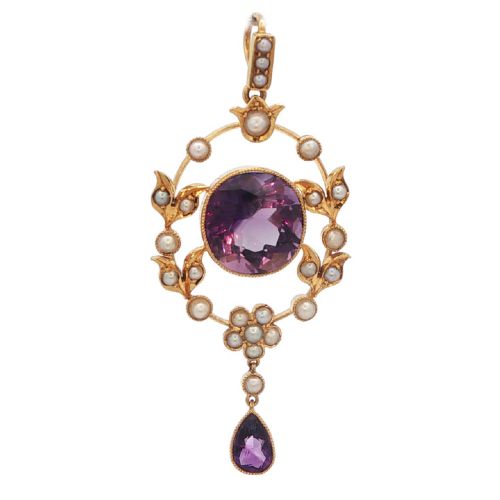
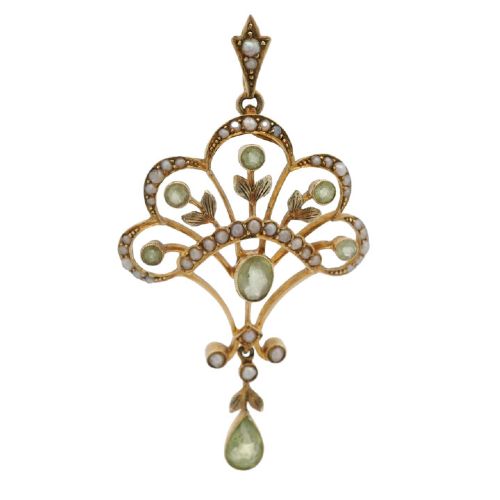
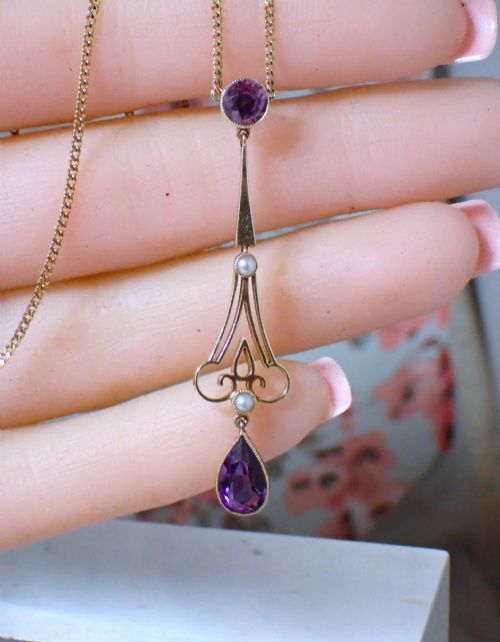
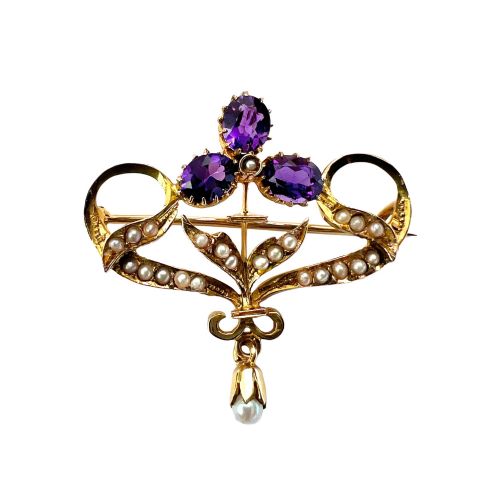
The version most commonly met on this page pairs soft seed pearls with vibrant coloured gemstones like amethyst or peridot set in yellow gold. Makers frequently suspended these pieces from delicate chains that sit high on the collarbone, allowing the central drop to move with the wearer.
How these pendants were constructed
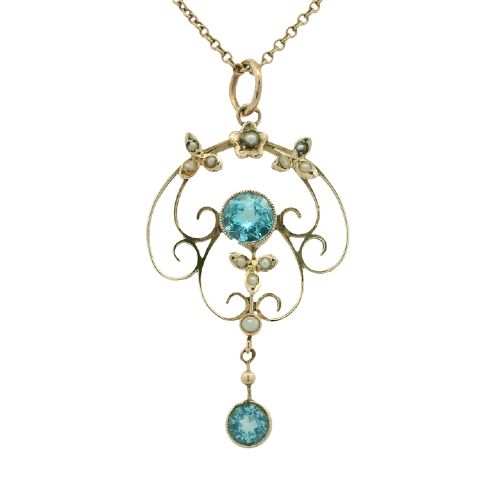
Goldsmiths worked primarily in nine carat and fifteen carat yellow gold, occasionally incorporating platinum or silver for high-contrast settings. These precious metals were shaped into scrolling foliate frames and wirework drop mounts designed to catch the light.
Seed pearls were meticulously split, drilled, and secured onto pins or glued into tiny bezels to accent the larger stones. Amethysts, peridots, and aquamarines were precision-cut into cushion, oval, or step facets to anchor the centre of the composition.
Many of these delicate drops spent a century hiding as brooches before someone finally converted them back into swinging necklaces.
What separates the finest examples
Quality rests upon the delicacy of the openwork metal fabrication and the matching of the pearls. Superior examples display intricate wirework with secure, clean bezel settings that hold every seed pearl uniformly in place without excess adhesive.
The choice and saturation of the accompanying gemstones dictate the upper tier of pieces. Vibrant, evenly coloured amethysts or fine aquamarines paired with well-matched lustrous pearls elevate a pendant above standard production.
S. Blanckensee & Son·Murrle Bennett·Hamilton & Co
The Antique Pearl Lavalier Pendant Glossary
- Lavalier
- A pendant featuring a swinging drop suspended from a smaller loop or chain. This style gained immense popularity during the late nineteenth and early twentieth centuries.
- Seed pearl
- A very small, naturally formed or cultured pearl used in clusters or borders. These tiny spheres require precise drilling and mounting.
- Foliate
- Ornamentation shaped like leaves and plant tendrils. This style dominates Art Nouveau and Edwardian metalwork.
- Suffragette
- Jewellery incorporating green, white, and violet stones, commonly peridot, seed pearl, and amethyst. These colours symbolised the women's suffrage movement.
Antique Pearl Lavalier Pendant: Frequently Asked Questions
How do I wear a lavalier pendant safely?
Pair these delicate drop necklaces with softer necklines that will not catch the swinging lower elements during movement. Ensure the historic chain is secure or swap it for a comparable period-appropriate metal strand.
Store the pendant flat in a lined jewellery box away from harder items to protect the seed pearls and delicate gold wirework from pressure or scratching.
What periods do these pendants come from?
The listings span the Victorian, Edwardian, and Art Deco eras, with a strong concentration of pieces created around nineteen hundred. You will also encounter Arts and Crafts examples alongside items from the nineteen twenties and thirties.
Design motifs help distinguish these eras, as Victorian pieces tend to be heavier and more structured, while Edwardian and Art Nouveau versions utilise flowing lines and lighter mounts.
Were these pieces used as brooches too?
Many examples were manufactured with clever convertible mechanisms incorporating both a pin and a bale. This allowed the owner to wear the exact same jewel pinned to a lapel or suspended from a neck chain.
Examining the reverse reveals the hinged pin and safety catch alongside the fixed loop required for hanging the pendant drop.
What stones are typically paired with pearls?
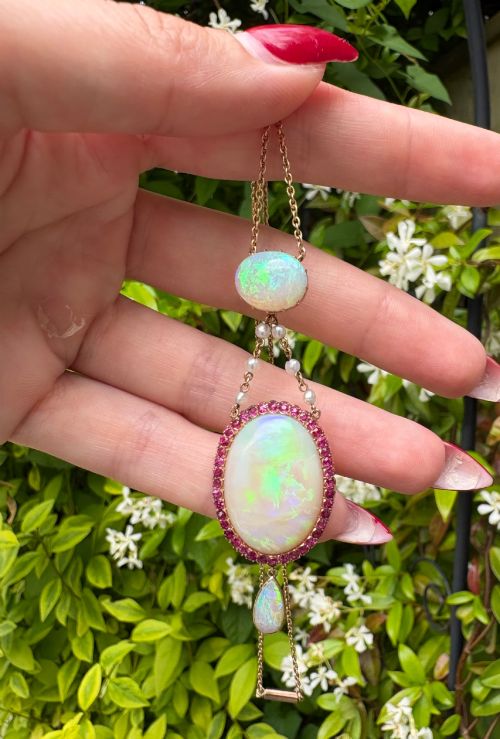
Amethysts and peridots appear most frequently alongside seed pearls, often creating striking purple or green contrasts against yellow gold. Aquamarines, opals, turquoise, and tourmalines also feature prominently in these historic drops.
Combinations of amethyst, peridot, and pearl frequently indicate specific historical movements, such as the suffragette jewellery trend of the early twentieth century.